

Gold Ruby Diamond Jewellery
Gold ruby diamond jewellery brings together vibrant red corundum and brilliant diamonds set in warm yellow gold, bright white gold, platinum or lower carat gold.
Gold Ruby Diamond Jewellery
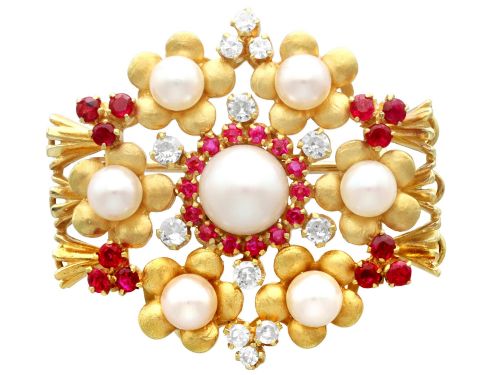
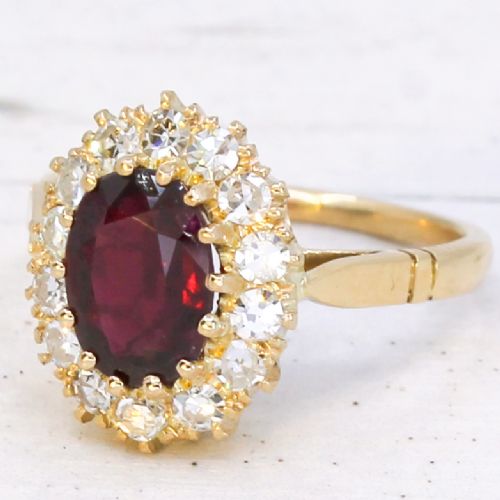
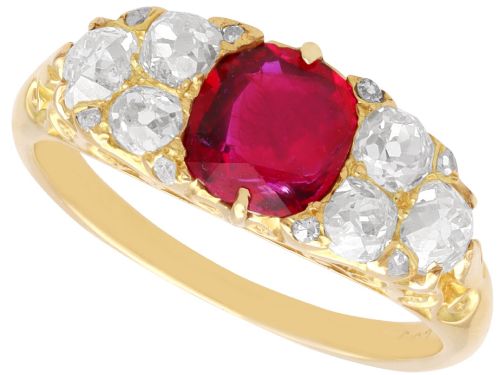
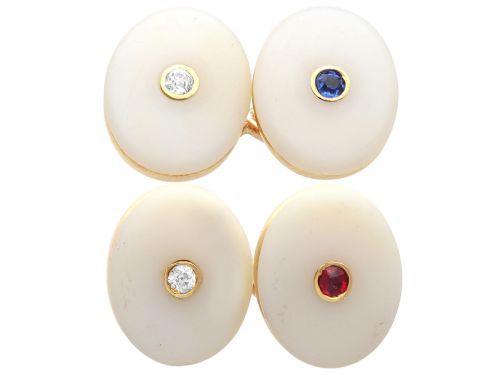
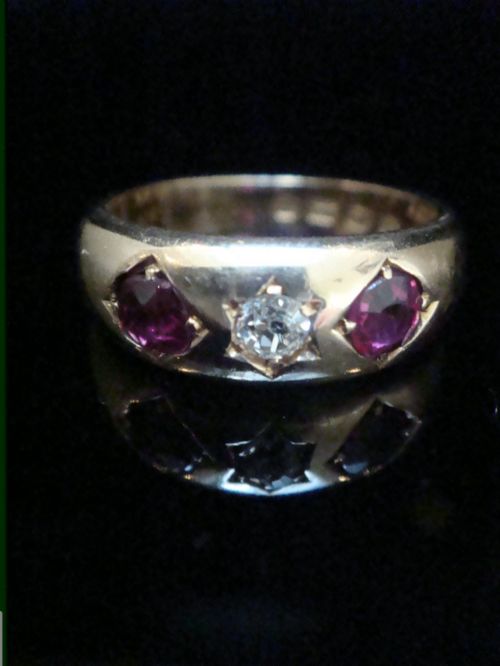
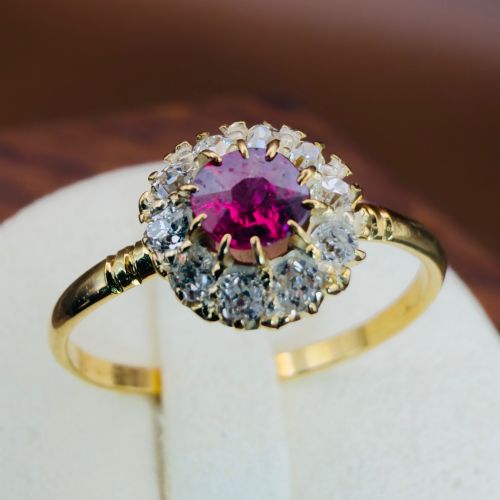
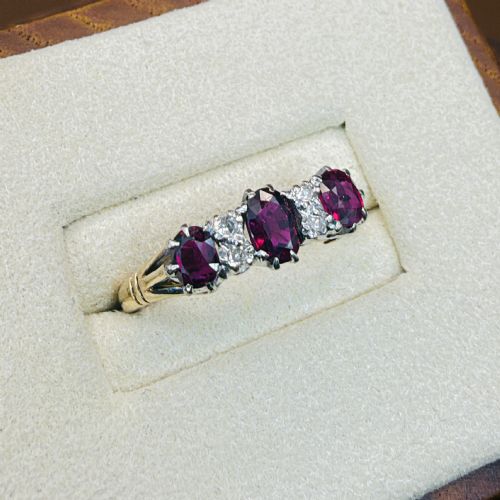
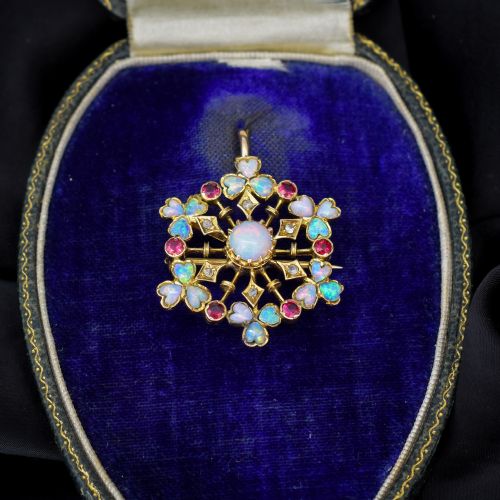
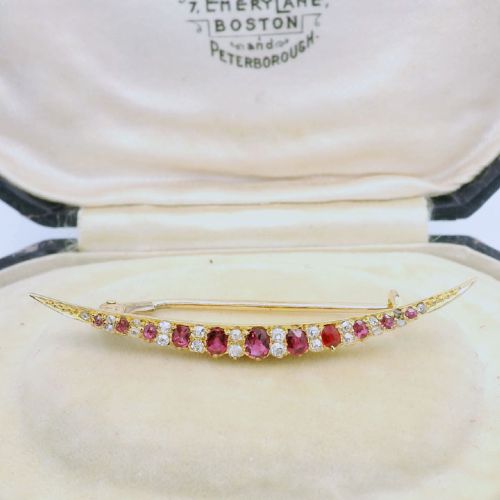
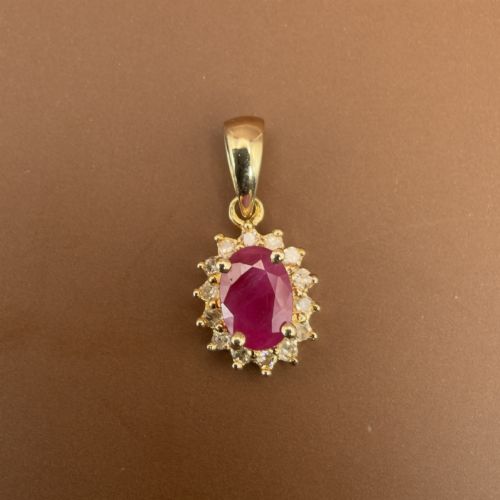
Gold ruby diamond jewellery encompasses rings, brooches, pendants, bangles, necklaces and bracelets spanning the Victorian, Edwardian, Art Deco and mid-century periods. Buyers seeking gold ruby diamond jewellery will find a strong representation of cluster rings, multi-stone band rings, and floral or starburst brooch designs.
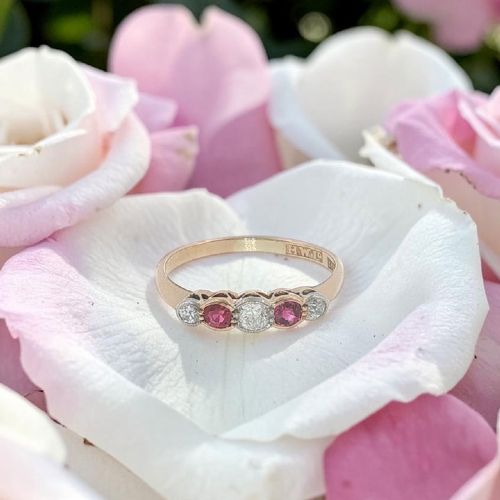
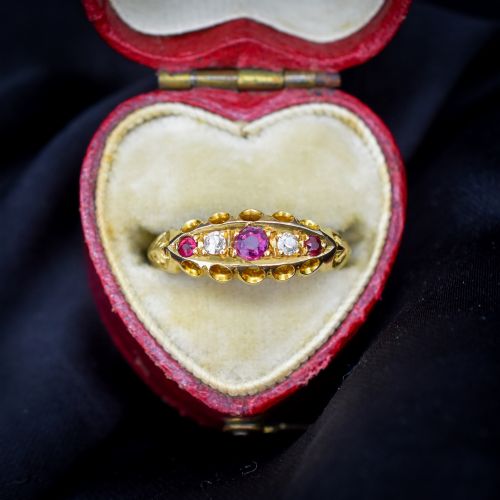
The selections range from nineteenth-century snake serpent necklaces and crescent brooches to 1950s and 1960s oval cut cluster rings. Cluster formations, three-stone rings and boat-shaped settings appear frequently across the available inventory.
Originating largely from British workshops and hallmarked centres like Chester and Birmingham, these items combine traditional gemstone settings with durable precious metals. Pieces vary from delicate floral bar brooches to substantial cocktail rings featuring unheated Burmese rubies.
How they were made
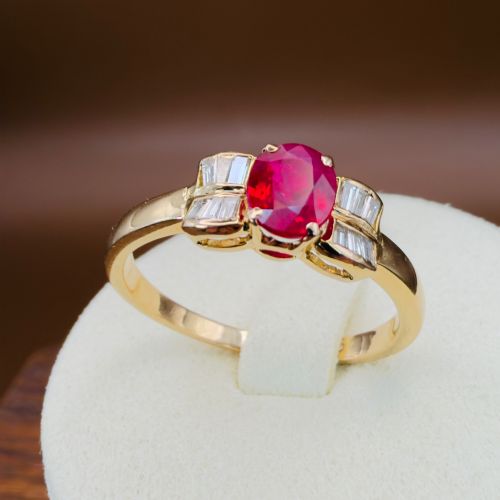
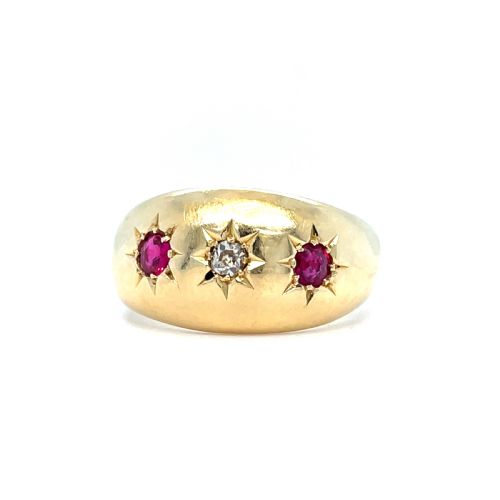
Goldsmiths utilised 18ct yellow gold, 18ct white gold, 15ct gold, 9ct gold and platinum to mount rubies alongside old cut, baguette or old mine cut diamonds. Settings frequently incorporated claw mounts, flush stars, and boat-shaped or navette platforms to secure the gemstones.
Craftsmen combined rubies with diamonds in cluster, trilogy, and five-stone arrangements, often integrating intricate granulation, engraving, or enamel work as seen in nineteenth-century snake necklaces. Hallmarks stamped into the metal indicate specific towns of assay such as Birmingham and Chester alongside metal purities.
What varies in quality
Quality differences depend upon the geological origin and thermal treatment of the rubies, with unheated Burmese stones commanding distinct attention alongside certified diamond carat weights. The precision of the setting work, from tight old cut diamond clusters to symmetrical navette frames, dictates the refinement of each piece.
Metal selection also shapes the character of the item, distinguishing solid 18ct yellow and white gold constructions or platinum pairings from lighter 9ct alternatives. Preservation of original hallmarks, sharp engraving, and secure stone retention further separate standard productions from exceptional workshop creations.
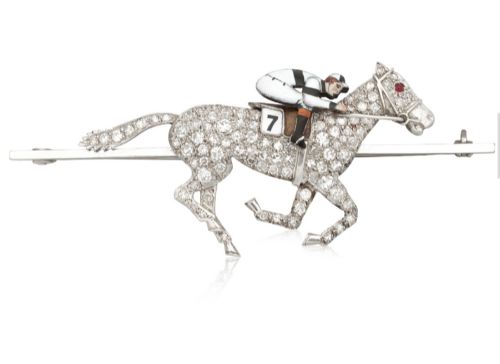
Kutchinsky
The Gold Ruby Diamond Jewellery Glossary
- Cluster ring
- A ring featuring a central gemstone surrounded by a border of smaller stones, typically diamonds encircling a ruby.
- Old cut diamond
- A precursor to the modern brilliant cut, hand-faceted with a smaller table and larger culet to catch candlelight.
- Navette
- A boat-shaped gemstone setting or ring face that tapers to sharp points at either end.
- Trily
- A three-stone ring arrangement, frequently alternating rubies and diamonds across the finger.
- Hallmark
- Official stamps pressed into precious metal to verify the purity of the gold or platinum and the place of assay.
Gold Ruby Diamond Jewellery: Frequently Asked Questions
How do I date a ruby and diamond ring?
Dating relies on stylistic clues such as the boat shape of Edwardian settings, the geometry of Art Deco pieces, and the hallmarks stamped into the gold band.
Assay office marks and specific metal purities, such as 15ct gold used before the twentieth century, help narrow the decade of manufacture.
What is an old cut diamond?
Old cut diamonds are hand-faceted stones shaped before modern diamond-cutting machinery was standardised in the early twentieth century.
They feature distinctive open culets and higher crowns that produce a softer, warmer scintillation under low light.
Can I wear an antique cluster ring daily?
Many antique cluster rings are robust enough for daily wear provided the settings and claws are checked regularly by a professional jeweller.
Consider removing delicate Edwardian or Victorian pieces during heavy manual tasks to protect the softer ruby stones from scratching.
What does unheated Burmese ruby mean?
An unheated Burmese ruby is a natural gemstone originating from Myanmar that has not undergone thermal enhancement to improve its colour or clarity.
Such untreated stones possess natural geological characteristics that are documented through specialist gemmological certification.