


Gold Rimmed China Plates
Gold rimmed china plates bring hand-painted fruit and armorial designs to the table, offering refined porcelain decorated with gleaming metal edges.
Gold Rimmed China Plates
When you search for gold rimmed china plates, you encounter fine porcelain and bone china vessels produced across multiple centuries, including Victorian, Edwardian, and mid-twentieth-century eras. These pieces function primarily as decorative cabinet plates, dessert dishes, and service items rather than everyday tableware.
The selections available here showcase distinct historical styles ranging from Aesthetic Movement Japanese motifs and Neo-Rococo flourishes to English Traditional and Regency aesthetics. Makers represented include renowned porcelain houses such as Royal Worcester, Minton, Royal Doulton, Coalport, Bloor Derby, and Royal Crown Derby.
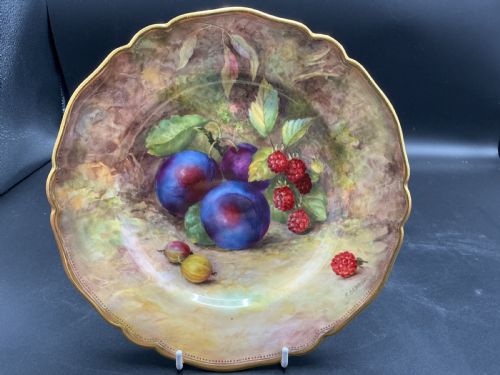
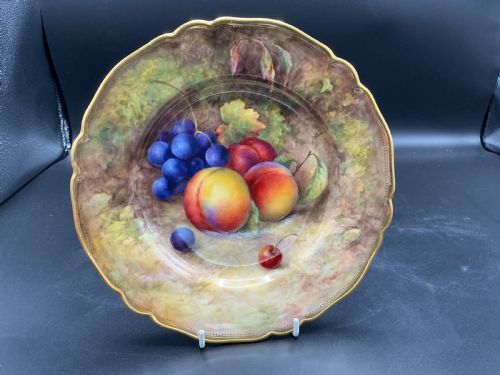
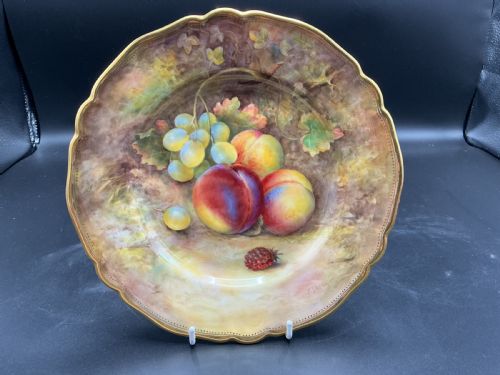
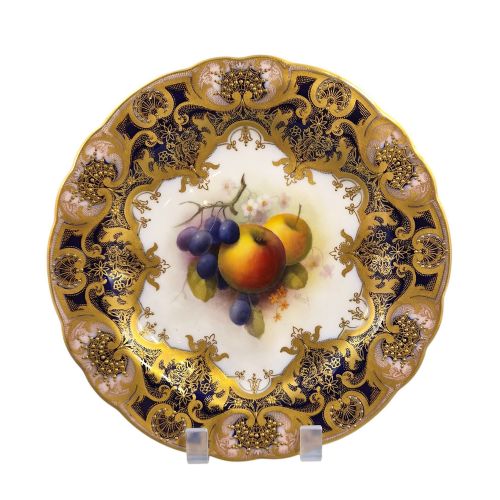
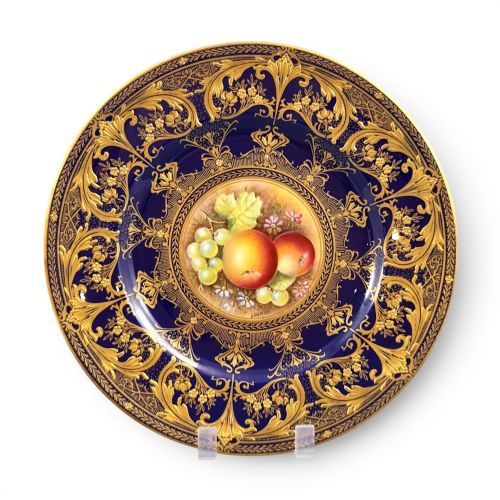
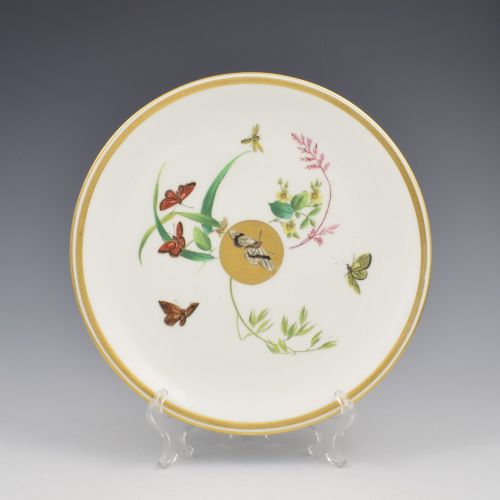
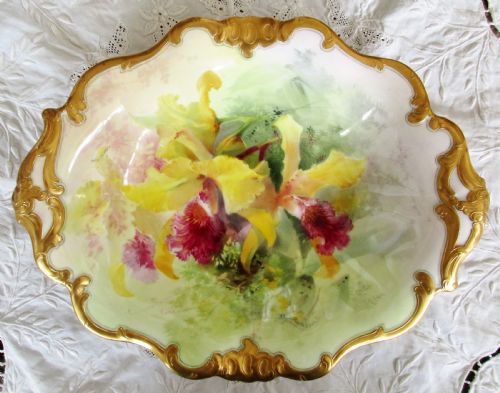
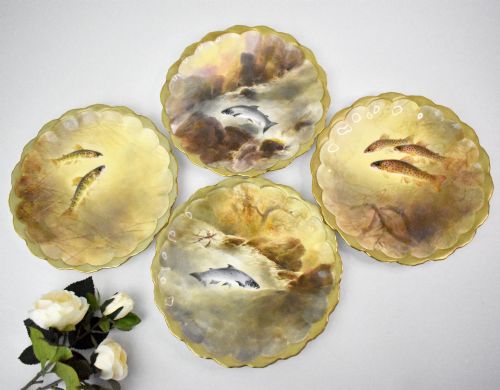
Forms vary from standard dinner and dessert plates to specialised soup plates, basketweave vessels, and large rope-edge display dishes. Many feature elaborate hand-painted natural subjects like fruit, orchids, fish, suns, and butterflies executed by named artists.
Assessing quality
Excellence in these ceramics lies in the fidelity and skill of the hand-painted artistry, particularly evident in detailed botanical, animal, or fruit studies signed by accomplished porcelain painters. Superior examples display precise brushwork, balanced composition, and rich, unrubbed application of gold leaf or gilding along the edges.
The prestige of the producing factory and the specific period of manufacture heavily influence the standing of a piece. Early nineteenth-century productions and signed cabinet plates from major potteries demonstrate greater artistic ambition than standard decorative items.
Listings feature porcelain and bone china items spanning the Victorian era through the 1970s, incorporating gold leaf, enamel, and gilt finishes.
Royal Worcester·Minton·Royal Doulton·Coalport·Barr, Flight and Barr·Bloor Derby·Royal Crown Derby
The Gold Rimmed China Plates Glossary
- Cabinet plate
- A decorative ceramic plate intended for display in a cabinet or on a wall rather than for practical dining use. These pieces often feature elaborate painted scenes and gilded borders.
- Bone china
- A type of soft-paste porcelain incorporating bone ash, resulting in high mechanical strength, chip resistance, and a characteristic milky translucency. It forms the base of many fine English service dishes.
- Gilding
- The application of gold leaf or gold powder to the surface of porcelain to create metallic rims and highlights. Quality depends on the thickness and adhesion of the precious metal.
- Armorial
- A ceramic design featuring a coat of arms, crest, or heraldic device. These bespoke services were historically commissioned by landed families.
- Enamel
- Low-melting glass coloured with metallic oxides, used for painting overglaze details on porcelain. It provides vibrant colours that fuse permanently with the glaze during firing.
Gold Rimmed China Plates: Frequently Asked Questions
How are gold rimmed china plates cleaned?
These decorative plates require gentle hand washing in lukewarm water using mild detergent. Avoid abrasive sponges and dishwashers to protect the delicate enamel paints and fragile gold leaf rims.
Pat the porcelain dry immediately with a soft cloth to prevent water spots on the gilt borders. Proper manual care preserves the painted surface for future generations.
Can I use these plates for dining?
Most pieces catalogued as cabinet plates or decorative dishes are intended primarily for display rather than heavy culinary use. Utensils can easily scratch the overglaze enamel paintings and wear away the delicate gold leaf.
Plain service plates from the selection handle light dining, but antique painted examples deserve careful preservation. Displaying them on plate stands or inside cabinets protects the artistic work.
How do I identify the maker?
Turn the plate over to inspect the underside for factory stamps, painted script marks, or impressed ciphers. Major British potteries like Royal Worcester and Minton used distinctive backstamps that evolved across different decades.
Artist signatures sometimes appear alongside factory marks on high-end painted fruit plates. Reference books on British ceramic marks help narrow down the exact production era.
What does aesthetic period mean?
The Aesthetic Movement of the late nineteenth century rejected rigid Victorian industrial design in favour of art for art's sake. Ceramics from this time often embrace asymmetrical Japanese-inspired motifs like butterflies and suns.
Makers such as Minton adopted these orientalist styles to create striking cabinet plates with unconventional compositions. These items represent a distinct shift toward naturalistic and decorative freedom.