



Gold Porcelain Saucer
When you search for a gold porcelain saucer, you are looking at fine ceramic vessels shaped during the Georgian, Regency, and nineteenth century eras.
Gold Porcelain Saucer
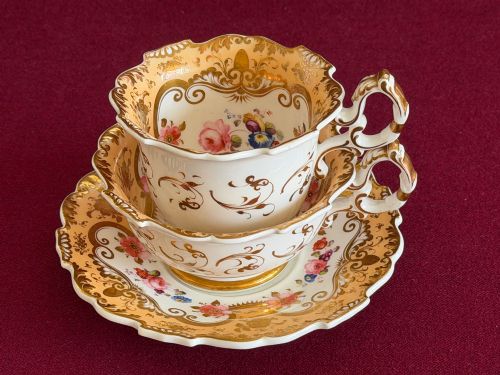
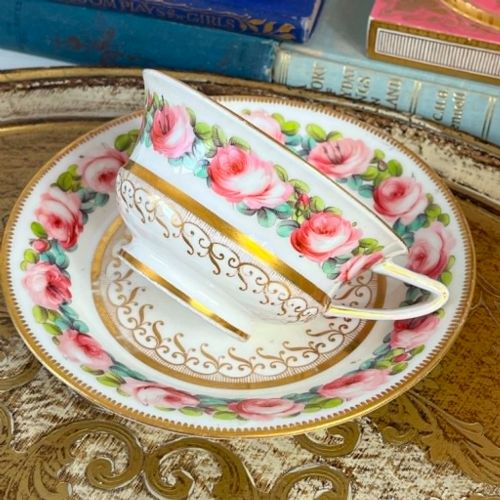
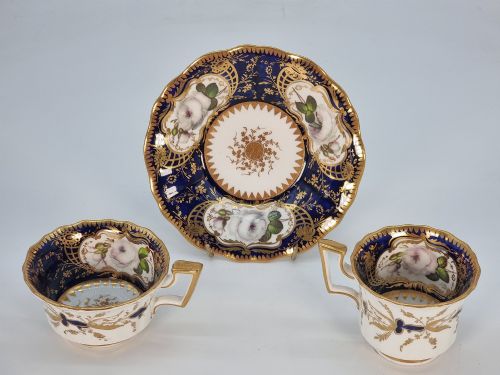
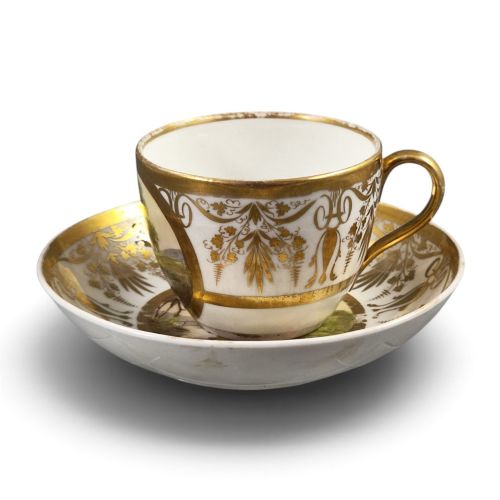
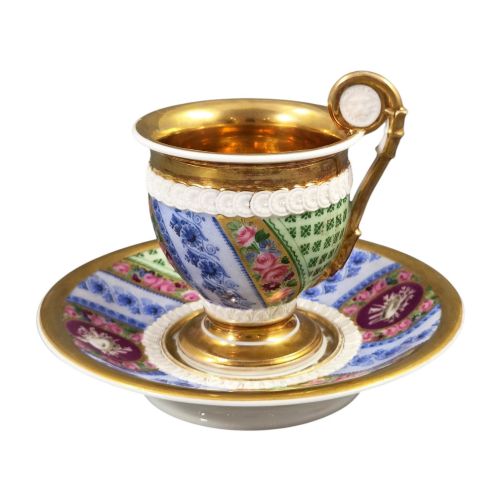
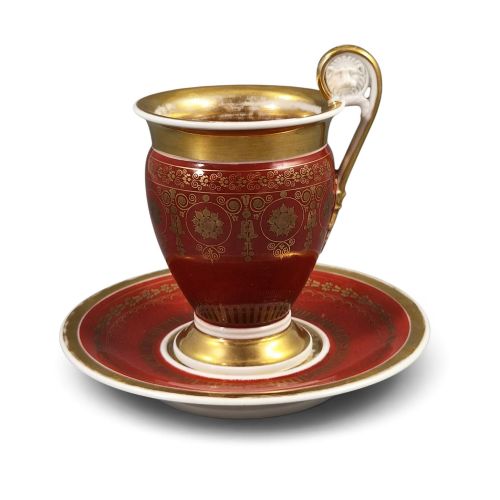
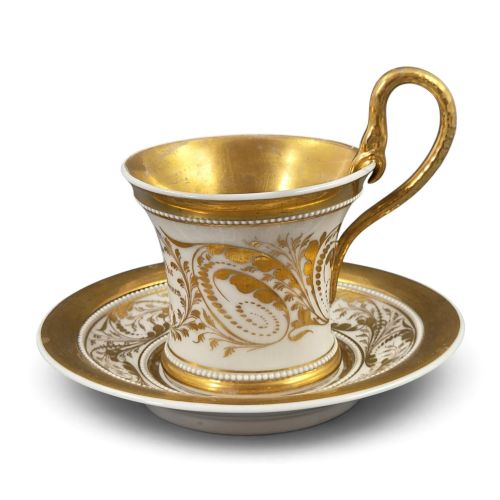
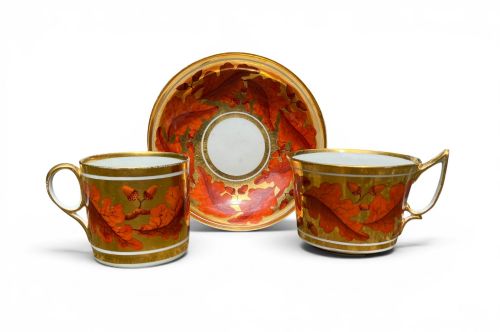
A gold porcelain saucer represents a specific category of ceramic tablewares designed for tea, coffee, and chocolate service across the Georgian, Regency, and nineteenth century periods. These saucers frequently appear alongside matching cups as duos, trios, or within larger cabinet services.
The objects span English factories such as Worcester, Coalport, and Spode, alongside continental European makers like KPM Berlin and French Old Paris. Buyers encounter individual cabinet pieces, cabinet plates, and complete tea services featuring distinct painted scenes and gilding.
Many examples date from the early eighteen-hundreds, reflecting neoclassical, Rococo Revival, and Empire styles. The form serves both decorative display and historical table service use.
How they were made
Potters utilised hard-paste porcelain, bone china, and earthenware bodies shaped into saucers, teacups, and coffee cans. These ceramic bases underwent high-temperature firing before receiving hand-painted enamel decoration in floral, landscape, and armorial motifs.
Gilding and gold leaf application defined the decoration, utilising solid gold gilt bands, hand-pencilled borders, and raised gold tooling. Artisans applied liquid gold or gold leaf directly onto the porcelain surface before a final low-temperature kiln fixation.
Materials recorded across the archive include bone china, hard-paste porcelain, earthenware, gold leaf, and enamel.
What varies in quality
The standard of painting determines the tier of the piece, separating factory-standard transfer prints from meticulous hand-painted miniature landscapes and botanical studies by named decorators. The precision of the gold leaf application and the crispness of the porcelain moulding also dictate the grade.
Makers such as Flight, Barr and Barr or KPM Berlin achieved superior porcelain translucency and heavier, burnished gold work compared to unmarked or standard commercial output. The completeness of original duos and trios influences the desirability of the set.
A H & R Daniel·Davenport·Coalport·KPM Berlin·Flight & Barr·Grainger's Worcester·Barr Flight and Barr·Kusnetzoff·Royal Worcester·Royal Albert Crown China·Duesbury & Kean·Minton·Hutschenreuther·Hirsch Dresden·Meissen
The Gold Porcelain Saucer Glossary
- Cabinet trio
- A matching set comprising a teacup, a coffee cup or saucer, and a matching plate designed for display rather than robust daily dining.
- Gilding
- The application of gold leaf or gold powder onto the porcelain surface to create metallic borders and highlights.
- Hard-paste porcelain
- A durable ceramic composition fired at high temperatures using kaolin and petuntse, producing a dense white body.
- Coffee can
- A straight-sided cylindrical cup used during the Georgian and Regency periods for drinking strong black coffee.
Gold Porcelain Saucer: Frequently Asked Questions
How do I care for a gold porcelain saucer?
Wash these fragile ceramics gently by hand using warm water and mild soap. Avoid abrasive sponges or modern dishwashers to protect the delicate enamel and gold leaf.
Store them securely on padded surfaces or in enclosed cabinets. Handle the saucers by the body rather than protruding handles or delicate rims.
Were these saucers used for daily dining?
Most of these pieces served wealthy households during tea and coffee rituals in the Georgian and Victorian eras. Finer cabinet examples were strictly intended for display in drawing room vitrines.
Service sets saw occasional use during formal social gatherings. Over time, many transitioned entirely into collector display items.
How do I identify the period of a gold porcelain saucer?
Examine the paste composition, weight, and potting style alongside any factory marks on the underside. Georgian and Regency pieces often feature handwritten pattern numbers or impressed factory ciphers.
Stylistic indicators such as Empire lion mask handles or neoclassical motifs help narrow down the manufacturing decade. Comparing the piece to recorded factory shapes confirms the age.
What is the difference between a duo and a trio?
A duo consists of a single cup and its matching saucer. These sets form the core of standard tea and coffee drinking equipment.
A trio adds a matching cake or side plate to the cup and saucer combination. This third piece completed the setting for afternoon tea service.