
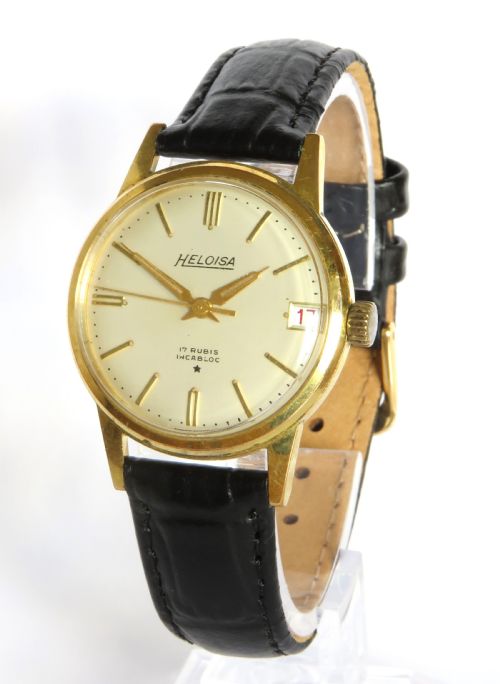
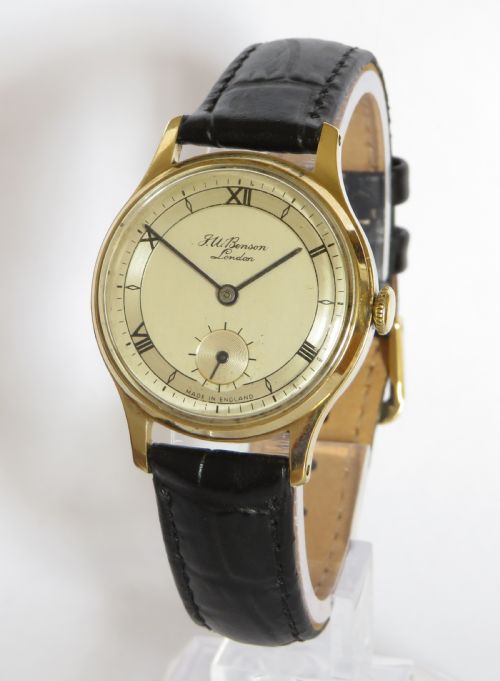
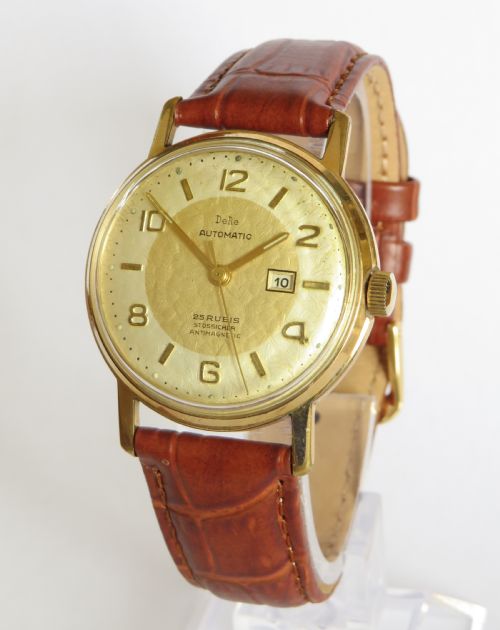
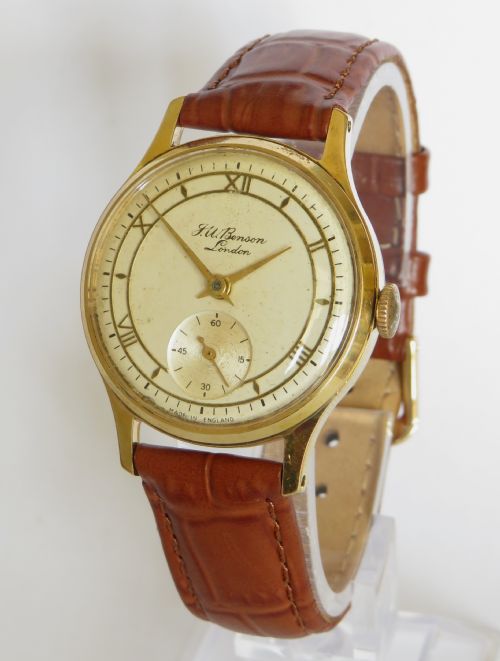
Gold Plate Wristwatch
A gold plate wristwatch offers the warmth of gold combined with mid-century horology, providing reliable vintage charm for daily wear.
Gold Plate Wristwatch
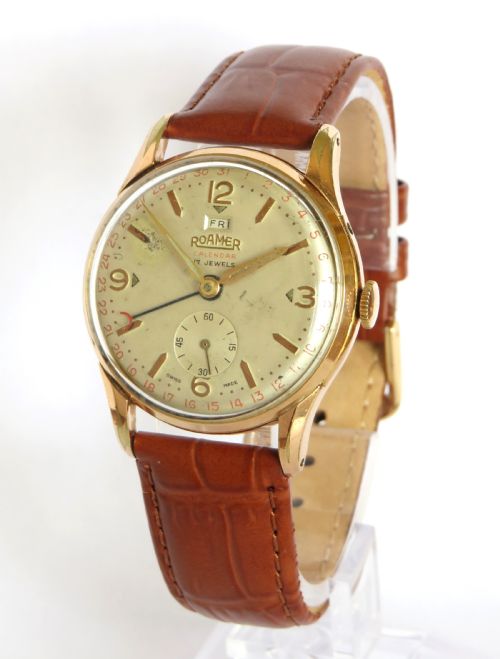
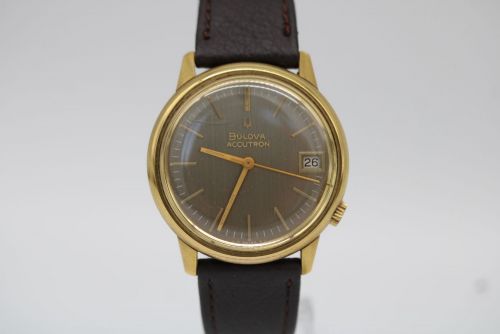
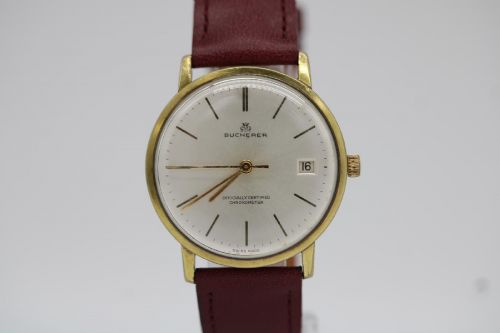
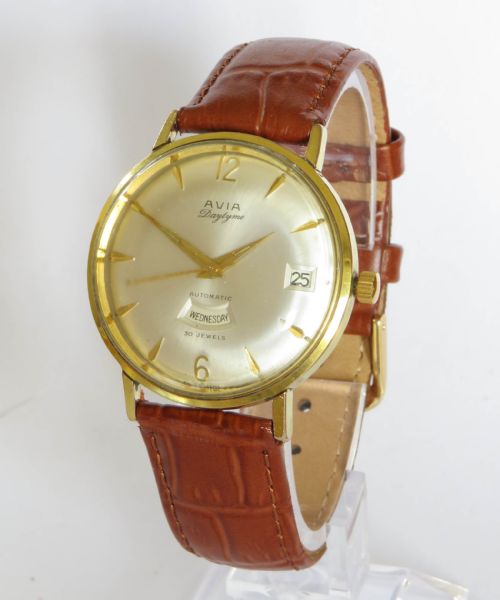
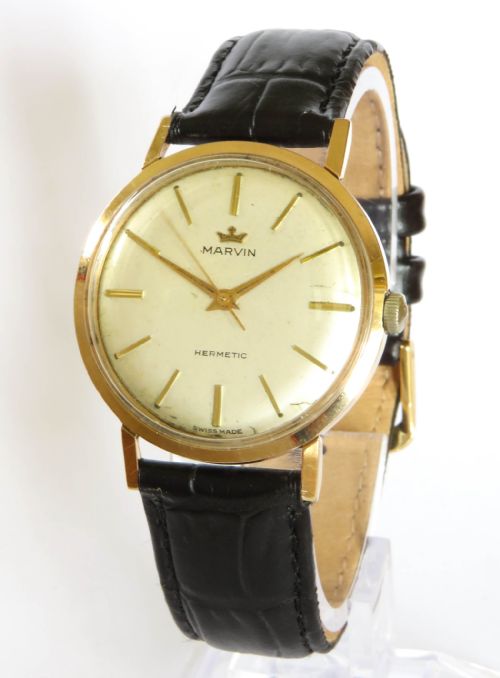
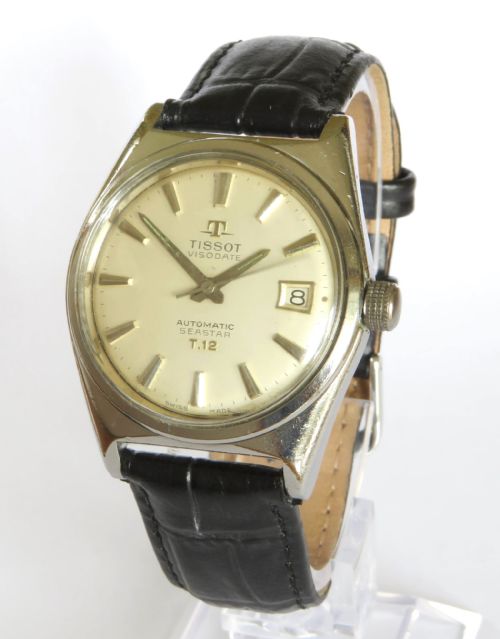
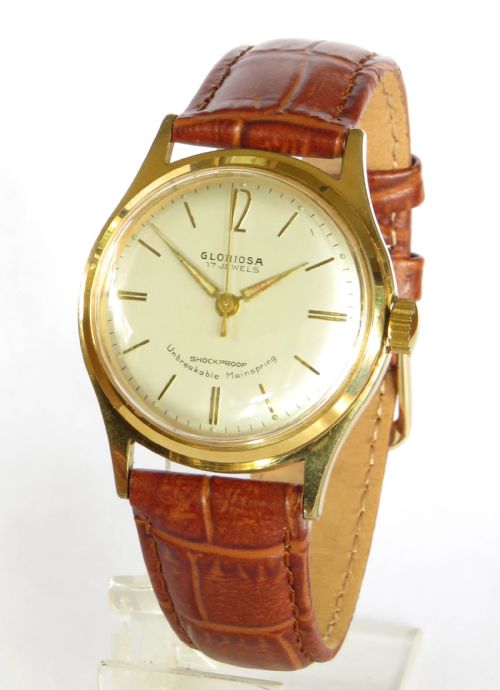
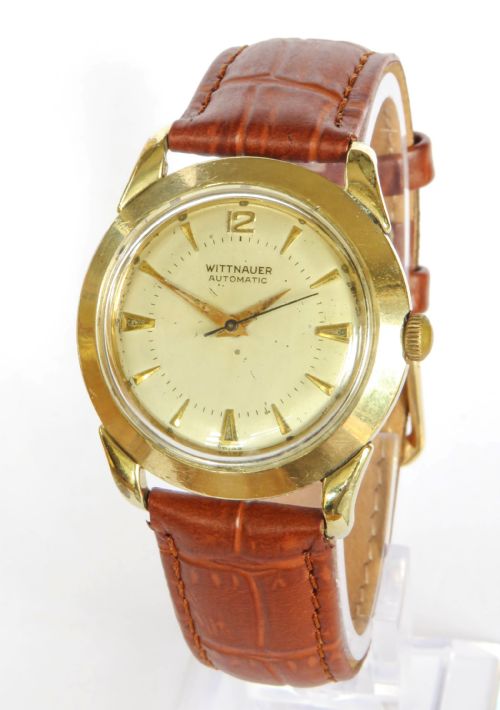
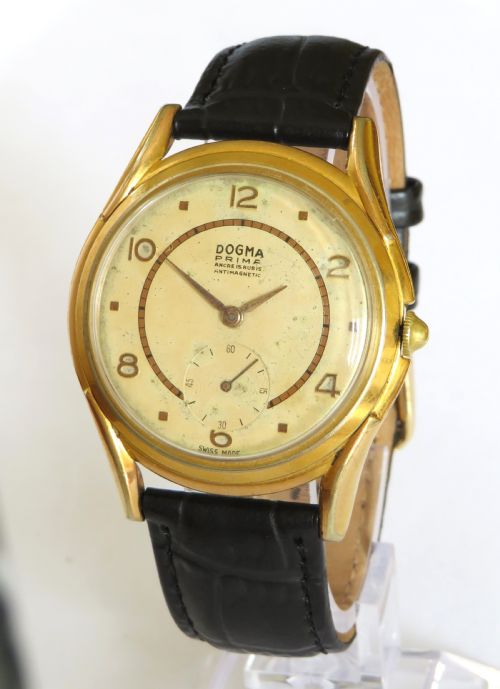
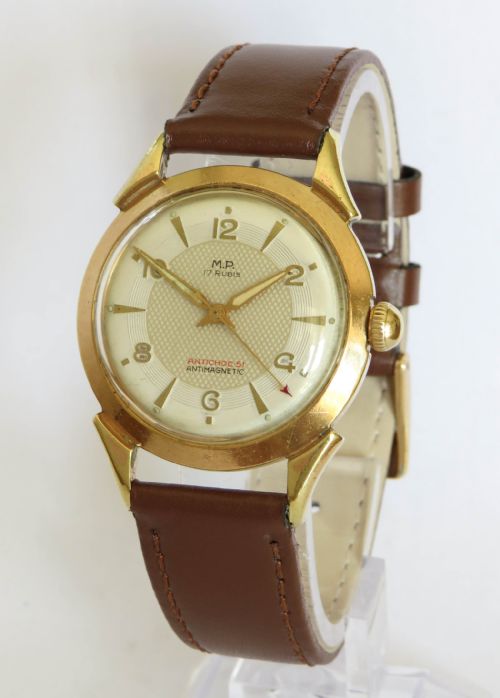
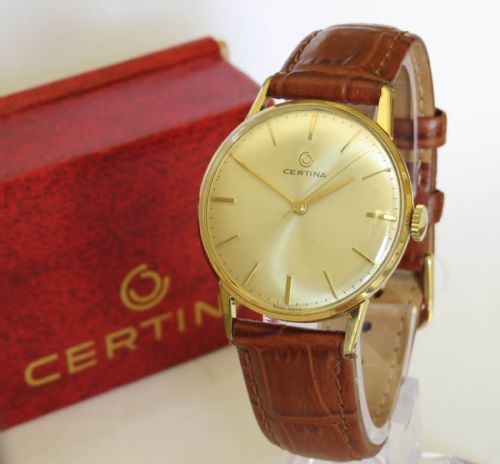
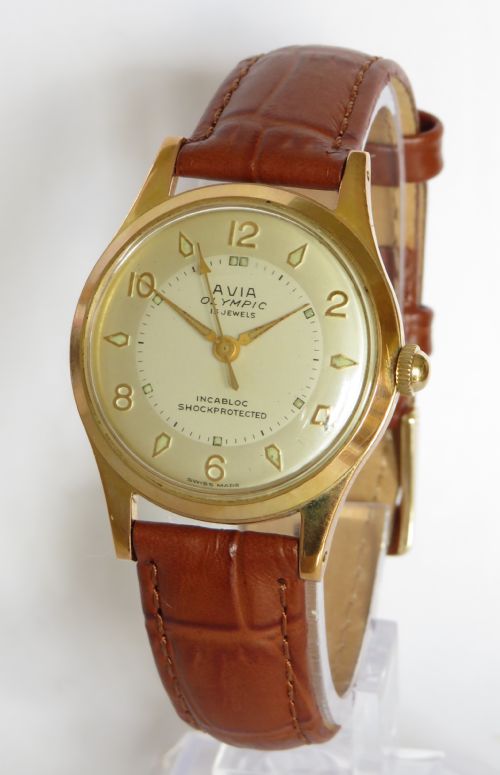
A gold plate wristwatch combines traditional horological movements with a warm metallic finish, spanning periods from the 1920s Art Deco era through the 1950s and 1960s. These pieces come in various forms, including automatic, manual wind, and chronograph designs.
The most common examples on this page are gents vintage wristwatches from the 1950s and 1960s, often produced by notable Swiss and British makers. Styles range from minimalist 1970s aesthetics to distinct mid-century modern and art deco designs.
Buyers encounter watches featuring leather straps, stainless steel case backs, and glass or acrylic crystals alongside gold plated metal cases. These timepieces serve as practical accessories that reflect mid-century design shifts.
Materials and construction
These watches utilise base metals coated in a layer of gold plating to provide a precious metal appearance while housing internal mechanical movements. Components such as glass or acrylic protect the dials, which often display sunburst textures or simple hour markers.
Materials across the selection include gold plate, stainless steel, leather, glass, and acrylic.
Quality and execution
The standard of a gold plate wristwatch depends heavily on the preservation of the plating across the edges and lugs, where daily wear typically causes thinning. Movement sophistication also separates basic time-only models from complex chronographs and automatic calibres.
Originality of components, including signed dials, matching hands, and proper crown signatures, elevates the standing of a piece. The presence of accessories like original boxes further distinguishes well-preserved examples from ordinary survivors.
Heloisa·Smiths·DeRe·Roamer·Bulova·Bucherer·Avia·Marvin·Tissot·Wittnauer·Dogma Prima·Certina·Astral·Zenith·Baume·Ensign·Lanco·Eterna-Matic·Omega·Felca·Mappin·Consul·Fludo·Breitling·Longines
The Gold Plate Wristwatch Glossary
- Automatic
- A self-winding mechanical movement that uses a weighted rotor to power the mainspring through natural wrist motion. This system removes the need for daily manual winding.
- Chronograph
- A watch equipped with a stopwatch function alongside its standard timekeeping displays. These models include independent sub-dials for measuring elapsed intervals.
- Manual Wind
- A traditional mechanical movement that requires the wearer to turn the crown by hand to tension the mainspring. This design allows for a thinner watch profile.
- Calibre
- The specific internal mechanical movement manufactured by a watchmaker to power a timepiece. Collectors often reference this number to identify the exact technical generation of a watch.
- Acrylic
- A lightweight, shatter-resistant plastic material commonly utilised for watch crystals during the mid-century period. It can be easily polished to remove minor surface scratches.
Gold Plate Wristwatch: Frequently Asked Questions
How do I wind a manual watch?
Turn the crown clockwise between your thumb and forefinger until you feel gentle resistance. Stop immediately once the tension increases to avoid damaging the internal mainspring.
Perform this action at a consistent time each day if you wear the watch regularly. Avoid over-winding, as forcing the crown past the stopping point can snap the spring.
Can I wear my vintage watch daily?
Many of these pieces were built for everyday utility and handle regular wear well when treated with care. However, most vintage models lack modern water resistance seals.
Keep the watch away from water, moisture, and strong magnetic fields to preserve the mechanical movement. Taking it off before strenuous physical activity prevents unnecessary knocks to the plated case.
What is a gold plated case?
A gold plated case consists of a base metal, such as brass or steel, bonded with a thin outer layer of genuine gold. This technique offered an accessible alternative to solid gold luxury watches.
Over decades of use, friction can wear away the outer gold layer, particularly on sharp edges. Inspecting the case helps determine how much of the original plating remains intact.
How do automatic movements work?
An automatic movement contains an internal weighted metal rotor that spins freely as your arm moves throughout the day. This spinning motion winds the mainspring automatically.
If the watch sits stationary for too long, the power reserve depletes and the watch stops. You can simply give the crown a few manual turns to restart it before setting the time.