





Gold Pearl Studs
Gold pearl studs combine precious metal with organic gems, offering classic forms across Georgian, Victorian, Edwardian, and mid-century periods.
Gold Pearl Studs
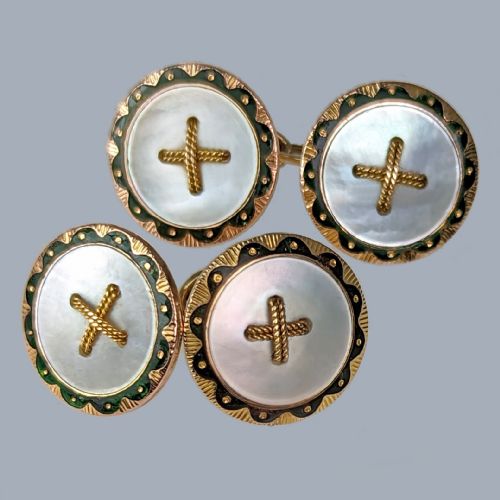
When you search for gold pearl studs, you encounter a variety of fastening types and configurations spanning Georgian, Victorian, Edwardian, and mid-century eras. The selection ranges from cluster designs and drop earrings to dress studs and cufflinks utilising pearl alongside precious metals.
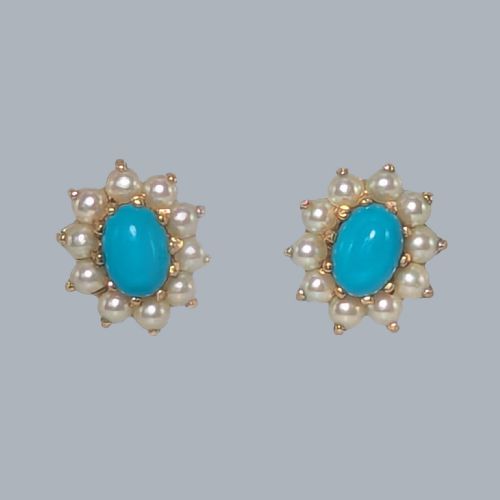
Earrings and dress studs dominate the listings, featuring split pearls, mabe pearls, and natural pearls. Pieces frequently incorporate surrounding gemstones such as diamonds, garnets, turquoise, and coral within various gold purities.
Materials and construction
Items are constructed using 9ct, 14ct, and 18ct gold, alongside 18ct white gold, platinum, and gold plating. Metals are worked into settings that accommodate pearls, mother of pearl, and supplementary stones like diamonds, paste, enamel, onyx, and bloodstone.
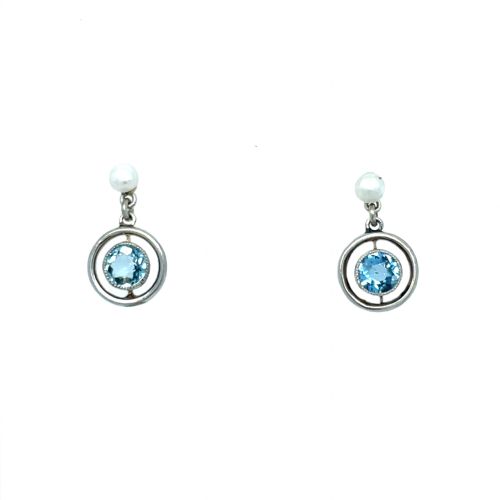
Construction techniques include cluster arrangements, target designs, and flower motifs, utilising screw backs, omega backs, and clip-on mechanisms alongside traditional hallmarked components.
Materials span pearls, mother of pearl, diamonds, garnets, turquoise, coral, onyx, bloodstone, and enamel set in various gold purities.
Factors of distinction
Quality rests upon the selection of materials, such as the grade of the pearl, the purity of the gold, and the integration of accompanying stones like diamonds and garnets. Craftsmanship shows in the precision of the cluster or target setting and the security of the mountings.
Provenance and period integrity distinguish examples, particularly where Birmingham hallmarks, French 18K markings, or specific era styles like Edwardian filigree and mid-century modern design remain intact.
Solomon Blanckensee Son·Christian Dior
The Gold Pearl Studs Glossary
- Split pearl
- A natural pearl that has been sawn in half, commonly used in Georgian and Victorian cluster jewellery for flat mounting. This technique allowed pearls to sit closely against metal backings.
- Mabe pearl
- A cultured blister pearl grown against the inside shell of an oyster rather than within its tissue, resulting in a domed appearance with a flat back. These often feature in mid-century earrings and rings.
- Guilloche
- An ornamental pattern engraved into metal with mechanical precision, frequently covered with translucent enamel in Georgian and Edwardian pieces. It adds depth and texture beneath the coloured surface.
- Dress stud
- A removable fastening button used for men's formal shirts or women's garments, often matching the materials and style of paired cufflinks. They share construction methods with standard earrings.
- Omega back
- A hinged clip closure shaped like the Greek letter omega, used on non-pierced or heavy earrings to distribute weight securely across the earlobe. This mechanism became prevalent in mid-century designs.
Gold Pearl Studs: Frequently Asked Questions
What periods do these pieces cover?
The available items span from Georgian and Victorian eras through Edwardian, 1940s, 1950s, and 1960s mid-century modern designs. Each period brings distinct mounting styles and gemstone combinations.
Earlier examples often feature seed pearls in intricate cluster or target motifs, while later decades utilise mabe pearls and larger profile screw or omega backs.
How do I identify a mabe pearl?
Mabe pearls are hemispherical cultured pearls grown against the oyster shell rather than inside the body, giving them a distinct domed profile and flat reverse. They frequently appear in mid-century jewellery surrounded by gold.
Because of their construction, they are often set into larger earrings and backed with supportive mountings like omega clips.
Are all items pierced earrings?
No, the selection includes a mix of pierced earring findings, screw backs, clip-ons, dress studs, and double-sided cufflinks. Fastening styles vary according to the decade of manufacture.
Victorian and Edwardian pieces often utilise traditional hooks or screw mechanisms, while mid-century examples frequently feature omega backs or clip fittings.
What metals are used in these items?
Items are fabricated in various gold purities including 9ct, 14ct, and 18ct yellow gold, alongside 18ct white gold and platinum. Some vintage pieces also incorporate gold plating.
Many listings feature British hallmarks, such as those from Birmingham or London, helping to verify the metal standard and origin.