




Gold Pearl Ring
A gold pearl ring brings together luminous organic gems and rich precious metal across centuries of fine jewellery design.

Gold Pearl Ring
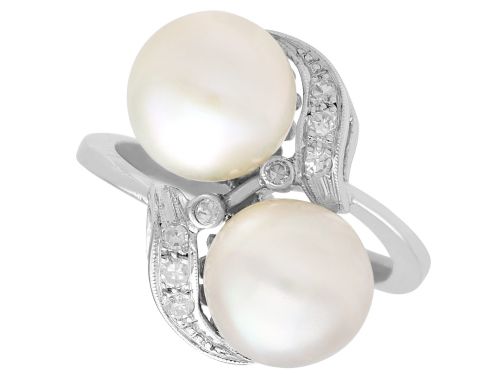
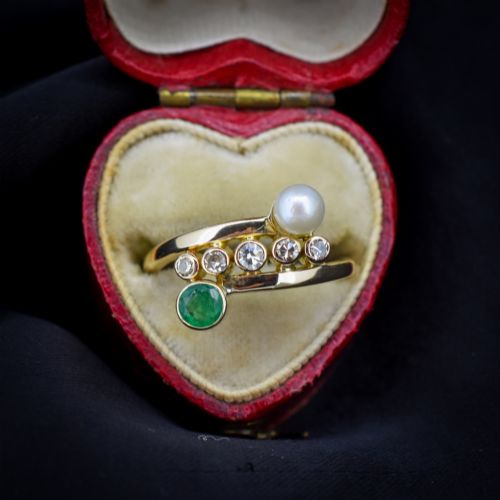
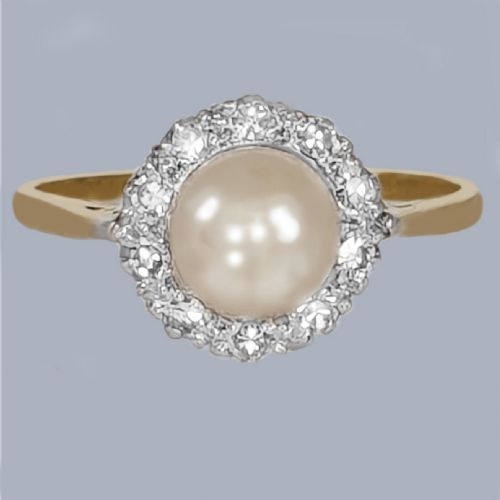
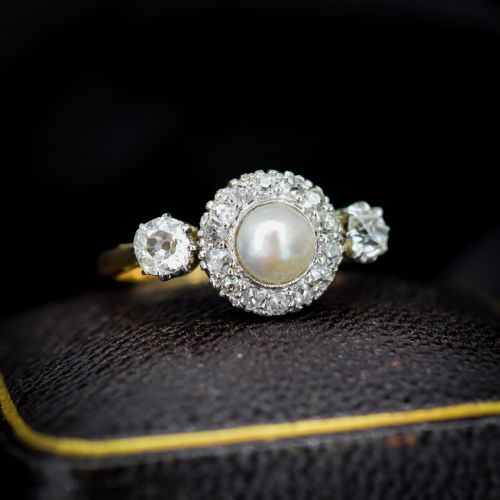
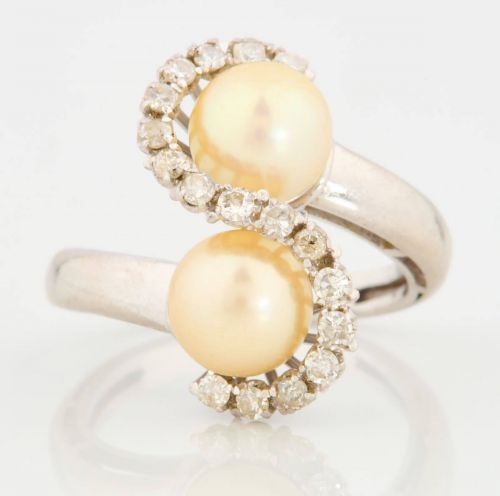
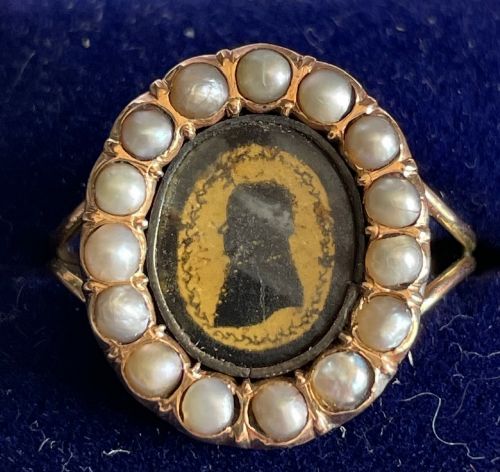
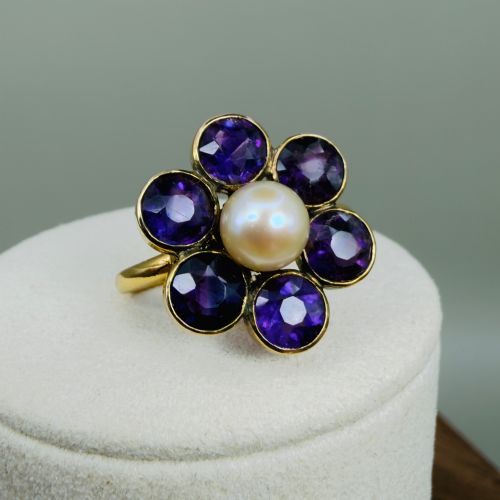
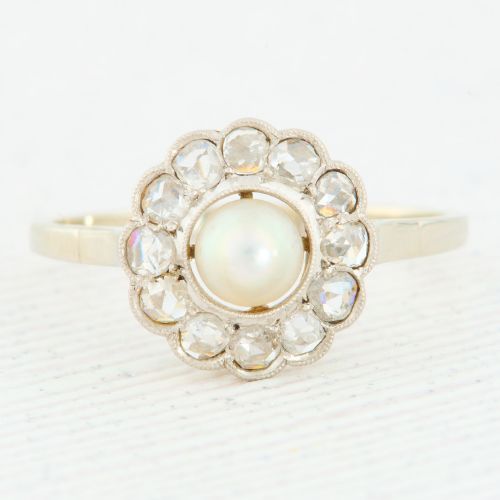
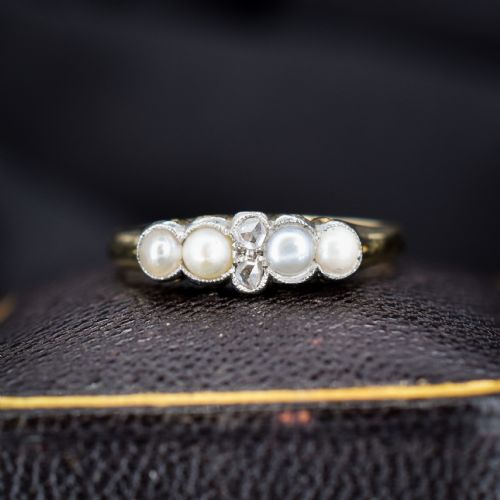
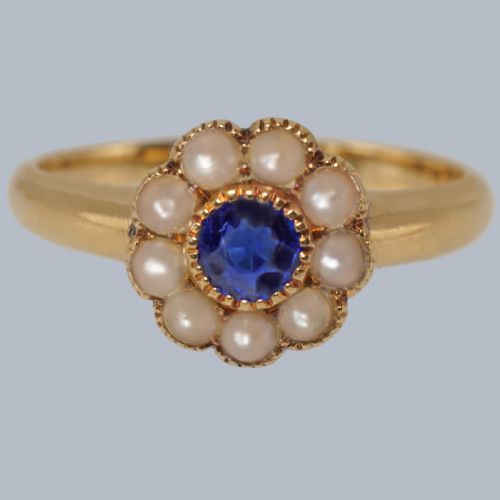
A gold pearl ring unites lustrous pearls with yellow, rose, or white gold settings, spanning periods from the Georgian era through Victorian, Edwardian, and mid-century modern design. Buyers searching for a gold pearl ring will discover diverse forms, ranging from cluster arrangements surrounded by diamonds or coloured gemstones to delicate multi-stone bands and mourning configurations.
The selection reflects historical shifts in taste, moving from Georgian foil-backed arrangements and Victorian memorial pieces to Edwardian delicate filigree and mid-century cocktail styling. Surviving examples demonstrate how makers paired natural and cultured pearls with amethysts, garnets, turquoises, and rubies set in varying carats of gold.
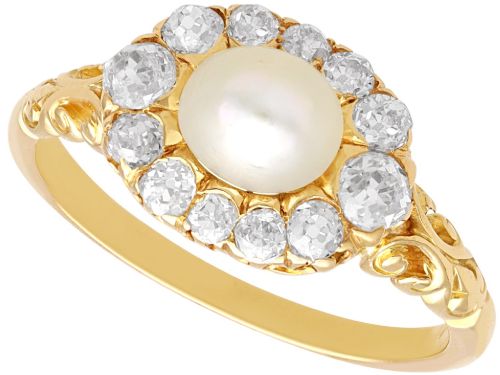
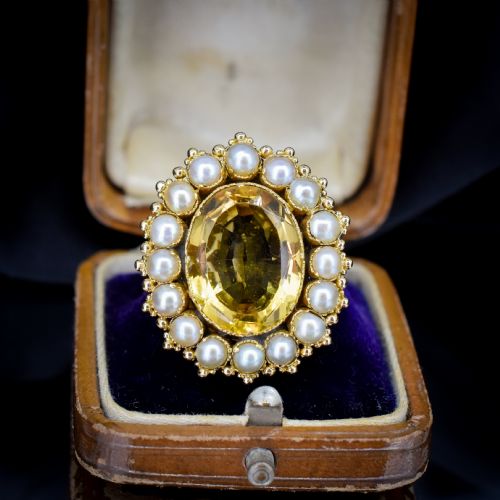
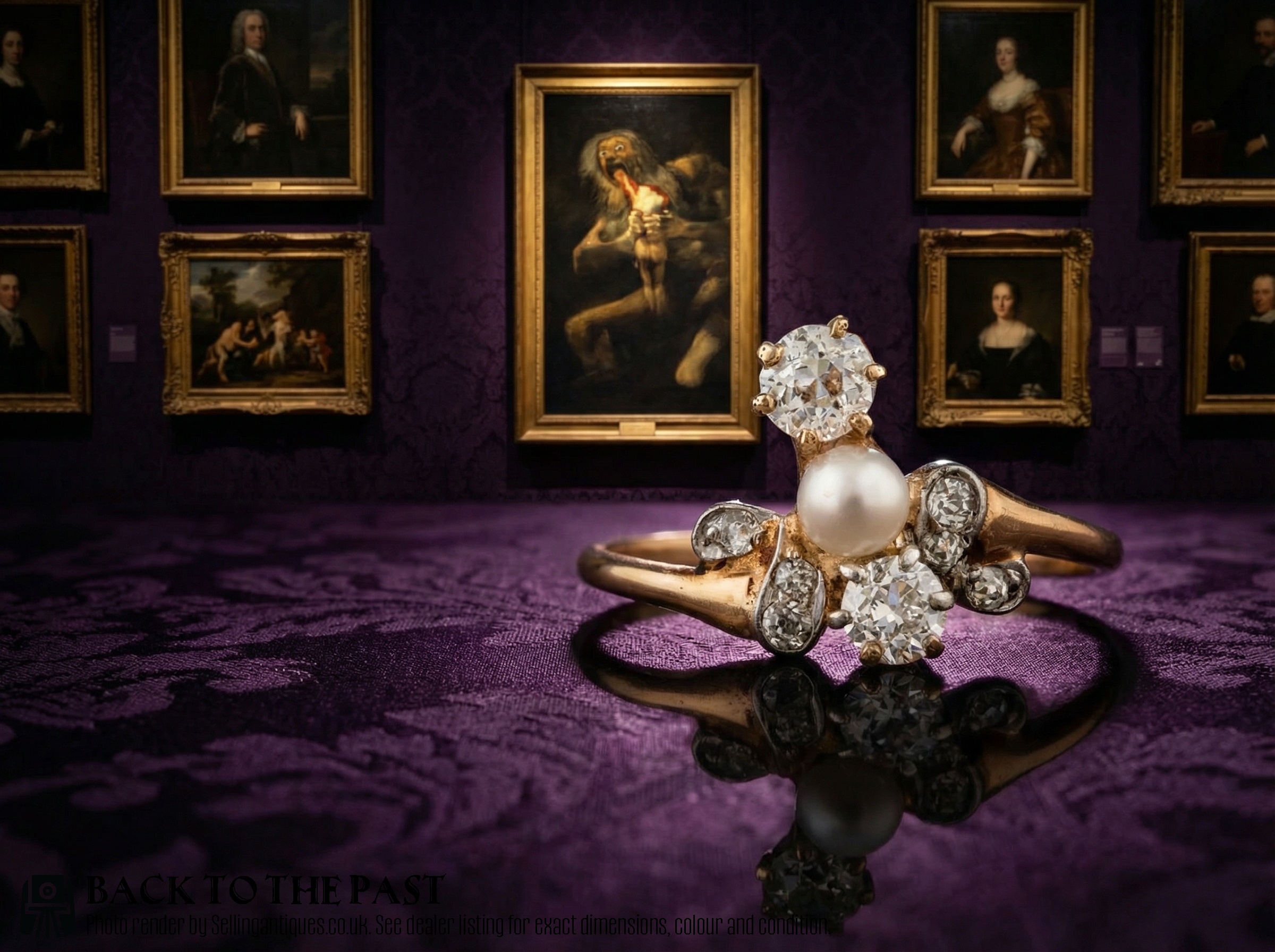
Cluster and halo formats dominate the choices, often positioning a central pearl or gemstone within a geometric border of smaller pearls and diamonds. These configurations highlight the contrast between the iridescent sheen of the pearl and the textured or polished metal surrounding it.
Materials and construction
Goldsmiths utilised various purities of gold, including 9ct, 12ct, 14ct, 15ct, and 18ct alloys, alongside platinum in later Edwardian and Art Deco pieces. Metalwork techniques evolved from hand-beaten bezels and closed-back foil settings in the Georgian period to intricate wirework, claw settings, and platinum-topped gold in the twentieth century.
Pearls used in these rings include natural specimens, saltwater varieties, seed pearls, and later cultured options. Craftsmen secured these delicate organic gems using pegs, adhesives, or tight settings, frequently pairing them with old-cut diamonds, rose-cut diamonds, and coloured gemstones such as emeralds, sapphires, and tourmalines.
Gold Pearl Ring Retail Price Guide 2026
Typical asking prices for gold pearl ring among the pieces listed under this phrase on Sellingantiques today, from the lower quarter to the upper quarter. They describe what is for sale here now, not the wider market.
Listings feature gold pearl rings spanning the Georgian, Victorian, Edwardian, Art Deco, and mid-century periods, utilising yellow, rose, and white gold.
Distinctions in quality
Quality in these pieces rests upon the integrity of the pearl's nacre, its matching uniformity within multi-stone settings, and the precision of the surrounding metalwork. Superior examples retain original components without replacement stones or reconstructed shanks, maintaining their period-appropriate hallmarks or stamps.
The refinement of the hand-carved settings, the symmetry of cluster arrangements, and the secure mounting of delicate seed pearls separate masterwork items from simpler production pieces. Preservation of surface lustre on both the metal and the organic gems dictates the standing of individual rings within the wider historical range.
The Gold Pearl Ring Glossary
- Seed pearl
- Very small natural or cultured pearls, often half-drilled and threaded onto wire or glued in Victorian and Edwardian cluster designs. They create delicate floral or geometric borders around central stones.
- Old-cut diamond
- A hand-faceted diamond cut before modern machinery standardisation, featuring a small table, high crown, and open culet. These stones display a softer, candlelit sparkle characteristic of Georgian and Victorian rings.
- Cluster ring
- A ring design featuring a central gemstone or pearl surrounded by a border of smaller stones. This format maximises visual presence and light reflection on the finger.
- Mourning ring
- A commemorative piece of jewellery containing hair, enamel, or pearls, created to remember a deceased person. Victorian and Georgian examples often incorporate dark stones alongside pearls.
- Rose-cut diamond
- A diamond cut with a flat base and a faceted dome comprising triangular planes. This historic cut provides a subtle, translucent glow rather than modern brilliant scintillation.
Gold Pearl Ring: Frequently Asked Questions
How do I care for a pearl ring?
Pearls are organic and soft, requiring gentle cleaning with a soft cloth rather than chemical dips or ultrasonic baths. Keep them away from perfumes, cosmetics, and household acids to preserve their natural lustre.
Store antique rings individually in padded boxes to prevent the harder gold and diamonds from scratching the pearl surface. Regular inspection by a specialist ensures the settings and holding pegs remain secure.
Are these pearls natural or cultured?
Earlier Georgian and Victorian pieces predominantly feature natural saltwater or freshwater pearls formed without human intervention. Twentieth-century examples increasingly incorporate cultured pearls grown with human assistance.
Distinguishing between them often requires microscopic examination of the drill holes and nacre layers by an experienced gemmologist. Both types hold historical significance within their respective periods of manufacture.
How do I date an antique ring?
Dating relies on a combination of hallmarks, metal purity standards, gemstone cuts, and overall construction techniques. For instance, 15ct gold was commonly used in British jewellery during the Victorian and Edwardian eras before being phased out.
Stylistic cues such as Georgian closed-back foils, Edwardian platinum-topped gold, and mid-century bold geometry provide reliable chronological markers. Comparing the setting style with documented period examples confirms the era of production.
Can I resize an antique gold ring?
Many gold rings can be resized by a skilled jeweller who understands antique construction methods. The presence of delicate side stones, intricate shoulder engravings, or closed-back settings requires careful consideration before any metalwork takes place.
Consulting a specialist ensures the structural integrity of the band and the security of the pearl settings remain uncompromised during the adjustment process.