


Gold Pearl Lavalier Necklace
A gold pearl lavalier necklace brings delicate pendant drops and flowing lines from the late nineteenth and early twentieth centuries to modern necklines.
Gold Pearl Lavalier Necklace
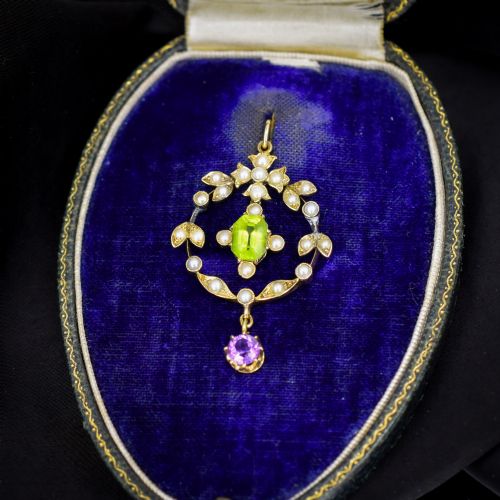
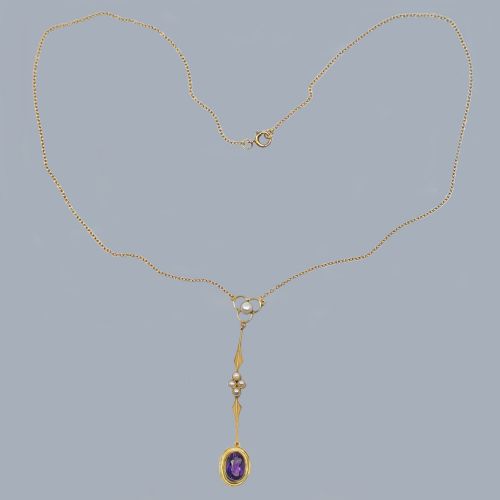
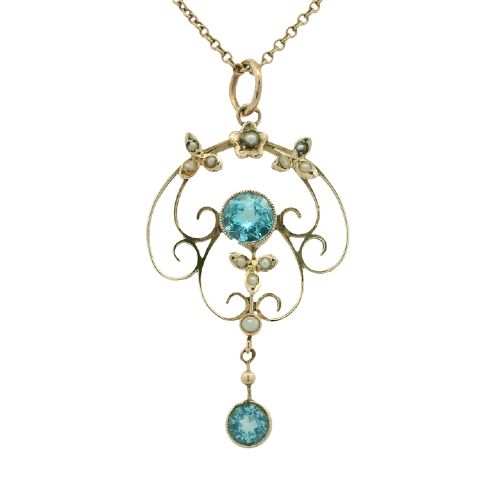
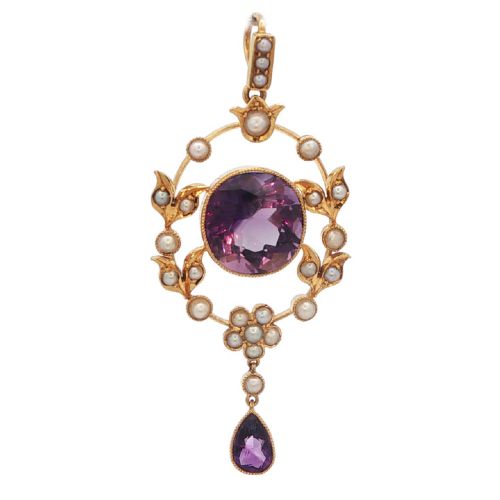
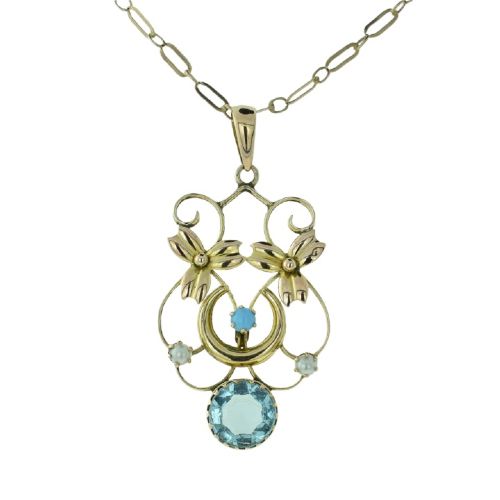
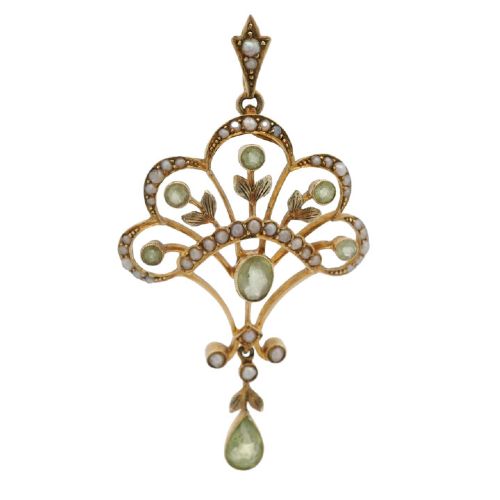
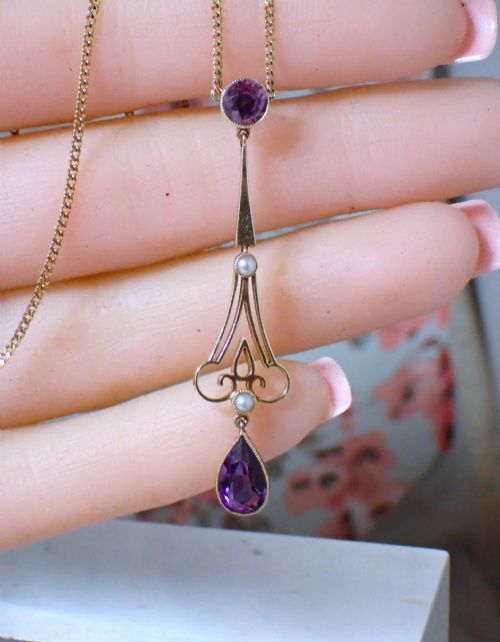
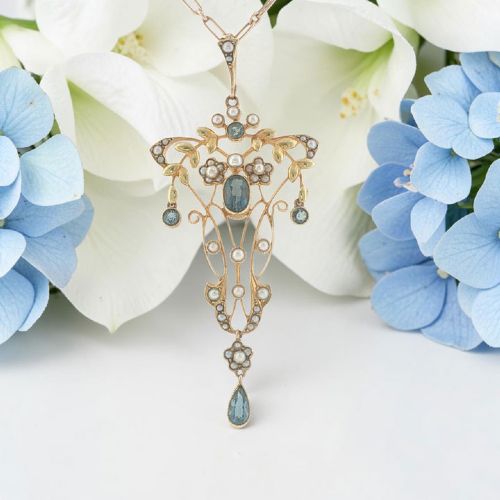
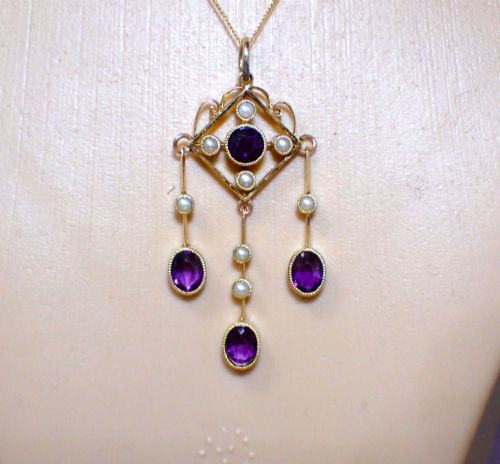
A gold pearl lavalier necklace is a pendant piece defined by its characteristic suspended drop configuration, most frequently appearing in Edwardian and Victorian designs. When looking through these examples, the most common form met is an intricate pendant featuring seed pearls paired with coloured gemstones like amethyst, peridot, and aquamarine.
These items bridge the gap between the late nineteenth century and the interwar decades, taking influence from Victorian opulence, Art Nouveau naturalism, and Arts and Crafts simplicity. The central drop motif swings freely from a fine gold chain or a rigid bar link, creating the characteristic kinetic movement that defines the lavalier style.
Assessing Quality and Craftsmanship
Quality in these pieces is dictated by the fineness of the metalwork and the uniformity and lustre of the seed pearls employed. Finer examples display meticulous attention to detail in the piercing and engraving of the gold frame, ensuring the reverse is finished with the same care as the front.
The selection and matching of the gemstones also determine the distinction of a piece, with well-saturated amethysts and vibrant peridots elevating the overall harmony. Original chains and secure, period-appropriate clasps further distinguish exceptional survivals from later assembled or heavily restored items.
Materials recur in combinations of seed pearls paired with peridot, amethyst, aquamarine, and turquoise.
S. Blanckensee & Son·Murrle Bennett·Hamilton & Co
The Gold Pearl Lavalier Necklace Glossary
- Lavalier
- A style of pendant necklace featuring a central gemstone or ornament suspended below a shorter decorative section, hanging loose on the chain. This drop design gained widespread popularity during the late nineteenth and early Edwardian periods.
- Seed Pearl
- Very small, naturally occurring or early cultured pearls, typically under two millimetres in diameter. They are closely strung or bead-set in tight clusters to form floral or geometric patterns.
- Millegrain
- A jewellery technique involving a border of tiny, raised metal beads along the edges of a setting. This adds a soft, textured finish characteristic of Edwardian fine work.
- Folilate
- Ornamentation or design inspired by leaves and foliage, frequently seen in Art Nouveau jewellery. These curving, botanical motifs mirror organic forms found in nature.
- Suffragette
- Pieces incorporating the characteristic colour triad of green, white, and violet, representing give freedom, white for purity, and violet for dignity. In this context, stones like peridot, seed pearl, and amethyst often signify this movement.
Gold Pearl Lavalier Necklace: Frequently Asked Questions
What is a lavalier necklace?
A lavalier necklace is a pendant design featuring a primary drop that hangs freely from a delicate chain or connector bar. This style gained immense popularity during the Edwardian and Art Nouveau eras for its graceful, dangling silhouette.
The drop element often incorporates swinging components that catch the light with movement. On this page, they commonly combine seed pearls with coloured gems like amethyst and peridot.
Are these necklaces wearable daily?
While these pieces were built with durable gold alloys, their delicate wirework and tiny seed pearls demand mindful wear. They suit special occasions and gentle daily use rather than rigorous physical activity.
Checking the security of the jump rings and clasp periodically ensures the pendant remains safe during wear. Removing the necklace before sleeping or swimming preserves the historic setting.
How can I tell Edwardian from Victorian pieces?
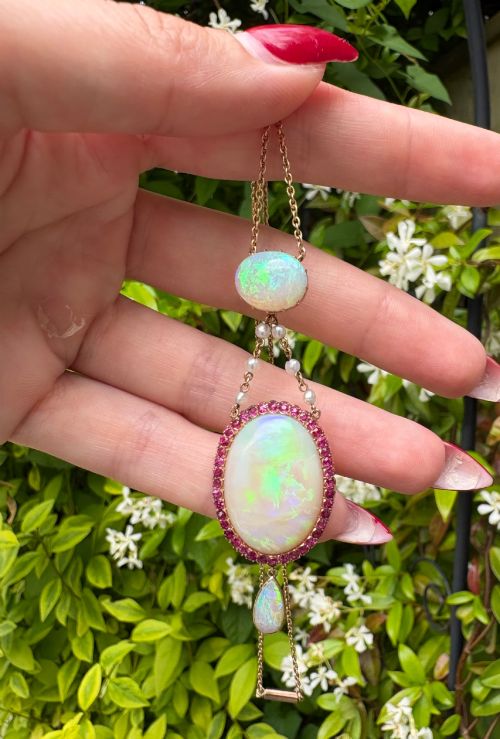
Victorian jewellery generally exhibits heavier, more substantial gold work with romantic or sentimental motifs, spanning darker garnets and rich opals. Edwardian pieces, by contrast, favour lighter platinum and high-karat gold with airy openwork and pastel gemstones.
Art Nouveau influence often bridges the two, introducing whiplash lines and organic plant forms. Examining the back of the pendant and the style of the setting helps reveal the manufacturing period.