


Late Victorian Gold Necklace
A late victorian gold necklace brings together the warm glow of period gold and intricate stone settings, offering a tangible piece of late nineteenth-century ornament.
Late Victorian Gold Necklace
The versions most commonly met on this page date around 1890 and incorporate various gold purities alongside silver settings for stones. Makers of the period often combined necklaces with detachable elements or converted brooches into pendants.
Designs span traditional Victorian motifs and distinct Arts and Crafts expressions. Jewellers utilised yellow gold, rose gold, and occasional gilt metal to structure these wearable items.
How they were made
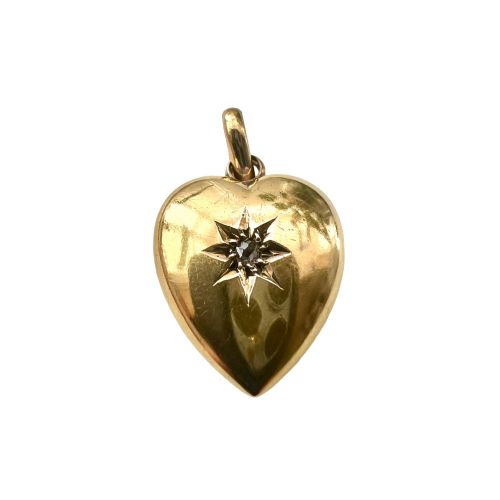
Jewellers constructed these pieces primarily in 15ct gold, 9ct yellow gold, and 9ct rose gold, occasionally integrating silver to back diamond settings. Goldsmiths shaped the metal through casting, wire-work, and sheet fabrication to build foundational chains, crosses, and puffy hearts.
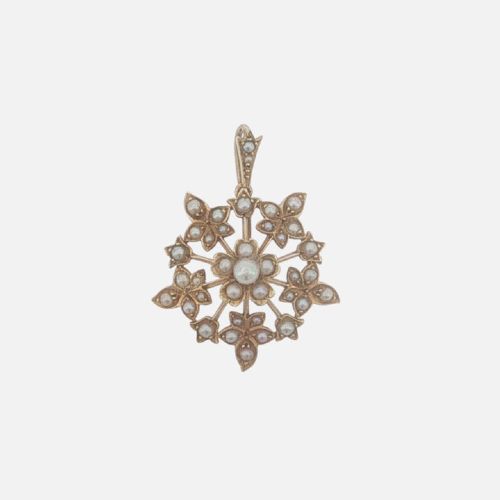
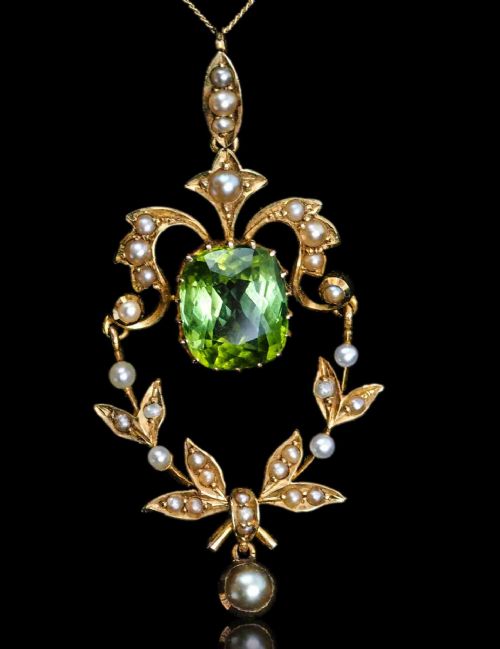
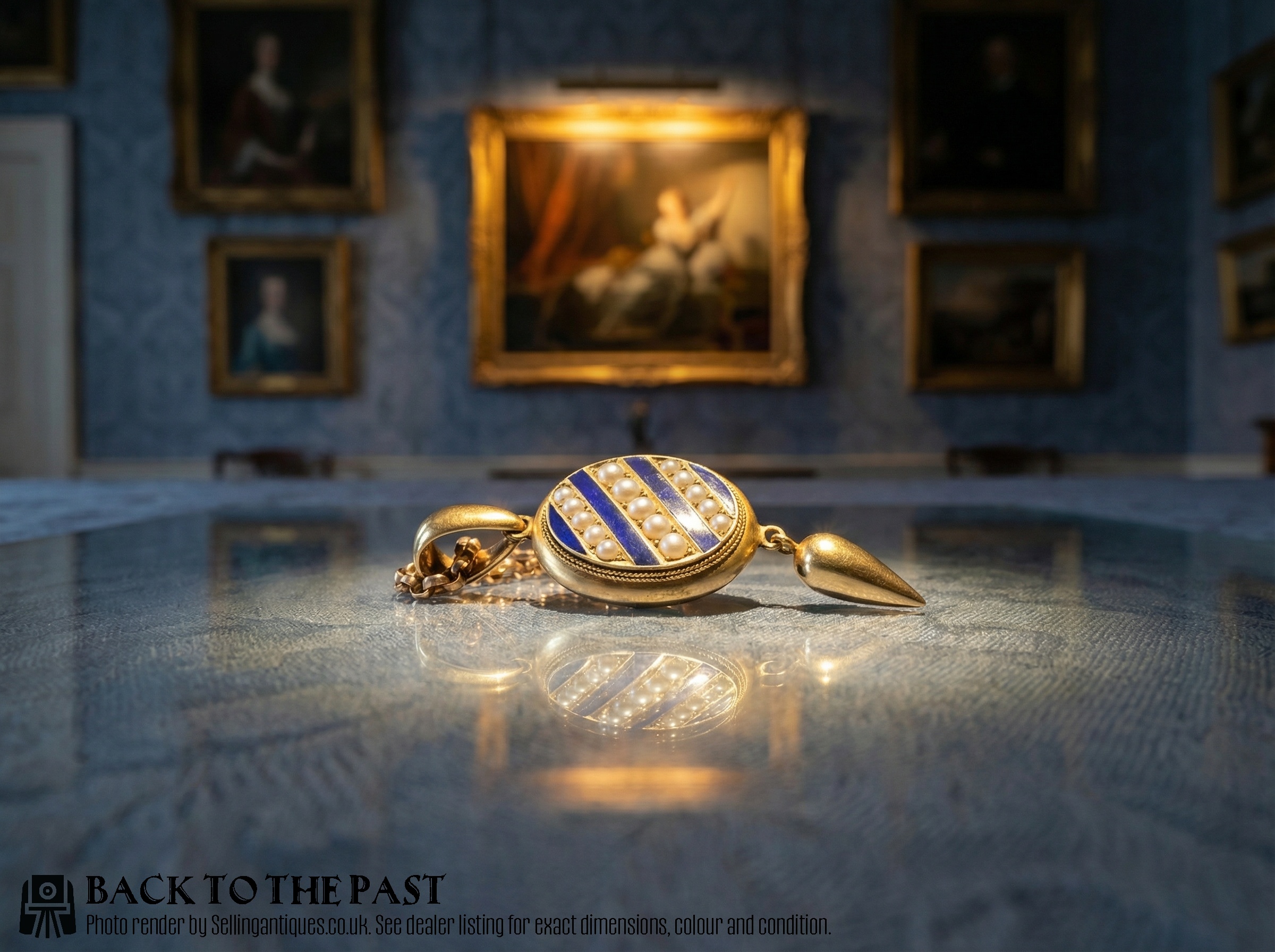
Craftsmen set natural gemstones including diamonds, pearls, seed pearls, opals, peridots, turquoise, emeralds, and garnets directly into the metalwork. Enamel work also appears, adding colour via applied vitreous layers alongside stone clusters.
Listings feature yellow gold, rose gold, and silver metals combined with diamonds, opals, pearls, and enamel across the Victorian and Arts and Crafts styles.
What varies in quality
The fineness of the gold alloy and the integration of gemstone groupings dictate the upper tier of these pieces. Higher-grade examples demonstrate careful stone matching, such as calibrated diamonds or natural conch pearls paired with substantial 15ct gold mounts.
Design complexity and maker attribution separate standard output from superior items. Pieces displaying signed work or distinct Arts and Crafts styling show superior artistic intent compared to simpler production lines.
Murrle Bennett
The Late Victorian Gold Necklace Glossary
- Pendant
- A hanging ornament suspended from a chain or collar. These pieces form a significant portion of the available neckwear.
- Seed pearl
- A very small, natural or cultured pearl used in clusters or floral arrangements. They appear frequently in late nineteenth-century jewellery.
- Brooch pendant
- A dual-purpose piece fitted with a pin and a loop. This allows the wearer to pin the item to clothing or suspend it from a chain.
- Arts and Crafts
- A design movement prioritising handcraftsmanship and simple materials. In these listings, it defines distinct stylistic choices away from heavy Victorian revivalism.
- Hallmarked
- An official stamp indicating metal purity. Such marks provide confirmation of the gold standard used by the maker.
Late Victorian Gold Necklace: Frequently Asked Questions
What periods do these necklaces span?
The pieces span the late nineteenth century, primarily clustering around the 1880 to 1900 window. This era covers both high Victorian ornament and emerging Arts and Crafts aesthetics.
Datings rely on stylistic evidence and occasional hallmarking found on the gold mounts.
How were these necklaces worn?
Owners wore them suspended from chains around the neck or utilised convertible elements like brooch pendants to pin them directly to garments. Some designs integrated interchangeable pendants and lockets.
Many incorporate seed pearls, opals, or diamonds that catches the light during evening wear.
Are the chains original?
Surviving necklaces often combine pendant components with period chains or collar book chains. The listings indicate various configurations including pendants and integrated necklaces.
Exact originality varies from piece to piece depending on past owner alterations.