




Blue Enamel Gold Necklace
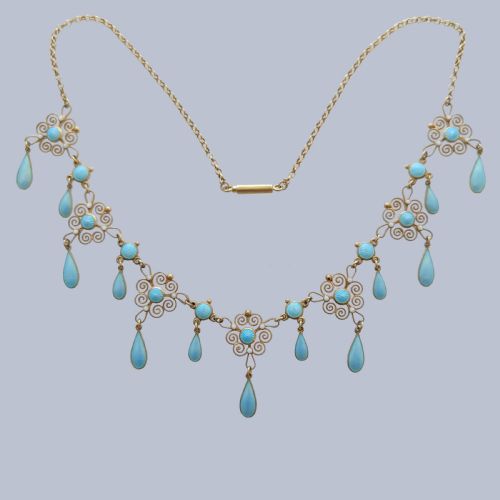
A blue enamel gold necklace brings together rich vitreous colour and precious metal work to create a piece of jewellery that catches the light from across a room.
Blue Enamel Gold Necklace
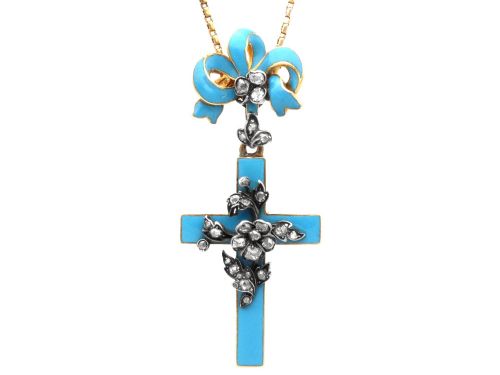
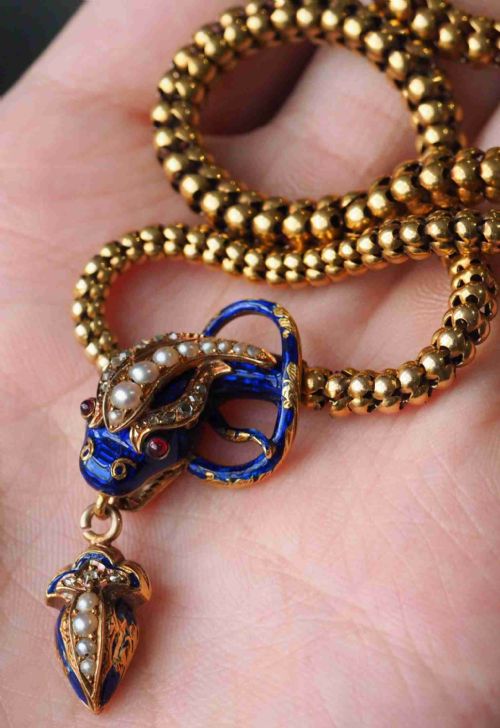
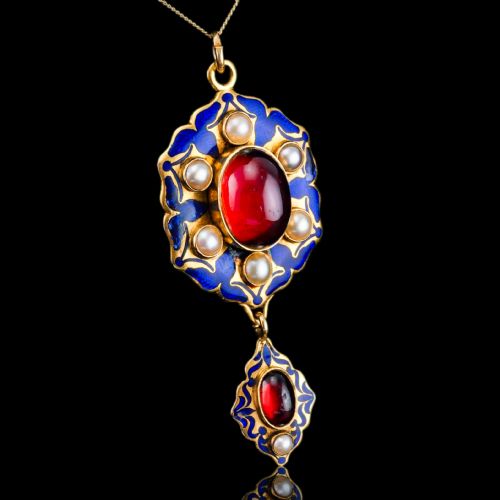
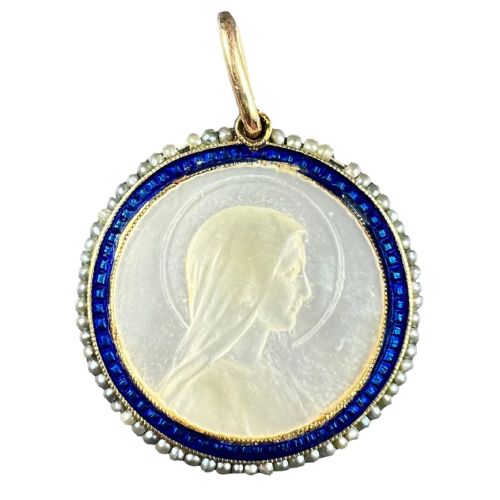
When you search for a blue enamel gold necklace, you enter a field defined largely by Victorian and early twentieth century work, where pendants and lockets dominate the available forms. These pieces often incorporate motifs such as snakes, hearts, crosses and religious iconography alongside geometric designs.
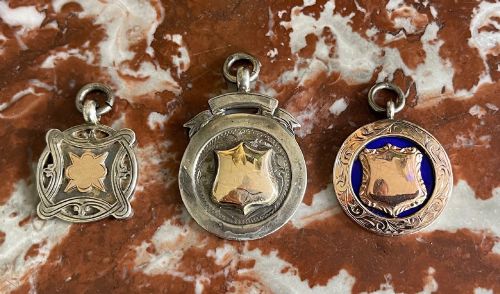
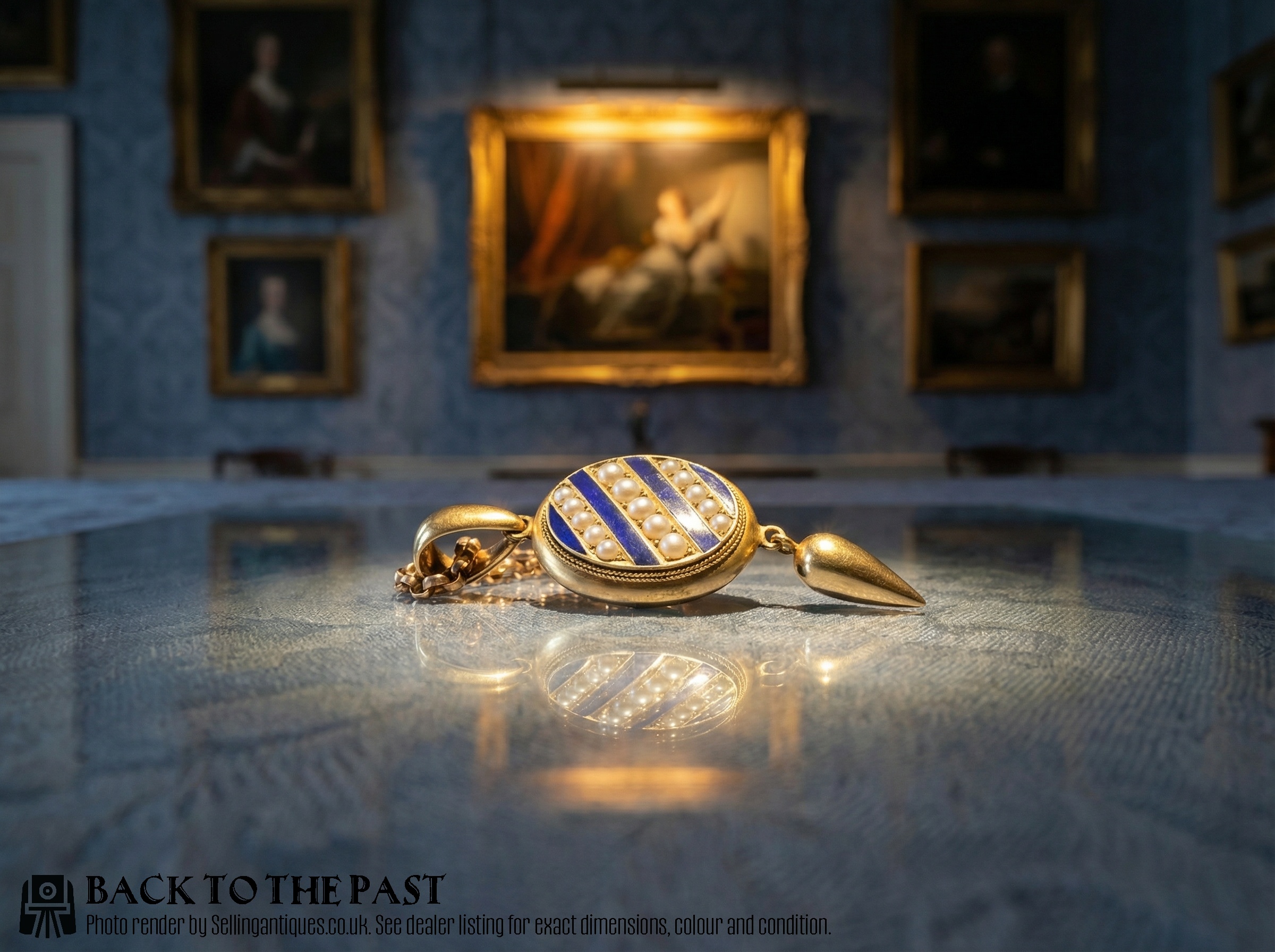
The version you are most likely to meet on this page is a Victorian pendant or a French medal incorporating rich blue enamel paired with either 15ct or 18K gold. Seed pearls and rose cut diamonds frequently accent these designs, adding texture and sparkle to the vivid enamel background.
Earlier nineteenth century examples display a distinct Renaissance Revival influence, whilst later pieces shift towards the translucent cellular effects of plique-a-jour. Across all periods, the combination of blue vitreous enamel and warm yellow gold remains the defining characteristic of the form.
Materials and construction
These items rely on high karat yellow gold, typically marked at 15ct or 18K, providing a durable yet rich foundation for the delicate glass work. Enamel is fused to the metal surface through intense heat, sometimes laid over engine turned guilloche patterns to create depth and movement.
Gems such as seed pearls and rose cut diamonds are then set into the gold framework to complement the deep blue enamel panels. In later French pieces, plique-a-jour techniques omit the backing metal entirely, allowing light to shine straight through the coloured glass compartments like a miniature stained glass window.
Blue Enamel Gold Necklace Retail Price Guide 2026
Typical asking prices for blue enamel gold necklace among the pieces listed under this phrase on Sellingantiques today, from the lower quarter to the upper quarter. They describe what is for sale here now, not the wider market.
Several pieces feature coiled gold snakes with diamond eyes, proving that Victorians loved a bit of subtle drama in their daily accessories.
Distinguishing quality across the range
Quality rests upon the precision of the enamel work and the subtlety of the metal design, where smoother surfaces and even colour distribution separate finer items from simpler production. The crispness of the gold casting and the secure, flush setting of tiny diamonds or pearls also dictate the standing of a piece.
Artistry in the subsidiary details, such as hand engraved borders or complex multi-coloured elements surrounding the blue enamel panels, elevates certain pendants and lockets above standard marketplace examples. The integrity of the glass and the weight of the underlying gold further establish the distinction between everyday items and superior creations.
The Blue Enamel Gold Necklace Glossary
- Enamel
- A glass-like substance fused to metal under high heat to provide permanent colour and decoration. This technique has been utilised for centuries to adorn fine jewellery.
- Plique-a-jour
- An enamelling technique where the enamel is applied without a backing metal, creating a translucent, stained glass effect. It is frequently seen in French pendants from the early twentieth century.
- Guilloche
- An ornamental pattern mechanically engraved into metal beneath translucent enamel to create shimmering wave or sunburst effects. It adds significant visual depth to the surface.
- Seed Pearl
- A very small, natural or saltwater pearl used extensively in clusters and borders on Victorian jewellery. They provide a soft contrast to bright gold and dark enamel.
- Rose Cut
- A vintage diamond cut featuring a flat base and a domed crown with triangular facets. This style was favoured before modern brilliant cuts became standard.
Blue Enamel Gold Necklace: Frequently Asked Questions
How do I care for my necklace?
Store your jewellery in a dry, lined box away from other pieces to prevent the enamel from scratching against hard metals. Avoid wearing it during swimming, cleaning or physical tasks.
Clean the piece gently using a soft, dry cloth rather than chemical dips or ultrasonic baths, which can damage old enamel and delicate pearls.
How can I date my pendant?
Dating relies heavily on stylistic cues, hallmarks, and the specific types of enamel or gemstone settings used in the construction. Victorian pieces often feature heavy gold work and mourning motifs, whilst later twentieth century examples lean towards lighter frames and translucent plique-a-jour.
Examining the clasp, chain loop and any maker marks on the reverse of the gold frame will often narrow down the decade of production.
What is Holbeinesque style?
Holbeinesque jewellery draws inspiration from sixteenth century designs associated with the Tudor court and Hans Holbein the Younger. These pieces feature elaborate geometric gold work, suspended pearls and central enamel plaques.
Victorian revivalists revived this opulent aesthetic during the mid-nineteenth century, creating rich pendants and necklaces with strong historical references.