


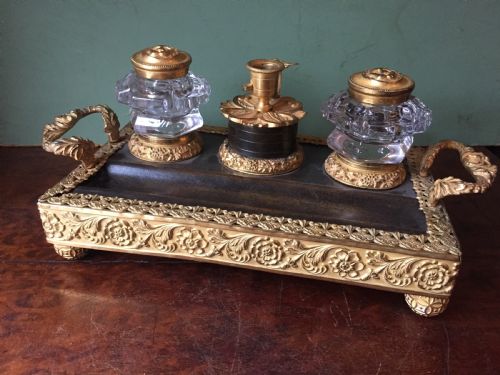
Gold Mounted Writing Desk
These gold mounted writing desk examples combine fine French cabinetmaking with gilt bronze fittings, offering a practical writing surface with decorative presence.
Gold Mounted Writing Desk
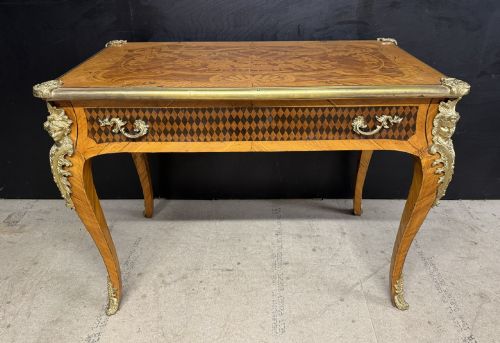
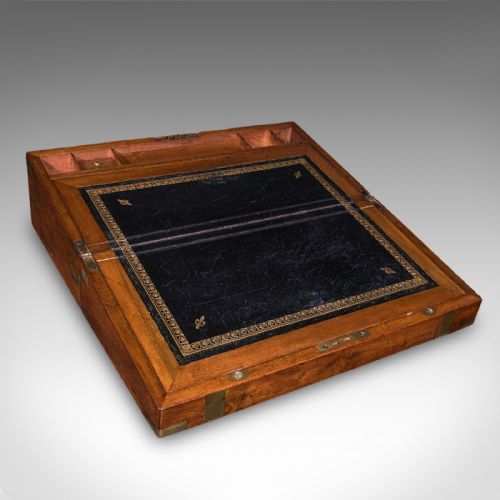
A gold mounted writing desk encompasses bureau plats, writing tables, and writing slopes produced across the nineteenth and early twentieth centuries. These pieces typically take the form of freestanding tables or smaller fall-front writing desks intended for domestic studies or boudoirs.
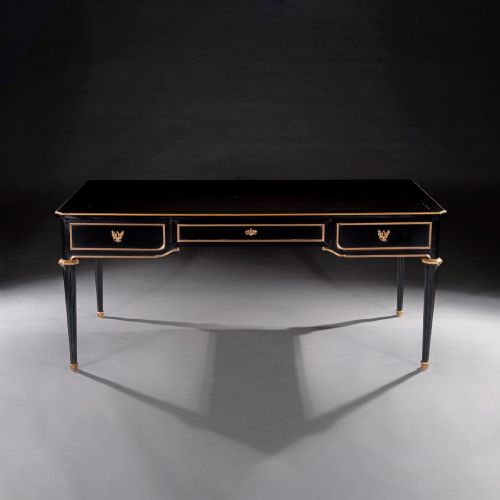
The versions most commonly found here originate from French workshops adhering to Louis XV, Louis XVI, and Empire design traditions. They combine timber carcases with metal mounts, operating primarily as functional writing furniture that doubles as decorative reception room centerpieces.
Materials and Construction
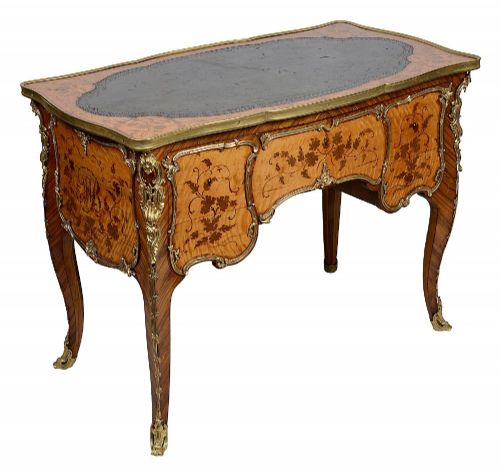
Maker workshops built these pieces using dense hardwoods such as mahogany, kingwood, walnut, and ebonised wood, frequently applying marquetry veneers in geometric or floral patterns. Carcases often received leather writing surfaces inset into the top surface for daily use.
Decoration relies heavily on cast metalwork, utilising ormolu and gilt bronze mounts secured to corners, legs, and aprons. Brass inlay appears on specific designs, combining with timber to create structured contrast.
A special order fountain pen occasionally slips into the desk category, proving that writers needed proper tools for their paperwork.
Evaluating the Workmanship
Quality reveals itself in the precision of the bronze or ormolu mounts and the crispness of their chasing. Finer examples display high-relief metalwork that fits flush to the timber contours without gaps.
Cabinetwork standards appear in the selection of veneer grains and the stability of the timber carcase. Pieces attributed to prominent makers or executed with intricate marquetry patterns generally demonstrate superior internal joinery and material selection.
Paul Sormani·Montblanc·Garrards
The Gold Mounted Writing Desk Glossary
- Bureau plat
- A flat-topped writing table, typically with drawers in the frieze, designed to stand free in a room. This form dominates French nineteenth-century production.
- Ormolu
- Gilt bronze mounts applied to furniture for decorative effect. The metal is cast and chased before receiving a gold amalgamation layer.
- Marquetry
- Decorative veneer work arranged in pictorial or geometric patterns across the surface of the desk. Artisans cut various woods to fit together precisely.
- Writing slope
- A portable or table-top box with a sloping lid that opens to reveal storage compartments and a writing surface. These range from Regency walnut examples to fitted boxes.
- Ebonised wood
- Timber treated to imitate ebony, creating a dense black finish popular in nineteenth-century revival furniture. It provides a dark contrast to gilt bronze mounts.
Gold Mounted Writing Desk: Frequently Asked Questions
What is a bureau plat?
A bureau plat is a freestanding writing table with a flat top and one or more rows of drawers beneath the writing surface. These pieces were designed for central placement in a room rather than against a wall.
They serve as functional writing desks while displaying decorative veneers and metal mounts on all sides.
How do I care for leather desk inserts?
Leather writing surfaces require minimal moisture and protection from direct sunlight to prevent drying and cracking. Gentle dusting keeps the surface clean.
Conditioning creams formulated for leather can be applied sparingly to maintain suppleness over time.
What is the difference between ormolu and gilt bronze?
Ormolu and gilt bronze refer essentially to the same material process of applying gold to a bronze base. The term ormolu specifically denotes the historic mercury gilding technique used on antique furniture.
Both materials provide a bright golden finish that resists tarnish on nineteenth-century desks.
Where were these writing desks used?
These desks were used primarily in private libraries, drawing rooms, and studies for correspondence and administrative tasks. Their finished backs allowed them to sit in the middle of a room.
They functioned both as utilitarian writing furniture and as status symbols in wealthy households.