



Gold Mother of Pearl
Gold mother of pearl objects combine iridescent nacre with precious metal settings across periods from the Georgian era to the mid-twentieth century.
Gold Mother of Pearl
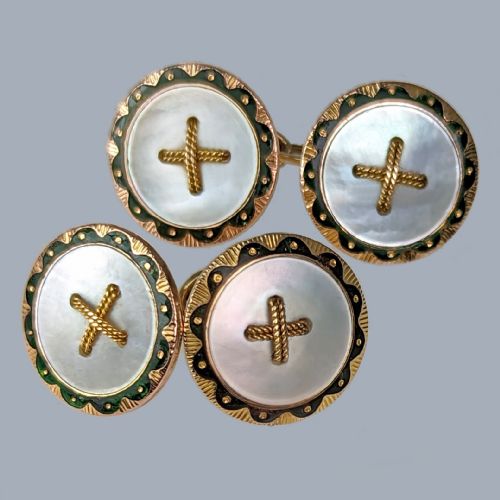
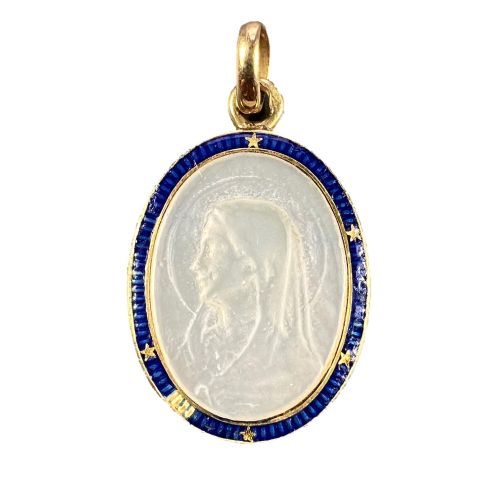
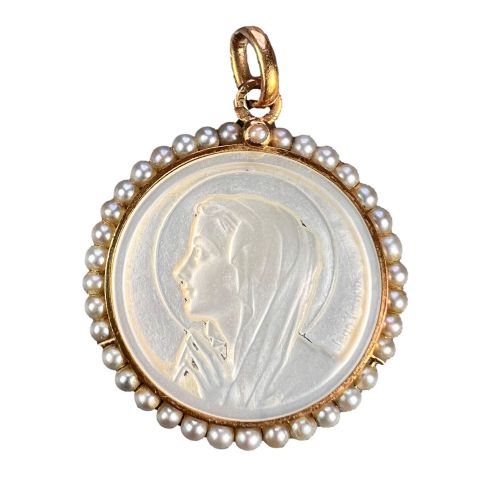
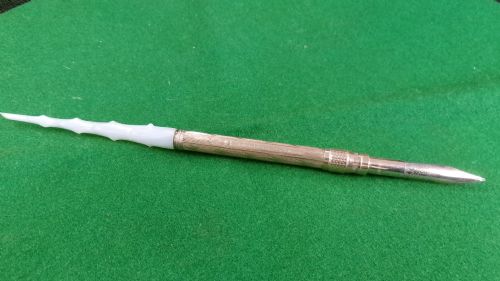
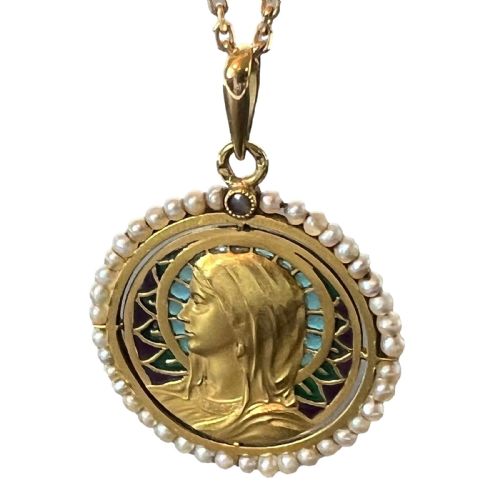
When you search for gold mother of pearl, you encounter personal items and decorative pieces that merge shimmering shell with yellow, white or rose gold. These objects range from delicate religious pendants and cufflinks to opera glasses and pocket items.
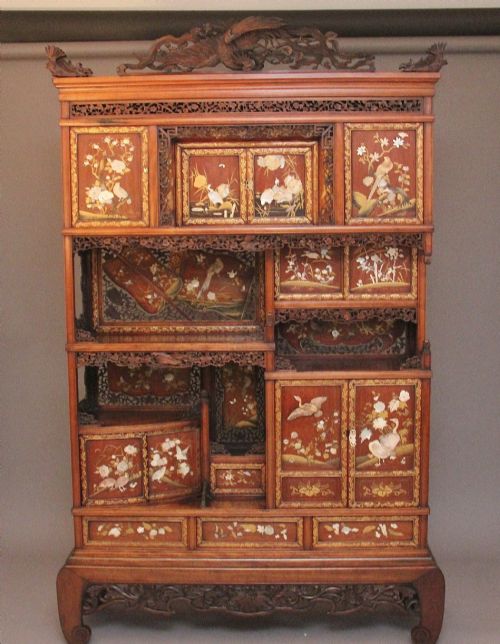
The pieces on this page span the Victorian, Edwardian and Art Deco periods, alongside French antique examples and Japanese Meiji works. You meet small wearable accessories more often than large furniture pieces.
Many items incorporate gemstones such as diamonds, sapphires and turquoise alongside enamel work. The underlying shell provides an iridescent background that catches light differently depending on the angle.
How they were made
Artisans shaped thin plates of mother of pearl from marine shells, mounting them onto frames of nine-carat or eighteen-carat gold, brass or gilt bronze. They secured the iridescent panels using twisted wire, bezels or tiny pins.
Makers added detail through hand engraving, guilloche enamel and plique-a-jour, letting light pass through translucent coloured sections. Papier-mache and lacquer formed the dark foundation for inlaid trays and screens, providing contrast to the pale shell.
What varies in quality
The grade of an item depends on the uniformity of the nacre and the precision of the metalwork surrounding it. Artisans who selected shells with deep, unblemished iridescence produced pieces that retain strong visual depth.
Maker marks, clear hallmarking on the gold components and signed optics indicate higher workshop standards. The inclusion of supplementary materials like calibrated diamonds or fine enamel elevates the standing of a piece.
Solomon Blanckensee Son·Mabie Todd And Co·Alexander Clark·Aikin Lambert
The Gold Mother of Pearl Glossary
- Mother-of-Pearl
- The iridescent inner layer of mollusc shells, valued for its shifting play of colour. It serves as the primary decorative surface for many Victorian and Edwardian accessories.
- Guilloche Enamel
- A decorative technique where transparent enamel is laid over engine-turned metal. This creates repeating geometric patterns beneath the glossy surface.
- Plique-a-Jour
- An enamelling technique resembling stained glass, lacking a backing metal to allow light through. It frequently appears in fine Edwardian pendants.
- Papier-Mache
- A composite material made from paper pulp or sheets mixed with glue, pressed and dried. It forms the dark, polished body of nineteenth-century trays and small furniture.
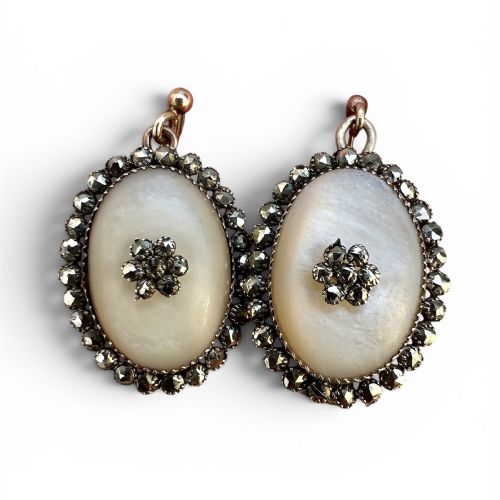
- Marcasite
- Small faceted pyrite stones set into silver or gold mounts to resemble cut steel. They provide sparkle around central shell panels.
Gold Mother of Pearl: Frequently Asked Questions
How do I clean gold mother of pearl items?
Wipe the surface gently with a soft, damp cloth to remove dust without scratching the delicate nacre.
Avoid harsh chemical dips or ultrasonic cleaners because they damage organic shell and weaken gold settings.
Are these pieces fragile?
The shell layer is thin and can crack under sharp impacts or sudden pressure.
Store items individually in padded boxes to protect both the pearl panels and the surrounding gold mountings.
How can I date an Edwardian piece?
Look for hallmarks on the gold components, registration numbers or maker stamps that link to specific London or Birmingham assay offices.
Style indicators like delicate platinum settings combined with yellow gold also point towards the early twentieth century.
What is the difference between Victorian and Art Deco designs?
Victorian items tend to feature ornate floral motifs, deep engraving and rich romantic symbolism.
Art Deco examples favour geometric lines, symmetry and streamlined mountings with contrasting gemstones.