
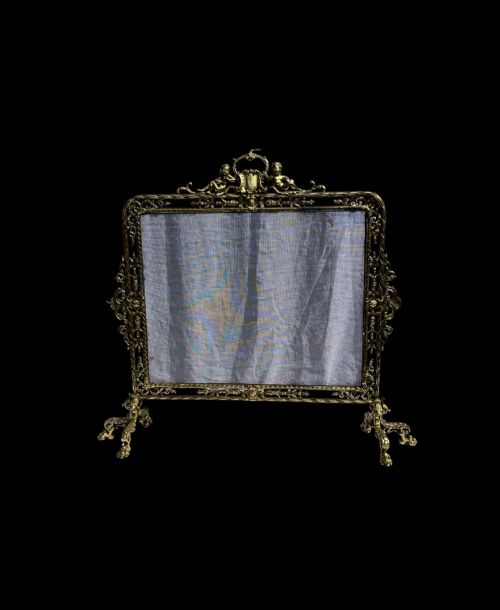
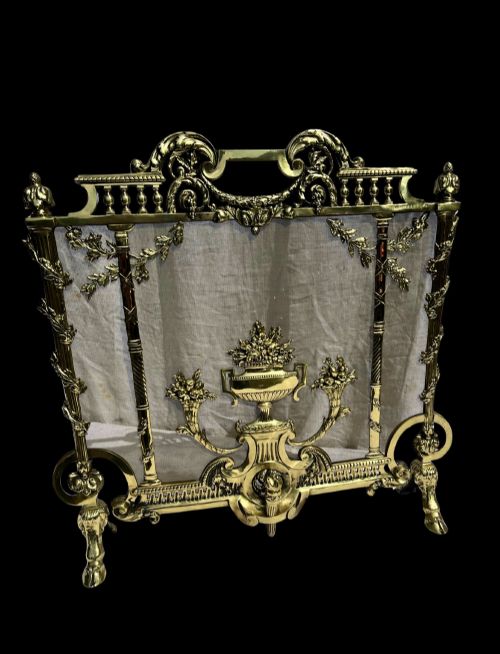
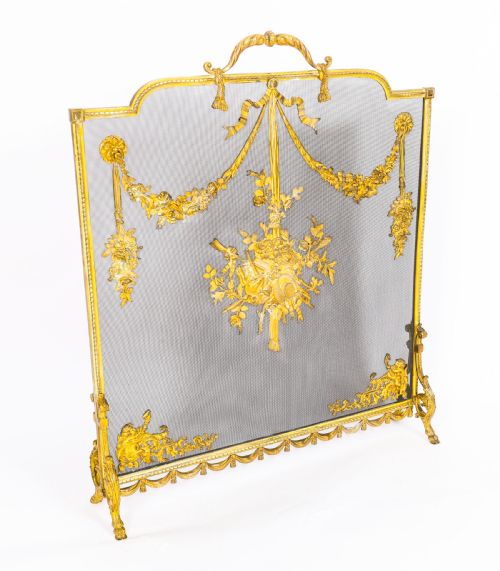
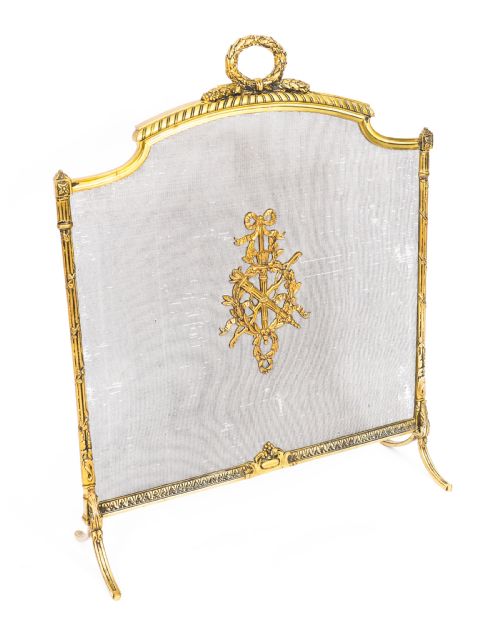
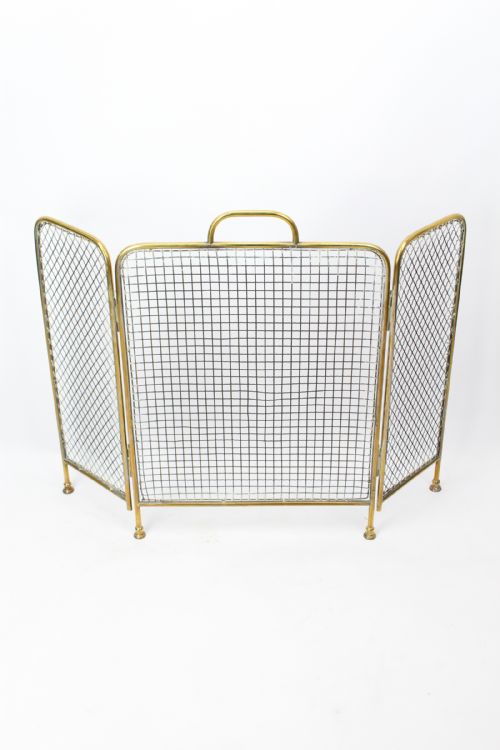


Gold Mesh Fire Screen
A gold mesh fire screen stands as a functional centrepiece of the hearth, combining protective wire mesh with decorative brass or gilt bronze frames.
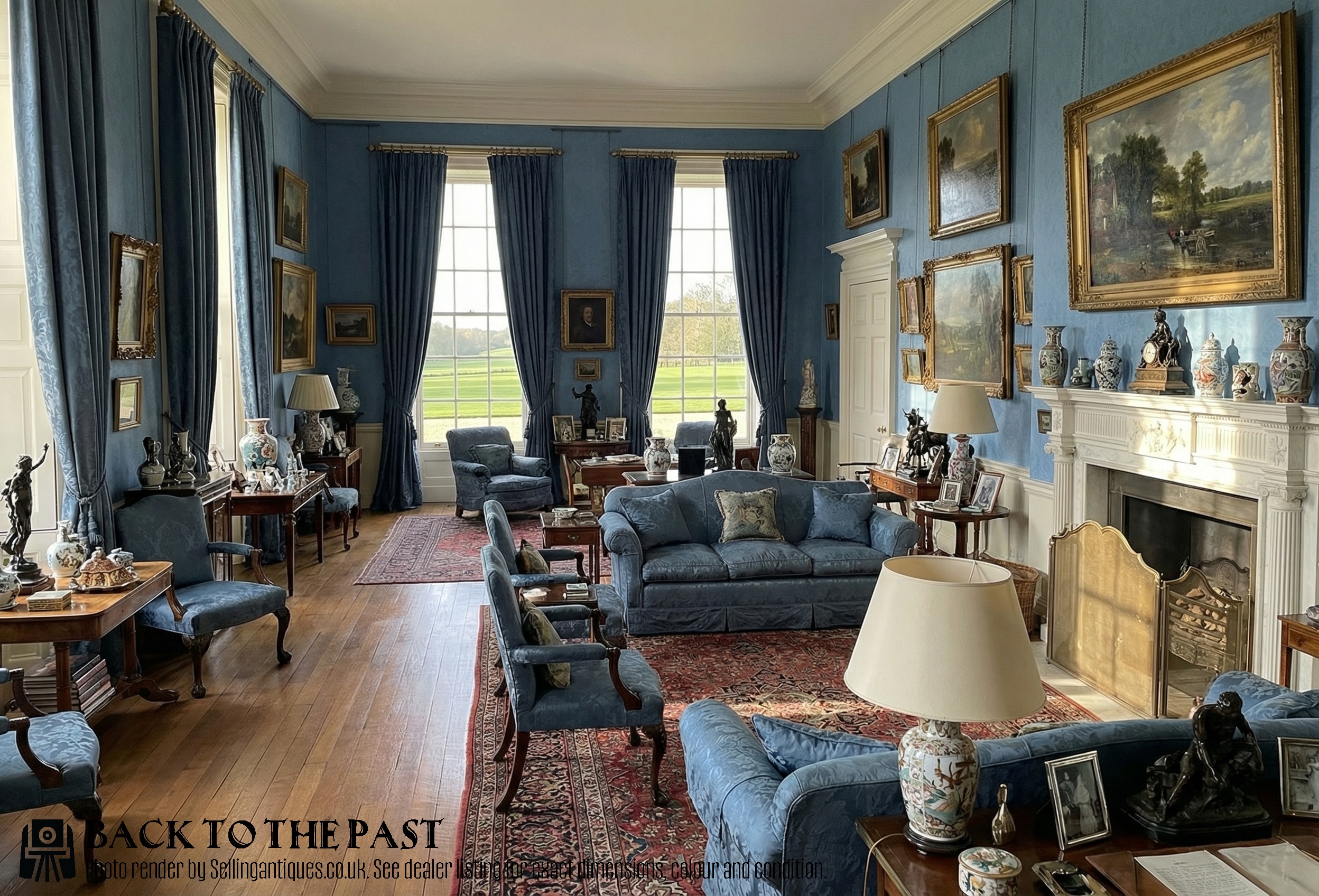
Gold Mesh Fire Screen
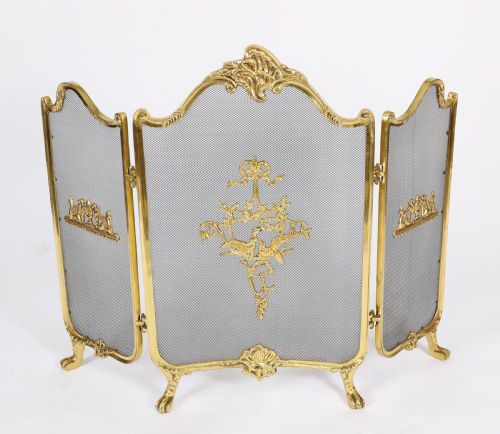
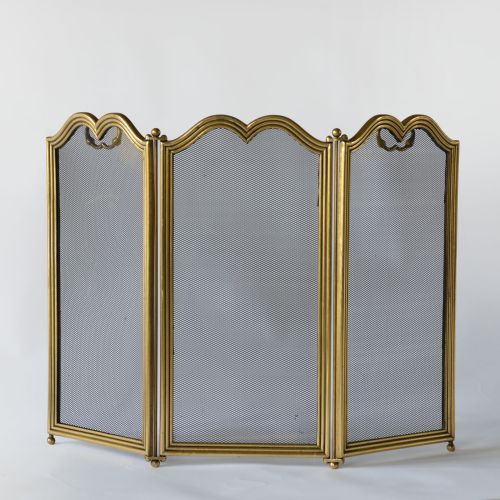
A gold mesh fire screen serves as a physical barrier for the fireplace while introducing metallic warmth and decorative detail to a room. These pieces appear in forms ranging from simple single panels to tripartite folding guards designed to contain sparks safely.
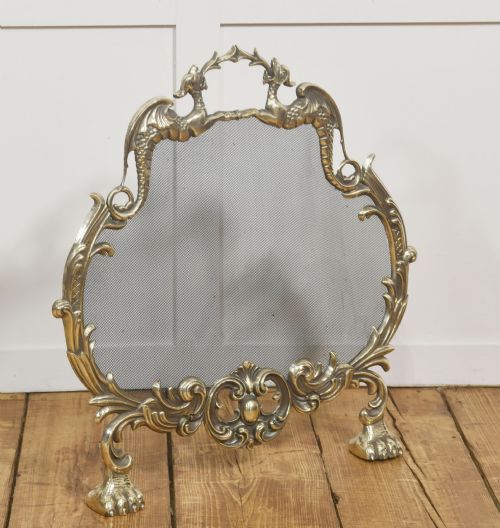
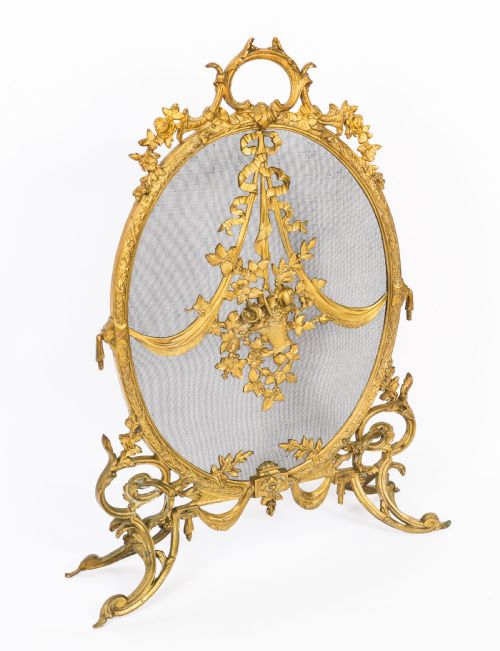
Most examples found here date from the nineteenth century, including Victorian pieces alongside French designs in the Rococo, Louis XVI, and Empire Revival styles. The selection leans heavily towards brass frames and wire mesh panels, often incorporating motifs such as flaming torches, musical trophies, and dolphins.
Materials and construction
Makers constructed these screens primarily using brass, gilt bronze, and various forms of wire mesh, including steel and iron variants plated or finished to resemble gold. Frames were cast, chased, or formed into intricate scrollwork and floral patterns characteristic of nineteenth-century revival styles.
The mesh panels were securely woven and fitted into rigid metal frameworks to withstand hearth temperatures while maintaining transparency. Folding models utilised robust hinges to allow the side wings to adjust easily around the fireplace opening.
Listings feature pieces spanning the nineteenth century into the early twentieth century, incorporating Victorian, Edwardian, and French revival styles.
Assessing quality and craftsmanship
Quality in a gold mesh fire screen rests upon the crispness of the casting and the weight of the metal frame. Finer examples display deeply chased ornamentation and substantial gilt bronze or heavy brass construction rather than thin, pressed sheet metal.
The sophistication of the design dictates the overall standard, with elaborate French Rococo or Empire Revival models exhibiting greater sculptural detail. The integrity of the mesh and the smoothness of any folding hinges also distinguish superior examples.
The Gold Mesh Fire Screen Glossary
- Gilt bronze
- Metal alloy coated with a thin layer of gold, commonly utilised in French decorative arts to achieve a rich metallic finish. It provides a durable surface that resists tarnishing near the hearth.
- Tripartite
- Composed of three distinct sections, typically seen in folding fire screens that feature a central panel flanked by two hinged wings. This configuration allows the guard to surround the hearth opening securely.
- Rococo Revival
- A nineteenth-century design movement inspired by eighteenth-century French styles, characterised by asymmetrical scrollwork, C-scrolls, and naturalistic plant motifs. It heavily influences the ornamentation of many brass fire screens.
- Spark guard
- An alternative term for a fire screen utilising fine wire mesh designed to prevent embers from escaping the fireplace. These screens prioritize protective utility while maintaining visibility of the fire.
Gold Mesh Fire Screen: Frequently Asked Questions
How do I clean a brass fire screen?
Dust the wire mesh gently with a soft brush and wipe the brass frame with a dry or slightly damp cloth to remove soot and ash accumulation.
Avoid abrasive cleaners that can strip the original metal finish or damage the delicate weave of the mesh.
Are these screens suitable for open fires?
Most antique fire screens function primarily as spark guards and decorative accessories for traditional hearths during use.
Ensure the metal mesh is sturdy enough to contain stray embers before placing it near an active, high-heat fire.
What is the difference between single panel and folding screens?
Single panel screens stand flat before the fireplace opening, offering a fixed decorative barrier that suits smaller hearths.
Folding screens utilise multiple hinged sections that adjust to angle around the fire, providing broader coverage and greater stability.
How do I date a nineteenth-century fire screen?
Dating relies on identifying stylistic markers such as Victorian proportions or French revival motifs alongside manufacturing techniques like casting methods and hinge types.
Comparing the decorative details to documented nineteenth-century design periods helps narrow the production era.