


Gold Marble Hallway Table
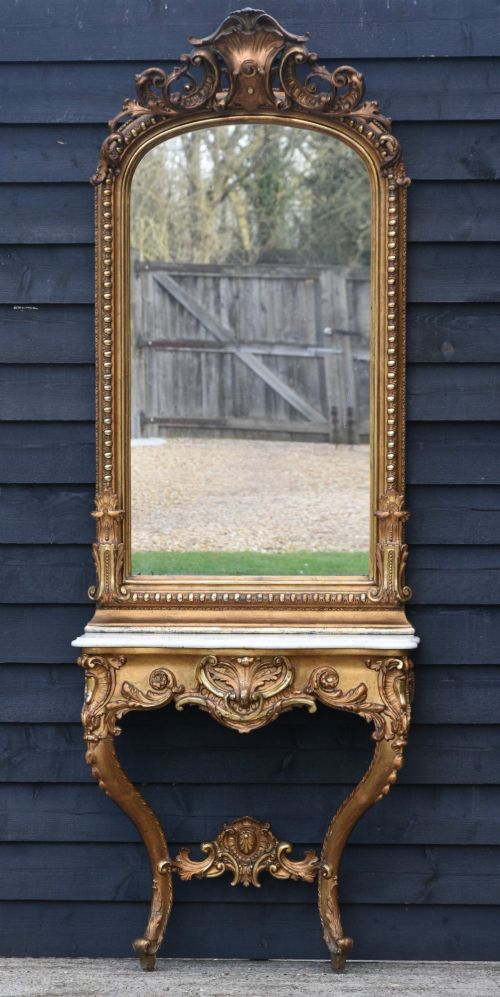
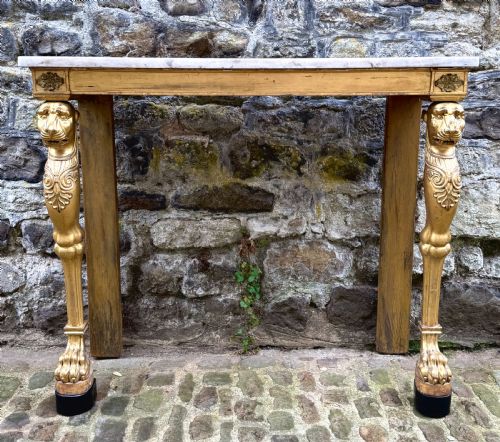
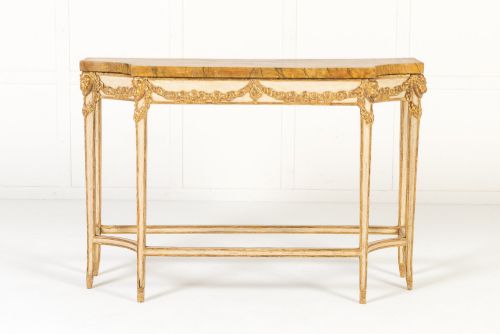
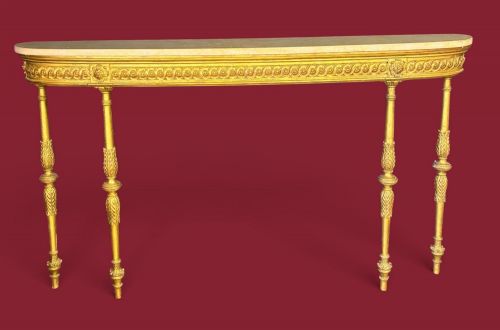
These gold marble hallway table pieces bring architectural presence and classical weight to an entrance, combining lustrous gilded surfaces with cool stone tops.
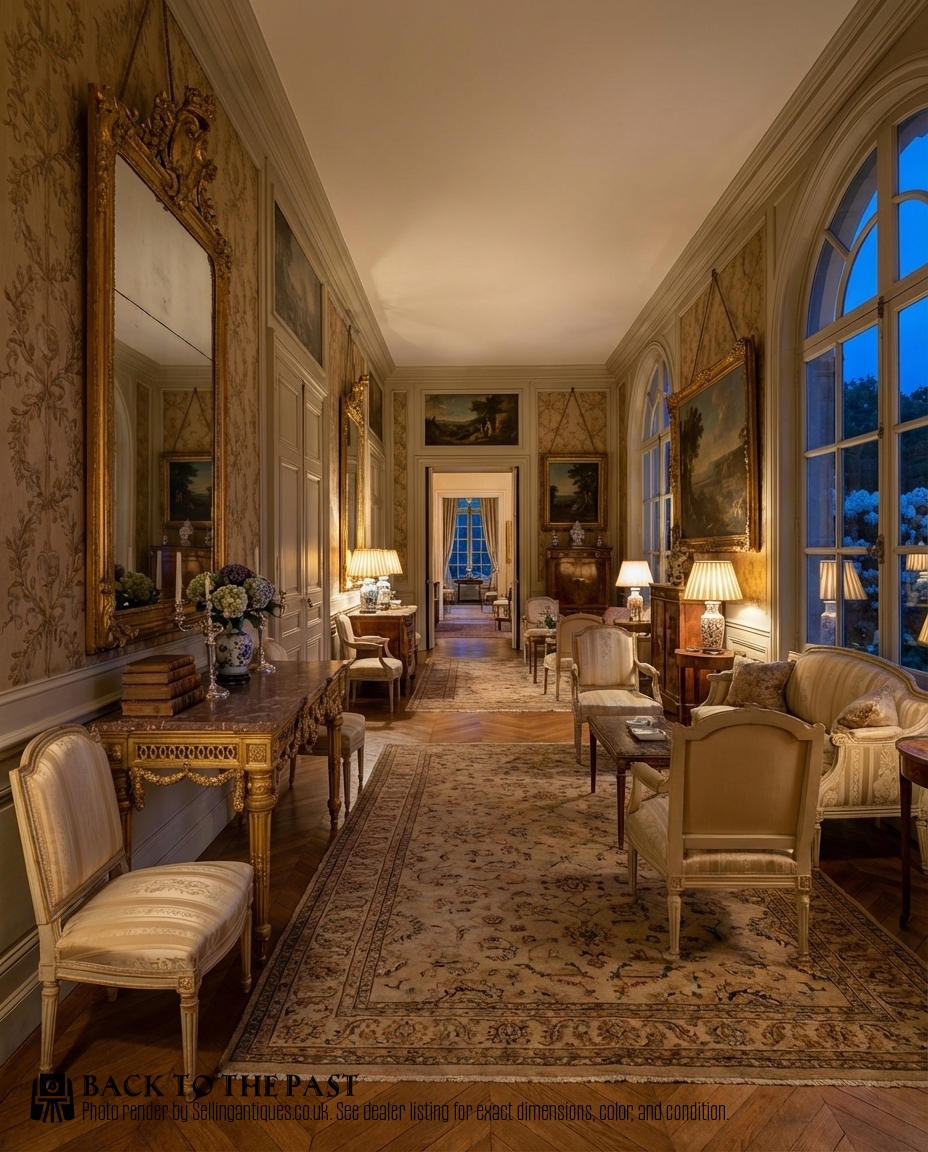
Gold Marble Hallway Table
When you search for a gold marble hallway table, you are looking at console tables and matching mirror sets designed for narrow spaces and entrance halls. The pieces on this page span the nineteenth century, Regency era, and Victorian period, drawing on French Rococo, Louis XVI, and Neoclassical styles.
The most common form you will meet is the console table with a marble top, frequently paired with a pier mirror. They appear in giltwood, painted wood, and gesso finishes, often featuring serpentine outlines or demi-lune shapes tailored for hallway placement.
How they were made
Carved wood provides the structural base for the giltwood and painted examples, shaped into elaborate scrolls, foliage, and classical motifs. Artisans applied gold leaf or gesso layers to the carved surfaces to create the reflective, metallic finish characteristic of these tables.
Stone tops, including rouge marble and Sienna marble, were cut and polished to fit the wooden frames, providing a heavy, durable surface that contrasts with the ornate woodwork beneath.
Listings feature items from the 19th Century, Regency, Victorian, and 1900 periods, constructed in giltwood, marble, gesso, glass, and painted wood.
What varies in quality
The depth and crispness of the carving distinguish finer examples from simpler production, particularly in the rendering of acanthus leaves, scrollwork, and figurative details. Superior pieces show precise joinery and well-preserved gilding that retains its warmth and texture across the wooden structure.
The choice and thickness of the marble top also influence the character of the piece, with richly figured stone varieties adding depth that plain slabs lack.
The Gold Marble Hallway Table Glossary
- Console table
- A table designed to stand against a wall, traditionally fixed with brackets or resting on front legs. They suit hallways and entrance spaces where floor depth is limited.
- Giltwood
- Timber coated with gold leaf or gold paint. It reflects light effectively in darker entrance halls.
- Demi-lune
- Half-moon shape. Tables in this form sit flush against a wall with a curved front edge.
- Pier mirror
- A large tall mirror designed to hang on the wall space between windows or above a console table. Sets combine the mirror and table into a unified architectural display.
- Serpentine
- A line or edge that curves outward and then inward in a wave-like form. This contour softens the rectangular rigidity of hallway furniture.
Gold Marble Hallway Table: Frequently Asked Questions
Where should I place a console table?
These tables fit naturally in entrance halls, corridors, or against feature walls in reception rooms where a shallow footprint is required.
Because many examples include matching mirrors, positioning them beneath a light source enhances the reflection from the gilded frame.
How do I care for the marble top?
Marble requires simple dusting with a soft cloth and immediate wiping of liquid spills to prevent staining on polished stone.
Avoid acidic cleaning products that can etch the surface and dull the natural polish of the marble.
Are these tables freestanding?
Console tables are traditionally designed to stand against a wall for stability, and some period examples historically relied on wall fixings.
Most pieces listed use front legs paired with wall support to maintain balance on uneven floors.
How do I identify a Regency piece?
Regency items date from the early nineteenth century and typically display neoclassical restraint, drawing inspiration from ancient Greek and Roman design.
They often feature cleaner architectural lines, painted surfaces, and subtle giltwood accents compared to the more exuberant Rococo revival styles.