


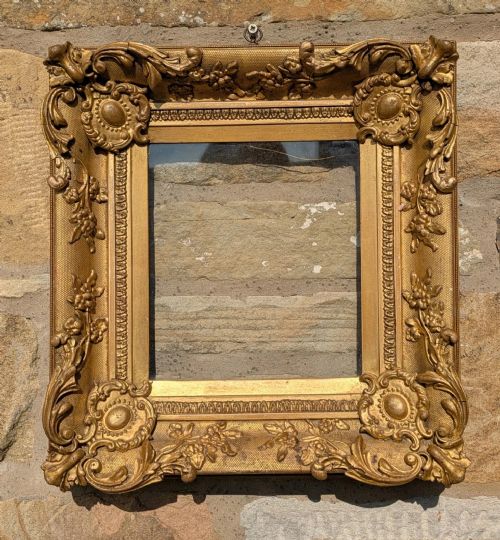


Gold Leaf Swept Frame
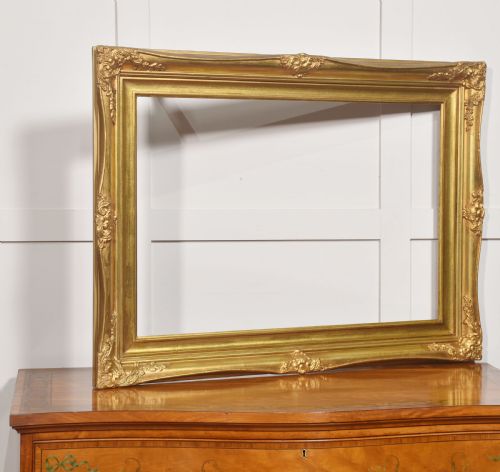
A gold leaf swept frame brings sculptural curve and brilliant metal to any canvas it holds.
Gold Leaf Swept Frame
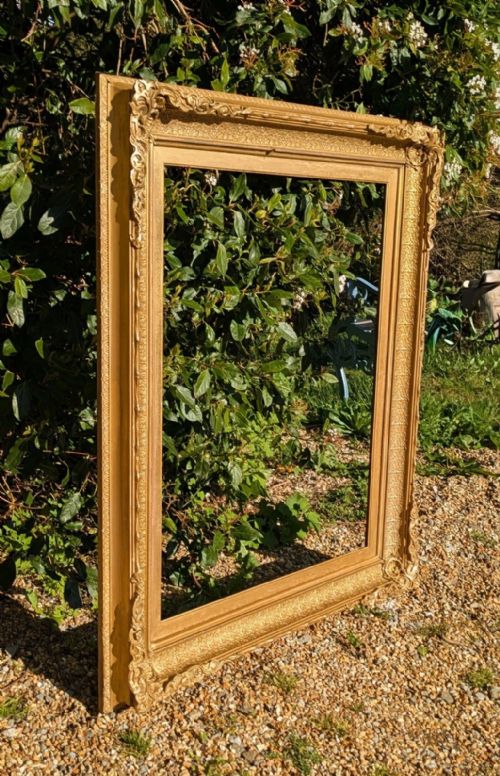
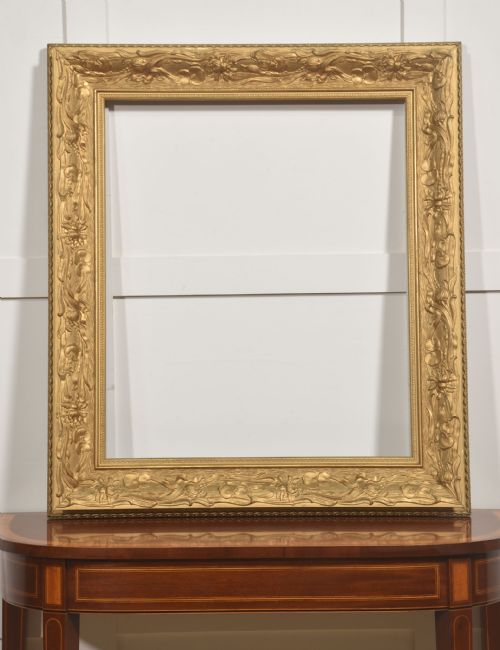
When you search for a gold leaf swept frame, you are looking at moulded and carved surrounds designed to house oil paintings and mirrors. These pieces date chiefly from the nineteenth century, though earlier and later examples appear, spanning the seventeenth century to the Edwardian era.
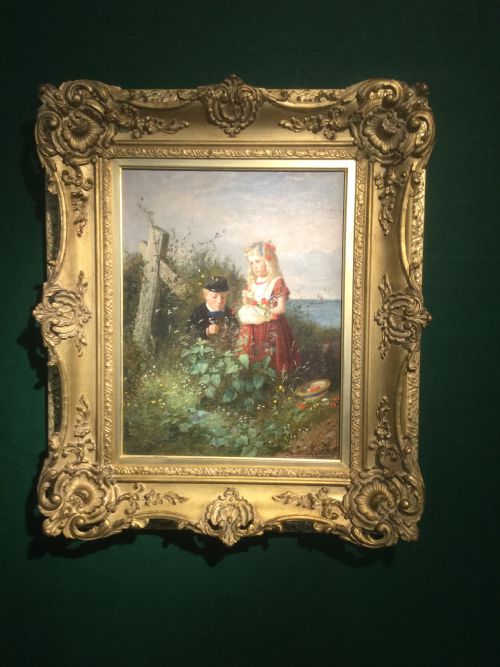
The most common version met on this page is the Victorian piece executed in the Rococo Revival style. These frames use deep, curving profiles and exuberant ornamentation to frame landscape, portrait, and dog subjects.
Originating in periods such as the Victorian and Edwardian epochs, these items range from small oval apertures to large rectangular formats. They are encountered both as standalone picture frames and housing period oil paintings on canvas.
How they were made
Wood and timber form the primary structural foundation of these surrounds, providing a sturdy base for intricate ornamentation. Artisans applied layers of gesso over the timber carcass to build up high-relief scrolls and curves.
Gold leaf and giltwood finishes were then applied to the prepared surfaces, creating a brilliant reflective sheen. This traditional guilding technique involved meticulous hand application of fine metal leaf over the gesso ground.
The archive includes oval dog portraits alongside large rectangular landscape oil paintings.
What varies in quality
The depth of the moulding and the crispness of the swept curves dictate the visual impact of the piece. Superior examples display sharply defined ornament without the blurring that occurs from excessive over-gilding.
The integrity of the underlying gesso and timber foundation separates robust pieces from those compromised by heavy structural loss. Original gilding surfaces show a coherent patination that distinguishes them from later, unsympathetic interventions.
Charles Hunt·Agnes Dundas·John Holland Snr
The Gold Leaf Swept Frame Glossary
- Gesso
- A plaster-like mixture applied to wood to create a smooth surface for gilding. It allows craftsmen to model intricate high-relief details before applying gold leaf.
- Giltwood
- Wood that has been coated with gold leaf or gold paint. This material defines the luxurious finish characteristic of nineteenth-century picture frames.
- Rococo Revival
- A nineteenth-century design movement favouring asymmetrical curves, scrollwork, and naturalistic motifs. It heavily influenced the swept profiles of Victorian frames.
- Swept frame
- A picture frame featuring undulating, serpentine outer edges and deep concave profiles. This distinct moulding style adds dramatic movement around the canvas.
Gold Leaf Swept Frame: Frequently Asked Questions
What fits inside a swept frame?
These surrounds accommodate oil paintings on canvas, both for landscapes and portraits. Many also function effectively as decorative mirror frames.
Selecting the correct rebate size ensures the canvas sits flush within the deep moulding profile.
How do I hang a heavy frame?
Large nineteenth-century pieces require robust wall fixings due to the weight of timber, gesso, and glass. Secure the hanging wire directly to heavy-duty brass rings screwed into the main wooden structure.
Distribute the weight evenly across two wall hooks to maintain stability.
Are these frames from the Victorian era?
The majority of pieces date from the nineteenth century, particularly the Victorian period. Styles such as Rococo Revival dominate this chronological group.
Earlier seventeenth-century examples and later Edwardian pieces also occur within the selection.
Can I clean the gold leaf?
Dust the surface gently using a soft, dry brush to remove accumulated particles. Avoid all liquid cleaners and abrasive cloths, which strip the delicate metal leaf from the gesso.
Preserving the original patination maintains the historical integrity of the gilding.