



Gold Leaf Statue
These gold leaf statue examples bring together centuries of carved wood, polychrome paint and gilding from European, Asian and Egyptian traditions.
Gold Leaf Statue
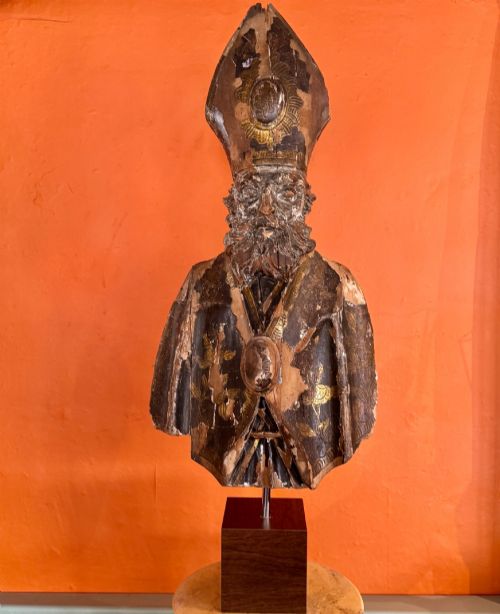
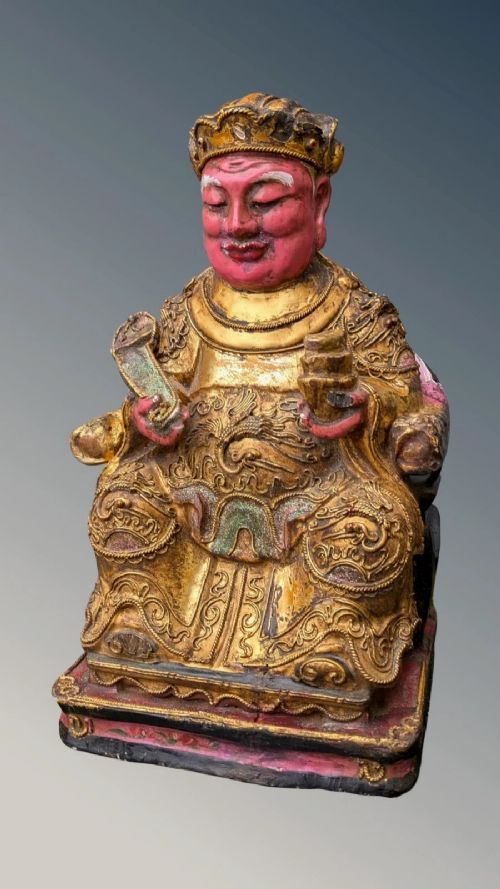
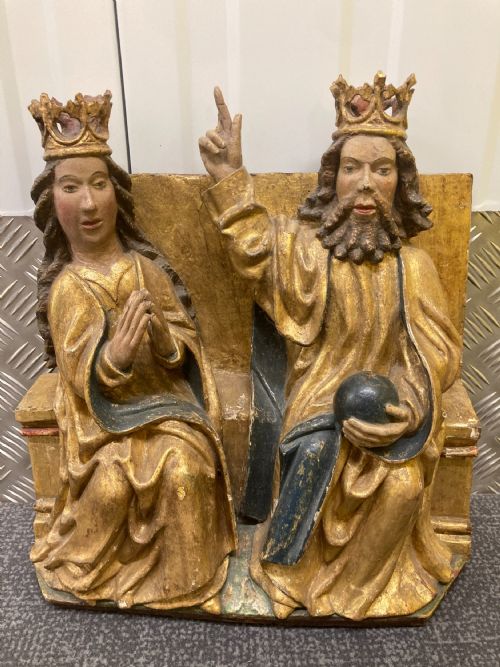
A gold leaf statue on this page typically takes the form of a carved wooden figure, devotional sculpture, or decorative object decorated with metal leaf, gesso or polychrome paint. Buyers seeking a gold leaf statue encounter diverse regional traditions ranging from Italian Baroque ecclesiastical busts and Venetian figures to Chinese deities and Japanese okimono. These pieces function primarily as decorative art or historical sculpture, spanning multiple centuries from the sixteenth century onwards.
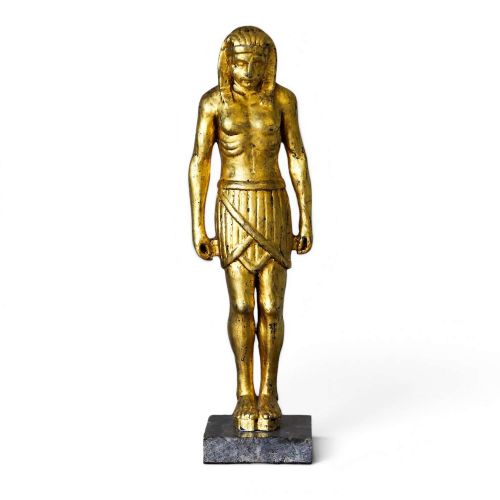
The selection reflects significant international craftsmanship, including South East Asian stone carvings, Burmese Buddha figures, and European Grand Tour Egyptian Revival pieces. Forms vary widely from single saints and bishops to floor lamps, torcheres, shrines, and pairs of angels. Most items rely on carved wood as a base, enhanced by historical surface treatments that have aged over hundreds of years.
Materials and construction methods
Makers constructed these works predominantly from carved wood, applying layers of gesso to prepare the surface before laying down delicate sheets of gold leaf or applying parcel-gilt details. Many pieces combine this metallic finish with polychrome paint, introducing colour to faces, garments, and symbolic attributes. Alternative substrates appear in stone and granite bases, though wood remains the dominant medium.
Surface ornamentation often involves intricate carving techniques executed by regional workshops, whether producing European Baroque drapery or Asian devotional figures. The application of gold leaf required skilled hands to adhere metal to gesso grounds, while polychrome finishes were hand-painted directly over prepared wooden forms.
Materials across these listings include gold leaf, gesso, carved wood, polychrome paint, glass, and stone.
Assessing quality in gilded figures
Quality rests upon the execution of the carving and the preservation of the original surface, where depth of detail in drapery and facial expression separates accomplished workshop production from simpler work. The harmonious relationship between the underlying carved form and the remaining gold leaf or polychrome paint dictates visual success.
The integrity of the gesso and gilt surface over centuries defines the aesthetic merit of each piece, with superior examples retaining their original painted highlights and gilding layers. Proportion, anatomical correctness, and the sophistication of regional styles - such as Venetian Baroque or Renaissance carving - further distinguish the upper tier of objects.
The Gold Leaf Statue Glossary
- Giltwood
- Wood that has been coated with gold leaf or gold paint. This finish appears frequently on European decorative figures and architectural elements from various centuries.
- Polychrome
- The practice of decorating architectural elements, sculpture, or pottery in a variety of colours. It is often combined with gold leaf on historical religious figures.
- Gesso
- A paint mixture consisting of a neutral binder mixed with chalk, gypsum, or pigment. It served as the foundational preparation layer before the application of gold leaf.
- Okimono
- A Japanese ornamental statue or figurine placed on display. These items were widely produced during the Meiji period.
- Shabti
- A funerary figurine used in ancient Egypt to work for the owner in the afterlife. Nineteenth-century examples often reflect European interest during the Grand Tour period.
Gold Leaf Statue: Frequently Asked Questions
How do I clean a gilded statue?
Dust the surface gently with a soft, dry brush to prevent accumulation without disturbing delicate gold leaf layers.
Avoid using water, liquid cleaners, or chemical solvents, as these substances can strip historical gesso and paintwork.
Where were these wooden figures made?
Origin locations span across Europe, including Italy, Germany, and Venice, alongside Asian traditions from China, Japan, and Burma.
Each region employed distinct carving styles and iconographic details rooted in local religious or secular art history.
What is a torchere?
A torchere is an ornamental stand or floor lamp designed to hold a light source or display decorative objects.
In historical interiors, these carved and gilded stands functioned as prominent decorative furniture pieces.
How can I tell the age of the wood?
Dating relies on stylistic markers, tool marks left by carvers, and the natural oxidation patterns of the underlying wood and gesso.
Comparing regional costume, artistic motifs, and historical periods helps establish the likely era of creation.