



Gold Leaf Light Fitting
A gold leaf light fitting brings a warm, reflective glow into a room through gilded metal, carved giltwood or polished brass.
Gold Leaf Light Fitting
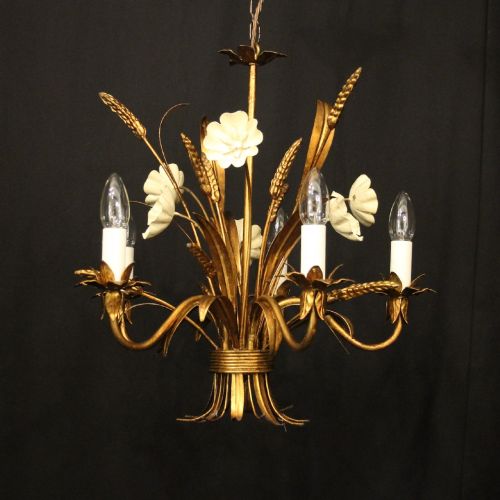
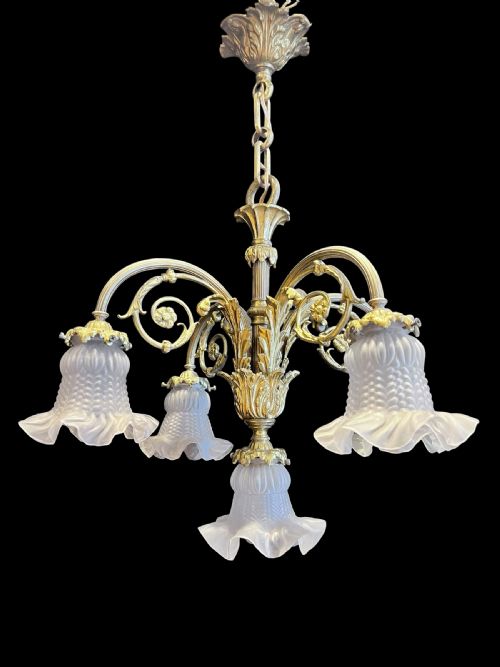
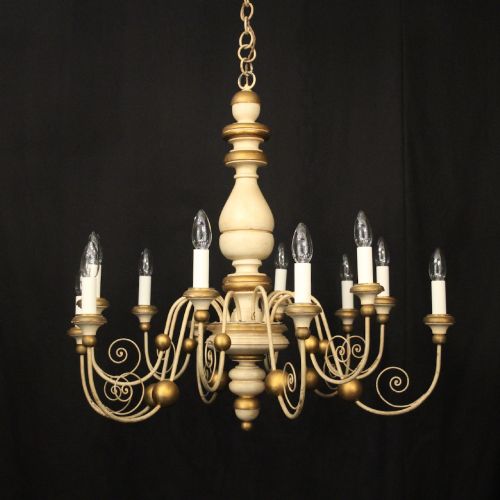
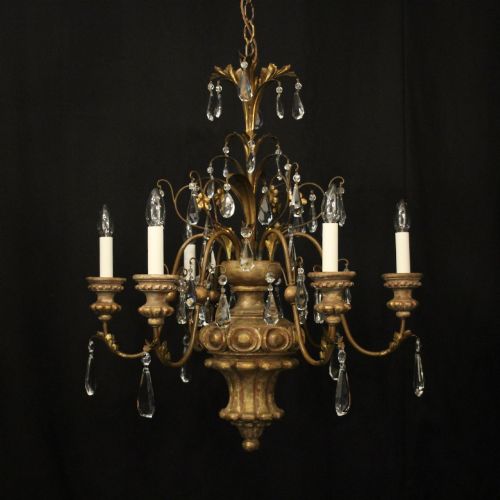
When you search for a gold leaf light fitting, you encounter a selection of hanging chandeliers, wall lights, pendants and lanterns originating from the nineteenth century up to the 1930s. The most common examples meeting this description are Italian Florentine chandeliers and French giltwood or brass fixtures featuring multiple light branches.
The objects take various forms, from large eighteen light chandeliers down to pairs of wall lights and smaller ceiling pendants. Their designs span several distinct aesthetics, including French Chateau, Italian Baroque, Hollywood Regency and Victorian Bohemian styles.
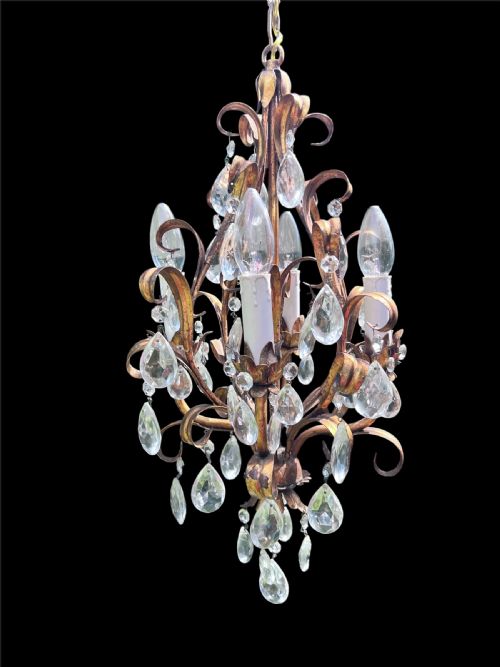
Many of these pieces employ polychrome gilding, crystal drops or carved wooden foliage to catch and diffuse illumination. They serve as central decorative fixtures in domestic spaces, combining historical craftsmanship with functional lighting.
How they were made
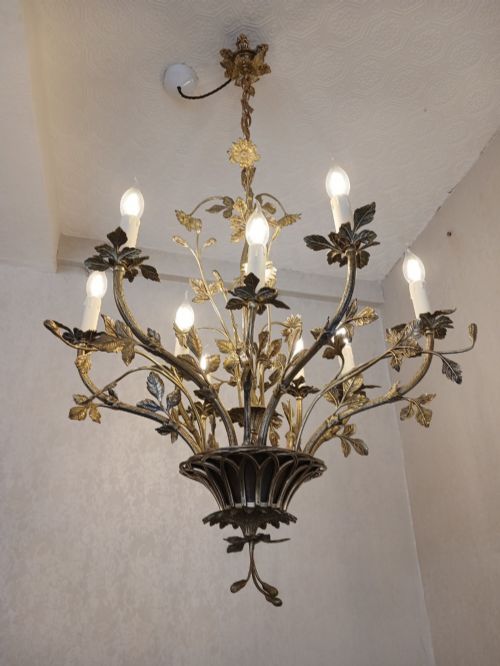
The construction of these fittings relies on a combination of metalworking and woodcarving techniques suited to each specific style. Makers utilised cast brass, bronze, wrought iron and gilt metal for the structural frames and candle arms of chandeliers and wall lights.
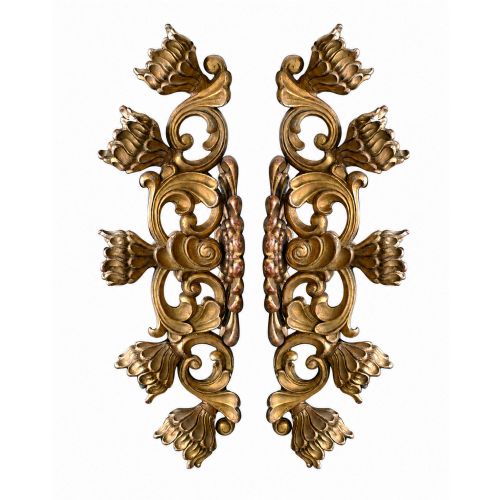
Wooden components, particularly in Florentine and French pieces, involve hand-carved giltwood and gesso applied over a timber base. Artisans then applied gold leaf or silver gilding to the surfaces, sometimes incorporating polychrome painted details or glass and crystal elements.
The object types span chandeliers, wall lights, ceiling pendants and table lamps across various French and Italian styles.
What varies in quality
The distinction between standard and superior pieces rests on the depth of the hand-carving and the fineness of the metalwork. Hand-carved wooden acanthus leaves and intricate cast acanthus mounts demonstrate a higher level of artisanal skill than simpler, moulded alternatives.
Materials also dictate the character of the object, with genuine giltwood, bronze and heavy crystal beadwork marking out the more ambitious workshops. The application of the gold leaf itself - whether finely burnished or layered with polychrome pigments - determines the richness of the finished surface.
The Gold Leaf Light Fitting Glossary
- Giltwood
- Wood that has been coated with a thin layer of gold leaf or gold paint. This technique was widely used on Italian and French frames and light fittings to create a luminous surface.
- Gesso
- A plaster-like mixture applied to wood as a base for gilding or painting. It allowed artisans to create smooth or relief-moulded details before applying gold leaf.
- Acanthus Leaf
- A classic ornamental motif modelled on the foliage of the Mediterranean acanthus plant. It appears frequently as a carved or cast decoration on arms and mounts.
- Polychrome
- Decorated in several colours. In these pieces, polychrome gilding often combines gold leaf with subtle painted pigments to enhance floral and leafy carvings.
- Pendant Light
- A light fixture that is suspended from the ceiling by a cord, chain or metal rod. These range from single downlights to multi-branched hanging arrangements.
Gold Leaf Light Fitting: Frequently Asked Questions
How do I clean a gilded light fitting?
Dust the fixture gently with a soft, dry ostrich feather duster or a very soft artist's brush to remove surface particles without disturbing the delicate gold leaf.
Avoid using liquid cleaners, chemical sprays or abrasive cloths, as these can strip away the gilding or damage the underlying gesso and wood.
How do I distinguish Italian Florentine from French styles?
Italian Florentine pieces often feature elaborate hand-carved giltwood foliage, rustic lantern frames or polychrome details inspired by baroque traditions.
French designs tend towards refined brass, bronze and giltwood structures, encompassing styles like Hollywood Regency branches and classic chateau chandeliers.
Where should I hang a multi-branch chandelier?
These chandeliers suit central positions in reception rooms, dining areas or high-ceilinged hallways where their proportions can be fully appreciated.
Ensure the ceiling height allows adequate clearance beneath the lowest point of the fitting for comfortable movement underneath.