


Gold Leaf Cabinet Cup
A gold leaf cabinet cup is a decorative porcelain vessel made for display, offering intricate painted scenes and rich gilding from past centuries.
Gold Leaf Cabinet Cup
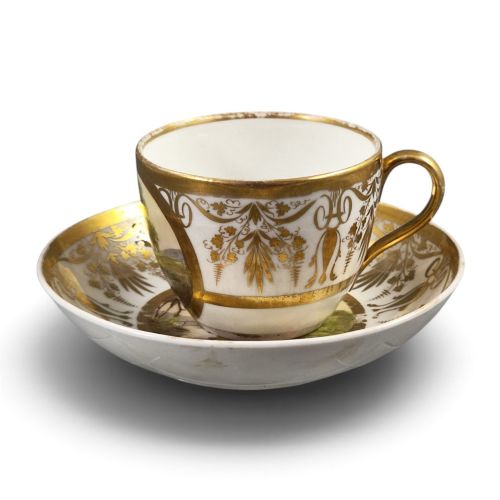
A gold leaf cabinet cup is primarily a decorative ceramic object rather than a vessel meant for daily tea service, often preserved in display cabinets. When exploring this selection, buyers encounter finely painted porcelain forms designed to showcase wealth and artistic skill during the Georgian and nineteenth-century periods.
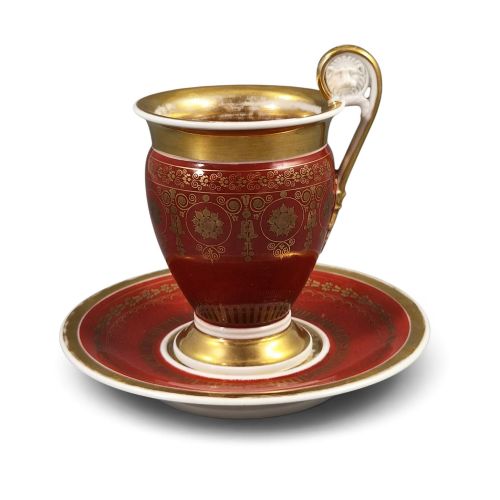
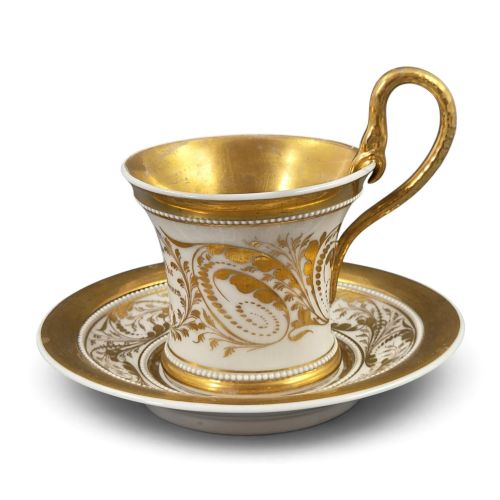
The objects listed here span various historical styles including Rococo Revival, Neoclassical, and French Empire. These pieces often arrive paired with matching saucers, featuring specialised forms such as chocolate cups and demitasse vessels.
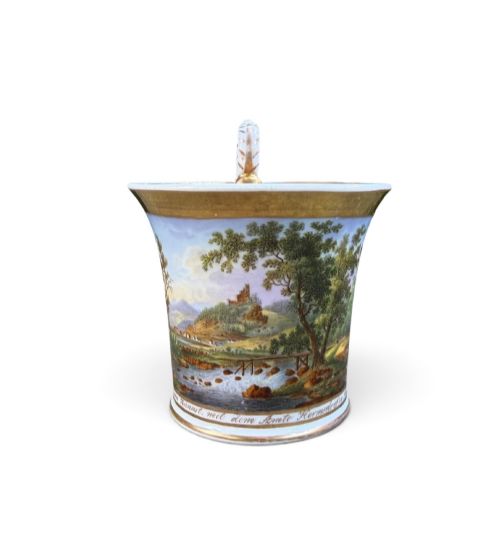
Origins represented in these items include notable European porcelain works, particularly from German and French factories. Collectors often find topographical views, hand-painted landscapes, and allegorical woodland scenes adorning the exterior surfaces.
How they were made
Makers utilised hard-paste porcelain as the primary ceramic body, which provided a durable and bright white canvas for detailed enamel painting. Artisans applied meticulous brushwork to render landscapes, portraits, and woodland scenes directly onto the glazed surface.
Gilding techniques involved the application of gold leaf and gold gilt to accentuate handles, rims, and decorative borders. This metallic embellishment was subsequently burnished to create a high-contrast shine against the painted ceramic panels.
Listings feature hard-paste porcelain objects decorated with gold leaf, enamel, and hand-painted landscapes from the nineteenth and early twentieth centuries.
What varies in quality
The standard of a gold leaf cabinet cup rests heavily on the complexity and preservation of the hand-painted artwork. Superior examples exhibit finely detailed miniatures, such as topographical landscapes or allegorical figures, executed with precision.
The application and preservation of the gold leaf or gilding also define the grade of the piece. Crisp, intact burnishing and elaborate moulded handles, like lion mask designs, elevate the visual impact and execution of the vessel.
KPM Berlin·Royal Vienna·Hutschenreuther
The Gold Leaf Cabinet Cup Glossary
- Cabinet cup
- A decorative porcelain cup intended for display in a cabinet rather than everyday use. These vessels frequently feature elaborate painting and gilding.
- Demitasse
- A small cup used for serving strong black coffee or espresso. They often appear alongside matching saucers in nineteenth and twentieth-century ceramic groups.
- Hard-paste porcelain
- A type of ceramic composed of kaolin and petuntse fired at high temperatures. It yields a strong, vitrified body that resists scratching and holds bright enamel colours.
- Gilding
- The application of gold leaf, gold gilt, or powdered gold to the surface of an object. This technique highlights rims, handles, and decorative borders.
- Enamel
- A glass-like substance fused to the porcelain surface through firing. It provides the vibrant colours found in painted landscape and figural scenes.
Gold Leaf Cabinet Cup: Frequently Asked Questions
How were they used?
These vessels were created to demonstrate taste, status, and wealth within a domestic interior. They sat within display cabinets or on mantelpieces for guests to admire.
While shaped like drinking vessels for tea, chocolate, or coffee, their delicate painted surfaces and gold leaf decoration meant they remained decorative items.
How do I date a piece?
Dating relies on identifying factory marks, stylistic influences such as French Empire or Neoclassical Revival, and the specific materials used. Porcelain bodies and enamel palettes shifted across the nineteenth century.
Examining the style of the hand-painted landscapes and the method of gilding helps narrow down the decade of production.
Are they safe for drinks?
Using these antique porcelain cups for beverages is generally discouraged due to age, delicate enamel work, and potential wear on the gold leaf. Hand-washing is necessary if handled at all.
Most buyers keep them strictly as display objects to preserve the painted surfaces and structural integrity of the ceramic.