
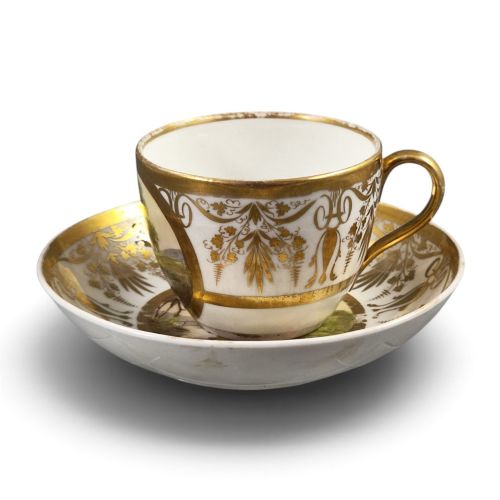
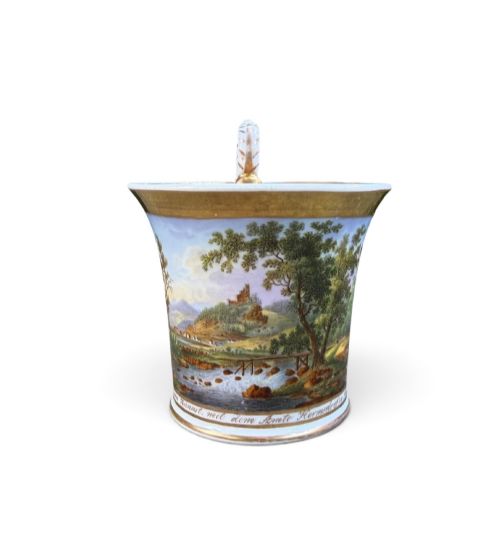

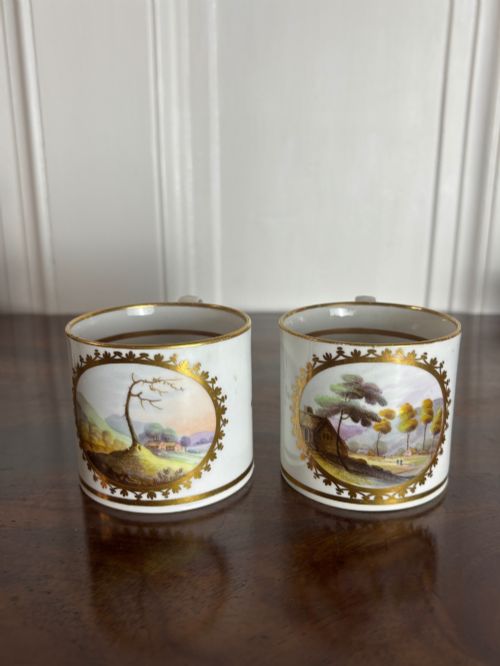
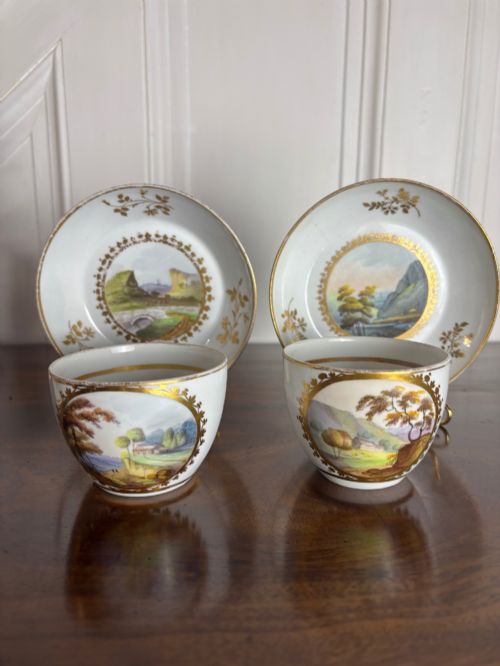


Painted Landscape Porcelain Cup
A painted landscape porcelain cup brings a miniature topographical view to the table, offering a direct glimpse into eighteenth and nineteenth-century vistas.
Painted Landscape Porcelain Cup
A painted landscape porcelain cup captures detailed topographical scenes on hard-paste porcelain, bone china, and ceramic bodies. These drinking vessels serve both as functional tea wares and decorative cabinet pieces designed for display.
The versions most commonly met on this page span the Georgian and nineteenth-century periods, taking the form of cabinet cups, coffee cans, porter mugs, and matching saucers. Makers ranged from English factories like Minton and Worcester to continental porcelain houses such as Meissen, Berlin, and KPM.
Stylistic influences vary widely across the selection, drawing upon Regency, Biedermeier, Neoclassical, and French Rococo Revival aesthetics. Each piece frames a specific painted view, sometimes naming a precise location such as Nottinghamshire.
How they were made
Potters shaped these objects from fine ceramic bodies including bone china and hard-paste porcelain, firing the pieces to create a smooth, white foundation for the artist. Artisans then applied detailed paint and enamel by hand to render miniature landscape scenes.
Gilding and gold leaf frequently frame the painted panels or accent the rims and handles, requiring an additional firing process to bond the metal to the glaze. Factories utilised pattern numbers and hand-brushed topographical details to identify the specific scenes and batches.
Some cups transport the drinker to specific rural spots, like a quiet river near Newark.
What varies in quality
The quality of the porcelain body and the crispness of the gilding further distinguish the work. Superior examples combine an unblemished glaze with well-preserved gold leaf and balanced proportions across the cup and saucer.
KPM Berlin·Berlin porcelain·Flight and Barr·Minton·Derby Porcelain·Meissen·Hicks Meigh and Johnson·Ridgeway
The Painted Landscape Porcelain Cup Glossary
- Cabinet cup
- A decorative porcelain vessel intended primarily for display in a cabinet rather than for daily tea consumption. These pieces often feature elaborate painted scenes and gilding.
- Coffee can
- A straight-sided cylindrical porcelain cup without a foot, popular during the Georgian period for drinking strong coffee. They are frequently paired with a matching saucer.
- Hard-paste porcelain
- A dense, durable ceramic composed of kaolin and petuntse fired at high temperatures. It forms a vitrified body that resists scratching and absorbs little moisture.
- Gilding
- The application of gold leaf or powdered gold to the surface of porcelain. It provides decorative borders and highlights handles, rims, and painted panels.
Painted Landscape Porcelain Cup: Frequently Asked Questions
What is a cabinet cup?
A cabinet cup is a decorative porcelain vessel made for display in a collector's cabinet rather than everyday use. These pieces often feature detailed hand-painted scenes and rich gilding.
They generally survive in better condition than functional teacups because they spent more time on display than on the tea table.
How were these cups used?
These vessels functioned as luxury items for drinking tea or coffee among the affluent classes during the Georgian and nineteenth-century periods. Some larger forms, such as porter mugs and loving cups, served communal or hearty drinking purposes.
Over time, many of these wares transitioned from functional dining items into decorative display pieces collected for their miniature art.
How do I date a porcelain cup?
Dating relies on identifying factory marks, stylistic periods such as Regency or Biedermeier, and the specific composition of the ceramic body. Hard-paste porcelain and bone china each dominated different eras and regional workshops.
Comparing pattern numbers and hand-painted motifs with documented factory archives helps narrow down the decade of production.