
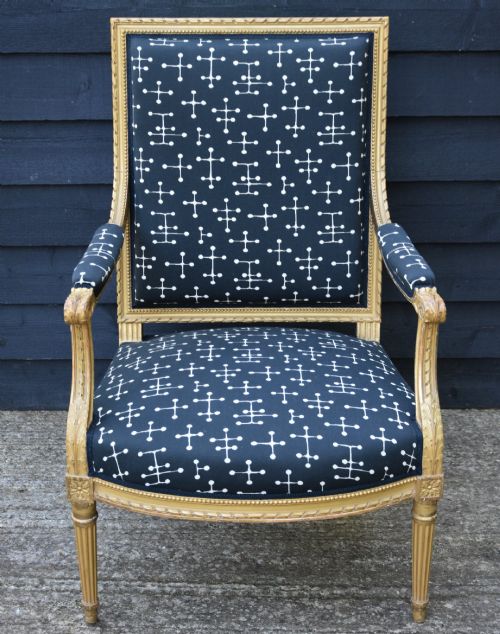
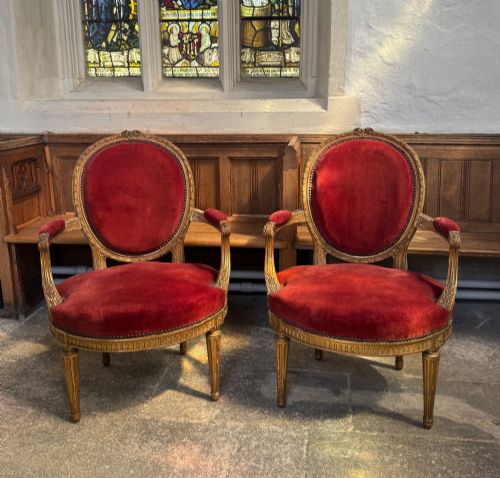
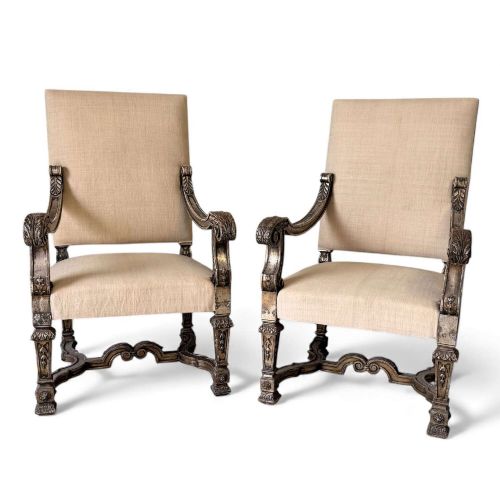
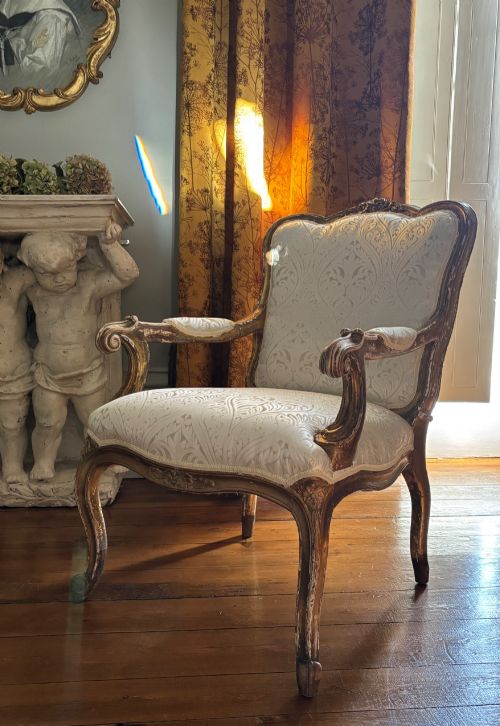
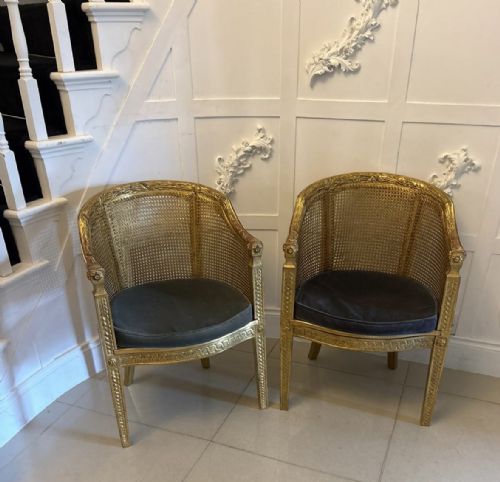
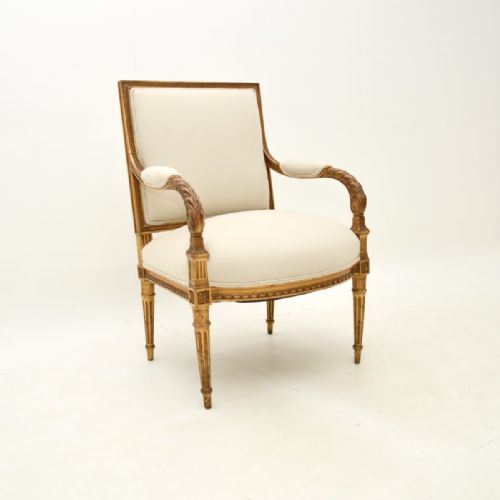
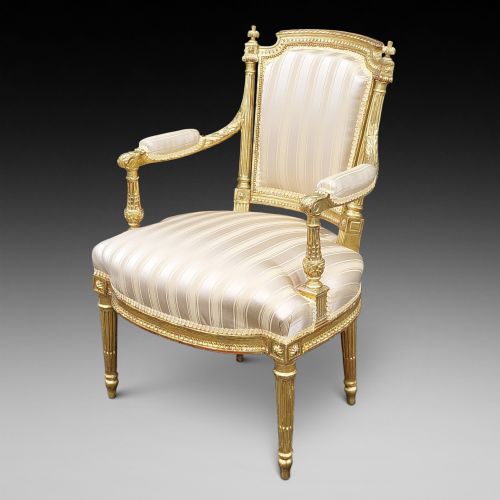
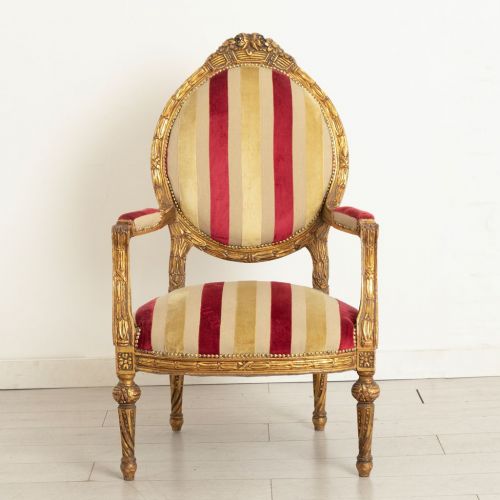


Gold Leaf Armchairs
Gold leaf armchairs bring unmatched presence to a room, offering grand seating shaped by centuries of revival design.
Defining gold leaf armchairs
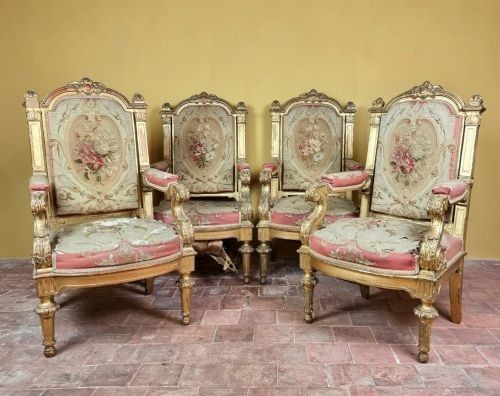
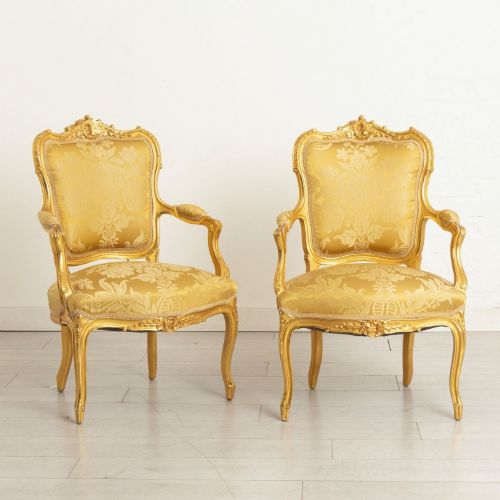
Gold leaf armchairs encompass grand seating options finished with a golden metallic surface, appearing across several historic periods and revival styles. When searching for gold leaf armchairs, buyers most frequently encounter pairs originating from the nineteenth and early twentieth centuries, drawing heavily on French and Italian design vocabulary.
The selections span distinct stylistic revivals, including Baroque, Régence, Louis XVI, and Italian Rococo forms. These pieces function primarily as statement furniture within formal reception spaces, drawing the eye through their scale and gilded surface treatment.
Materials and construction
The underlying frames utilise traditional timbers such as beech, solid walnut, and general wood, providing structural integrity beneath the decorative surface. Artisans applied thin sheets of gold leaf over these wooden foundations, often enhancing the carved details characteristic of revival cabinetry.
Upholstery historically incorporates textiles like linen, velvet, and other decorative fabrics to complete the seating surface. These materials complement the gilded frames, balancing structural joinery with soft furnishings.
Retail Price Guide 2026
Typical UK retail prices for gold leaf armchairs, calculated from the Sellingantiques database of over a million retail prices indexed since 2003. This retail price guide relies exclusively on Sellingantiques data; no external sources or auction records are used, so the figures do not describe the wider market.
Frame materials recorded across these listings include beech, solid walnut, and general timber.
Assessing quality
Quality reveals itself through the depth and crispness of the carved wooden ornament beneath the gilding, where superior examples display sharp hand-carving rather than soft contours. The application method of the gold leaf also dictates the finish, distinguishing refined historic gilding from heavier modern interventions.
The integrity of the underlying timber frame and the harmony of the upholstery proportions further separate standard production from exceptional craftsmanship. Superior pairs maintain their original structural balance and decorative cohesion across both chairs.
The Gold Leaf Armchairs Glossary
- Giltwood
- Timber decorated with gold leaf or powder applied to a prepared surface. This material forms the primary visual identity of many historic formal seats.
- Regency
- An English stylistic period spanning the early nineteenth century. It often reinterprets classical motifs with distinct British restraint.
- Baroque Revival
- A nineteenth-century stylistic movement emulating the dramatic, ornate forms of the seventeenth century. It favours exuberant curves and heavy ornamentation.
- Louis XVI Style
- A neoclassical design vocabulary characterised by straight lines, symmetry, and geometric restraint. It contrasts sharply with the earlier curved excesses of Rococo.
Frequently Asked Questions
What periods do these armchairs span?
The available pieces stretch from the eighteenth century through the nineteenth century, Edwardian era, and into the nineteen-twenties. Revival movements also look back to earlier Régence and Baroque aesthetics.
Craftsmen in later periods frequently recreated these historic silhouettes, meaning a nineteen-hundreds piece might faithfully copy an eighteenth-century Italian or French model.
How do I identify French revival styles?
French revival styles generally divide into distinct reigns, such as the flowing curves of Louis XV or the geometric symmetry associated with Louis XVI. Look at the legs and back frames for clues.
Straight fluted legs often point toward Louis XVI influences, while cabriole legs and asymmetrical cartouche backs typically signal Rococo or Régence inspiration.
Where should I place a pair?
These commanding seats suit formal drawing rooms, large bedrooms, or reception hallways where their reflective surfaces can catch the light. They work best as symmetrical pairs flanking a fireplace or console table.
Because of their visual weight, they demand sufficient surrounding space to let the carved frames and gilded finish stand out properly.
What woods lie beneath the gold?
Cabinetmakers utilised sturdy hardwoods like beech and solid walnut to construct the underlying structural frames. These timbers possessed the necessary density for intricate carving.
Softer or secondary woods occasionally appear in hidden structural areas, but the primary show frames rely on durable materials capable of supporting heavy use.