
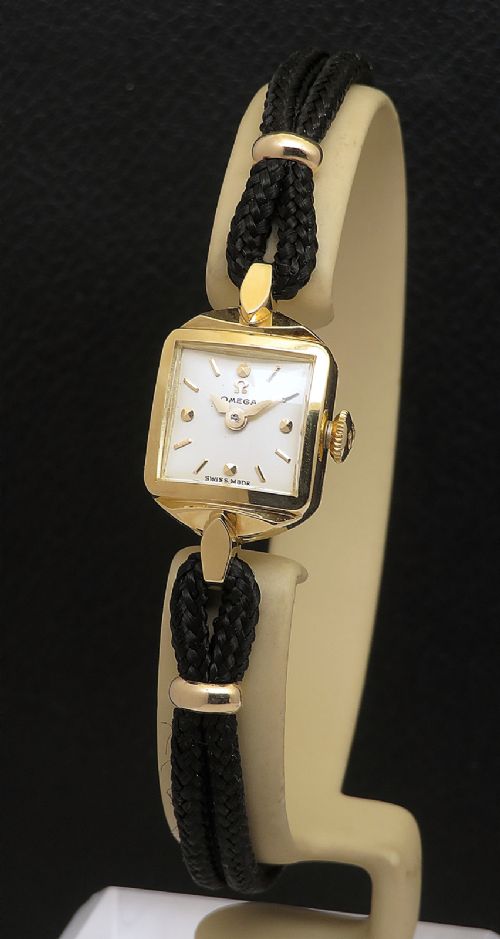
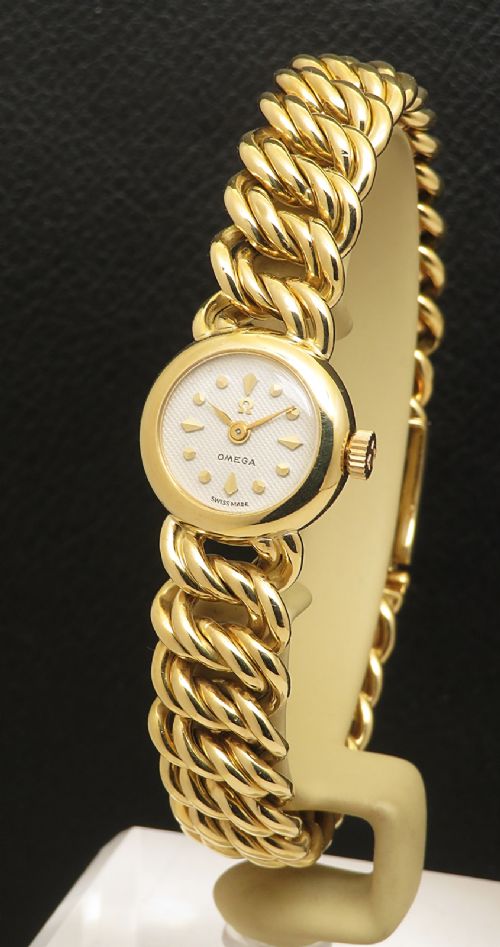
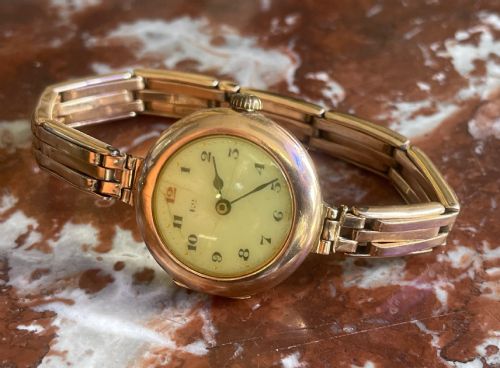
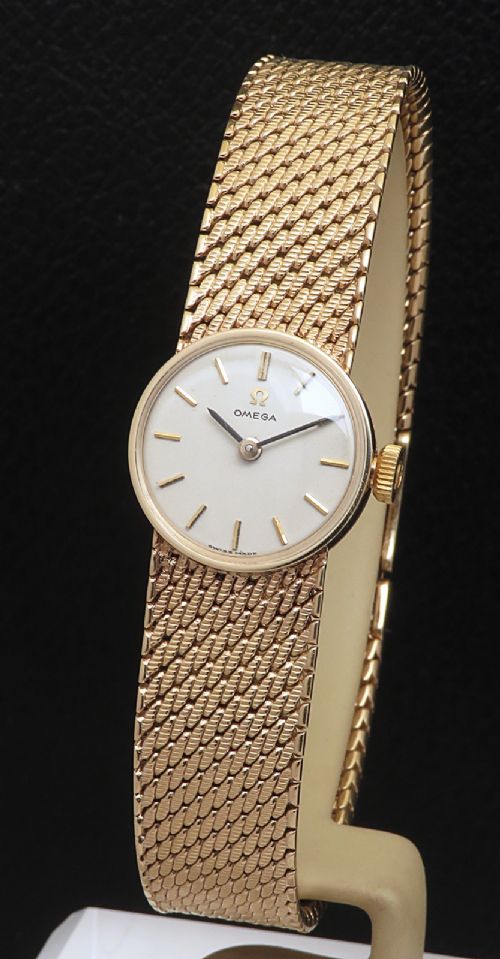






Gold Ladies Watch
A gold ladies watch brings together practical timekeeping and delicate jewellery design from periods spanning the early twentieth century to the late twentieth century.
Gold Ladies Watch
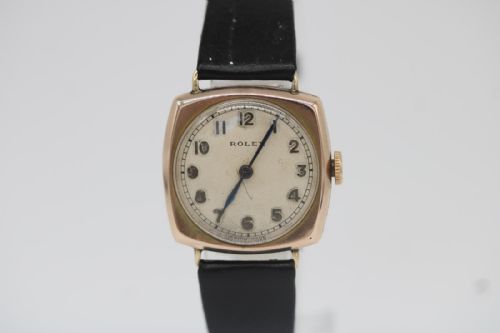
A gold ladies watch functions primarily as a piece of fine jewellery designed to be worn on the wrist or pinned to clothing. These items encompass standard wristwatches, fob watches, and elaborate evening pieces intended for social occasions. The selection draws heavily from mid-century iterations and earlier twentieth-century designs, featuring items produced during the 1930s, 1940s, and 1950s alongside Edwardian and Victorian examples.
The objects take many forms, from simple yellow gold bracelet models to diamond-set cocktail watches housed in white gold or platinum. Pieces emerge from notable Swiss and British makers, appearing alongside period accessories like watch chains and fob attachments.
How they were made
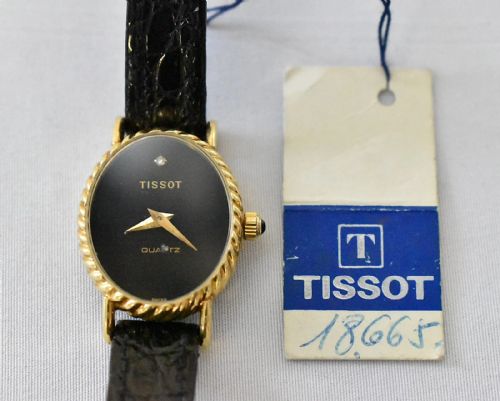
Makers utilised precious metals including nine-carat, fourteen-carat, and eighteen-carat yellow, white, and rose gold, frequently combining them with platinum settings to secure gemstones. Cases often housed manual-wind mechanical movements, though later examples incorporate quartz technology.
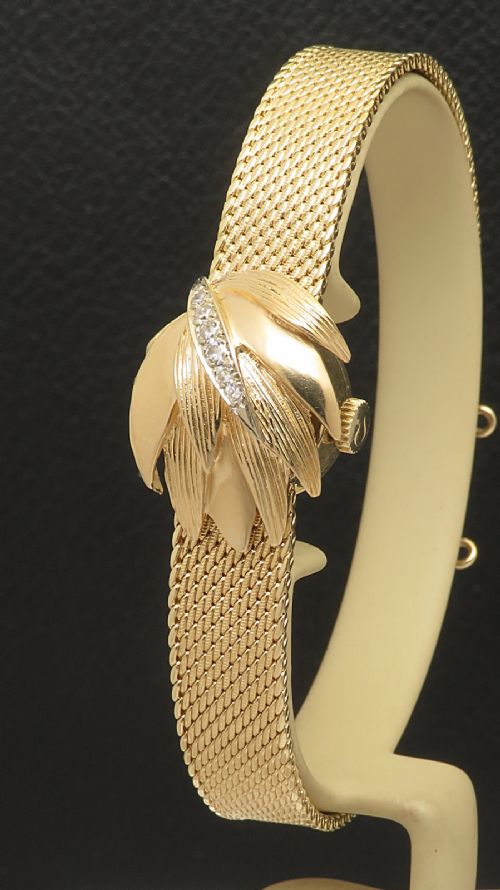
Goldsmiths and watchmakers integrated decorative elements such as mesh bracelets, floral engravings, and diamond bezels into the cases. Master jewellers set diamonds, sapphires, and emeralds by hand to accent the metalwork of cocktail models.
What varies in quality
Quality separates pieces by the weight of the precious metal and the complexity of the movement and gem-setting. Solid gold construction and higher carat weights elevate a piece above gold-plated alternatives.
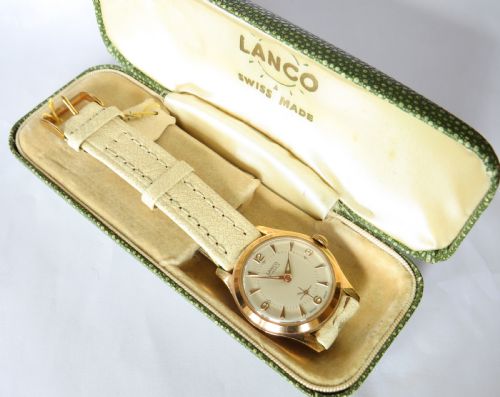
The presence of original packaging, maker documentation, and untouched dial configurations distinguishes exceptional survivals from standard examples.
Omega·Rolex·Tissot·Movado·J W Benson·Bulova·Benrus·Longines·Jaeger-LeCoultre
The Gold Ladies Watch Glossary
- Cocktail Watch
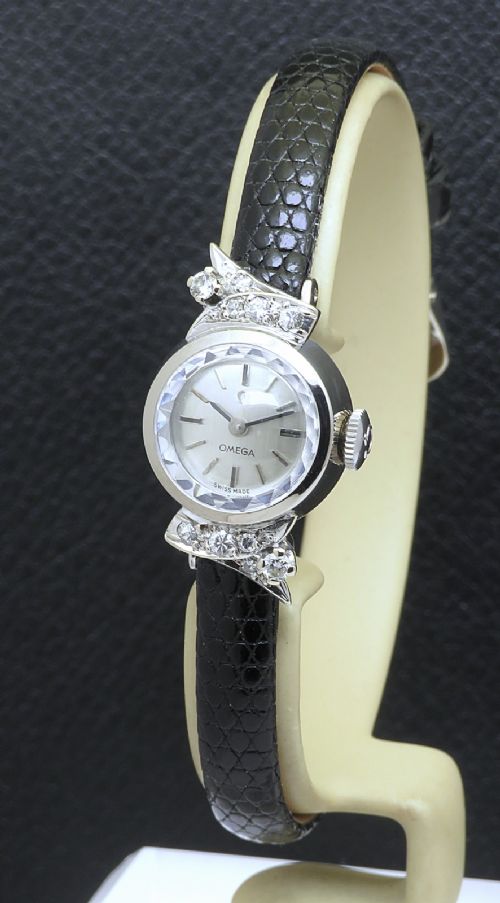
- A small, highly decorative timepiece designed for evening wear, frequently encrusted with diamonds and precious stones. These watches subordinate strict timekeeping legibility to ornamental brilliance.
- Fob Watch
- A pocket watch intended to be attached to a ribbon, chain, or fob, often worn pinned to a garment. They appear frequently in Edwardian and Victorian pieces.
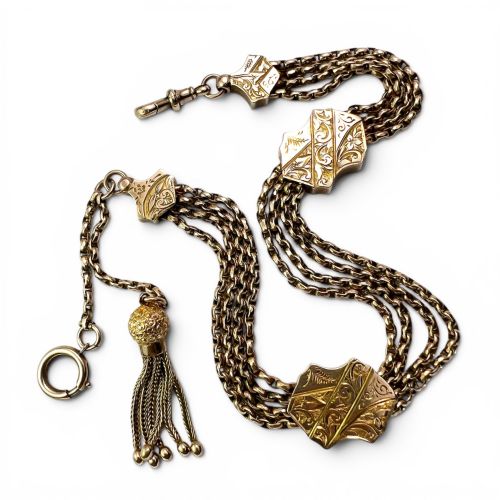
- Albertina
- A shortened version of an Albert watch chain designed specifically for women. These items often feature tassels and decorative slides.
- Manual Wind
- A mechanical movement powered by manually turning the crown rather than through automatic rotor weight or battery power. This traditional mechanism sits inside most vintage watch cases.
- Sapphette
- A watch crystal faceted from sapphire or synthetic sapphire to create a brilliant, gem-like surface over the dial. Omega utilised this technique on several mid-century models.
Gold Ladies Watch: Frequently Asked Questions
What is a cocktail watch?
A cocktail watch is a small, highly decorated timepiece intended for evening wear rather than daily utilitarian use. These items combine the function of a watch with the intricate craftsmanship of fine jewellery.
They frequently feature diamond settings, platinum cases, and delicate mesh bracelets designed to complement formal attire from the mid-century and Art Deco eras.
How do I wear a vintage watch?
Vintage wristwatches and fob watches suit modern wardrobes when paired thoughtfully with appropriate attire. Fob watches can be pinned to lapels or secured with period chains, while bracelet watches serve as primary wrist jewellery.
Manual-wind movements require daily winding by hand to maintain accurate timekeeping throughout use.
What distinguishes Art Deco watch design?
Art Deco watch design relies on geometric symmetry, clean lines, and stark contrasts between white metals and dark straps or onyx accents. White gold and platinum provide the primary canvases for diamond pavé settings.
Rectangular and tonneau-shaped cases dominate this period, moving away from traditional round pocket watch formats.
Are original boxes important?
Original boxes and associated paperwork provide historical context and complete the package for a collector. Surviving packaging often bears the retailer name or maker stamp matching the timepiece inside.
Such accompaniments support the provenance of pieces originating from the mid-twentieth century and earlier.