

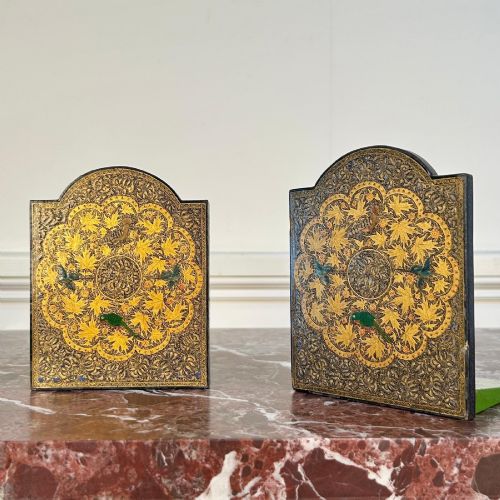


Gold Lacquerware
Gold lacquerware comprises decorated boxes, cabinets, and vessels adorned with metallic pigment.
Gold Lacquerware
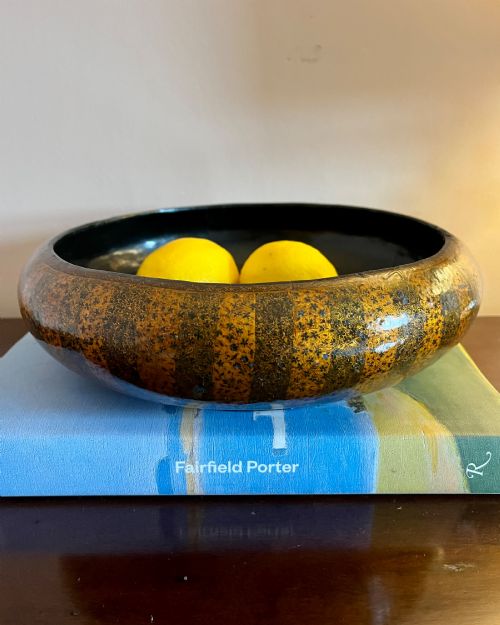
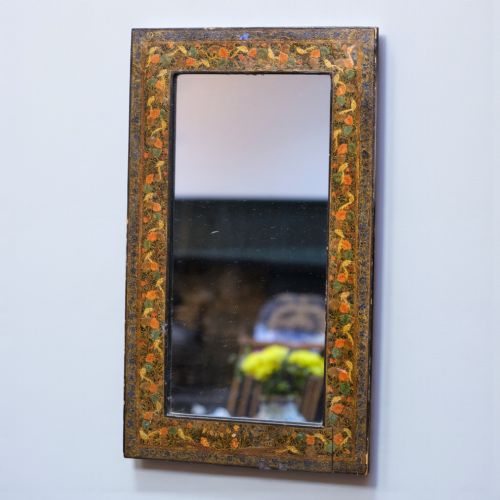
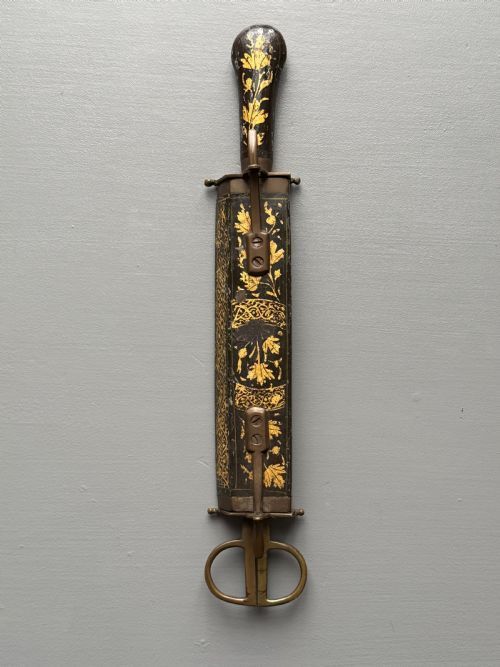
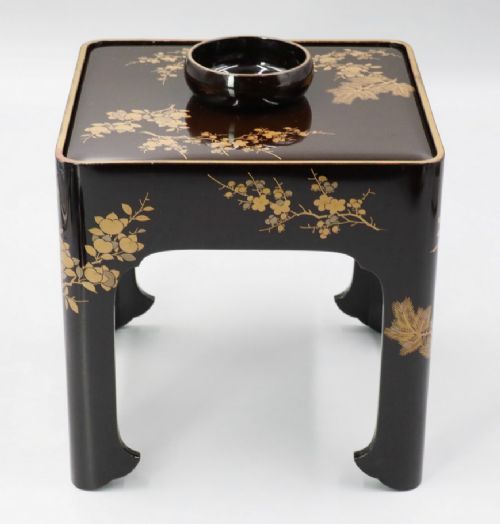
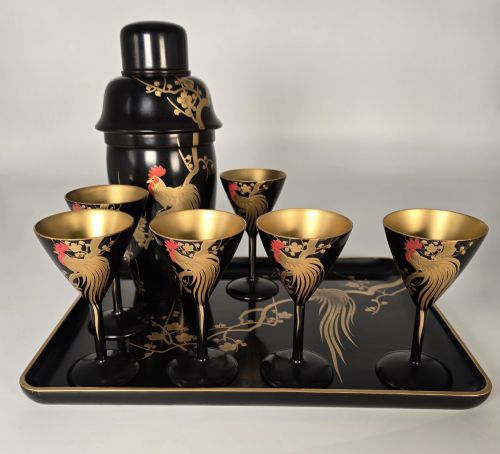
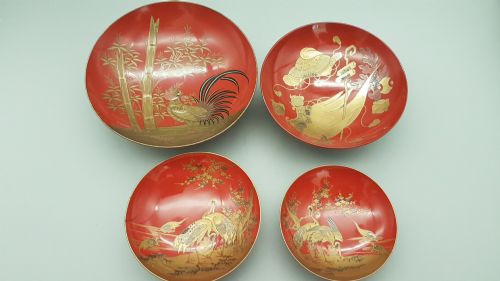
Gold lacquerware encompasses functional and decorative objects ornamented with gilded surfaces, including cabinets, sake cups, and storage boxes. These pieces emerge from diverse regional traditions such as Japanese Meiji production, Chinese export workshops, and Kashmiri craftsmanship.
The objects appearing most frequently on this page date from the nineteenth and early twentieth centuries. Buyers encounter domestic accessories like tea caddies alongside larger furnishings such as table cabinets and wall mirrors.
Materials and construction methods
Artisans built these objects primarily from wood, papier-mâché, and porcelain bases. Craftsmen then applied layers of lacquer combined with pigments to form a hard, protective ground before adding surface ornamentation.
Decoration relied on gold leaf and gilt work to build intricate designs across the hardened ground. Certain pieces incorporated additional elements like brass fittings or glass components to complete the functional forms.
Gold Lacquerware Retail Price Guide 2026
Typical asking prices for gold lacquerware among the pieces listed under this phrase on Sellingantiques today, from the lower quarter to the upper quarter. They describe what is for sale here now, not the wider market.
Current listings feature items spanning the nineteenth century through the 1920s, utilising wood, papier-mâché, and gold leaf.
Distinctions in execution
Quality rests upon the precision of the hand-painted detailing and the preservation of the delicate lacquer surface. Superior examples display crisp pictorial work and stable ground layers without significant surface degradation.
The complexity of the form also dictates the tier of the piece, distinguishing simpler domestic containers from monumental temple vases or elaborate cabinets on stands.
The Gold Lacquerware Glossary
- Inro
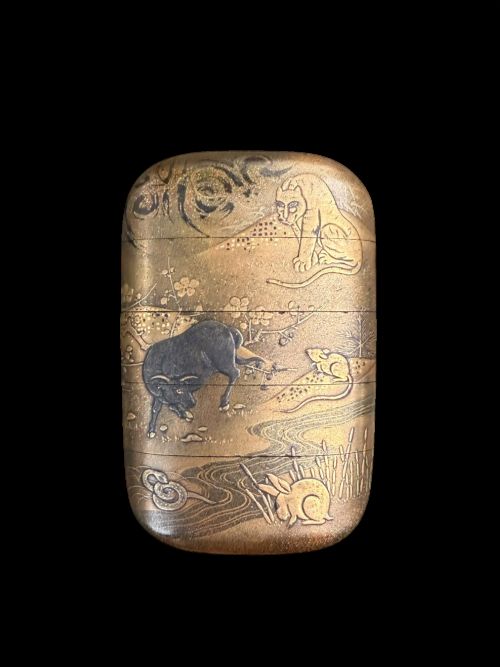
- A traditional Japanese multi-tiered case used for carrying small items, suspended from a sash. These portable containers often feature detailed lacquer and gold decoration.
- Shodana
- A style of Japanese tabletop display cabinet featuring asymmetrical shelving. These pieces showcase intricate lacquer panels and gilding.
- Papier-mâché
- A composite material made from paper pulp reinforced with glue or resin, utilised as a lightweight base for lacquer work.
- Chinoiserie
- European decorative style reflecting Chinese artistic motifs. Artisans applied these designs to furniture and household objects.
Gold Lacquerware: Frequently Asked Questions
What is gold lacquerware?
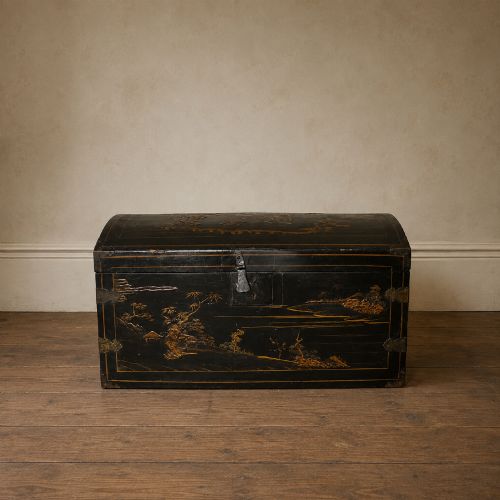
Gold lacquerware refers to decorative items finished with layered lacquers and detailed with gold leaf or gilt ornamentation. These pieces range from small drinking vessels to large storage chests.
Originating across multiple Asian and Middle Eastern traditions, the objects combine utility with intricate painted surface designs.
How were these pieces used?
Many items served practical domestic functions, such as holding tea, storing documents, or serving sake during meals. Other examples functioned purely as decorative furnishings within the home.
Cabinets and boxes organised precious items, while trays and vessels supported daily hospitality rituals.
How should I clean lacquerware?
Maintenance requires gentle dusting with a soft, dry cloth to protect the delicate surface layers from scratching. Moisture and direct sunlight can damage the underlying lacquer and gold leaf over time.
Avoiding harsh chemical cleaners preserves the integrity of the historical materials.
How do I identify the period?
Dating relies on stylistic markers associated with specific manufacturing eras, such as the Meiji period in Japan or nineteenth-century Chinese export conventions. Construction materials like papier-mâché or solid wood also provide clues to the age.
Comparing structural forms against documented regional output helps confirm the date.