



Gold Inlaid Bronze
Gold inlaid bronze brings together rich metalwork and precise inlay across Japanese, Chinese and European pieces from the nineteenth and early twentieth centuries.
Gold Inlaid Bronze
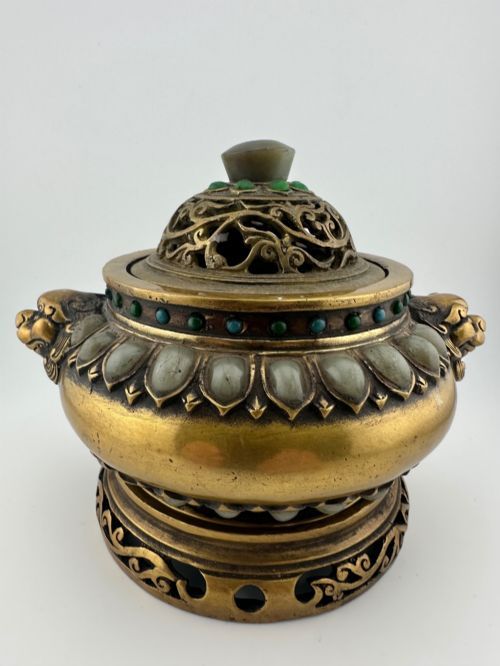
Gold inlaid bronze encompasses a diverse array of objects, ranging from Japanese Meiji period vases and circular boxes to Sino-Tibetan multi-armed deity figures and French Napoleon III style mantel clocks. Buyers searching for gold inlaid bronze encounter distinct cultural traditions, spanning Japanese Komai style mixed-metal dishes depicting Benzaiten and dragons alongside European ormolu-mounted boulle cabinets and writing tables.
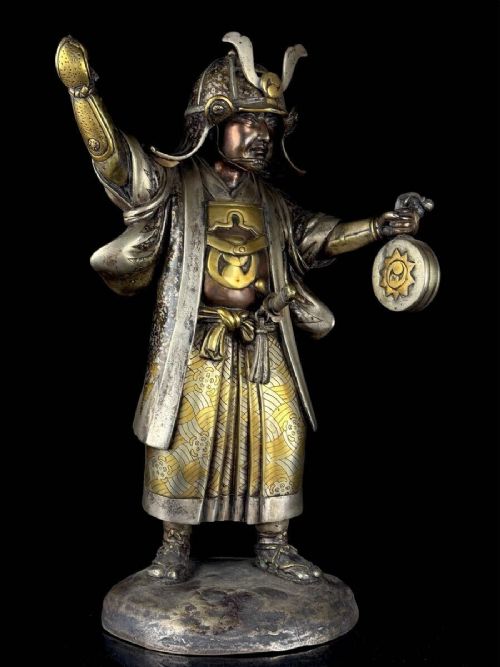
The objects listed display specific functional and decorative forms, including bronze sculptures of figures such as Ōishi Yoshio, large circular boxes, decorative dishes, and sculptural vases. Many pieces date from the nineteenth century, including items from the 1880s and 1890s, as well as early twentieth century examples from around 1910.
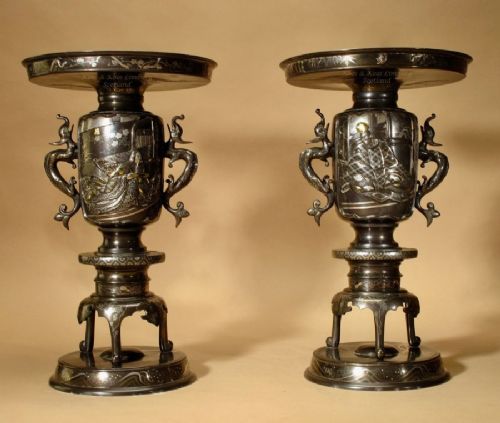
Japanese Meiji period works feature prominently, showcasing intricate mixed-metal applications of silver, gold, and bronze on plaques and vessels. Alongside these Asian metalworks, European furniture and timepieces incorporate similar decorative techniques through gilt bronze, brass, and ormolu mounts set into wood bases.
Materials and construction
Makers utilised bronze, gilt bronze, brass, and ormolu as primary metallic bodies for casting vessels, figures, and clock mounts. These metals provided sturdy structural foundations capable of supporting intricate surface decoration and contrasting metal inlays.
Gold inlay and mixed-metal techniques involved embedding finer metals such as gold and silver into prepared channels or surfaces on the bronze substrate. Artisans combined these metallic elements with other decorative materials like turquoise inlays, tortoiseshell, and wood in pieces such as boulle cabinets and writing tables.
Gold Inlaid Bronze Retail Price Guide 2026
Typical asking prices for gold inlaid bronze among the pieces listed under this phrase on Sellingantiques today, from the lower quarter to the upper quarter. They describe what is for sale here now, not the wider market.
The listings feature diverse materials including bronze, gilt bronze, brass, gold inlay, ormolu, tortoiseshell, gold, and silver across the nineteenth and early twentieth centuries.
Judging quality in metalwork
Quality reveals itself in the precision and complexity of the metallic inlays and the crispness of the cast bronze or brass forms. Finer examples display meticulous integration of mixed metals, where gold and silver work aligns seamlessly with the underlying bronze or brass surface.
The sophistication of the design and the execution of sculptural details differentiate superior pieces from simpler productions. Whether examining a Japanese mixed-metal dish or a French mantel clock, the depth of artistry in the decorative motifs dictates the standing of the piece within its period.
Samuel Marti
The Gold Inlaid Bronze Glossary
- Ormolu
- Gilt bronze mounted on decorative objects and furniture. This technique involves applying a finely ground high-carat gold mercury amalgam to a bronze object.
- Boulle
- A type of marquetry using brass and tortoiseshell developed in France. It frequently adorns nineteenth-century credenzas, writing tables, and mantel clocks.
- Komai Style
- A specific Japanese metalworking technique involving delicate damascene inlay of gold and silver on iron or bronze surfaces.
- Gilt Bronze
- Bronze that has been coated with a thin layer of gold. It provides a bright metallic finish resistant to tarnishing.
Gold Inlaid Bronze: Frequently Asked Questions
What is gold inlaid bronze?
Gold inlaid bronze refers to metalwork objects adorned with gold or mixed-metal inlays set into a bronze or brass body. These pieces include Japanese vases, plaques, and boxes alongside European decorative items.
The category spans diverse cultural origins, encompassing nineteenth-century Japanese Meiji period metalwork and European ormolu-mounted furniture and clocks.
How do I care for these pieces?
Care requires gentle dusting with a soft, dry cloth to protect delicate metallic surfaces and inlays. Avoid harsh chemical cleaners that can damage gold leaf, patinated bronze, or tortoiseshell.
Keeping items away from direct sunlight and excessive humidity preserves the stability of mixed-metal components and wood structures.
Where were these items made?
These items originated across multiple regions, with significant contributions from Japanese metalworkers and Chinese artisans. European workshops in France also produced substantial quantities of gilt bronze and ormolu pieces.
This geographical diversity brings together contrasting aesthetic traditions, from East Asian decorative vessels to ornate French Napoleon III style furnishings.