
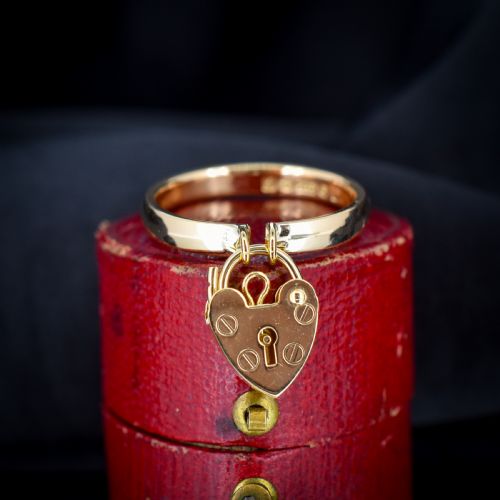


Gold Heart Pendant
A gold heart pendant carries sentiment in metal, spanning Victorian and Edwardian periods with gemstones and diamonds.
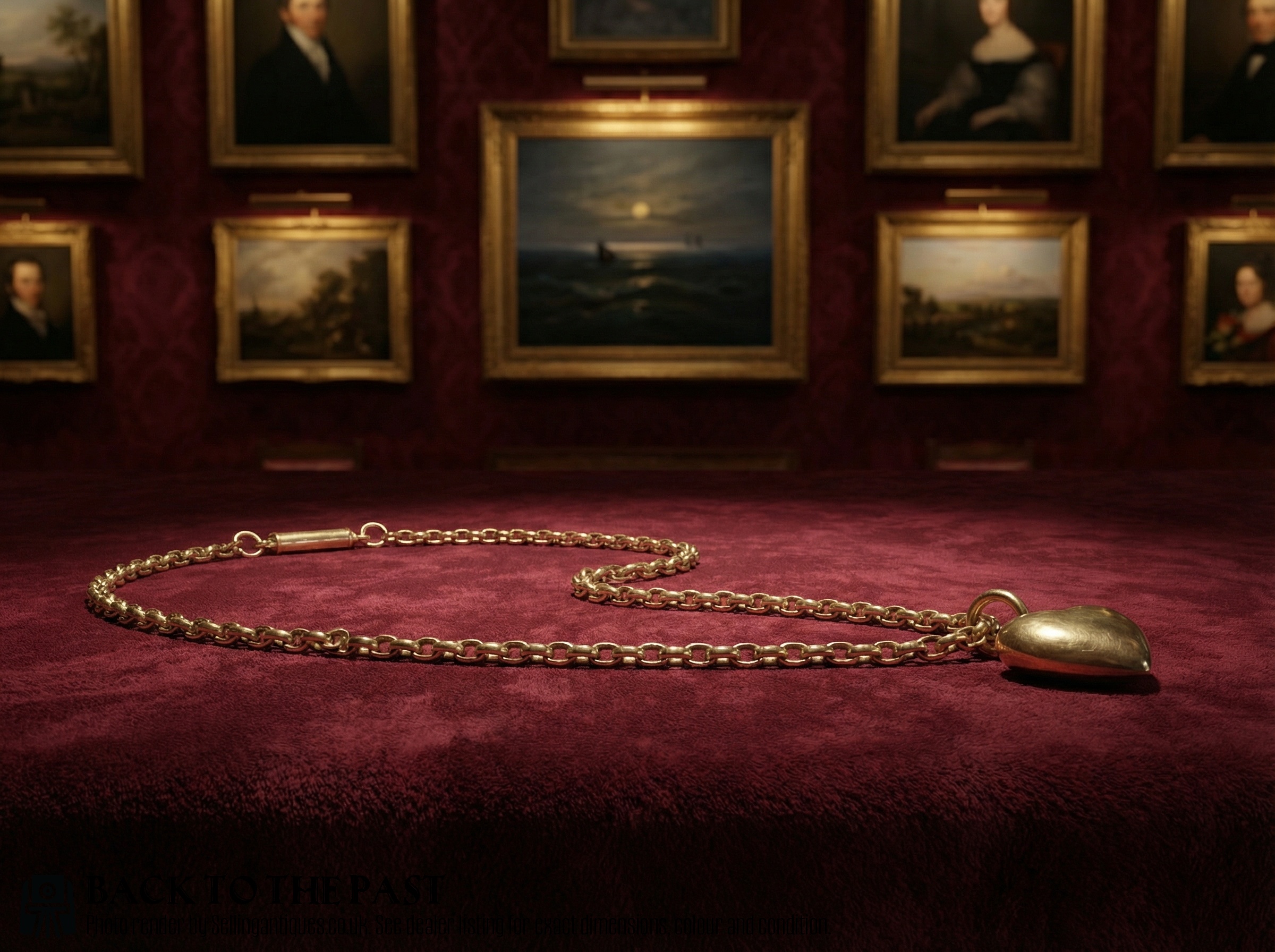
Gold Heart Pendant
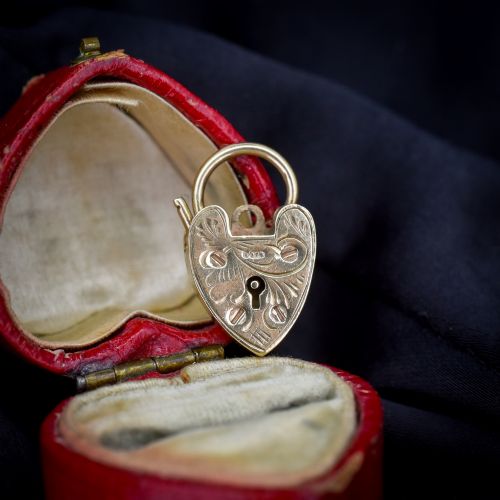
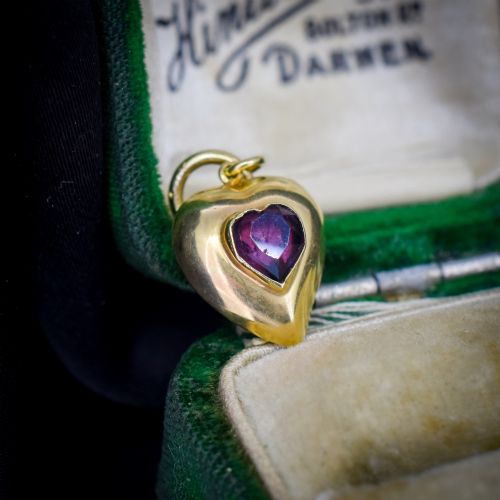
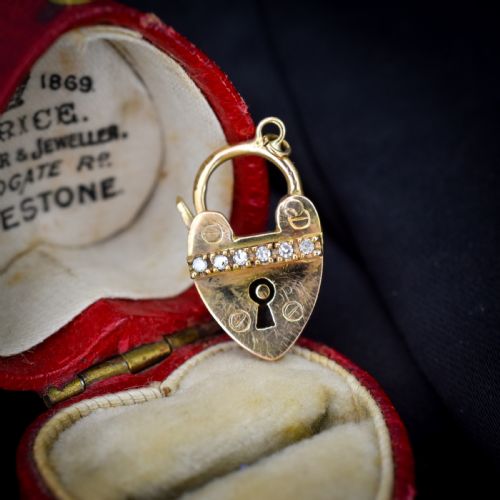
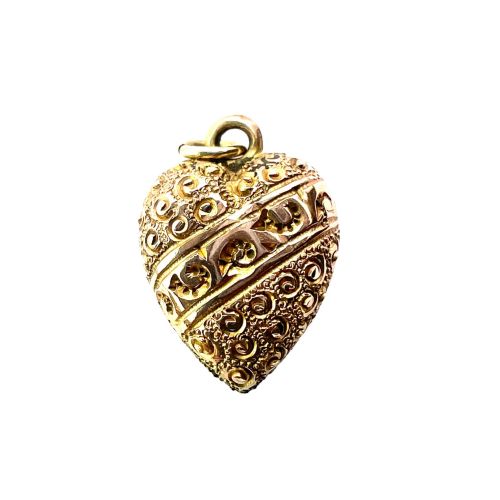
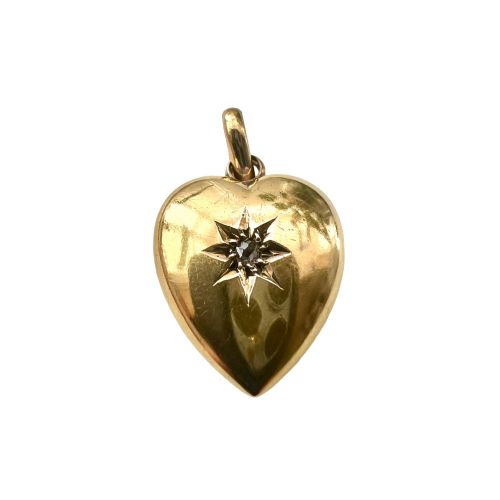
A gold heart pendant represents sentiment across Victorian, Edwardian, and later eras. Buyers find puffy hearts, lockets, and padlock charms set on chains or worn as charms.
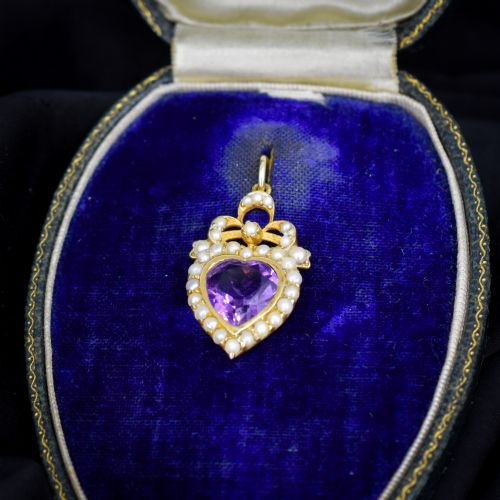
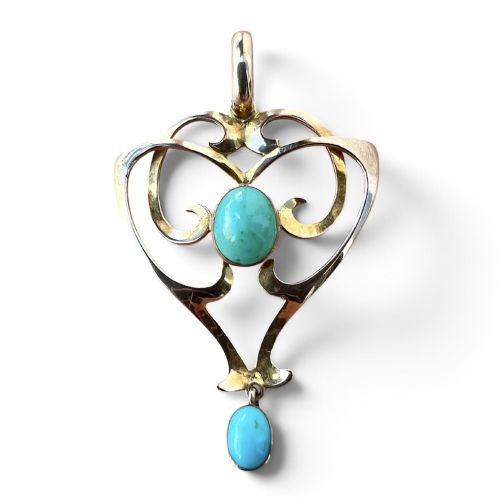
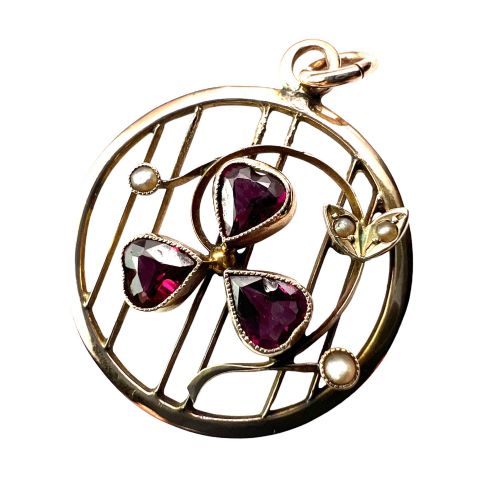
Victorian and Edwardian versions dominate the selection, often worked in high carat 15ct or 9ct gold. These pieces combine symbol and ornament, frequently incorporating seed pearls, diamonds, and turquoise.
Materials and Construction
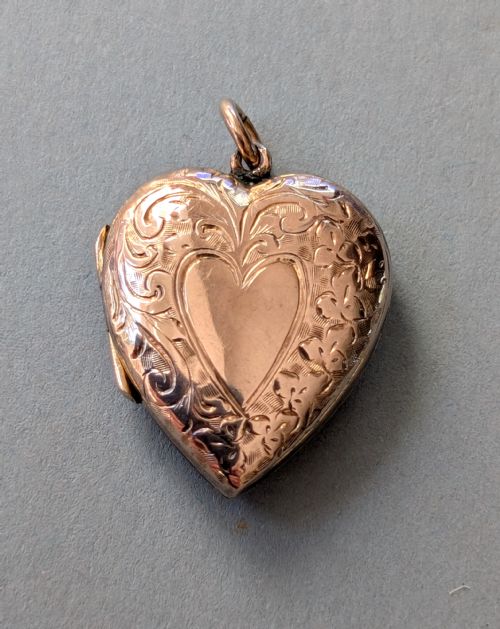
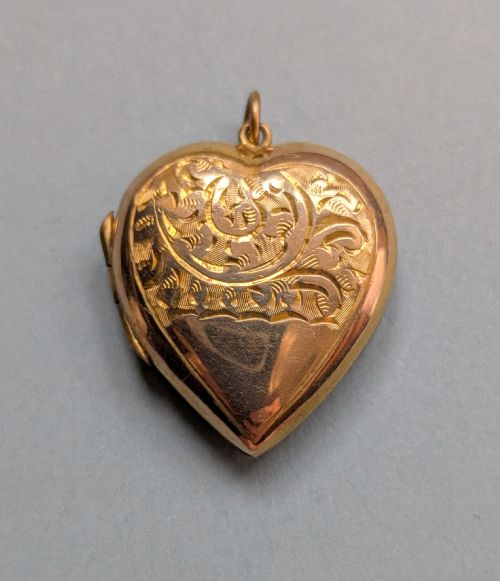
Goldsmiths utilised 9ct, 15ct, and 18ct gold, alongside platinum, creating solid forms or hollow puffy hearts. Front surfaces occasionally featured matt finishes or detailed engraving of birds, butterflies, and floral motifs.
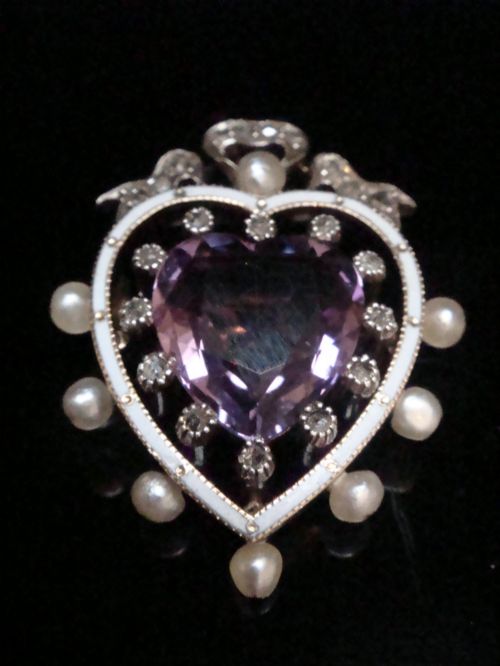
Gemstones including old cut diamonds, seed pearls, turquoise, amethyst, ruby, and sapphire were flush set, collet set, or arranged in clusters and double heart formations.
Gold Heart Pendant Retail Price Guide 2026
Typical asking prices for gold heart pendant among the pieces listed under this phrase on Sellingantiques today, from the lower quarter to the upper quarter. They describe what is for sale here now, not the wider market.
Listings demonstrate pendants executed in 9ct, 15ct, and 18ct gold, alongside platinum, incorporating materials from turquoise to moonstone.
Distinctions in Quality
Quality rests upon the weight of the gold, the presence of high carat alloys like 15ct, and the crispness of hand engraving. Superior examples retain original components such as matching chains or functional lockets.
The selection and cut of stones separate standard pieces from finer ones, particularly when old cut diamonds or well matched seed pearls and turquoise are present.
Murrle Bennett·Lasserre·Lavrillier·Dropsy
The Gold Heart Pendant Glossary
- Puffy heart
- A hollow, three dimensional heart pendant formed from two convex halves joined at a seam. These pieces were popular during the Victorian period.
- Padlock charm
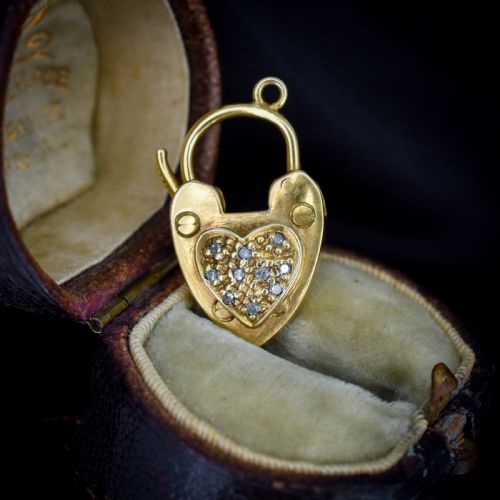
- A small padlock shaped like a heart, designed to secure a bracelet or necklace. Many examples carry hallmarks from the Edwardian era.
- Double heart
- A motif featuring two hearts joined together, symbolising union. They are frequently accented with seed pearls and turquoise.
- Lavalier
- A pendant featuring a main stone with one or more drops suspended below. Edwardian makers often designed these in delicate gold frameworks.
Gold Heart Pendant: Frequently Asked Questions
How do I date a gold heart pendant?
Dating relies on hallmarks, mount styles, and associated gemstones. Victorian pieces often use high carat 15ct gold with seed pearls, while Edwardian versions frequently incorporate platinum and old cut diamonds.
Changes in engraving subjects, such as birds or floral motifs, also help place a pendant within its correct period.
What is a puffy heart pendant?
A puffy heart is a hollow pendant constructed from two raised gold plates joined at the edges. This technique allowed makers to create substantial three dimensional shapes without excessive weight.
Many Victorian and Edwardian examples feature engraved fronts or central gemstone settings.
Were these pendants worn on chains?
Original configurations varied between chains, ribbons, and charm bracelets. Surviving pieces often retain their original split rings, lockets, or matching necklaces.
Padlock charms were frequently secured to heavy link chains during the late nineteenth and early twentieth centuries.
What stones are common in antique hearts?
Seed pearls, turquoise, and amethyst appear frequently in Victorian and Edwardian pieces. Diamonds, rubies, and sapphires were also utilised for cluster settings and coronet designs.
Softer stones like moonstone and sardonyx occasionally feature in specific fob and pendant configurations.