





Gold Half Hoop Ring
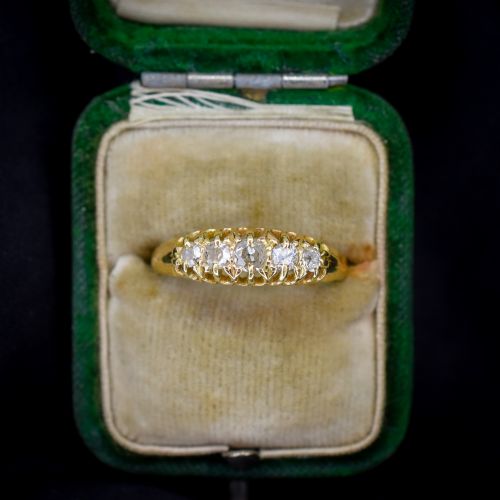
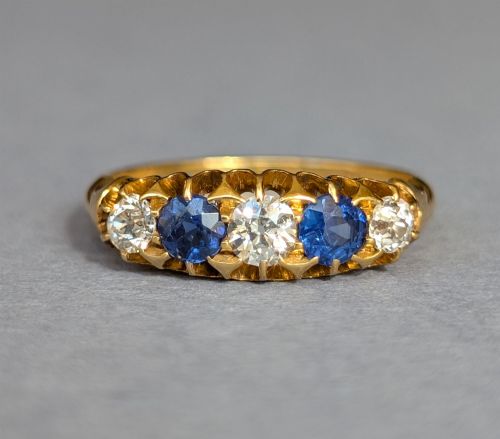
A gold half hoop ring presents a row of matched gems across the finger, bringing together Victorian, Edwardian, and later periods in wearable form.
Gold Half Hoop Ring
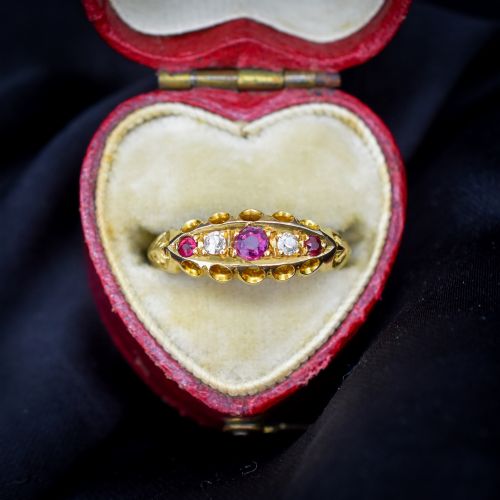
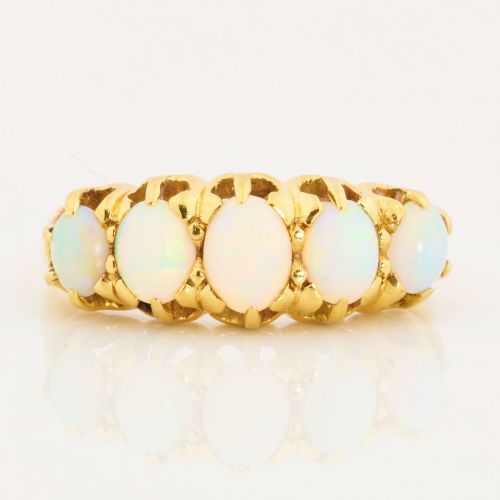
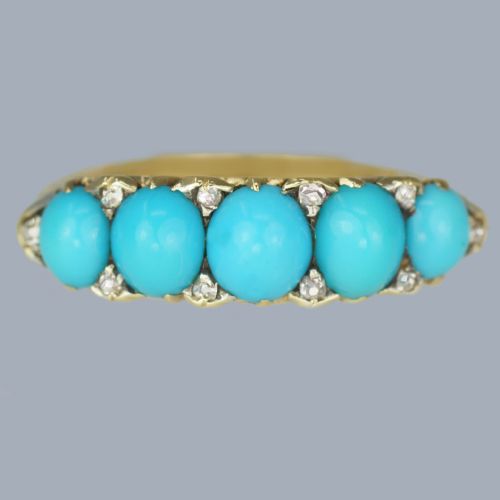
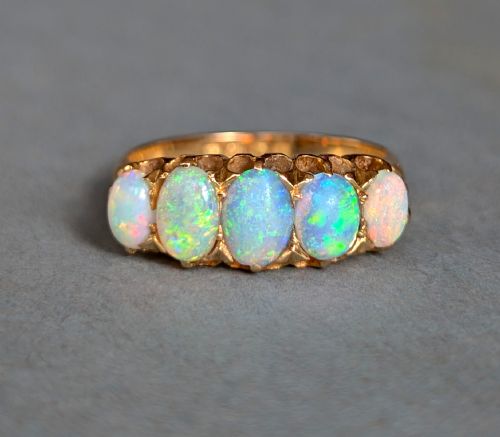
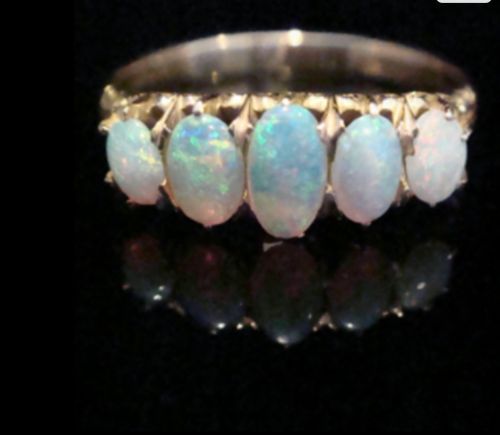
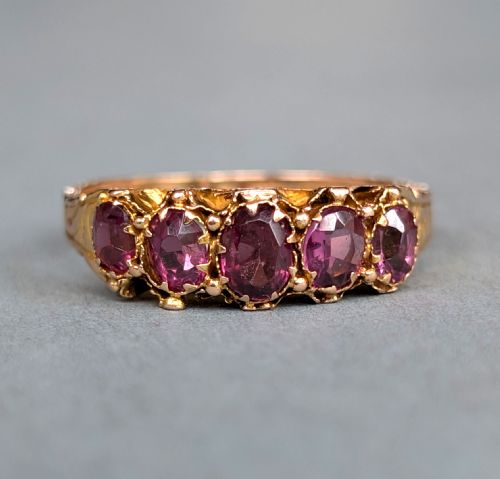
The format accommodates diamonds alongside coloured stones such as sapphires, rubies, opals, and turquoise. Many examples use alternating stone arrangements, pairing diamonds with sapphires, rubies, or pearls in an 18ct yellow gold setting.
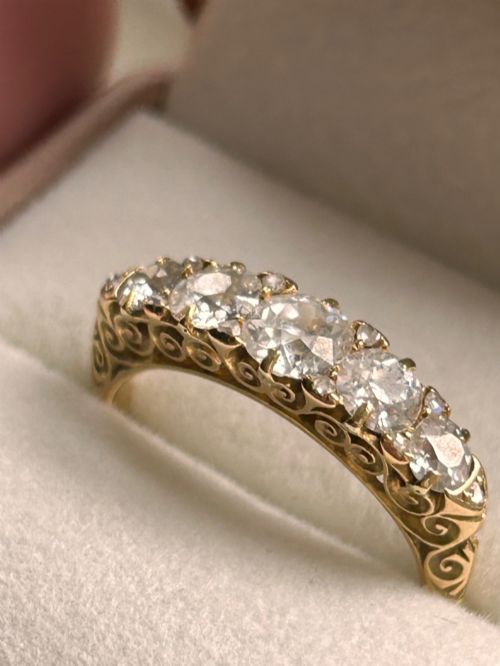
Makers often shaped the mounting into boat or bateau profiles, sometimes termed carved half hoops, where the metalwork curves upward to cradle each gem. These rings function primarily as day wear or engagement bands, sitting low to the hand.
How they were made
Goldsmiths worked predominantly in 18ct yellow gold, though 15ct, 14ct, and 9ct white and yellow variations also exist in the record. Stones were secured using claw settings, star settings in gypsy styles, or flush mountings within boat-shaped galleries.
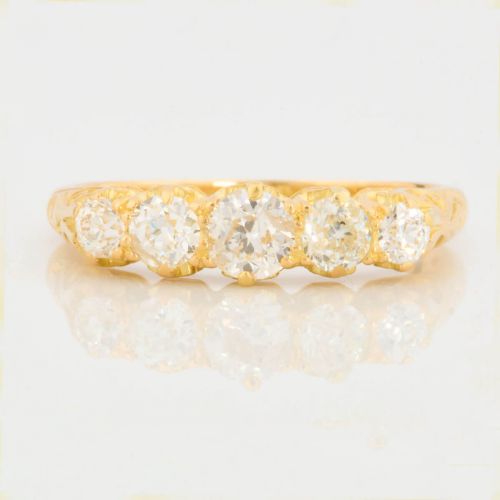
Gems were cut by hand during the Victorian and Edwardian periods, yielding old mine cut or old European cut diamonds that display smaller tables and deeper pavilions than modern stones. Coloured stones such as opals, rubies, and sapphires were shaped into cabochons or faceted rounds to fit the linear progression of the half hoop.
What varies in quality
The standard of a gold half hoop ring rests on the uniformity and matching of the stones across the row. Graduated or evenly sized gems with consistent colour saturation elevate an antique piece above standard production.
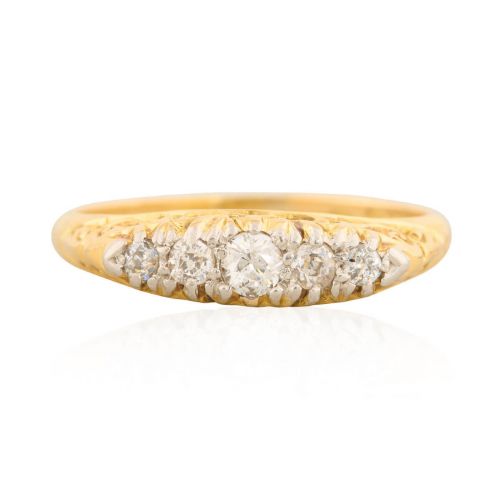
Metalwork execution distinguishes finer examples, particularly where carved galleries, pierced shoulders, or substantial claw work show deliberate hand-finishing rather than mass assembly. Hallmarks indicating assay offices such as Chester, Birmingham, or London provide verifiable provenance for the gold standard.
The Gold Half Hoop Ring Glossary
- Half hoop
- A ring design featuring a single row of stones spanning the upper portion of the band. This configuration contrasts with full eternity rings that encircle the entire finger.
- Boat ring
- A mounting shaped with tapering ends that resemble the hull of a ship, lifting the central stones higher than the shoulders. This style is also known as a bateau setting.
- Old cut diamond
- A diamond cut by hand before the advent of modern machinery, characterised by a smaller table, higher crown, and open culet. These stones catch candlelight effectively.
- Gypsy set
- A mounting style where stones are flush-set directly into the thick gold band, leaving the metal surface smooth around the gem. This technique gained popularity during the Victorian era.
- Cabochon
- A gemstone polished to a convex, rounded surface rather than faceted. This cut is common for opals, turquoises, and certain star stones.
Gold Half Hoop Ring: Frequently Asked Questions
How do I wear a half hoop ring daily?
These rings sit low to the hand, making them suitable for regular wear when paired thoughtfully. Consider removing them during manual labour to protect softer gems like opals and turquoise from impact.
Pairing a gold half hoop with plain bands minimises friction between adjacent rings. Regular cleaning in warm soapy water maintains the brilliance of both the gold and the stones.
Were these rings used as engagement rings?
Victorian and Edwardian examples frequently served as engagement rings, particularly five-stone diamond configurations. The linear arrangement symbolised enduring partnership.
Gemstone combinations such as ruby and diamond or sapphire and diamond were also popular choices for betrothal tokens. Their low profile made them practical for daily use in past decades.
How do I tell Victorian from Edwardian pieces?
Victorian settings often feature heavier 18ct yellow gold, gypsy star engravings, or robust boat galleries. Gemstones during this era included substantial old cut diamonds and rich rubies or sapphires.
Edwardian rings transition towards lighter aesthetics, incorporating millegrain edges and occasionally white gold or platinum accents alongside diamonds and pale opals. Hallmarks and assay stamps inside the band provide definitive dating clues.
What stones are common in antique half hoops?
Diamonds form the backbone of these listings, frequently paired with sapphires, rubies, and opals. Turquoise and pearls also appear in Victorian multi-gem configurations.
Coloured stones were often chosen for personal significance or birthstone association. The variety ranges from deep blue sapphires to iridescent white and black opals.