



Gold Hair Jewellery
Gold hair jewellery comprises memorial pieces woven from human hair and mounted in precious metals, offering a tangible remembrance of loved ones from past centuries.
Gold Hair Jewellery
Gold hair jewellery spans several eras, with pieces originating from the Georgian, Victorian, and Edwardian periods. Buyers encounter items created to memorialise the deceased or celebrate personal bonds, utilising intricate strands preserved behind glass or woven into solid structures.
The inventory on this page centres heavily on Victorian examples, alongside Georgian and Edwardian pieces. Forms include rings, brooches, lockets, pendants, and hair ornaments such as combs and tiaras.
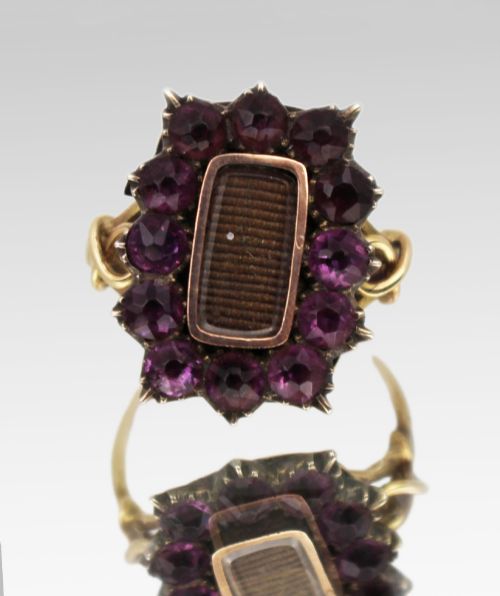
Mourning items dominate the selection, featuring woven hair set alongside seed pearls, coloured paste stones, and enamel. These wearable keepsakes combine sentimental purpose with the distinct aesthetic of nineteenth-century craftsmanship.
How gold hair jewellery was made
Craftsmen built these pieces using yellow gold, often graded at 9ct, 15ct, or 18ct, alongside silver for specific mountings. Tortoiseshell and glass provide protective covers or structural backings for delicate internal compartments.
Makers utilised human hair as both a decorative surface and a structural medium, weaving strands into flat panels or volumetric braids. Seed pearls and paste stones were then applied around the central hair work to frame the memorial design.
Gold Hair Jewellery Retail Price Guide 2026
Typical asking prices for gold hair jewellery among the pieces listed under this phrase on Sellingantiques today, from the lower quarter to the upper quarter. They describe what is for sale here now, not the wider market.
Listings feature items spanning the Georgian, Victorian, and Edwardian periods, constructed in gold, silver, glass, tortoiseshell, and seed pearls.
What varies in quality
The refinement of the hair work itself distinguishes standard examples from exceptional items, with tight, complex braids demonstrating superior technical control. The weight and purity of the gold mountings, ranging from lower carat alloys up to 18ct, contribute significantly to the distinction between pieces.
The integration of supplementary materials, such as well-matched seed pearls or diamond paste stones, elevates the overall execution. Preserved condition of the glass covers and the clarity of engine-turned engraving on the gold casing further separate individual items.
Jacob Amyand
The Gold Hair Jewellery Glossary
- Mourning ring
- A finger ring created to remember a deceased person, frequently incorporating braided human hair and gold. These pieces often bear engraved dates or initials on the interior band.
- Vinaigrette
- A small container holding a sponge soaked in aromatic vinegar, used to counteract unpleasant smells. Georgian examples in this category occasionally incorporate hair work compartments.
- Seed pearl
- A very small, natural, or saltwater pearl, often undrilled or half-drilled, utilised to edge memorial brooches and rings. They create a delicate, luminous border around central hair panels.
- Kushi and Kogai
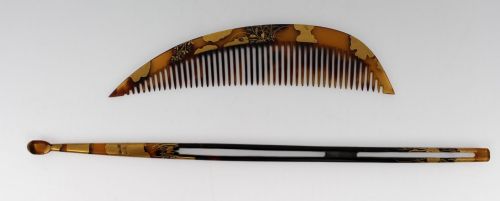
- Traditional Japanese hair ornaments comprising a decorative comb and matching skewer set. Meiji period examples utilise lacquered and metallic finishes for formal styling.
- Engine-turned
- A decorative surface technique produced by a lathe that cuts geometric patterns into metal. This method provides texture to the gold backs and lockets of Victorian pieces.
Gold Hair Jewellery: Frequently Asked Questions
What is gold hair jewellery?
These pieces are historic personal ornaments that incorporate actual human hair into rings, brooches, and lockets. They served as tokens of remembrance or affection during the Georgian and Victorian eras.
Craftsmen encased the hair beneath glass or wove it tightly into decorative motifs, supported by gold and silver settings.
How do I wear a mourning ring?
Mourning rings are worn on the hand just like conventional rings, though their delicate hair work and glass panels require careful treatment. Daily wear should avoid impact or immersion in water.
Keep them protected from harsh chemicals and store them securely when not in use to preserve the integrity of the hair and gold.
How do I date a hair locket?
Dating relies on stylistic clues, gold purity marks, and structural formats associated with specific periods like the Georgian or Victorian eras. Enamel work, stone cuts, and fastener types offer further chronological indicators.
Inscribed dates and maker details on the reverse or interior also help pinpoint the exact year of creation.
What periods do these pieces come from?
The selection spans from the Georgian era through the Victorian period and into the Edwardian years. Specific dates recorded range from the early nineteenth century up to the late Victorian decades.
Meiji period Japanese hair ornaments also appear, representing distinct cultural traditions of the same timeframe.