


Gold Glass Mantel Clock
A gold glass mantel clock brings weight and precise mechanics to a room, combining heavy glass panels with polished metal cases.
Gold Glass Mantel Clock
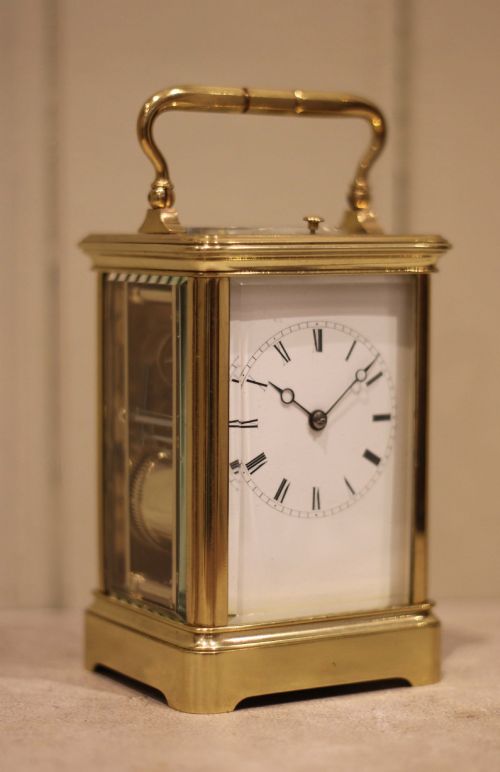
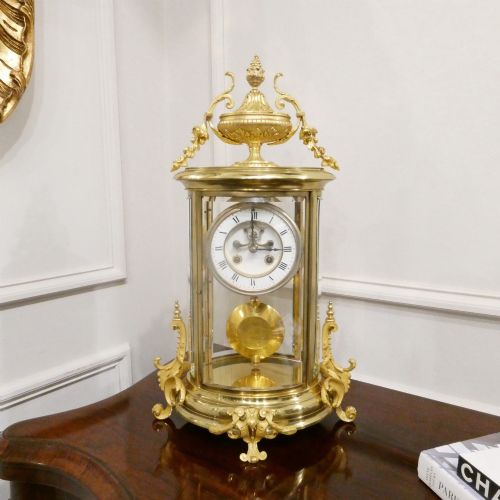
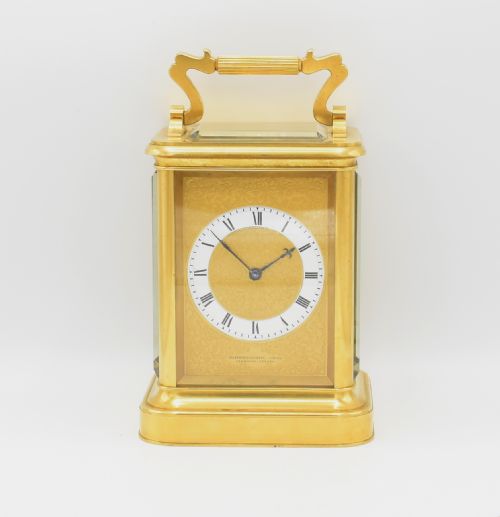
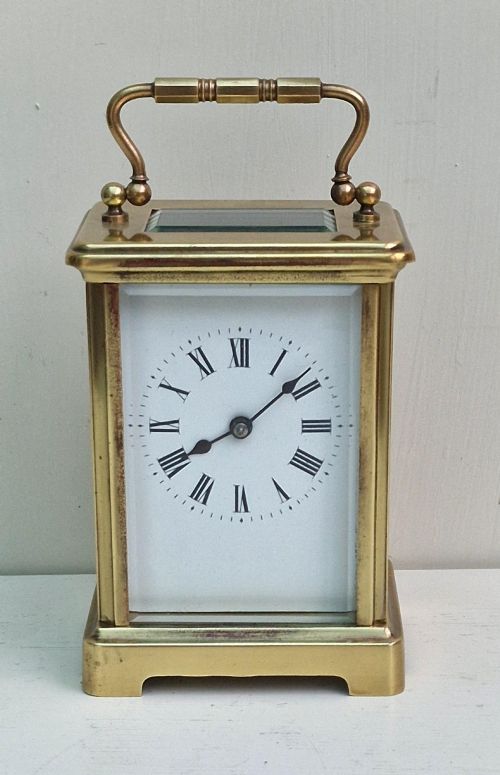
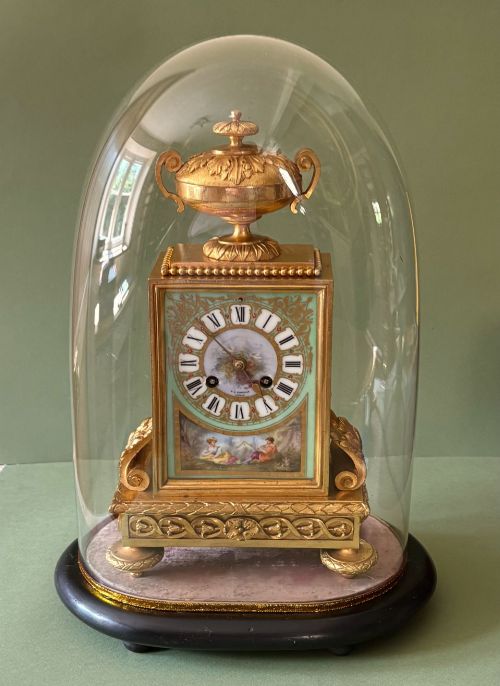
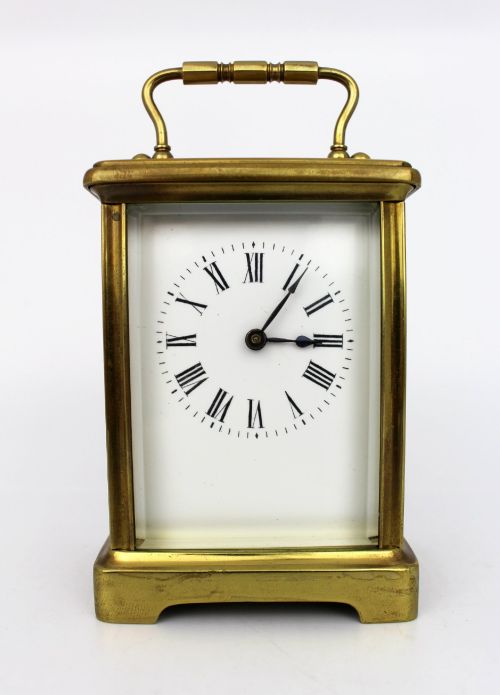
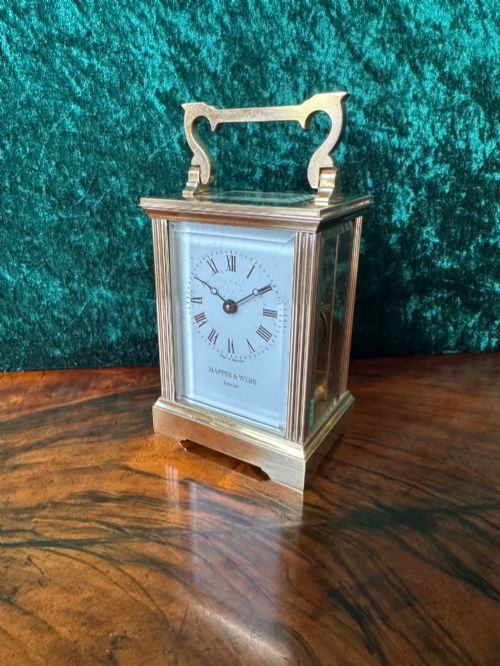
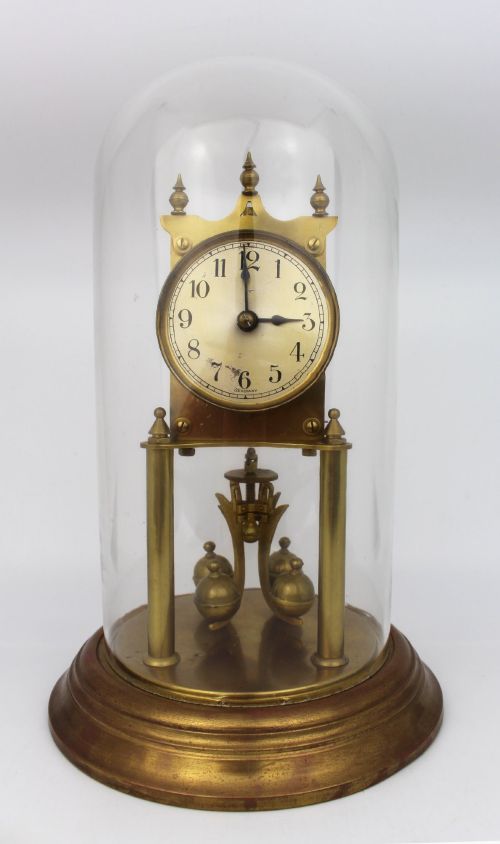
When you search for a gold glass mantel clock, you encounter domestic timepieces housed in brass, gilt bronze, or ormolu frames paired with transparent glass panels. These objects range from heavy nineteenth-century French four-glass clocks to compact carriage clocks and mid-century pieces.
The selections here lean heavily toward nineteenth-century French workshops, Victorian carriage clocks, and glass-heavy mantel designs. You will frequently find brass and gilt bronze combined with enamel dials and visible internal mechanics.
Materials and construction
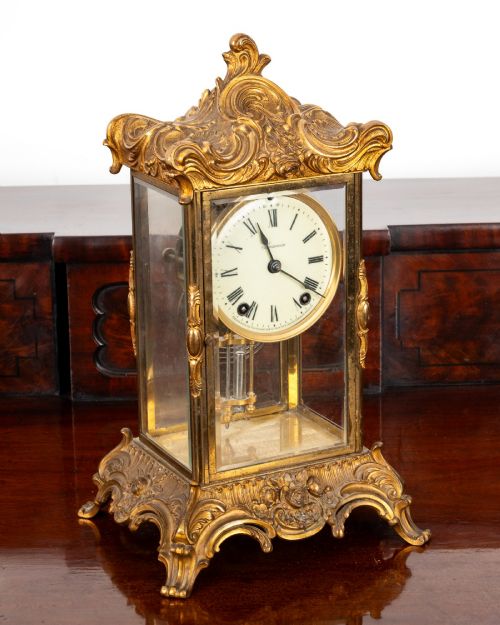
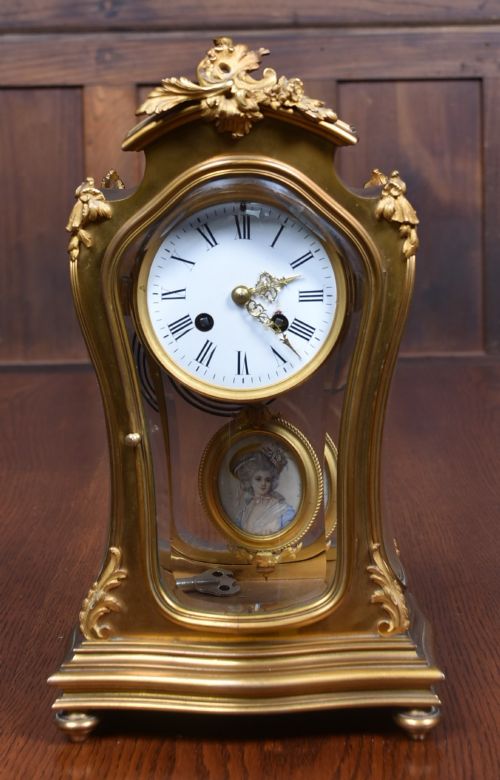
Makers constructed these clocks using cast brass, gilt bronze, or ormolu frames fitted with bevelled glass panes that allowed light to pass through the movement. Dials were commonly made of white enamel with painted Roman or Arabic numerals, sometimes accented with porcelain plaques or miniature paintings.
Movements were built from brass and steel components, often featuring lever platforms, striking mechanisms, or complex repeating gear trains. Cases relied on sturdy corner pillars and secure bezel mountings to support the heavy glass panels.
Listings feature glass, brass, enamel, gilt brass, gilt bronze, ormolu, steel, and porcelain across the nineteenth and twentieth centuries.
Assessing quality in execution
Superior examples display crisp casting and chasing on the gilt metal mounts, with thick, bevelled glass panes that fit securely within the frame without play. The quality of the movement is evident in the finish of the brass plates, the precision of the escapement, and the clarity of the enamel dial.
Finer clocks often include signed movements from established makers, auxiliary striking or repeating functions, and original escape mechanisms rather than later replacements. The overall weight and rigidity of the metal housing distinguish finely engineered pieces from lighter, mass-produced alternatives.
Samuel Marti·Goldsmiths Alliance Ltd·Mappin and Web·Ansonia New York·Leroy Paris·Breguet·L Epee·AD Mougin·Jaeger LeCoultre·DROCOURT
The Gold Glass Mantel Clock Glossary
- Ormolu
- A technique of applying finely ground high-carat gold to an object of bronze through a mercury amalgamation process. This finish provides a warm, enduring golden lustre to the metal mounts of the clock case.
- Four glass clock
- A mantel clock housed in a rectangular case with glass panels on the front, back, and both sides. This design exposes the entire movement and pendulum to view from multiple angles.
- Carriage clock
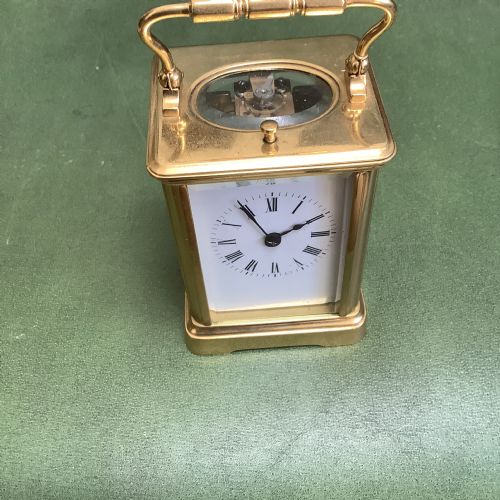
- A small, portable spring-driven clock originally designed for travel during the nineteenth century. They usually feature a rectangular brass case with a glass top and a hinged carrying handle.
- Escapement
- The mechanical linkage that controls the rotation of the gear train by translating the power of the mainspring into controlled impulses. It produces the characteristic ticking sound of the clock.
- Repeating movement
- A mechanism that allows the clock to chime the most recent hour and quarter-hour upon demand when a pull-cord or button is activated. This function was useful for telling time in a dark room.
Gold Glass Mantel Clock: Frequently Asked Questions
How do I wind a mechanical carriage clock?
Insert the winding key into the arbour located on the back plate of the movement. Turn the key gently clockwise until you feel firm resistance.
Avoid overwinding the spring, as this can damage the internal gearing. Ensure you support the case securely while turning the key.
Why does my clock run fast or slow?
Mechanical clocks are sensitive to temperature changes, mechanical wear, and being placed on an uneven surface. Most movements include a small regulation square on the dial or back plate to adjust the speed.
Moving the regulatory lever slightly toward the fast or slow indicator will correct the timing over a twenty-four-hour period.
How should I clean the glass panels?
Use a soft, lint-free microfibre cloth and a mild glass cleaner applied to the cloth rather than directly onto the clock case. This prevents moisture from seeping into the movement or tarnishing the surrounding metal.
Take care around enamel dials and painted surfaces, as aggressive solvents can permanently damage the markings.
What is a platform escapement?
A platform escapement is a self-contained regulating assembly mounted on a small metal plate within portable clocks like carriage models. It replaces the traditional pendulum found in stationary mantel clocks.
This innovation allows the timepiece to maintain accurate time while being moved or transported.