
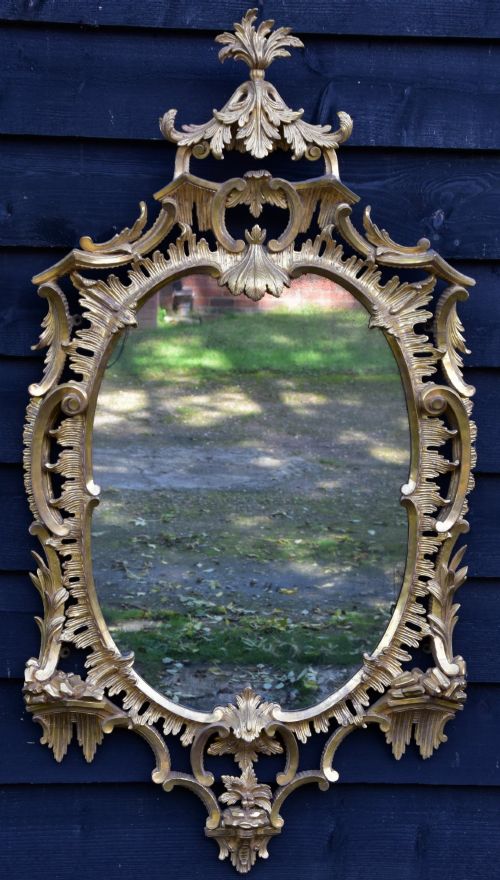
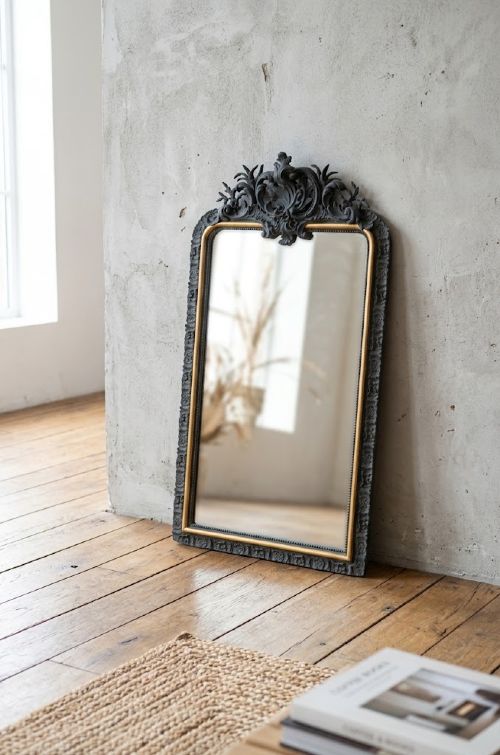
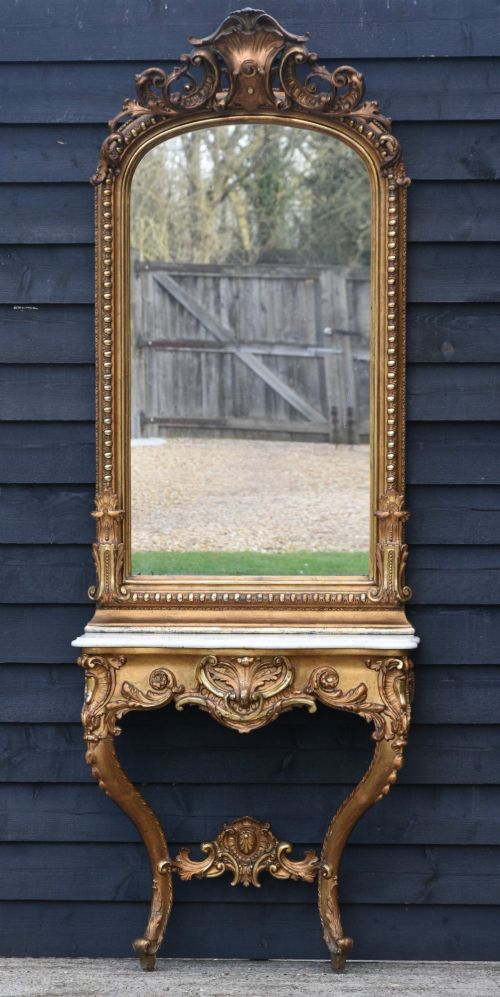
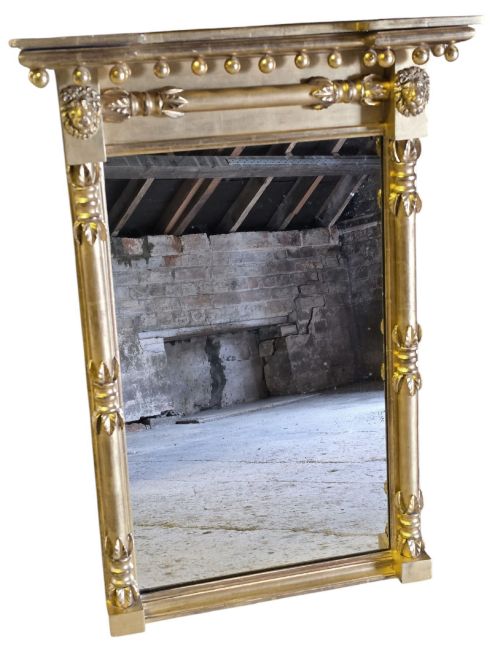

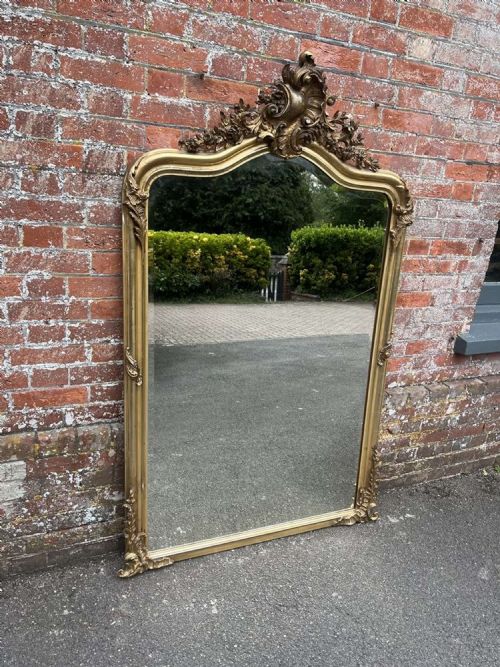
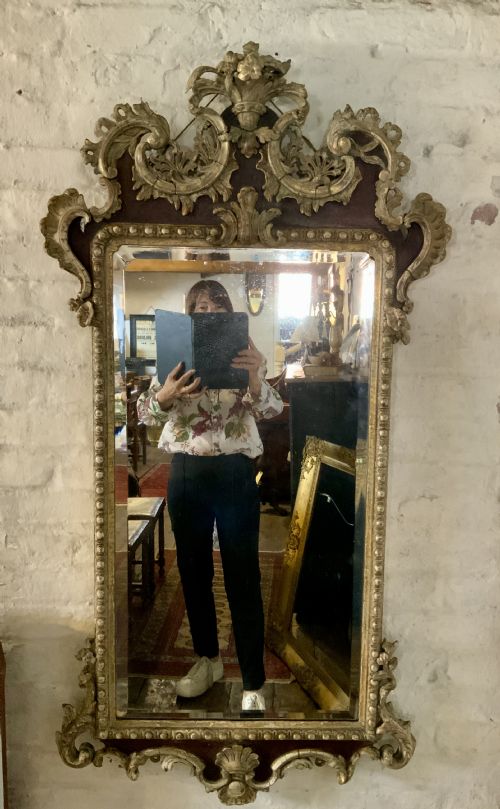
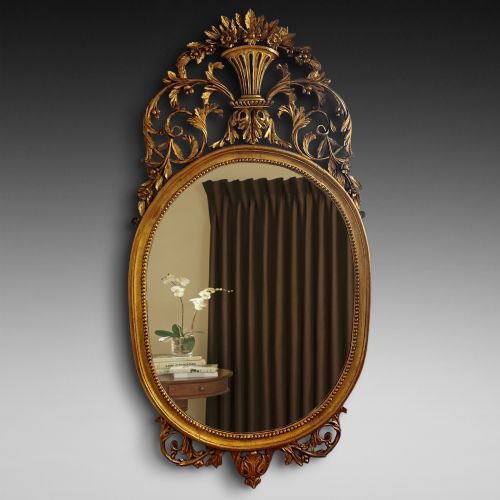
Gold Giltwood Pier Glass
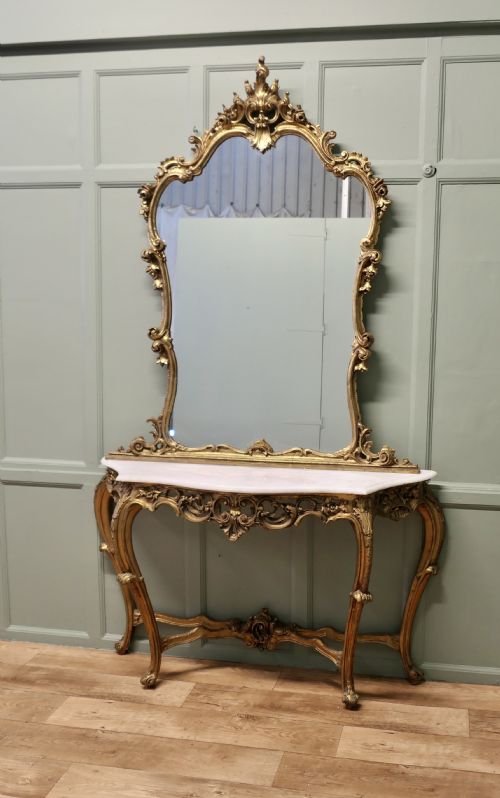
A gold giltwood pier glass brings architectural height and reflected light to a room, hung traditionally between two windows over a console table.
Gold Giltwood Pier Glass
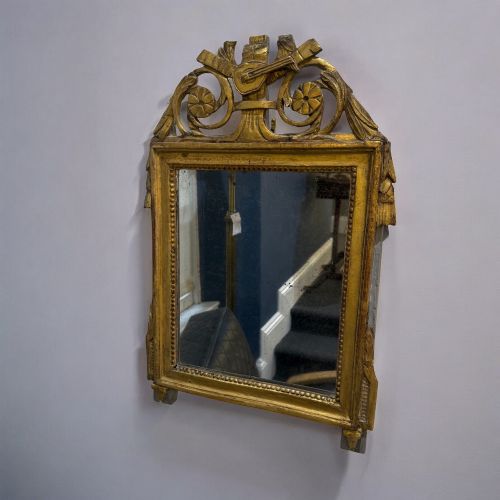
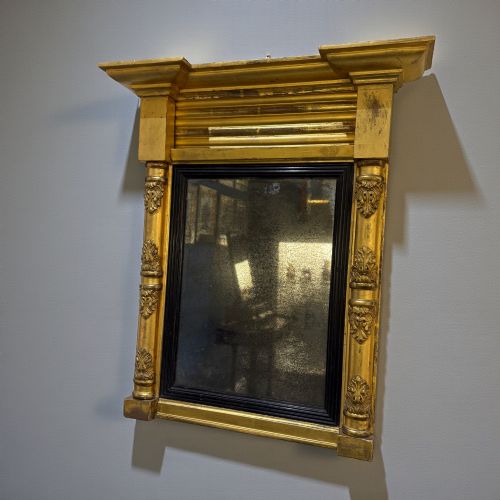
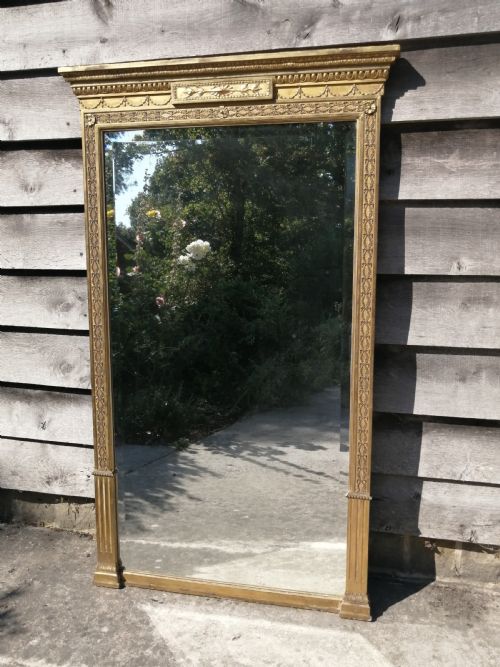
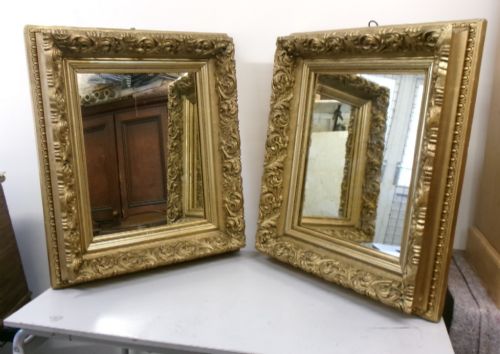
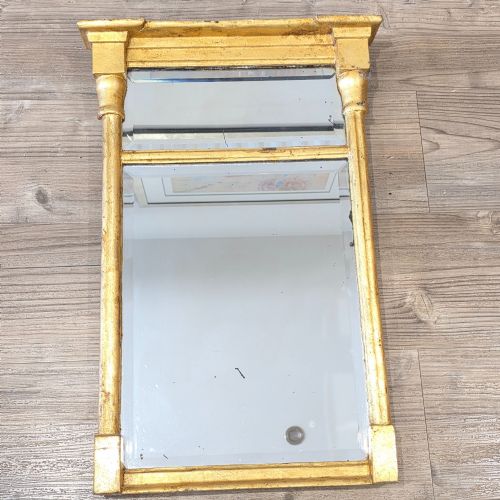
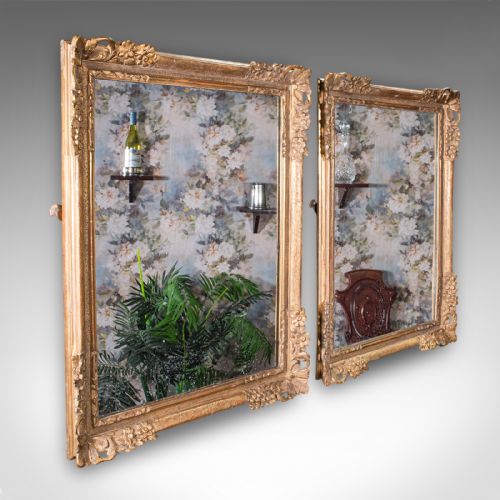
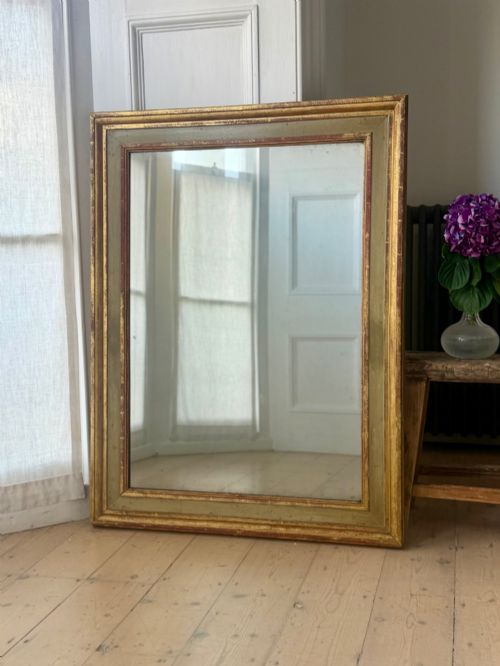
A gold giltwood pier glass is a tall, vertical wall mirror designed to occupy the narrow wall space, known as the pier, between windows or doors. The selection here spans the eighteenth, nineteenth and early twentieth centuries, drawing on Georgian, Regency, Victorian and French Neoclassical styles.
The most common examples you will encounter date from the nineteenth century, including Regency interpretations and French Napoleon III or Rococo revival pieces. These take the form of wall mirrors, console table and mirror combinations, and trumeau mirrors with painted or decorated upper panels.
Origin points range across English workshops and continental centres such as France and Italy, with makers utilising traditional forms inspired by earlier George I and Adam designs. The plates range from domestic wall hangings to monumental architectural glass.
Materials and construction
The foundation of these frames typically combines carved wood, gesso and composition ornament, built up to take layers of gold leaf or paint. Carvers worked soft woods to create detailed scrolling, columns and motifs before applying the gilding.
Mirrors from the earlier periods frequently retain original mercury glass plates, showing subtle foxing and depth, while later examples utilise standard mirror glass. Panels often incorporate verre eglomise reverse-painted glass or upper sections decorated with oil painting.
Some nineteenth century mirrors double as valet glasses, helping well-dressed visitors check their hats before stepping out.
Craftsmanship and preservation
Quality rests in the crispness of the carved detail and the depth of the gesso work beneath the gold leaf, where hand-tooled execution separates finer items from mass-produced frames. The integrity of the original mercury plate or early glass adds substantial character.
The survival of the original gilding without heavy overpainting dictates the visual weight and historical honesty of the piece. Proportion between the mirror plate and the surrounding frame structure governs the overall architectural balance.
The Gold Giltwood Pier Glass Glossary
- Pier glass
- A tall vertical mirror specifically built to hang on the wall space between two windows. It frequently sat above a matching console table.
- Giltwood
- Timber that has been coated with a thin layer of gold leaf over a prepared gesso ground. This finish provides the characteristic metallic warmth.
- Gesso
- A mixture of chalk, gypsum and size applied to wood frames to create a smooth surface for carving and gilding. It allows for sharp relief ornament.
- Verre eglomise
- A cold decoration technique involving painting and gilding on the reverse side of glass panels. It often appears in the upper section of a pier mirror.
- Trumeau
- A decorative wall panel that incorporates a mirror glass alongside a painted or carved scene. These originated in grand French interiors.
Gold Giltwood Pier Glass: Frequently Asked Questions
Where should I hang a pier glass?
These mirrors suit narrow wall sections between windows or above low console furniture where vertical lines draw the eye upward.
They function effectively in hallways, dining rooms and drawing rooms to bounce natural light around the space.
What is mercury glass?
Older mirror plates created using a tin and mercury amalgam poured behind the glass rather than modern silvering.
This method produces a warm, mottled reflection with characteristic dark spots known as foxing.
Are these mirrors heavy?
The combination of dense timber frames, thick gesso and heavy glass plates makes these pieces substantial in weight.
Secure wall fixings and professional installation into structural masonry or studwork are essential for safe hanging.