

Gold Giltwood Accent Chairs
Gold giltwood accent chairs bring a gilded French or English formality into a room, offering sculptural seating shaped by centuries of revivalist design.
Gold Giltwood Accent Chairs
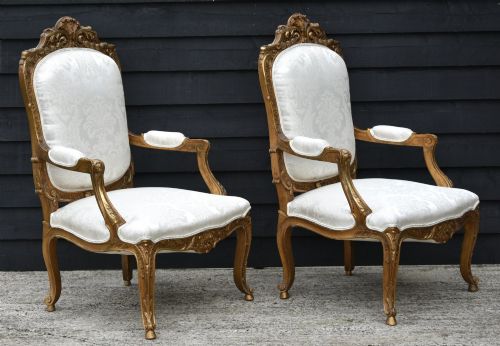
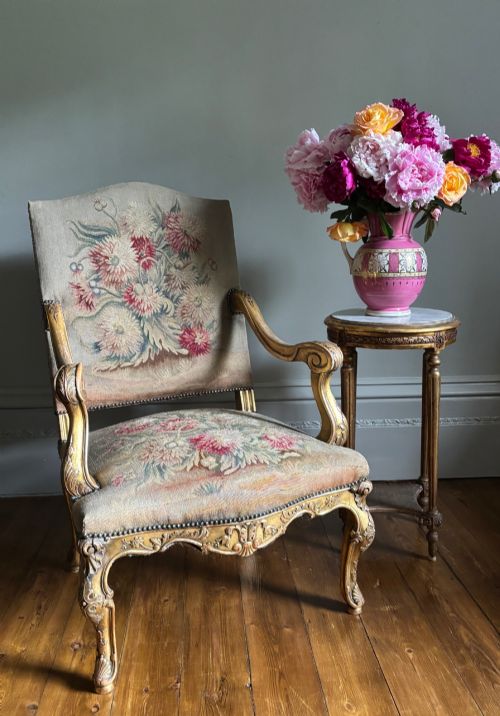
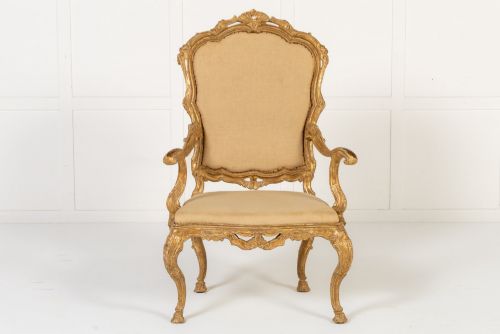
Gold giltwood accent chairs encompass an array of seating types, from open armchairs and bergères to salon and occasional chairs. Buyers searching for gold giltwood accent chairs will encounter numerous examples originating from the eighteenth century onwards, with a strong representation of nineteenth-century French manufacture.
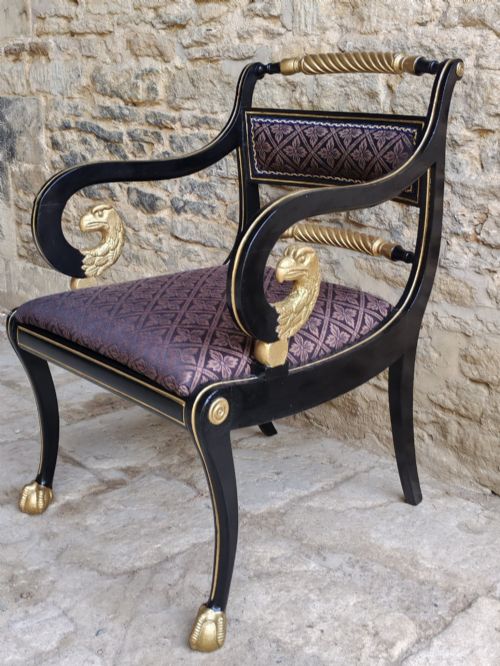
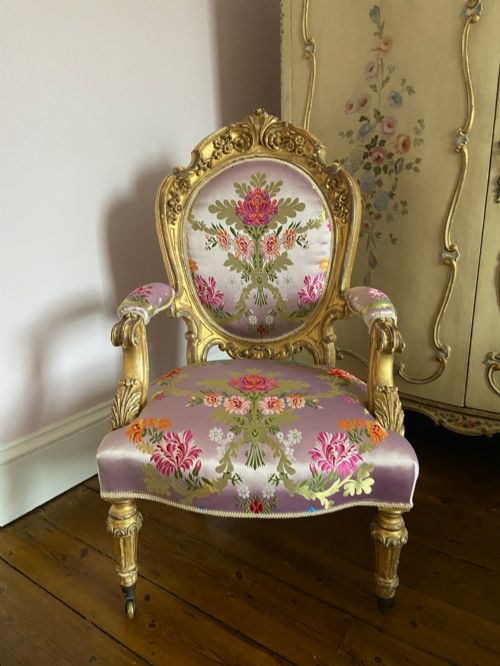
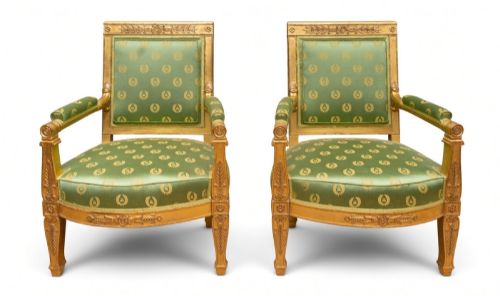
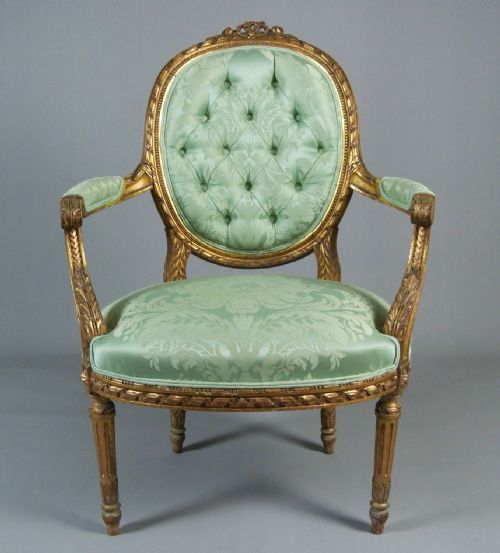
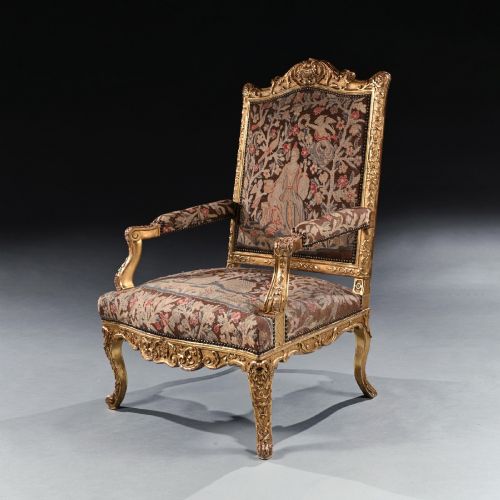
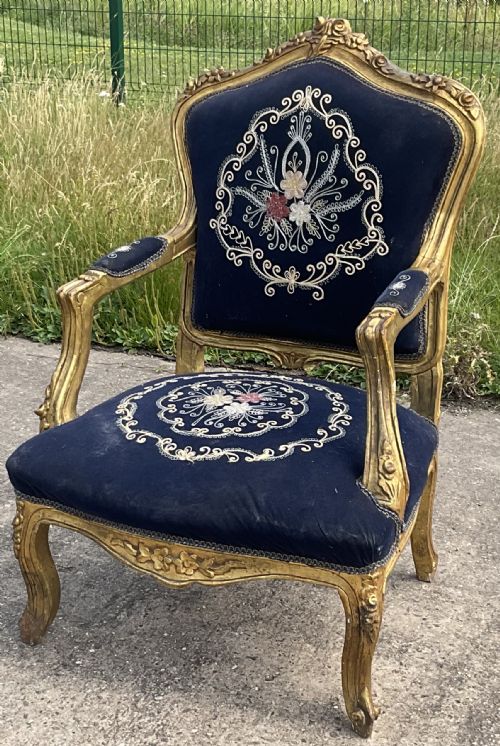
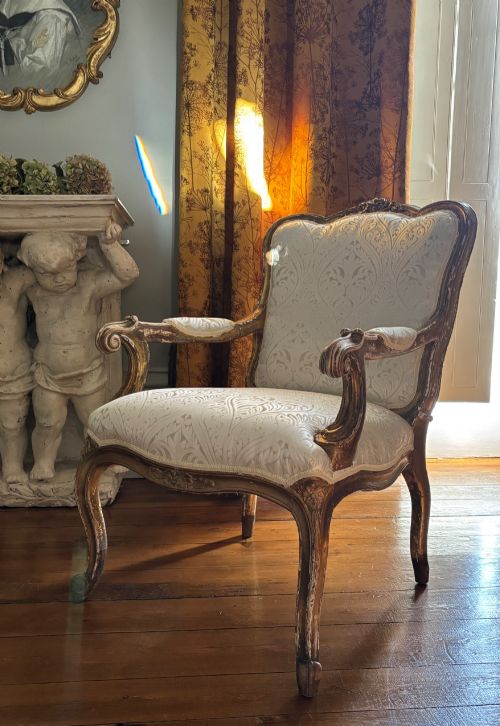
The assortment includes specific forms such as fauteuils, nursing chairs, and side chairs suited for drawing rooms or bedrooms. Many pieces adhere to Louis XVI style, French Rococo, or Regency aesthetics, showing the enduring popularity of classical revival designs.
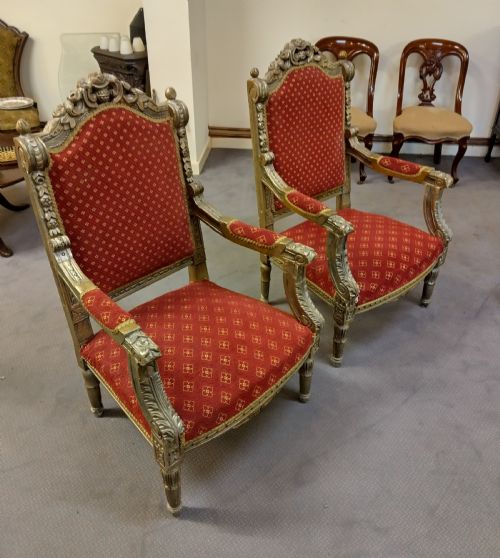
Makers often drew upon historical precedents, resulting in chairs that range from grand throne seats to lighter parlour chairs. The inventory reflects diverse regional influences, including English, French, and Italian interpretations of gilded seating.
Materials and Construction
The structural framework of these seats relies primarily on hardwoods such as beech, timber, and walnut, chosen for their ability to hold intricate carved detail. Craftspeople applied thin sheets of metal leaf over a prepared base to achieve the characteristic gilded surface.
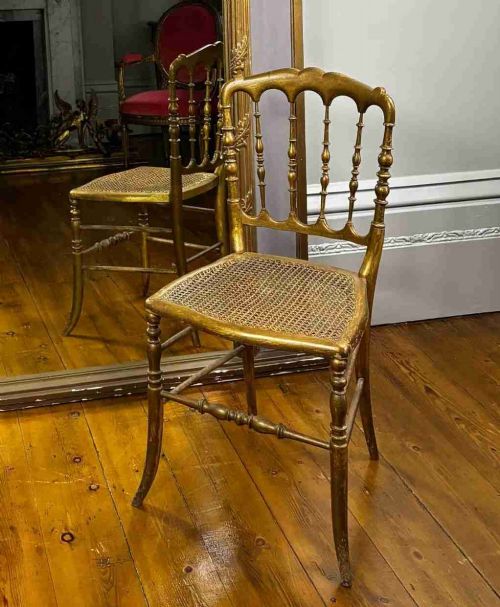
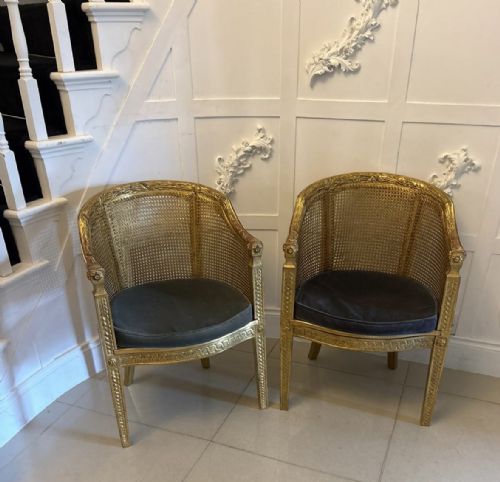
Upholstery materials vary from traditional horsehair stuffing beneath silk and velvet fabrics to cane panels integrated into the seat or back. Brass pins and tacks frequently secure the textile edges to the wooden frame.
The listings on this site feature beech, walnut, and timber frameworks finished in giltwood, paired with silk, velvet, and cane.
Assessing Quality and Execution
The depth and crispness of the hand-carved ornamentation dictate the visual strength of the piece, separating finely executed acanthus leaves and fluted legs from softer, moulded substitutes. Superior frames display tight joinery that maintains structural integrity under normal use.
The preservation of the original gilt finish or the quality of historical regilding influences the overall coherence of the object. High-grade upholstery work respects the period style through appropriate fabric choice and tension.
Jacob-Desmalter·Thomas Chippendale·Blaise Maucuy
The Gold Giltwood Accent Chairs Glossary
- Giltwood
- Timber coated with gold leaf or powder over a gesso preparation. This finish provides a luminous metallic sheen that reflects candlelight and daylight.
- Fauteuil
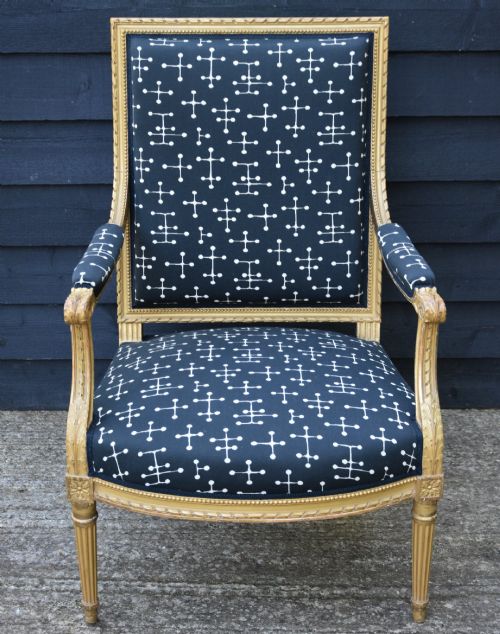
- An open-framed upholstered armchair with wooden armrests, originating in France. These seats combine decorative woodwork with padded comfort.
- Bergère
- An enclosed upholstered armchair with solid upholstered sides and a loose seat cushion. It offers a more sheltered seat than an open armchair.
- Rococo
- An ornate design style characterised by asymmetrical scrollwork, C-curves, and naturalistic plant motifs. It dominated mid-eighteenth-century European decorative arts.
- Caning
- Woven rattan strips used to form light, flexible panels for seat backs or bases. This technique provides breathability and visual lightness.
Gold Giltwood Accent Chairs: Frequently Asked Questions
How do I identify a Louis XVI style chair?
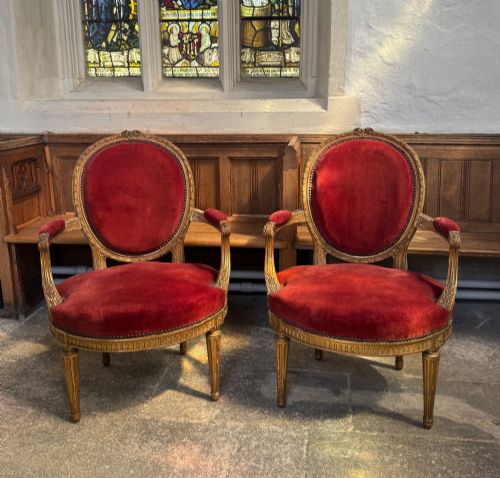
Louis XVI style chairs are distinguished by straight, fluted legs, geometric frames, and neoclassical motifs like ribbons or floral wreaths. These elements contrast sharply with the curving asymmetry of earlier Rococo designs.
Look for rectangular or oval backs and exposed wood framing that emphasises architectural balance and restrained ornamentation.
Can these chairs be used daily?
Most antique giltwood seating functions well for gentle daily use, provided the frame joints remain secure and stable. Heavier frames handle regular sitting better than delicate salon or side chairs.
Placing them away from direct sunlight and moisture helps preserve both the fragile gilt finish and the textile upholstery.
How is giltwood maintained?
Maintenance requires gentle dusting with a soft, dry cloth to prevent abrasive particles from scratching the thin gold leaf. Moisture and chemical cleaners must be avoided entirely to protect the underlying gesso.
Professional conservation is recommended if the metallic surface begins to flake or separate from the timber base.