



Gold Gilt Saucer
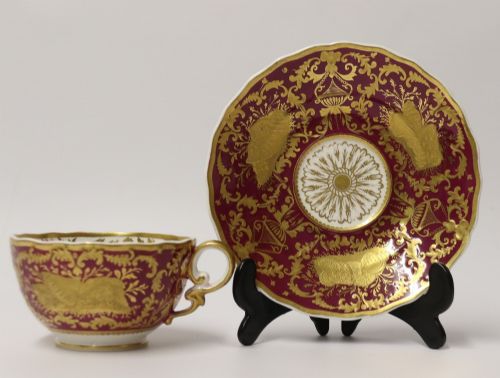
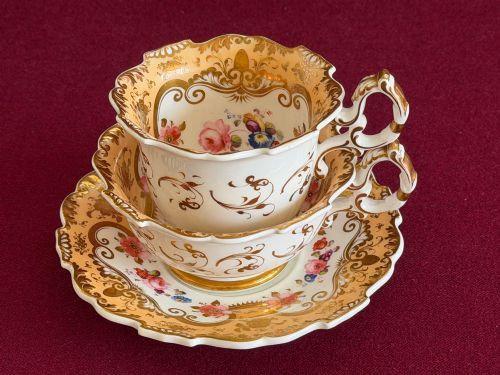
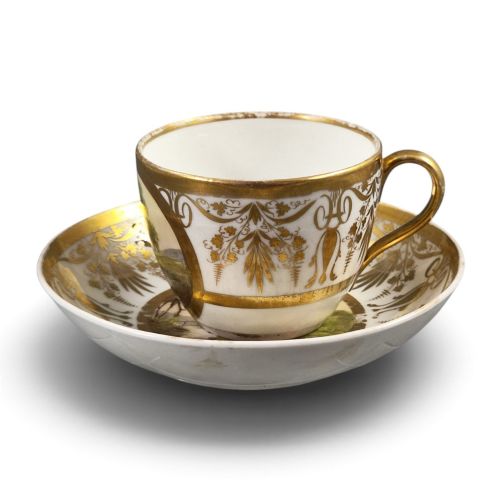
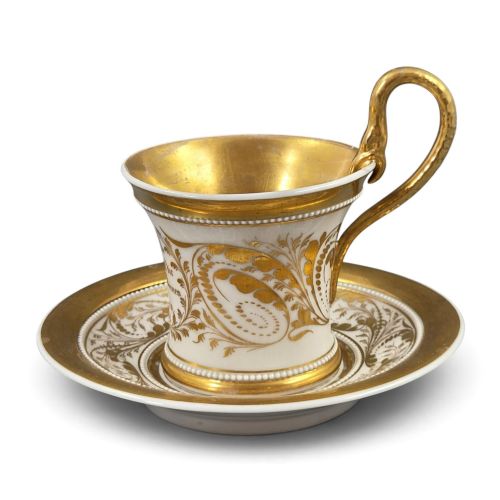
These gold gilt saucer pieces are delicate items designed for tea and coffee, bringing historic craftsmanship and metallic lustre straight to your table.
Gold Gilt Saucer
A gold gilt saucer is a ceramic dish designed to accompany a cup, often found as part of a teacup and saucer duo or a larger tea set. The selection ranges from compact demitasse pieces to cabinet items intended for display.
Most examples originate from the Georgian, Regency, and Victorian periods, stretching through the nineteenth century into the early twentieth century. Makers from English factories and continental houses like KPM Berlin and Royal Vienna predominate.
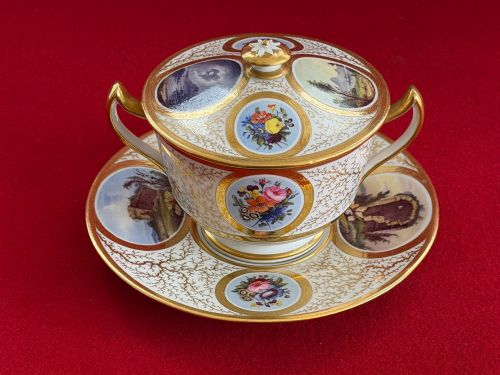
Forms vary from standard tea saucers to coffee cans, chocolate cups with stands, and entire tea or coffee services. These functional vessels reflect the changing social rituals of dining and hospitality across different decades.
Materials and Methods
Makers utilised porcelain, bone china, hard-paste porcelain, and earthenware as the base ceramic body for these vessels. Factories shaped these materials on the potter's wheel or cast them in moulds before initial kiln firing.
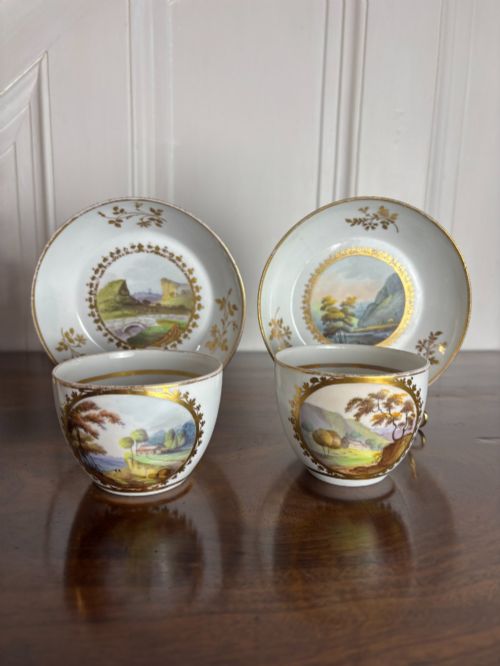
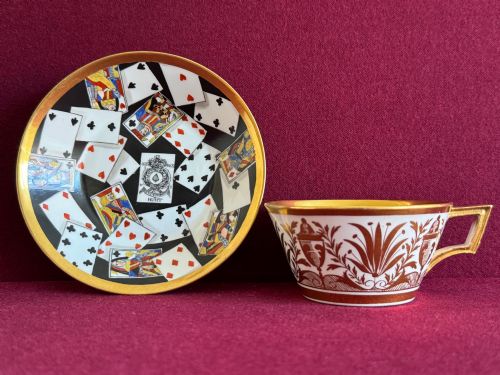
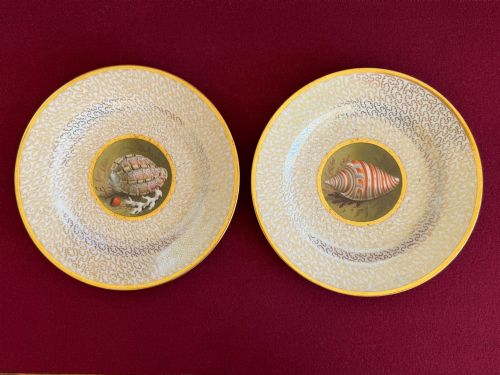
Artisans applied surface decoration through handpainted motifs, enamel colours, and detailed handpainted pink cabbage roses or landscapes. Gilding, gold leaf, and gold gilt finishes were then applied to rims, handles, and borders to create a reflective metallic sheen.
Gold Gilt Saucer Retail Price Guide 2026
Typical asking prices for gold gilt saucer among the pieces listed under this phrase on Sellingantiques today, from the lower quarter to the upper quarter. They describe what is for sale here now, not the wider market.
English factories like Worcester and Spode sit alongside continental houses such as KPM Berlin and Japanese Satsuma workshops in the current selection.
Evaluating Quality and Craft
Quality depends on the precision of the handpainting and the purity of the applied gilding. Pieces featuring intricate handpainted landscapes or signed portrait work demand greater artistic skill than standard transfer-printed wares.
The weight, translucency, and thinness of the porcelain body also distinguish finer cabinet pieces from utilitarian earthenware. Preservation of the original gold gilt surface without excessive rubbing indicates how carefully the item was handled and stored.
Barr and Barr·Flight and Barr·Spode·Duesbury and Kean·H and R Daniel·Davenport·KPM Berlin·Coalport·Royal Albert Crown China·Royal Vienna·Royal Worcester·Hutschenreuther
The Gold Gilt Saucer Glossary
- Gilding
- The application of gold leaf, gold gilt, or powdered gold to the ceramic surface. This technique adds a reflective metallic border or accent.
- Hard-paste porcelain
- A durable ceramic material composed of kaolin and petuntse, fired at very high temperatures. It produces a dense, vitreous body common in continental European pieces.
- Demitasse
- A small cup and saucer used for serving strong black coffee or espresso. These items often feature rich gilding and cabinet-quality painting.
- Cabinet cup and saucer
- A decorative or commemorative item made primarily for display in a glass cabinet rather than daily tea service. These pieces frequently showcase elaborate painted scenes or presentation gilding.
- Trio
- A matching set comprising a teacup, a saucer, and a matching tea plate. Trios became popular in English porcelain production during the nineteenth century.
Gold Gilt Saucer: Frequently Asked Questions
What is a gold gilt saucer used for?
These saucers served underneath teacups, coffee cups, or chocolate cups to catch drips and hold the vessel during social gatherings. They formed an essential component of formal tea and coffee services.
Over time, many finer saucers transitioned into display items kept in cabinets rather than utilised for daily dining. Their decorative gold gilt rims and painted surfaces made them prized possessions for drawing rooms.
How do I date an antique saucer?
Dating relies on factory marks stamped or painted on the underside, stylistic indicators like Regency or Rococo Revival shapes, and the composition of the ceramic body. Examining the style of handpainted flora or landscapes also helps narrow the era.
Changes in ceramic technology, such as the shift from early nineteenth-century bone china to later Victorian earthenware formulations, provide further chronological clues. Comparing similar marked pieces from known makers confirms the decade of production.
What is the difference between a tea set and a coffee set?
Tea sets generally include wider cups and saucers designed for tea infusions, accompanied by teapots, cream jugs, and sugar bowls. Coffee sets feature taller, narrower demitasse cups and saucers suited for serving concentrated coffee.
Coffee wares often display more compact dimensions and distinct tall pot forms compared to their tea-serving counterparts. Both types frequently share matching gold gilt decoration across the entire service.