

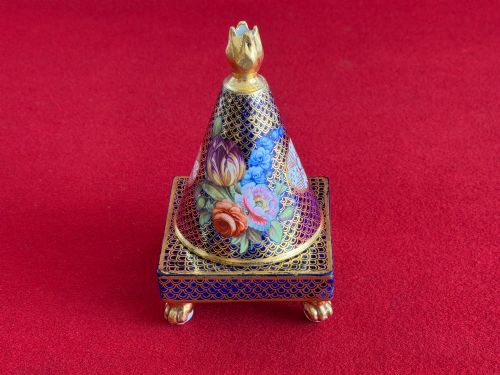
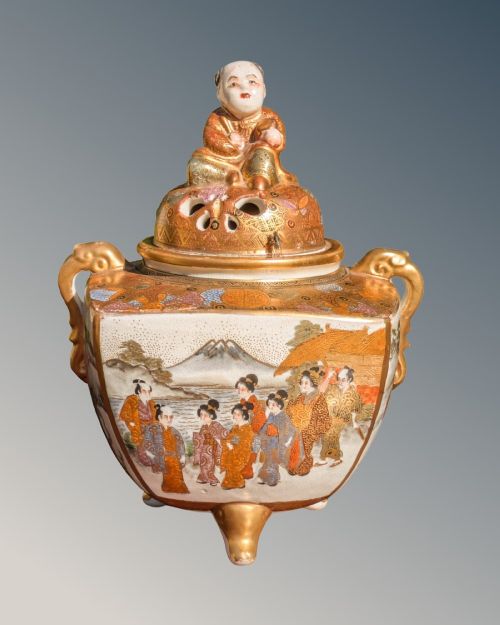


Gold Gilt Incense Burner
These gold gilt incense burner examples bring tactile historic craft into the room, offering intricate metalwork and ceramic forms designed to diffuse fragrant resin or smoke.
Gold Gilt Incense Burner
A gold gilt incense burner encompasses lidded vessels and tripod censers designed for burning aromatic materials across various historic centuries and international traditions. Buyers searching for a gold gilt incense burner will encounter diverse forms ranging from heavy cast Chinese bronzes to delicate Japanese earthenware and French decorative urns. The objects span several distinct eras, with notable representation from the 16th century through to the early 20th century.
Asian traditions provide tripod censers and Satsuma earthenware koro decorated with intricate detailing, while European makers contribute ormolu bronze cassolettes and Regency porcelain pastille burners. These vessels often feature fitted covers, stands, or handles shaped as animal masks, fulfilling both ritual and decorative domestic functions. Surviving pieces demonstrate the varied global interpretations of vessels intended to hold burning incense.
The objects listed on this page bridge utilitarian function and high-status ornamentation, reflecting the aesthetic priorities of their respective periods of origin. Whether examining a heavily cast bronze vessel or a miniature Kyoto-Satsuma koro, each piece exhibits the specific decorative grammar of its workshop. Collectors navigate these diverse geographic and chronological origins to find examples matching their preferred scale and material.
Materials and construction
Metalwork pieces rely on bronze or brass casting, often utilising lost-wax techniques to achieve sculptural forms like tripod legs and animal mask handles. Artisans then applied gold leaf, gilding, or gilt-splashing techniques to create shimmering surfaces that catch the light. This metal treatment unites disparate objects such as heavy Chinese censers and French ormolu cassolettes.
Ceramic vessels incorporate earthenware or porcelain bodies, hand-painted with detailed enamel motifs and signed by specific workshops or makers. Japanese Satsuma pieces demonstrate this earthenware tradition, combining complex surface decoration with gilded highlights. European porcelain burners similarly integrate ceramic bodies with painted patterns before being fitted with metal mounts.
Gold Gilt Incense Burner Retail Price Guide 2026
Typical asking prices for gold gilt incense burner among the pieces listed under this phrase on Sellingantiques today, from the lower quarter to the upper quarter. They describe what is for sale here now, not the wider market.
Listings feature items spanning the 16th century to the 1920s, including Qing Dynasty bronzes, Meiji period Satsuma ceramics, and Regency porcelain.
Assessing quality and execution
The standard of a gold gilt incense burner rests heavily on the crispness of its casting and the depth of its metal surface treatment. Finer bronze examples show sharply rendered details on handles and tripod supports, whereas lesser pieces lose definition in their decorative motifs. The application of gold leaf or gilding should appear integrated and deliberate rather than flat or uniform.
In ceramic and porcelain examples, the quality is determined by the precision of the hand-painted enamel work and the finesse of any applied signatures or crests. Superior Satsuma pieces display microscopic control in their gilding and patterning, alongside balanced ceramic proportions. The structural integrity of fitted lids and matching stands further separates standard production wares from exceptional studio pieces.
Kotobuki do·Kizan·Shizan·Spode
The Gold Gilt Incense Burner Glossary
- Censer
- A vessel designed specifically for burning incense. These often feature pierced covers to allow fragrant smoke to escape.
- Koro
- A Japanese incense burner, typically featuring a body, a lid, and often three legs. They appear frequently in earthenware and ceramic forms.
- Cassolette
- A French decorative vessel with a reversible lid that functions either as an urn or an incense burner. They are frequently cast in ormolu bronze.
- Ormolu
- Finely ground high-carat gold applied to bronze metalwork. This technique creates a rich golden finish popular in French decorative arts.
- Pastille burner
- A small European container used for burning scented pastilles or cones. These often appear in Regency porcelain and ceramic bodies.
- Taotie
- A mythological zoomorphic mask motif commonly cast into ancient and historic Chinese bronze ritual vessels. It adds both texture and symbolic weight to the object.
Gold Gilt Incense Burner: Frequently Asked Questions
How do I clean a gilt bronze burner?
Dust gently with a soft, dry brush to preserve the delicate gold surface.
Avoid liquid cleaners or chemical polishes, which can strip the historic gilding.
Were these burners used for resin?
Many historic metal censers accommodated burning resin, charcoal, or aromatic wood chips safely.
Ceramic variants often burned powdered incense or small scented pastilles instead.
How do I identify Meiji period Satsuma?
Look for fine earthenware bodies decorated with detailed enamel work and extensive gilding.
Many pieces bear artist signatures or workshop seals on the underside.
What is the function of a cassolette lid?
The reversible lid allows the piece to switch between a closed decorative urn and an open burner.
Pierced sections on one side let fragrant smoke diffuse into the room.