



Gold Gilt Coffee Saucers
Gold gilt coffee saucers bring bright metallic warmth to the table, and these pieces span porcelain and bone china across several centuries.
Gold Gilt Coffee Saucers
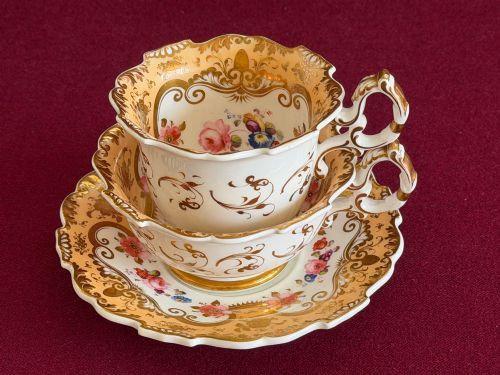
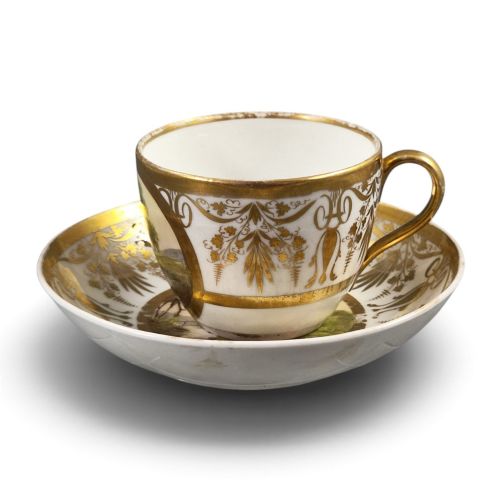
When you search for gold gilt coffee saucers, you encounter small ceramic plates designed to hold matching cups for after-dinner service. The examples on this page encompass teacups and saucers, demitasse sets, and larger coffee services spanning Georgian, Regency, Victorian, and later periods.
Most entries combine these saucers with coffee cans, trios, or cabinet cups, showing how manufacturers paired the small dish with a vessel for strong coffee. The selection ranges from nineteenth-century porcelain and hard-paste bodies to twentieth-century sets.
Makers and factories represented in the records include established names like Flight & Barr Worcester, Coalport, Davenport, Derby, and KPM Berlin. Forms vary from traditional British shapes to Biedermeier cabinet pieces and Rococo Revival designs.
How they were made
The foundation of these items is typically porcelain, bone china, or hard-paste porcelain, shaped into small saucers designed for coffee service. Potters formed these ceramic bodies before applying detailed hand-painted landscapes and decorative motifs.
Gilding and gold leaf were then applied to the rims and surfaces, often through extensive hand-gilding techniques that required careful firing in kilns. Enamel work frequently complements the gold leaf, adding colour alongside the metallic finish.
Gold Gilt Coffee Saucers Retail Price Guide 2026
Typical asking prices for gold gilt coffee saucers among the pieces listed under this phrase on Sellingantiques today, from the lower quarter to the upper quarter. They describe what is for sale here now, not the wider market.
Some nineteenth-century drinkers needed separate cups for tea and coffee in the same sitting, explaining why antique trios include two cups per saucer.
What varies in quality
The standard of the gilding itself marks the distinction between ordinary production and finer examples, as heavy hand-applied gold leaf retains a richer lustre than thin washes. The crispness of the porcelain body and the precision of any hand-painted landscape work further separate standard sets from superior ones.
Completeness also dictates value, where single saucers differ significantly from preserved trios, coffee services, or matched pairs retaining their original cups and cans. Factory attribution adds another layer, with documented works from manufactories like Worcester or Berlin holding distinct interest.
A H & R Daniel·KPM Berlin·Flight & Barr Worcester·Derby·Coalport·Davenport·Hutschenreuther·Royal Worcester·Spode Copeland
The Gold Gilt Coffee Saucers Glossary
- Coffee Can
- A straight-sided cylindrical cup designed for drinking strong coffee, typically paired with a matching saucer. These vessels appear frequently in Georgian and Regency services.
- Demitasse
- A small cup used for serving espresso or Turkish coffee, accompanied by a small saucer. The term translates literally to half-cup.
- Hard-paste Porcelain
- A dense, durable ceramic composed of kaolin and petuntse, fired at very high temperatures. European factories adopted this material to produce fine cabinet cups and saucers.
- Trio
- A matched set consisting of a teacup, a coffee cup or can, and a saucer. These groups demonstrate the comprehensive nature of nineteenth-century table service.
Gold Gilt Coffee Saucers: Frequently Asked Questions
What is the difference between a coffee saucer and a tea saucer?
Coffee saucers are generally smaller and often feature a recessed central well designed to hold a cylindrical coffee can or a narrow demitasse cup securely in place.
Tea saucers tend to be broader and shallower to accommodate wider, open teacups used for lighter infusions.
Can I use antique gilt saucers for daily coffee?
Most antique porcelain and bone china saucers with hand-applied gold leaf require careful handling and hand washing rather than machine cleaning.
Using them occasionally is possible, but modern detergents and dishwashers will wear down fragile enamel and metallic gilding over time.
How do I identify a Georgian coffee saucer?
Georgian pieces often display characteristic ceramic bodies from factories like Worcester, featuring hand-painted motifs and early porcelain formulations.
They usually accompany straight-sided coffee cans rather than modern flared teacups, reflecting the drinking habits of the period.
What does a cabinet cup and saucer mean?
Cabinet cups and saucers were decorative display items rather than utilitarian tableware, produced by factories such as KPM Berlin.
They typically feature detailed hand-painted landscapes or intricate gilding intended to be admired on a shelf or inside a glass cabinet.