




Gold Gilded Bracket Table
A gold gilded bracket table brings decorative polish to a hallway, often paired with matching mirrors or topped with marble.
Gold Gilded Bracket Table
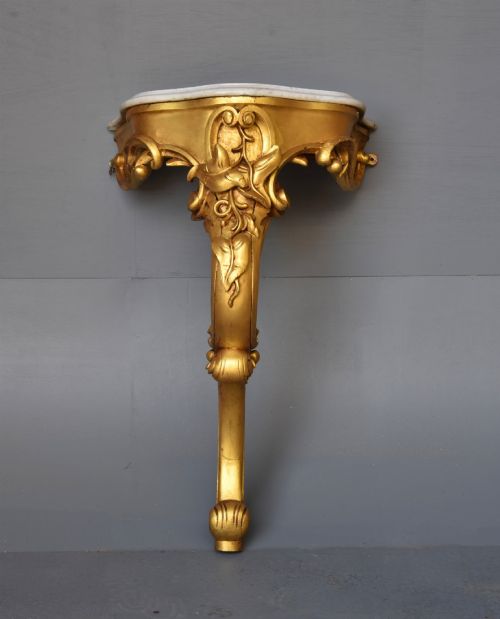
When buyers search for a gold gilded bracket table, they encounter a selection of console tables, wall consoles, and side tables defined by gilded surfaces and decorative timber or gesso carving. These wall-mounted or floor-standing pieces often date from the nineteenth century, reflecting periods such as the Victorian era and the French Second Empire.
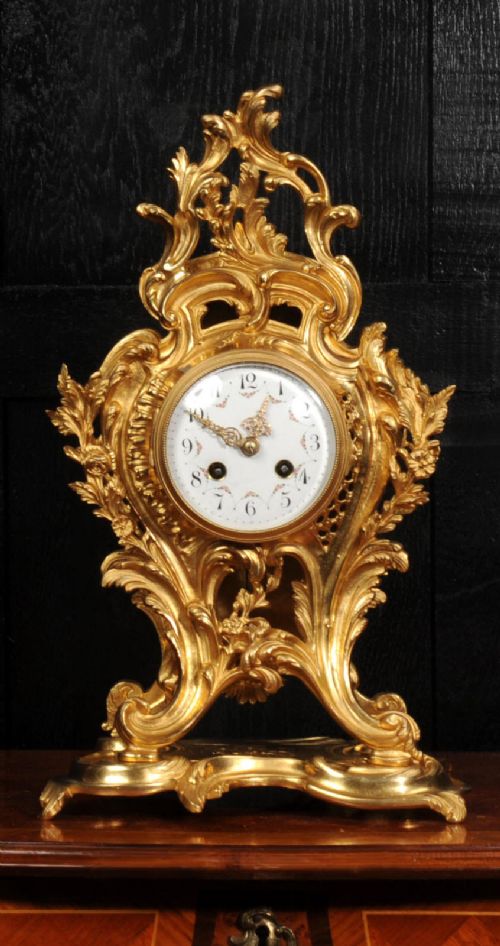
Alongside tables, the selection includes mantel clocks and bracket clocks housed in gilt bronze, ormolu, and brass, which share the same ornamental vocabulary and decorative finishes.
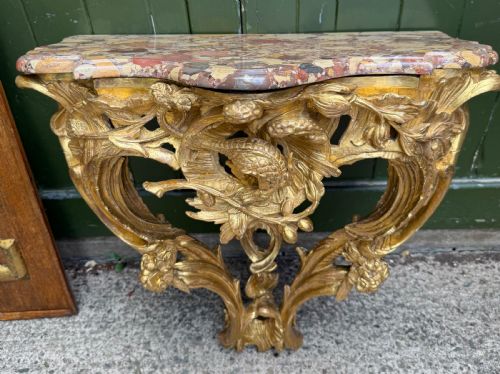
The most prevalent regional styles span French Rococo, Italian Rococo, and Chinoiserie, each bringing distinct sculptural movement to the gilded woodwork or metalwork.
Materials and construction methods
Carved timber frames receive layers of gesso and gold leaf to create the characteristic gilded finish seen on tables and console pieces.
Clock housings utilise cast ormolu and gilt bronze, frequently combined with inset glass panels or champlevé enamel details.
Table surfaces frequently feature fitted marble slabs, including figured breche d'alep varieties resting directly on the gilded structure.
Gold Gilded Bracket Table Retail Price Guide 2026
Typical asking prices for gold gilded bracket table among the pieces listed under this phrase on Sellingantiques today, from the lower quarter to the upper quarter. They describe what is for sale here now, not the wider market.
A gilt bronze cherub reaches persistently for birds trapped forever in a stationary tree.
Assessing quality in execution
The crispness of the carving on wooden consoles and the precision of the chasing on gilt bronze clock mounts distinguish finer examples from simpler production.
The depth and application of the original gilding determine the visual richness of the surface, particularly where gesso has been modelled by hand.
The integration of heavy marble tops and the presence of signed clock movements or documented makers elevate the standing of individual pieces.
Le Roy and Fils·Hay London·Baetens London
The Gold Gilded Bracket Table Glossary
- Console table
- A table designed to be fixed against a wall, frequently supported by wall brackets or carved front legs. These items often feature decorative marble tops.
- Ormolu
- Gilded bronze produced through mercury amalgamation, widely utilised on French clock mounts and decorative fittings during the eighteenth and nineteenth centuries.
- Gesso
- A plaster-based mixture applied to wood substrates to form a smooth surface for subsequent gilding. This material allows for intricate relief ornamentation.
- Fusee
- A conical pulley mechanism used in clocks to maintain even tension on the drive chain as the mainspring unwinds. This system improves timekeeping accuracy.
- Champlevé enamel
- A technique where troughs are dug into a metal surface and filled with vitreous enamel before firing. It decorates clock cases and dial surrounds.
Gold Gilded Bracket Table: Frequently Asked Questions
Where should a console table go?
These tables suit narrow entrance halls or reception rooms where floor space is limited. Wall-supported versions anchor visually beneath pier mirrors or large artworks.
Positioning them away from direct heat sources helps protect antique gesso and gilded timber surfaces from drying out.
How do bracket clocks work?
Bracket clocks operate using spring-driven movements, often controlled by a fusee or pendulum mechanism. They were originally designed to sit on small wall brackets or mantelpieces.
Regular winding keeps the tension balanced across the internal gears for accurate timekeeping.
How do I clean gilded wood?
Dusting surfaces gently with a soft, dry brush prevents dirt accumulation without disturbing delicate leaf application. Liquid cleaners and polishes damage historical gilding.
Professional conservators should handle any structural repairs or flake stabilisation.
What is French Rococo style?
French Rococo design relies on asymmetrical scrollwork, naturalistic shell motifs, and curving lines. This aesthetic dominated decorative arts during the eighteenth century and saw revivals later.
Objects from this tradition exhibit energetic, flowing ornamentation across metal and wood.