

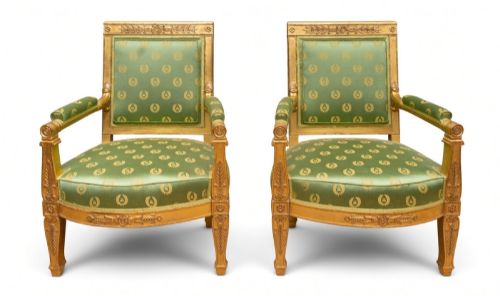
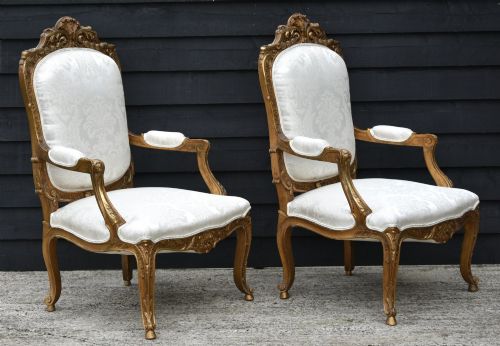
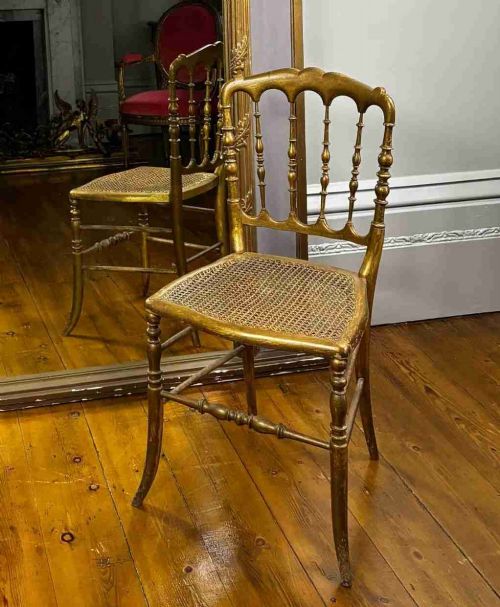
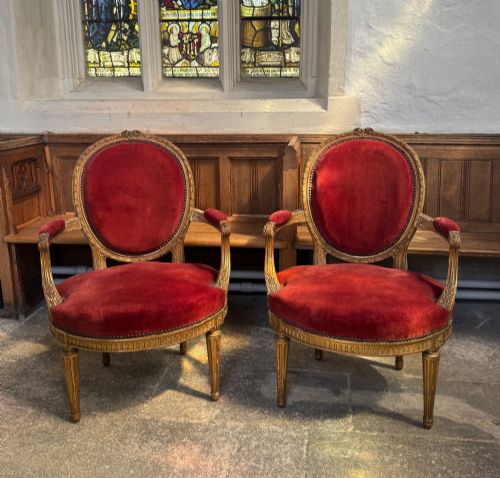
Gold French Salon Chairs
Gold french salon chairs bring gilded carving, exposed timber frames, and period upholstery into interior spaces.
Gold French Salon Chairs
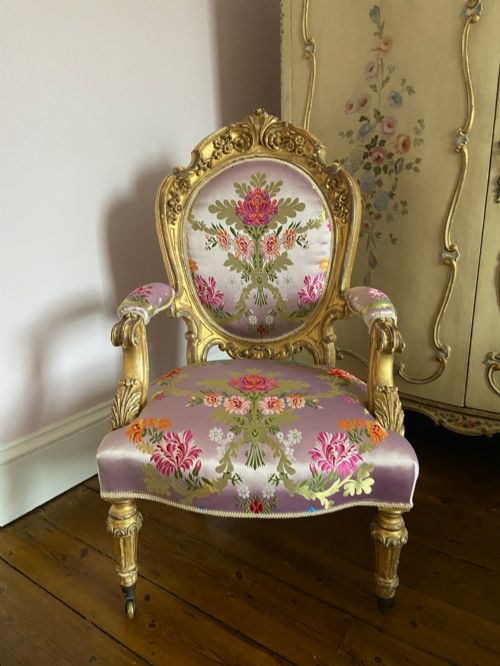
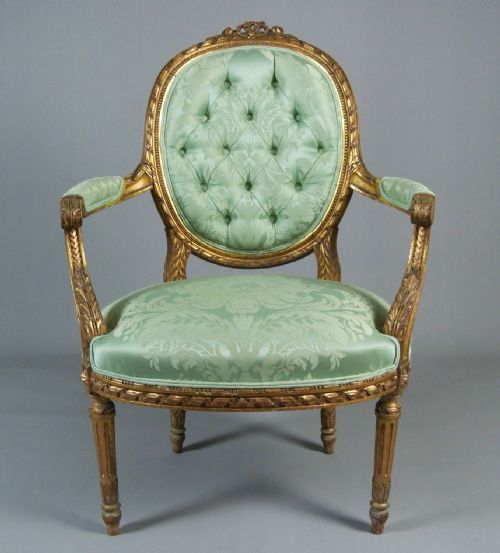
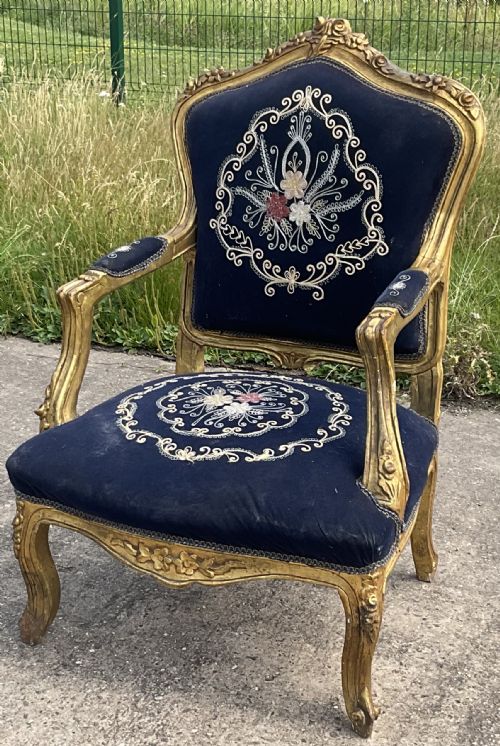
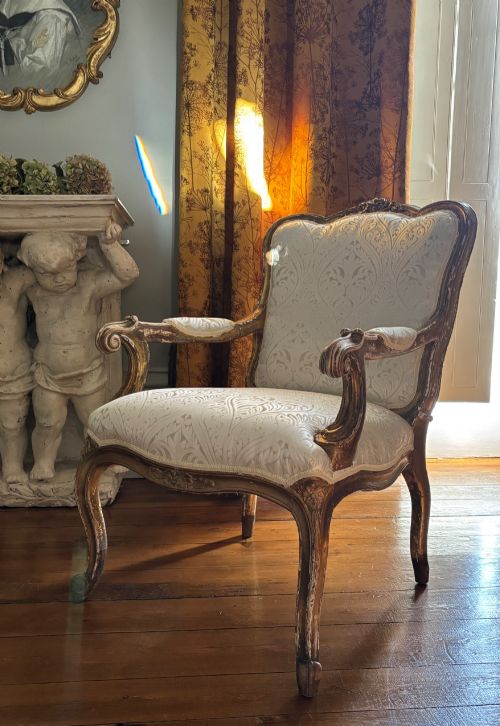
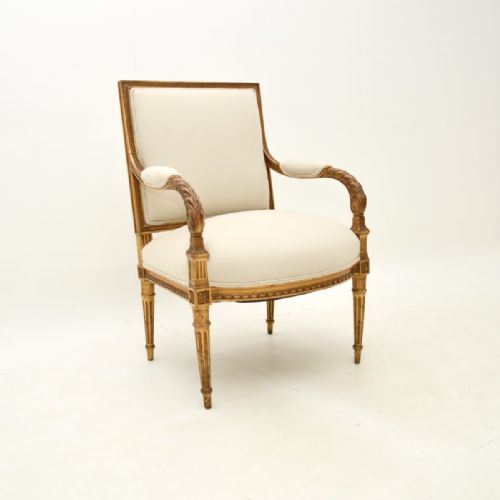
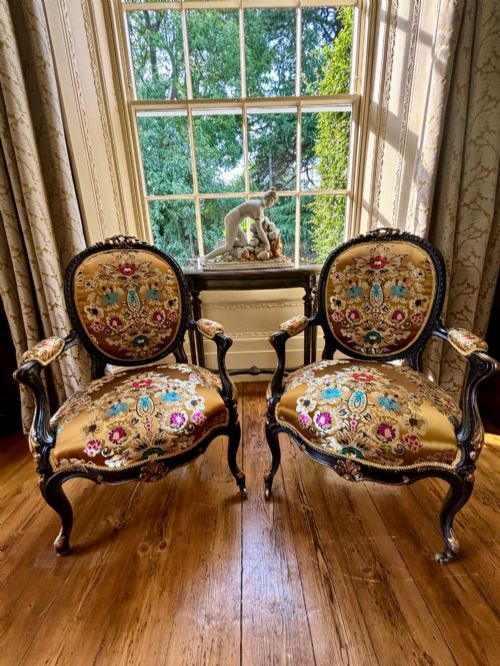
Gold french salon chairs encompass open armchairs, bergères, fauteuils, and side chairs spanning the eighteenth, nineteenth, and early twentieth centuries. These seating forms emerge primarily in Louis XVI style, Louis XVI revival, French rococo, and Restauration designs, reflecting European reception rooms and formal drawing rooms.
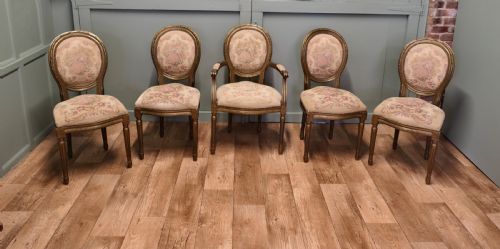
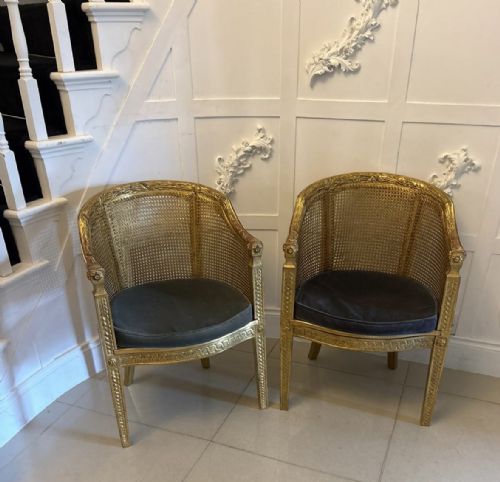
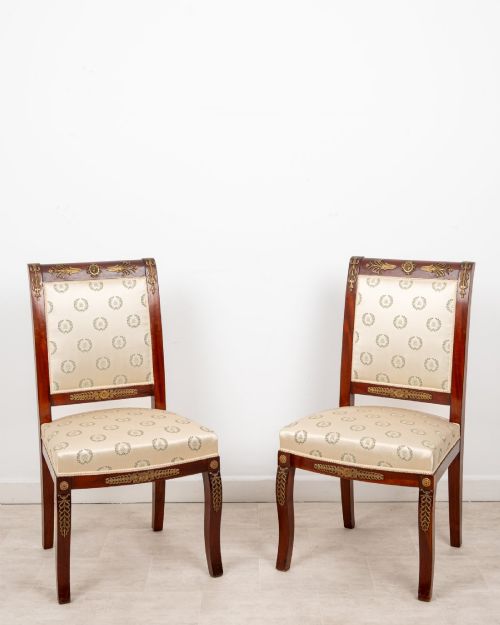
Buyers encounter matching pairs, sets of four, larger dining sets, and complete salon suites among the available selections. Beech, walnut, and general wood frames provide the structural base for giltwood finishes, complemented by textile, silk, velvet, and caned seating.
Materials and Construction Methods
Maker workshops construct these frames from solid timbers including beech and walnut, carving floral motifs, fluted columns, and classical details directly into the wood. Craftsmen then apply layers of gilder's gesso and gold leaf to the prepared surfaces, creating the characteristic reflective metallic finish.
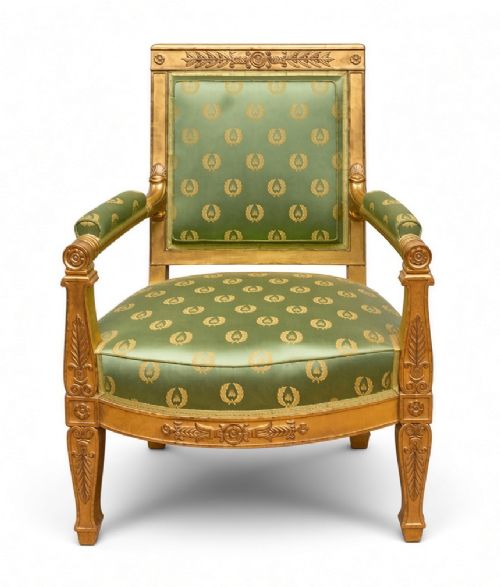
Upholstery relies on traditional stuffing methods finished with silk, velvet, textile, or woven cane seats. Brass fittings, ormolu mounts, and painted accents occasionally supplement the gilded woodwork on specific revival and empire pieces.
Children benefit from miniature living standards through scaled-down nineteenth-century French gilded and painted children's salon chairs.
Distinctions in Quality
The standard of carving determines initial distinction, separating crisp hand-chiseled botanical and architectural detail from softer, moulded ornamentation. Deeper relief work and well-defined joinery indicate higher workshop output.
Surface application and upholstery execution dictate the visual presence of each seat. Intact gold leaf with subtle burnishing contrasts against flat, modern metallic paints, while period-appropriate silk and velvet textiles anchor historical integrity.
Jacob Desmalter·Thomas Chippendale·Blaise Maucuy·Holland and Sons
The Gold French Salon Chairs Glossary
- Giltwood
- Wood that has been coated with gold leaf applied over a prepared gesso ground. This finish provides the characteristic metallic sheen seen on antique French frames.
- Bergère
- An enclosed upholstered armchair with closed sides padded upholstered arms. These chairs offer deeper seating proportions than standard open armchairs.
- Fauteuil
- An open-framed armchair with upholstered back and armrests, leaving the wooden structural sides exposed. This form originated in seventeenth and eighteenth-century France.
- Caned
- Woven rattan or split cane used to form breathable seat panels or backrests. It provides a lightweight alternative to traditional fabric upholstery.
- Ormolu
- Gilded bronze mounts applied to furniture frames for decorative accent. The technique was particularly popular during the neoclassical and empire periods.
Gold French Salon Chairs: Frequently Asked Questions
How do I identify Louis XVI style chairs?
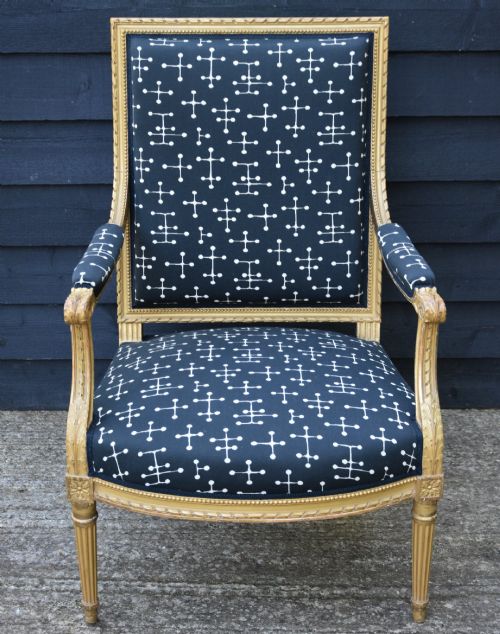
Louis XVI style chairs feature straight fluted legs, rectangular or oval backs, and classical motifs derived from ancient Rome and Greece. These elements distinguish them from the curved cabriole legs and asymmetrical flourishes typical of earlier rococo designs.
Makers working in this tradition emphasise symmetry and restrained geometric proportions across giltwood frames.
What is the difference between a bergère and a fauteuil?
A bergère includes solid upholstered sides filled with padding between the armrest and the seat rail. A fauteuil leaves the wooden arm supports open and exposed beneath the padded armrests.
Both forms appear frequently among nineteenth-century revival seating.
Are these chairs suitable for daily seating?
These antique chairs function well in domestic interiors when paired with supportive internal webbing and sturdy frames. Many historical frames accommodate modern sitting habits while retaining their original decorative purpose.
Proper placement away from direct sunlight preserves both the silk or velvet upholstery and the gilded surface.
How should I care for giltwood finishes?
Giltwood requires gentle dusting with a soft, dry brush to prevent abrasion to the delicate gold leaf layer. Moisture and abrasive chemical cleaners damage the historical gesso base beneath the metallic surface.
Maintaining stable indoor humidity levels prevents the underlying timber from expanding or contracting.
Can I mix salon chairs with modern interiors?
Giltwood salon chairs introduce textural contrast and historical weight when placed against minimalist or contemporary decor. Their carved timber frames and textile upholstery serve as sculptural focal points in modern rooms.
Single armchairs or small pairs integrate easily into contemporary living spaces without overwhelming the room layout.