

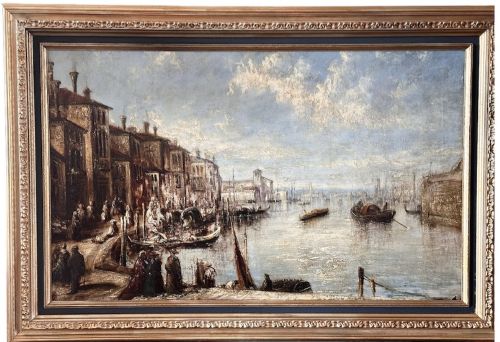
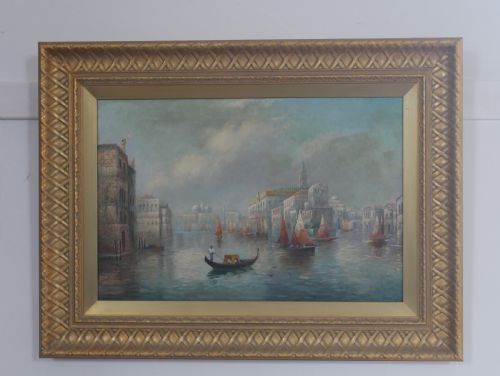
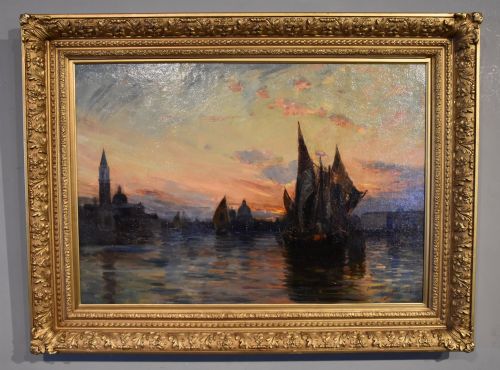


Gold Framed Venetian Artwork
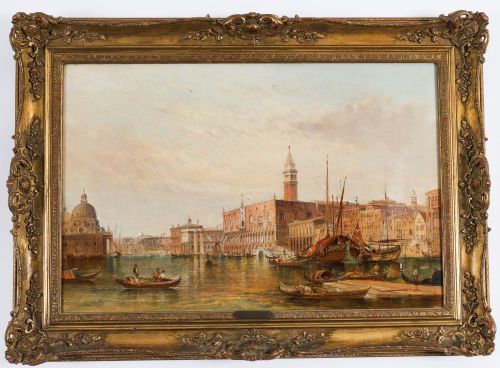
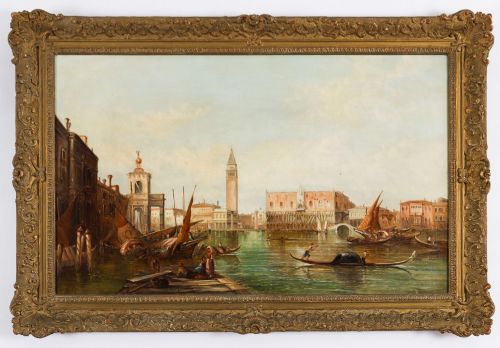
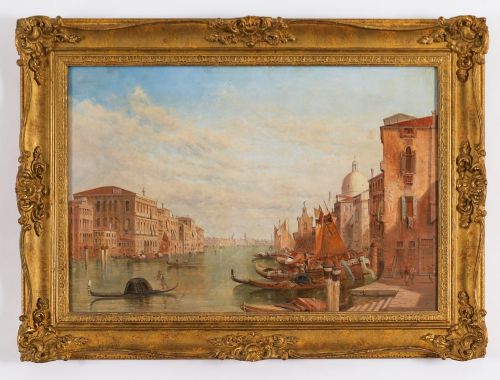
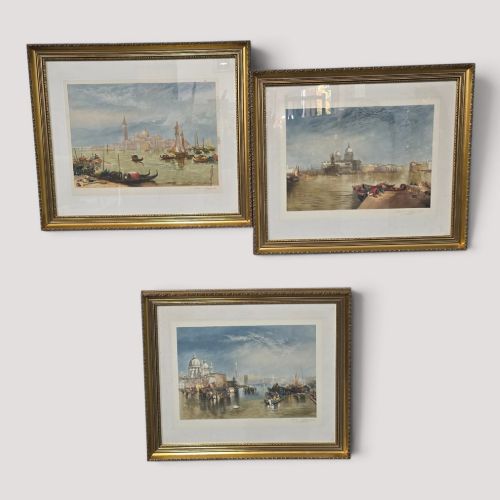
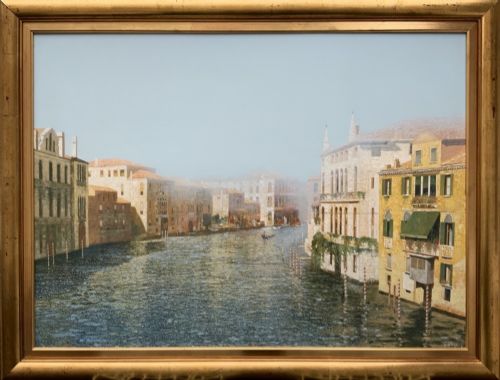
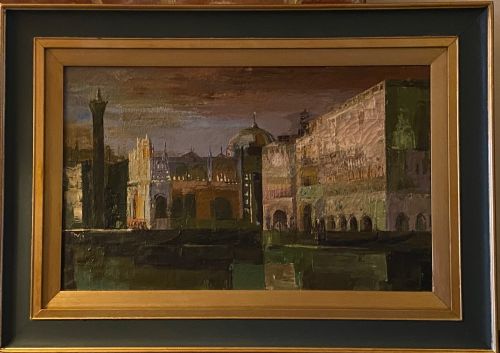
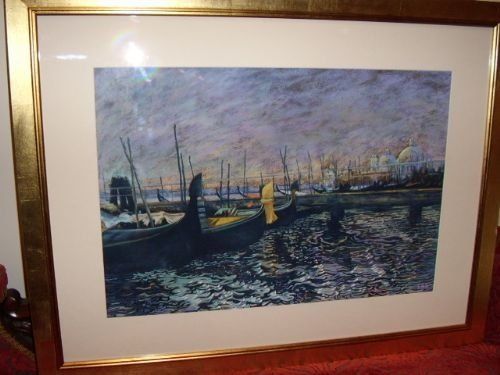
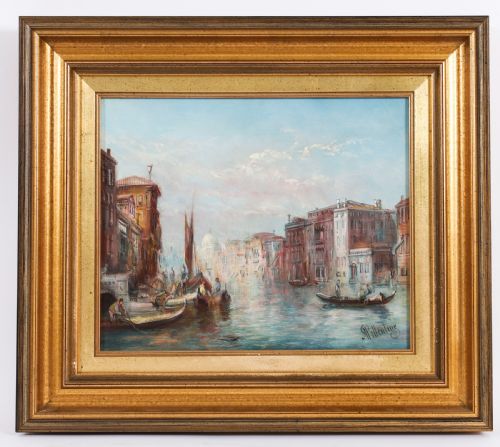
Gold framed venetian artwork brings home the canals and palazzos of Italy through historic oil and watercolour paintings.
Gold Framed Venetian Artwork
When you search for gold framed venetian artwork, you encounter historical paintings capturing Italian lagoons, canals, and architecture. These pieces span centuries of artistic output, depicting scenes from the Grand Canal to the Doge's Palace.
Nineteenth-century works dominate the selection, alongside earlier 18th-century compositions and later mid-century interpretations. Each piece reflects the enduring appeal of Venetian light and topography upon British and European painters.
Materials and Techniques
Artists painted primarily in oil on canvas or board, utilising pigments to capture the distinct luminescence of the lagoon. Watercolours on paper and pastel works also appear, offering lighter impressions of gondolas and moonlight.
The supporting frames consist of wood, heavily gilt or gilded to complement the visual weight of the paintings. This combination of oil media and ornate wooden framing defines the physical presence of the category.
Gold Framed Venetian Artwork Retail Price Guide 2026
Typical asking prices for gold framed venetian artwork among the pieces listed under this phrase on Sellingantiques today, from the lower quarter to the upper quarter. They describe what is for sale here now, not the wider market.
The selection spans four distinct centuries of European painting, from the 18th century to the 1960s.
Factors of Distinction
Quality rests in the handling of light and architectural perspective by named artists such as Alfred Pollentine or Jane Vivian. Stronger works convey the atmosphere of the Venetian water and stone with confident brushwork and precise topographical detail.
The joinery and finish of the gilt wood frame also contribute to the overall integrity of the piece. Period frames that harmonize with the canvas enhance the visual coherence of the artwork.
Sushila Singh·Alfred Pollentine·Francis Moltino·Thomas Hodgson Liddell·Paolo Veronese·F J Aldridge·F.D. Campo·Antonietta Brandeis·Antoine Bouvard Senior·E. Perez Senet·Jane Vivian·William Raymond Dommersen·Andrea Celesti·Richard Geiger·William Knox·Helen Donald-Smith
The Gold Framed Venetian Artwork Glossary
- Giltwood
- Wood carved and coated with gold leaf or metallic powder. This material provides the traditional reflective border surrounding the canvas.
- Grand Canal
- The main waterway of Venice, frequently depicted in 19th-century townscape paintings. It serves as the primary subject for artists recording Italian architecture.
- Gouache
- An opaque watercolour paint consisting of pigment and binder. It creates saturated, matte areas of colour in works on paper.
Gold Framed Venetian Artwork: Frequently Asked Questions
What periods do these paintings come from?
The selection includes works dating from the 18th century through the 19th century and into the 20th century. Victorian and Edwardian interpretations of Italy are particularly common.
Artists across these eras returned repeatedly to Venetian subjects, creating a rich record of changing painting styles within traditional frameworks.
Are the frames original to the paintings?
Many pieces retain period gilt wood frames that match the age of the canvas. These frames use traditional wood gilding techniques appropriate to their era of production.
Such enclosures are integral to the presentation, completing the historical presentation of the artwork.
What mediums were used by the artists?
Oil on canvas is the predominant medium, capturing deep tones and atmospheric light. Watercolours, pastel, and gouache on paper also feature among the works.
Each medium offers a different texture, from heavy impasto oils to delicate paper drawings.
How do I identify a Venetian townscape?
Townscapes typically feature recognizable landmarks such as the Doge's Palace, the Dogana, or Santa Maria della Salute. Gondolas and waterways occupy the foreground.
Artists utilised these specific architectural motifs to immediately signal the setting to the viewer.