



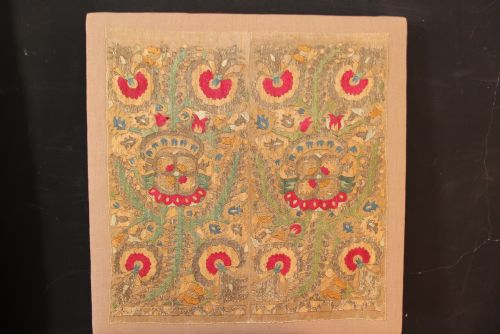

Gold Framed Textile
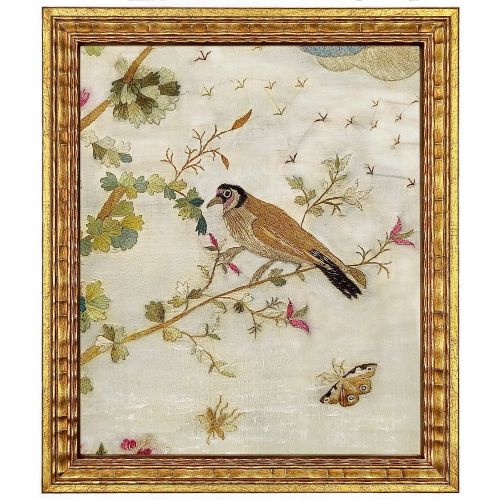
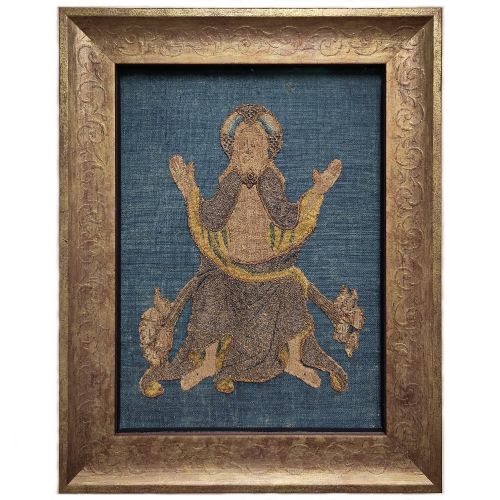
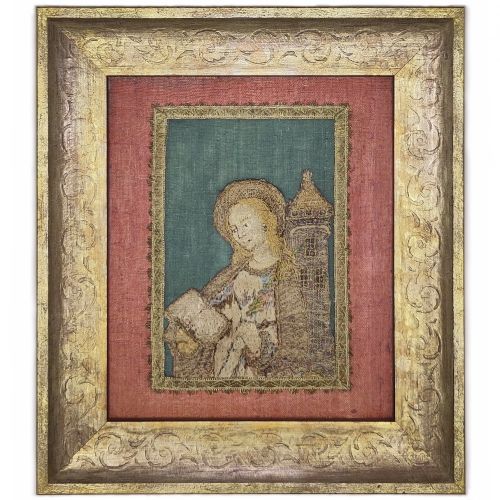
Gold framed textile pieces combine historic fabric needlework and tapestries with gilded wood surrounds, bringing centuries of texture and metallic thread to walls.
Gold Framed Textile
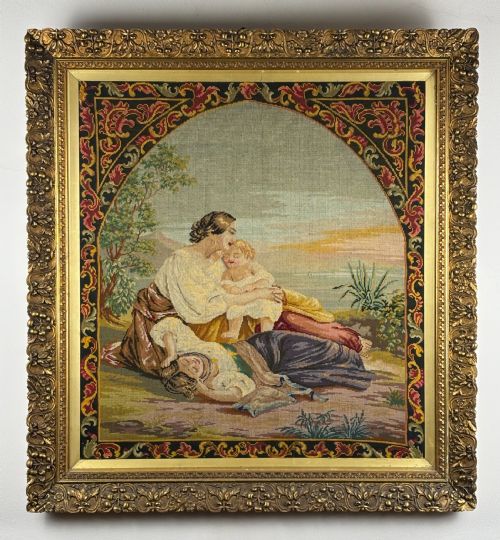
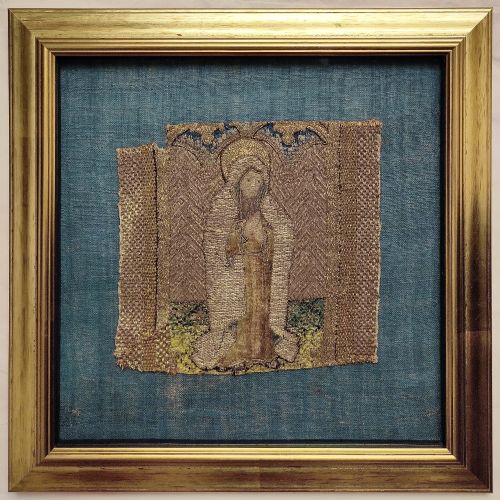
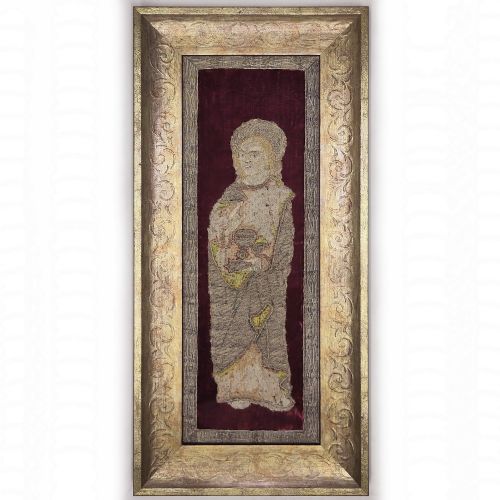
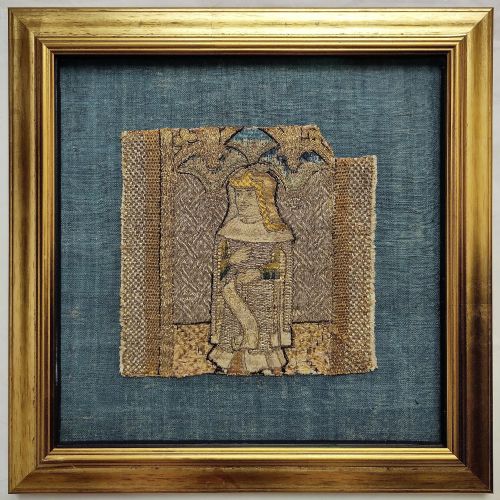
A gold framed textile brings together historic fabric artistry and a protective gilded enclosure, satisfying the desire for tactile wall art with deep historical resonance. When searching for a gold framed textile, collectors encounter diverse needlework pictures, embroidered panels, and tapestry fragments mounted behind glass in wood frames.
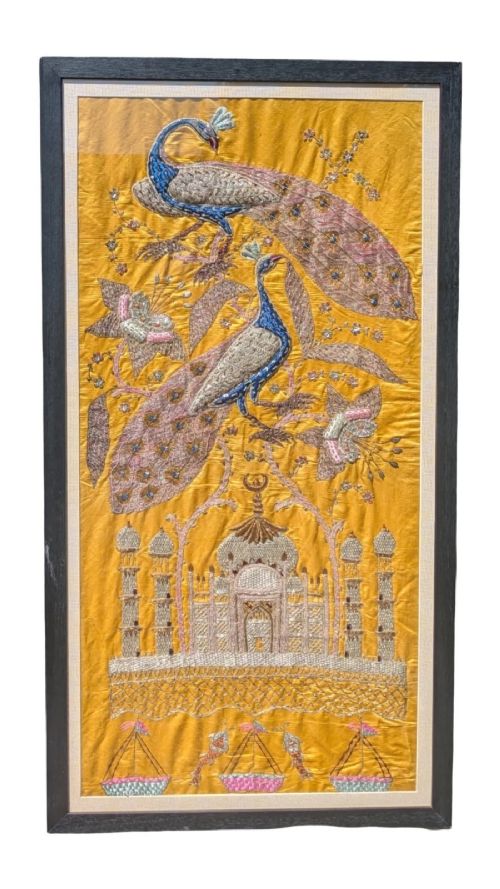
The objects span multiple centuries, ranging from seventeenth-century stumpwork and Flemish tapestry fragments to eighteenth-century silk embroidery, nineteenth-century crewel work, and later Indian and Chinese embroidered panels. English, French, Italian, and Ottoman origins appear frequently across the pieces.
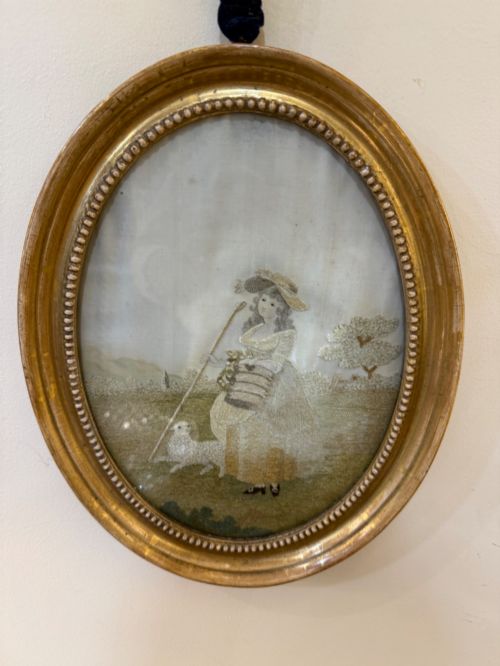
Framing styles vary considerably, matching the aesthetic tastes of their respective periods, from water-gilded oval surrounds and gilt mezzotint frames to substantial giltwood and gilded wood mouldings that complement the sheen of the textiles within.
Materials and construction methods
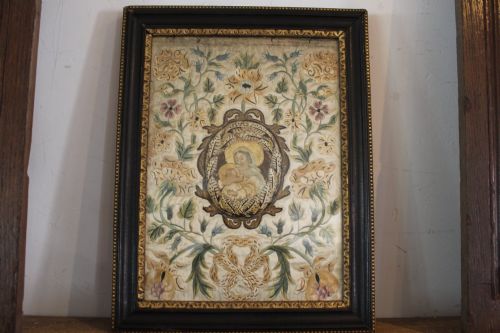
Makers utilised natural fibres such as silk, wool, and cotton as the primary ground for intricate needlework, often incorporating metallic thread, silver wire, and metal thread to create shimmering visual effects. Artisans employed specialised techniques like stumpwork, crewel work, beadwork, and hand painting directly onto silk to build complex pictorial scenes.
Frames were constructed from wood and finished with layers of gilding, gold leaf, or water gilding to produce the characteristic metallic lustre that frames the textile art. Glass protection was frequently added to shield delicate organic fibres and metallic threads from environmental degradation over time.
Gold Framed Textile Retail Price Guide 2026
Typical asking prices for gold framed textile among the pieces listed under this phrase on Sellingantiques today, from the lower quarter to the upper quarter. They describe what is for sale here now, not the wider market.
Listings feature textiles spanning from the seventeenth century through the 1930s, incorporating silk, wool, and metallic thread within gilded wood frames.
Assessing quality in textile art
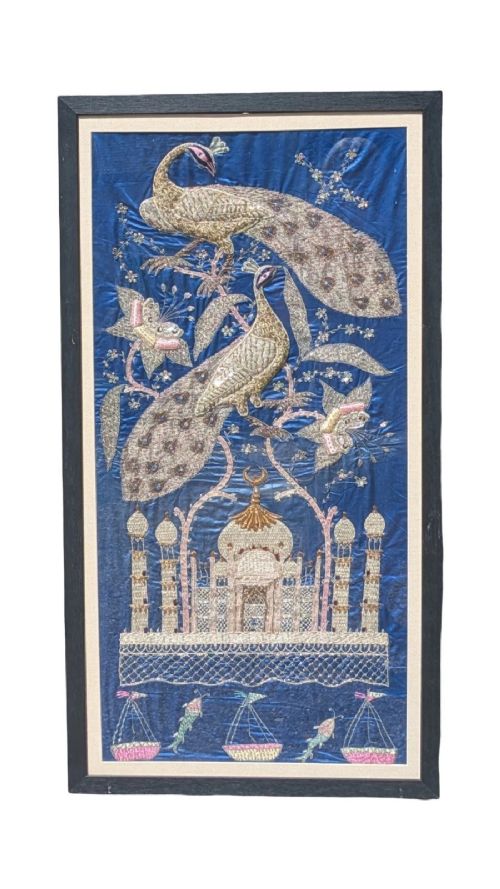
Quality rests primarily on the technical proficiency of the needlework and the integrity of the textile itself, where dense, precise stitching and well-preserved fibres indicate superior craftsmanship. The artistry of the composition, whether depicting botanical subjects, figures, or architectural scenes like the Taj Mahal, dictates the visual impact of the piece.
The original frame contributes significantly to the overall merit, with period-appropriate water-gilded or giltwood surrounds holding greater coherence than later replacements. The survival of fragile metallic threads and hand-painted details without extensive loss or modern restoration elevates the status of the textile.
The Gold Framed Textile Glossary
- Stumpwork
- A raised embroidery style popular in the seventeenth century that used padded underlays to create three-dimensional figures and motifs on fabric panels.
- Crewel work
- Embroidery executed using wool yarn on a heavy linen or cotton twill ground, often producing dense floral or pastoral designs.
- Giltwood
- Wood carved and coated with gold leaf, gold paint, or metal powder to simulate solid gold, commonly utilised for antique picture frames.
- Tapestry
- A form of textile art woven by hand on a loom, frequently depicting narrative scenes and historic events.
- Needlework picture
- A pictorial composition stitched with thread on a fabric backing, designed specifically for display as framed wall art.
Gold Framed Textile: Frequently Asked Questions
How do I date a gold framed textile?
Dating relies on analysing the textile materials, stitching techniques, subject matter, and framing style together. Historic clothing styles, needlework patterns, and the chemical composition of threads offer clues to the century of origin.
The accompanying frame often provides a secondary indicator of period, though textiles were sometimes reframed in later centuries to suit changing interior decoration tastes.
Where should I hang these textiles?
These works suit dining rooms, libraries, or drawing rooms where traditional decor highlights their historic character. Position them away from direct sunlight to prevent the fading of silk fibres and metallic threads.
Maintain stable room humidity levels to protect organic materials like wool, silk, and wood from moisture damage or excessive dryness.
What subjects appear in these works?
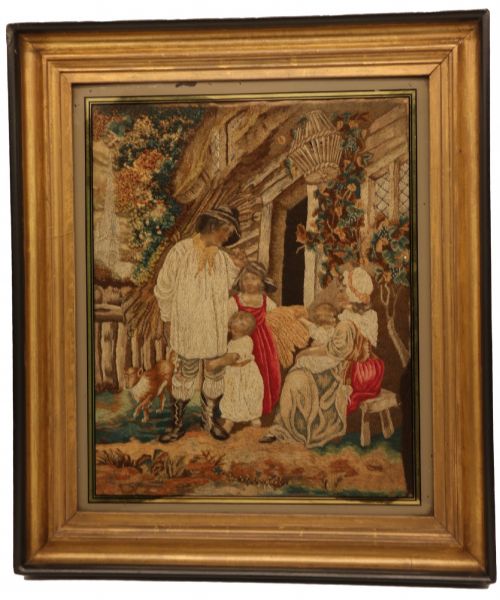
Common subjects include pastoral landscapes, historic events, religious scenes, and botanical studies featuring birds and flowers. Regional pieces from India, China, and the Ottoman Empire frequently depict local architecture, court scenes, or traditional garments.
European examples often draw on classical mythology, royal commemorations, or literary narratives popular during the Georgian and Victorian eras.