






Gold Framed Silk
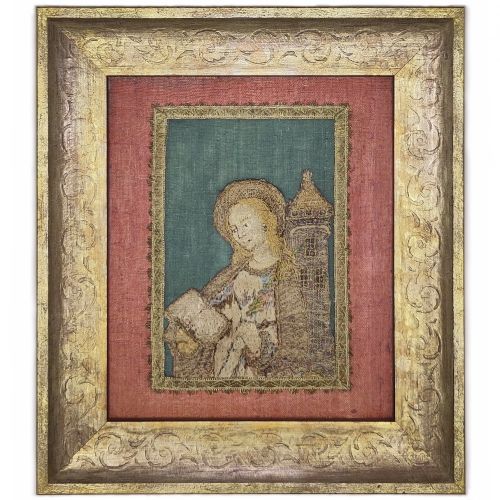
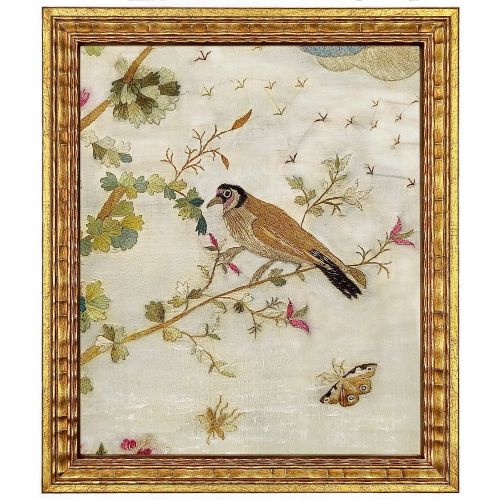
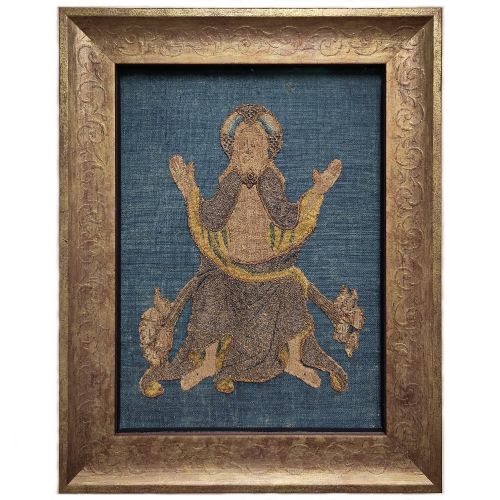
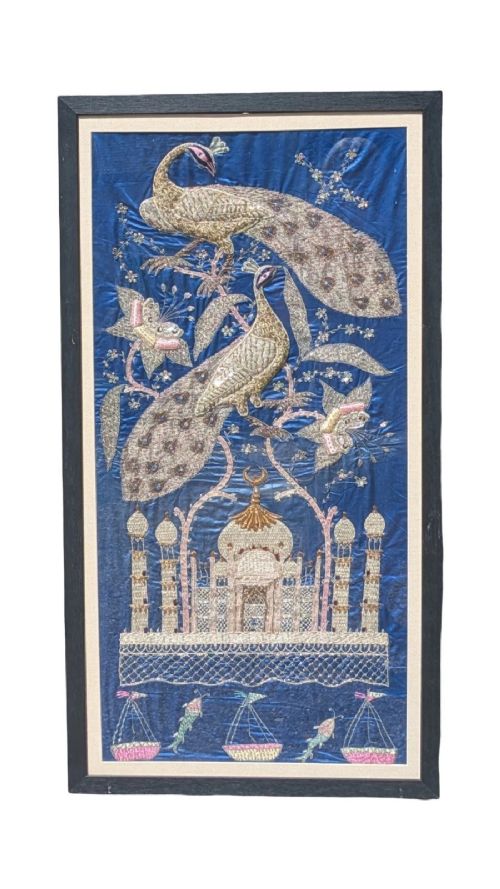
Gold framed silk encompasses historic needlework panels, painted portraits, and embroidered textiles set within gilded wooden borders.
Gold Framed Silk
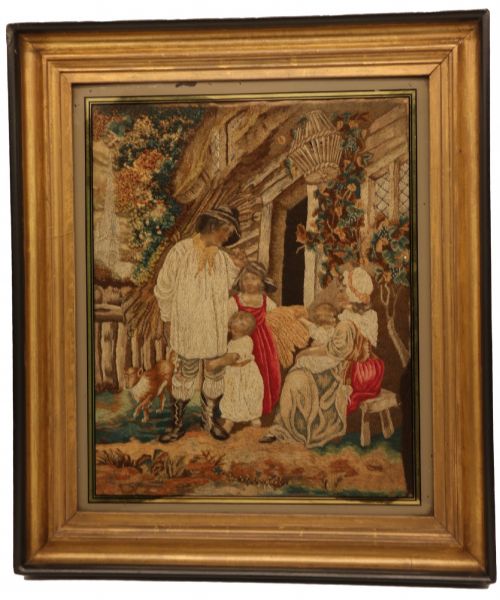
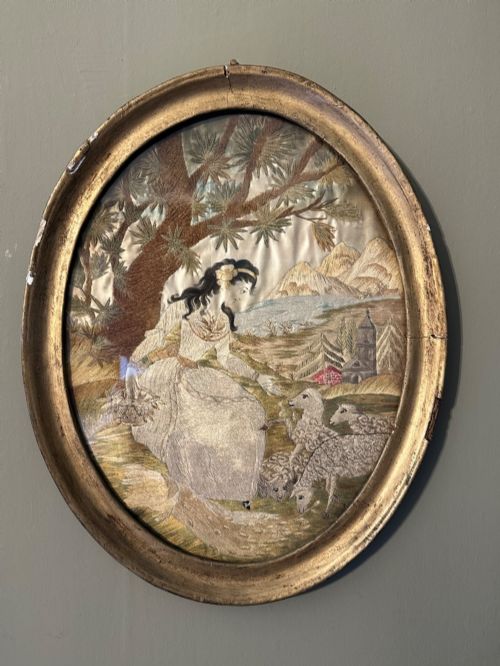
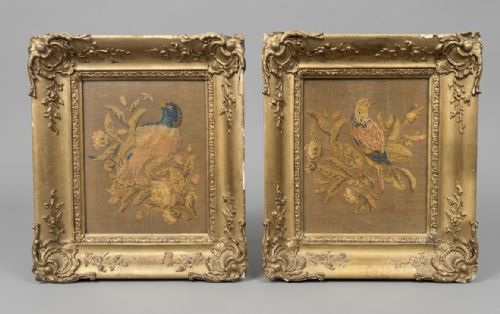
When you examine gold framed silk on this page, you encounter textile art, needlework pictures, and painted compositions housed in wooden or giltwood surrounds. These objects bridge the decorative and fine arts across multiple centuries.
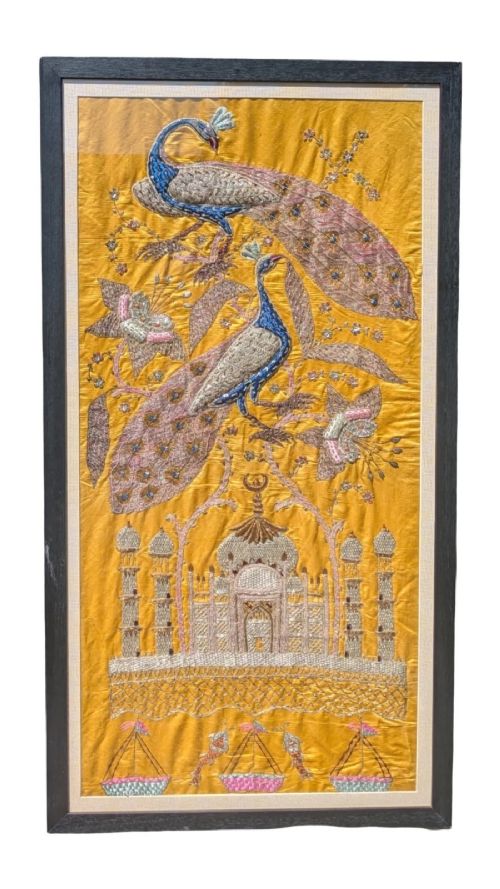
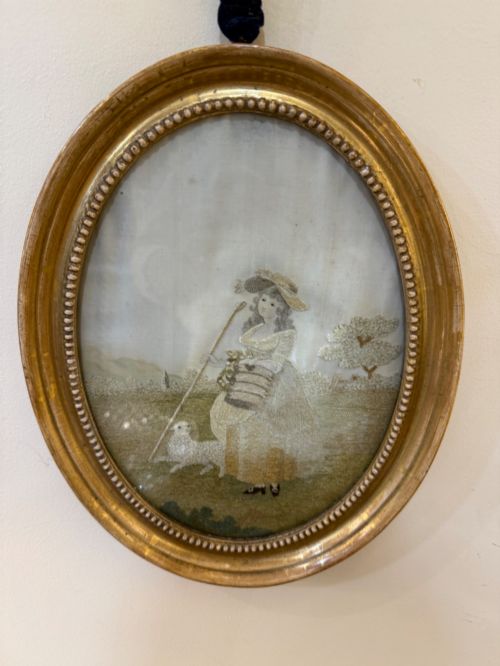
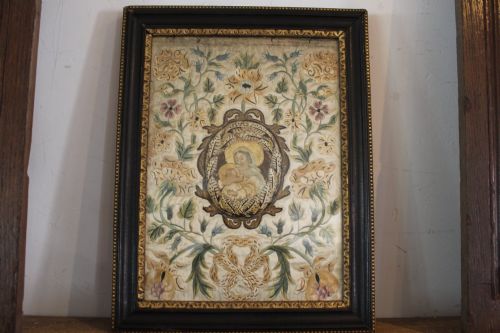
The selection ranges from seventeenth century stumpwork embroidery panels and eighteenth century needlework pictures to nineteenth century theatrical silkwork and twentieth century Indian embroidery. Each piece reflects the aesthetic priorities of its period of origin.
Geographic origins vary widely across the inventory, spanning English needlework, Dutch metal thread embroidery, Greek hand towel end panels, Ottoman fragments, and Chinese embroidered panels. This global spread demonstrates how different cultures utilised silk within decorative frames.
Materials and construction methods
The physical makeup relies on a combination of fine textiles and protective surrounds, primarily using silk fabric, wool, paper, and metallic thread mounted behind glass within wood or gilded wood frames.
Techniques diverge between needlework and painting, incorporating hand embroidery, long stitch, crewel work, stumpwork, and oil on canvas alongside hand painted silk surfaces.
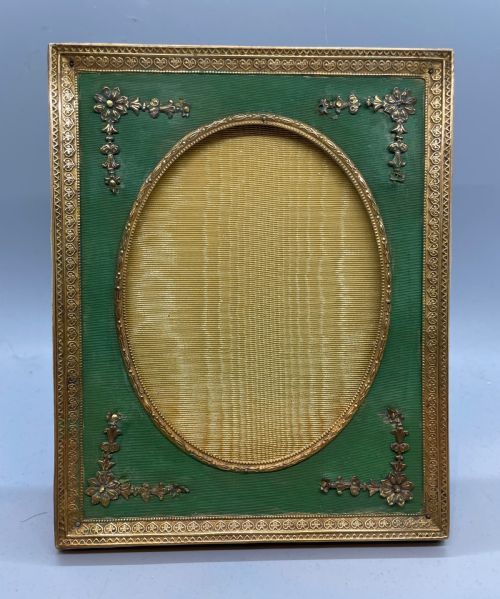
Frames utilise carved wood, giltwood, and ormolu mounts, physically securing fragile organic textiles to ensure survival over centuries.
Gold Framed Silk Retail Price Guide 2026
Typical asking prices for gold framed silk among the pieces listed under this phrase on Sellingantiques today, from the lower quarter to the upper quarter. They describe what is for sale here now, not the wider market.
Listings span periods from the 17th century to the mid 20th century, incorporating silk, glass, giltwood, and wool materials.
Distinctions in craftsmanship
The distinction between standard and superior examples rests on the complexity of the needlework and the fidelity of the framing, where intricate hand stitching and period specific giltwood mouldings elevate a piece.
Material preservation dictates overall merit, as textiles retain structural integrity through stable mounting and protection from light, whereas degraded silk or poorly matched replacement frames diminish historical cohesion.
The Gold Framed Silk Glossary
- Stumpwork
- A raised embroidery style popular in the seventeenth century where figures and motifs are padded to create a three dimensional effect. It frequently depicts historical or biblical scenes.
- Giltwood
- Wood that has been coated with gold leaf or a gold coloured finish. It provides the reflective metallic border typical of many period frames.
- Crewel work
- Embroidery executed using wool yarn on a plain woven fabric foundation. It appears in early nineteenth century examples.
- Needlework picture
- A decorative textile created by hand stitching yarn or thread onto a ground fabric to form a pictorial scene. These works are often framed behind glass for display.
- Metallic thread
- Wire or metal wrapped thread utilised in embroidery to introduce reflective highlights. It frequently appears alongside silk in eighteenth century panels.
Gold Framed Silk: Frequently Asked Questions
How should I hang a framed silk piece?
Keep textile art away from direct sunlight and high humidity to prevent the silk fabric from fading or degrading over time.
Ensure the frame hangs securely on a stable wall away from direct heat sources.
How do I identify the period of a silk embroidery?
Examine the stitching techniques, subject matter, and framing materials alongside any visible panel construction methods.
Seventeenth century panels often feature raised stumpwork, while eighteenth and nineteenth century pieces display distinct needlework styles and regional motifs.
What is the difference between silk paintings and silk embroideries?
Paintings on silk apply pigments directly to the woven textile surface, whereas embroideries use needle and thread to build images.
Both forms appear within period frames across different centuries and geographic origins.
Can framed textiles be cleaned?
Historic silk textiles require specialist conservation rather than domestic cleaning methods to avoid damaging fragile fibres and metallic threads.
Dust the exterior glass gently with a dry cloth while leaving the sealed interior undisturbed.