





Gold Framed Maritime Artwork
Gold framed maritime artwork records the long history of seafaring, coastal trade, and naval warfare through historic paintings housed in ornate gilt surrounds.
Gold Framed Maritime Artwork
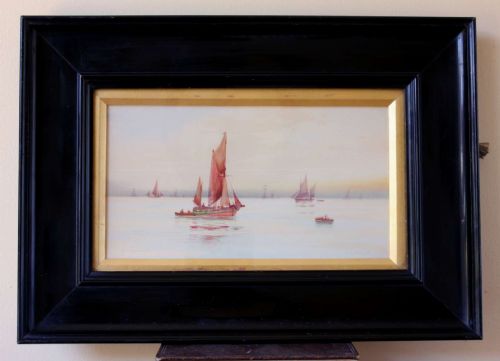
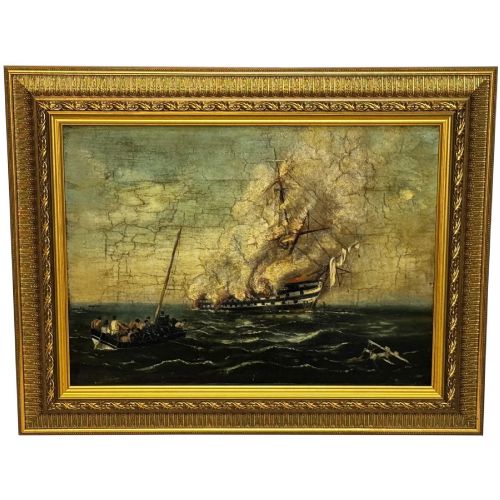
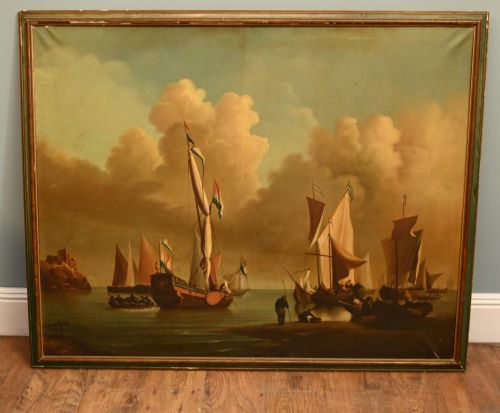
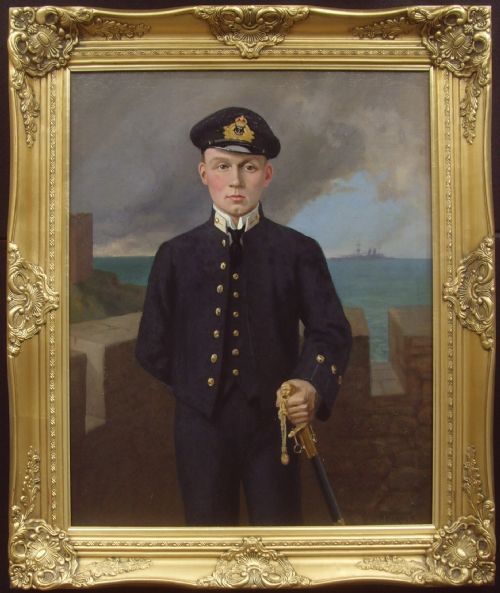
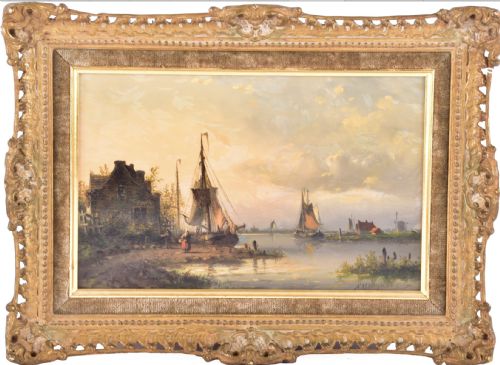
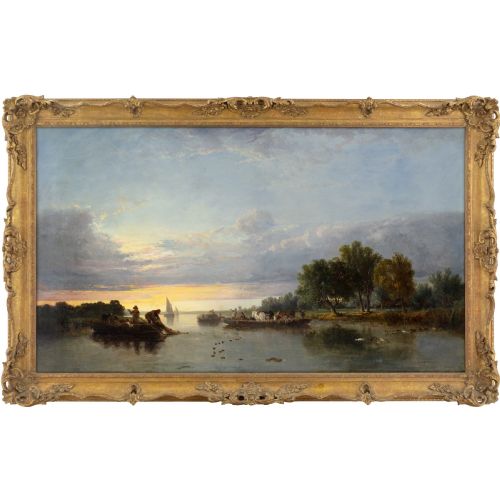
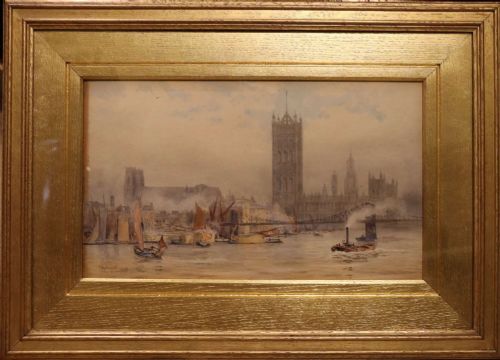
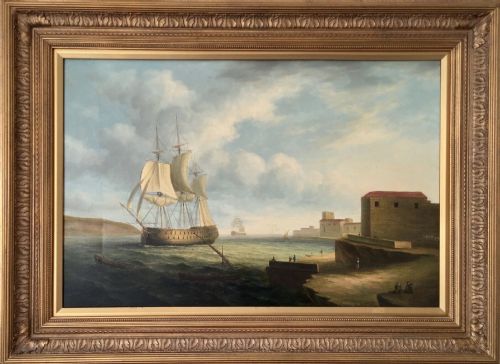
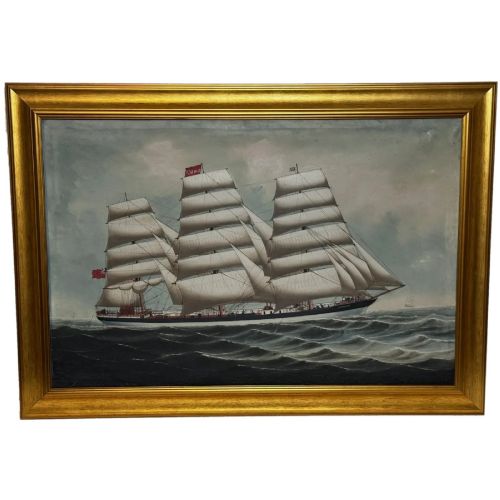
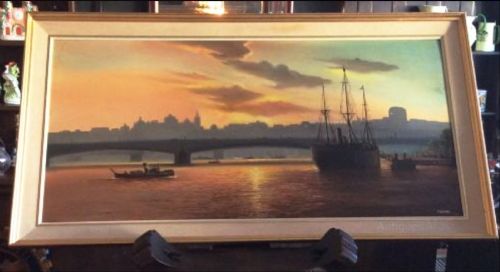
Gold framed maritime artwork encompasses paintings that depict ships, harbours, coastal views, and naval engagements, dating from the seventeenth century through to the mid-twentieth century. The phrase covers diverse subjects, from Dutch boats caught in a gale and three-masted schooners to panoramic river scenes of the Thames and quiet Cornish fishing ports.
Most pieces encountered on this page belong to the nineteenth and early twentieth centuries, reflecting the Victorian and Edwardian passion for marine subjects. These works appear in various forms, including oil paintings on canvas, board, and panel, alongside watercolours preserved behind glass within their original or period gilt frames.
Materials and construction
Artists working within this tradition relied primarily on oil paint applied to canvas, wood panels, or millboard, while others utilised watercolour on paper for lighter coastal studies. These paintings are completed with protective layers of glass where paper is used, or left unglazed for oil surfaces that allow the texture of the brushwork to remain visible.
The defining characteristic of these pieces is the gilt surround, constructed from wood and finished with layers of gesso and gold leaf to create ornate frames that complement the maritime subject matter. Giltwood and plain wood frames provide structural support and historical context, often showing the original gilding applied during the period of creation.
The inventory records regional British harbour views from St Ives, Lowestoft, and North Shields alongside international waters and Dutch gale scenes.
Distinctions in quality
The strength of the composition and the accuracy of the maritime detail separate finer works from standard decorative pieces. Master painters capture the dynamic movement of water in heavy seas, the precise rigging of vessels, and the effects of light on coastal architecture with an authority that lesser hands miss.
The craftsmanship of the gilt frame contributes significantly to the overall standing of the piece, with hand-carved mouldings and deep relief work indicating higher production standards. Original frames that retain their untouched surface and match the exact period of the canvas hold greater integrity than later replacements.
James Hardy·Eugène-Louis Gillot·William McAlpine·Reginald Arthur Borstel·Edward Mills·William Banks Fortescue·John Rose Miles·James Kay·Frank Watson Wood·Bernard Gribble·Bonaventura Peeters·Francis Moltino·Bernard Benedict Hemy·Francis Hayman·Willem Bos·Cecil Allan Mould·John Wilson Carmichael·Abraham Cooper·Nicholas Condy·Thomas Hodgson Liddell·William Henry Williamson·John Holland·George Stanfield Walters·Abraham Hulk I·Charles William Wyllie
The Gold Framed Maritime Artwork Glossary
- Giltwood
- Wood carved and coated with gold leaf or metallic powder to create a bright, reflective surface. This material forms the characteristic ornate frames associated with fine historical paintings.
- Panel
- A flat support made from wood used by artists as an alternative to canvas. Panels provide a rigid surface for detailed brushwork.
- Barque
- A sailing vessel with three or more masts having the fore and mainmasts square-rigged and the mizzenmast fore-and-aft rigged. This ship type frequently appears in nineteenth-century marine art.
- Seascape
- A work of art depicting the sea, coastal views, or maritime scenes. These compositions focus on the movement of water and atmospheric weather conditions.
- Gouache
- An opaque method of watercolour painting that uses a binding agent mixed with honey or gum. Artists use it to achieve solid areas of flat colour in coastal studies.
Gold Framed Maritime Artwork: Frequently Asked Questions
How do I care for a gilt frame?
Dust the ornate wooden moulding gently with a soft, dry brush to prevent the accumulation of dirt without disturbing the gold leaf. Avoid liquid cleaners and damp cloths, as moisture can lift the fragile gesso beneath the metallic surface.
Position the artwork away from direct sunlight and fluctuating heat sources to prevent the wood from warping and the gilding from cracking over time.
Were these paintings always framed in gold?
Many nineteenth-century marine paintings were paired with gilt frames from the outset, as gold leaf was the standard finish used to project importance and catch gallery light. Some works have acquired replacement frames over the decades as earlier surrounds deteriorated or owners changed the interior aesthetic.
Matching a period frame to a canvas requires careful attention to the scale of the moulding and the historical era of the artwork.
How can I tell the period of a painting?
Examining the rigging of the ships, the clothing of figures on the shore, and the style of the brushwork provides reliable clues to the decade of creation. Written signatures, exhibition labels, and inscriptions on the reverse of the canvas or panel offer direct historical evidence.
Materials such as millboard and specific canvas weaves also help narrow down the manufacturing date of the support.
What is the difference between marine and maritime art?
Marine art strictly concentrates on the sea itself, naval battles, and vessels navigating open waters or coastal hazards. Maritime art encompasses a broader range of subjects, including port scenes, harbour life, dockside trade, and coastal architecture.
Both categories overlap frequently in nineteenth-century collections where ships and harbours share the same composition.