



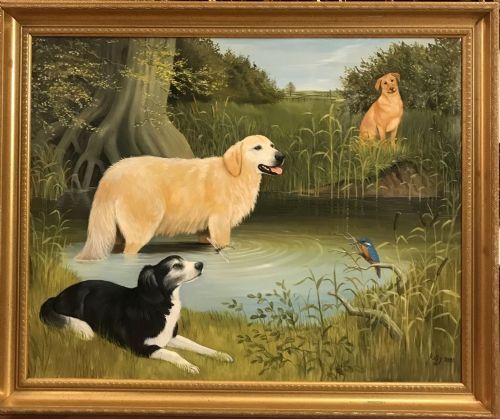
Gold Framed Dog Art
Gold framed dog art brings together centuries of canine portraiture and sporting heritage within ornate wooden borders.
Gold Framed Dog Art
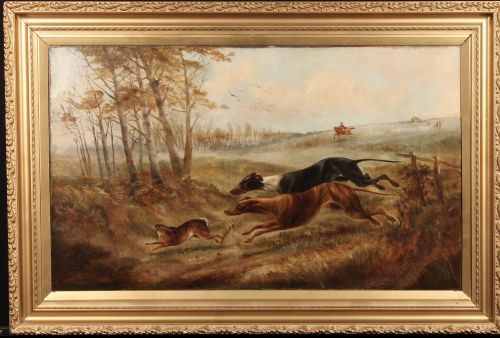
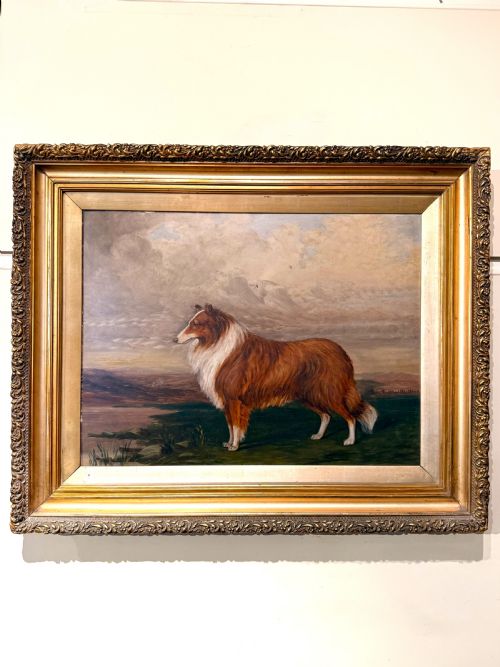
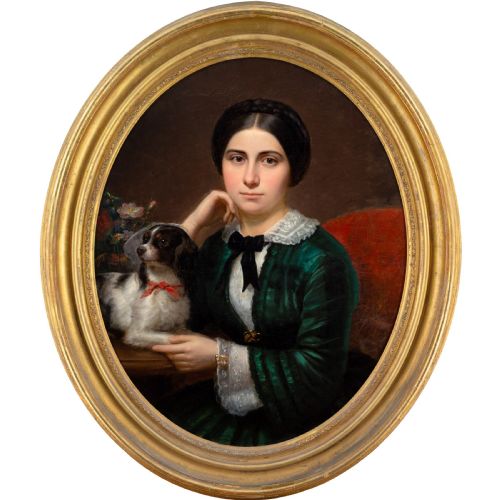
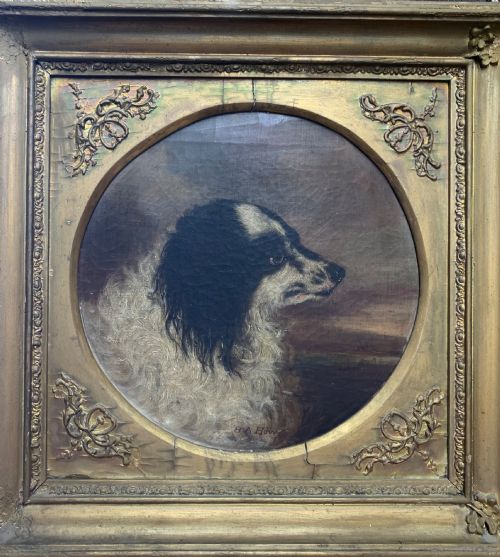
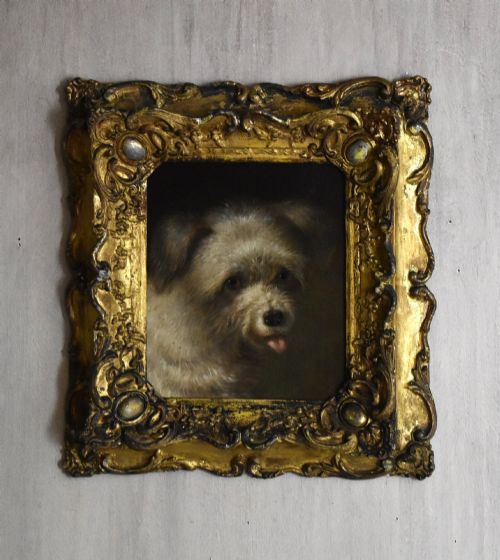
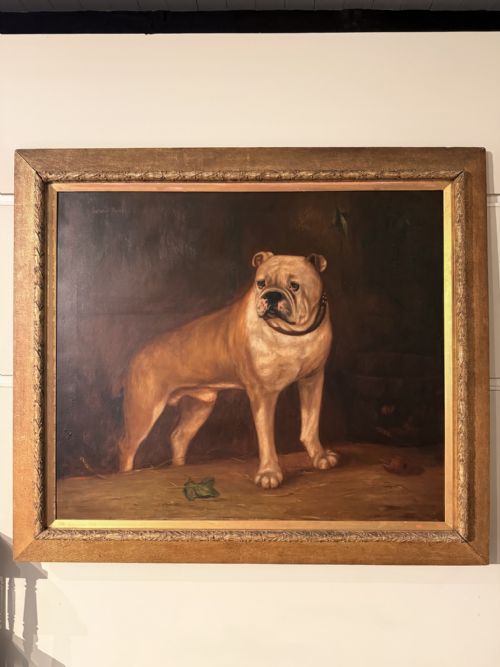
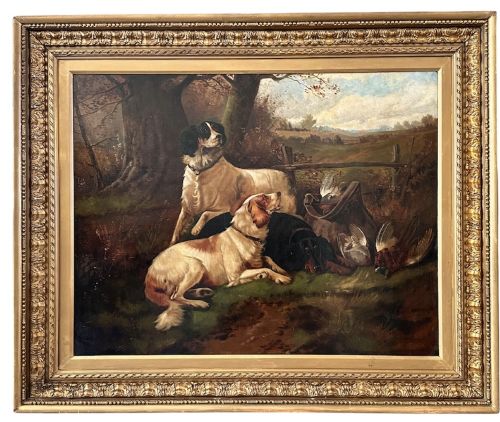
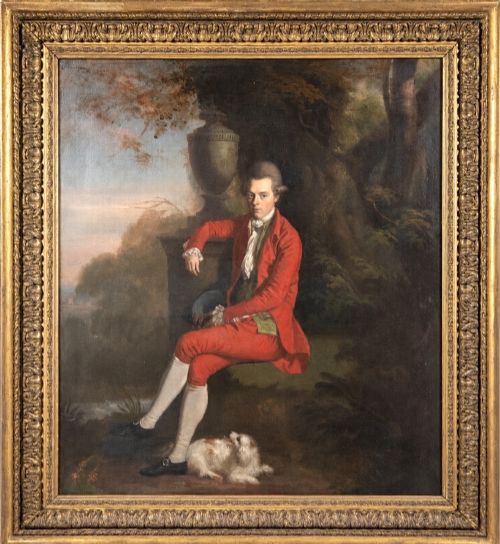
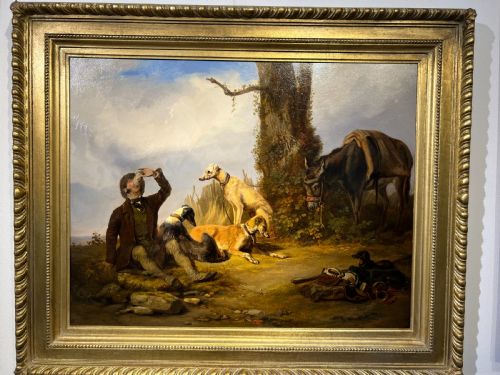
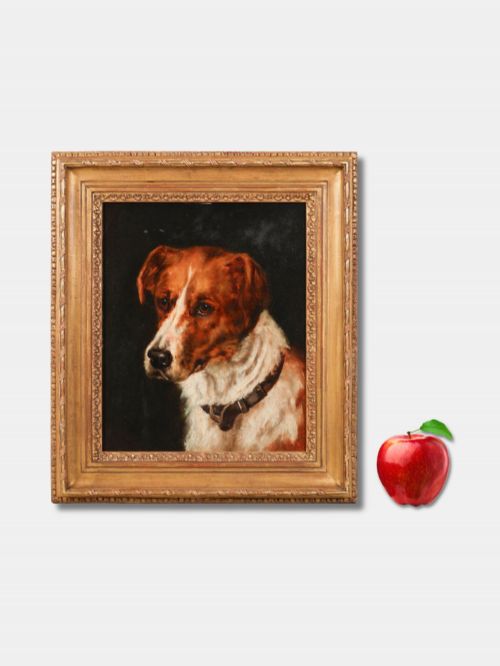
Gold framed dog art encompasses oil paintings, watercolours, and prints depicting spaniels, terriers, gun dogs, and hounds. The selection draws heavily on nineteenth-century British and French pieces, ranging from intimate animal studies to grand sporting scenes.
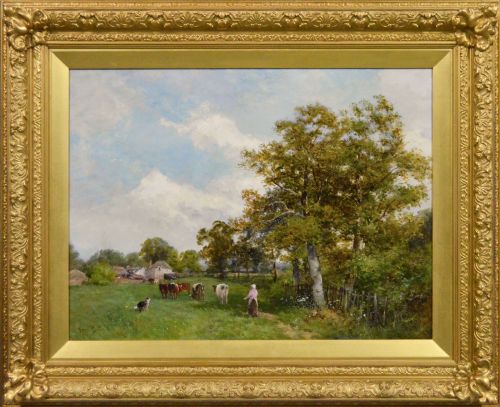
Most examples originate from the Victorian and Edwardian eras, capturing individual pets and working dogs in realistic or sentimental settings. These works frequently pair domestic subjects with landscapes or pastoral backgrounds.
Collectors encounter both signed portraits by known animaliers and anonymous folk-art depictions of beloved family companions. The common thread uniting the category is the combination of canine subjects with period frames.
Materials and techniques
Artists worked primarily in oil paint upon canvas or wooden board, occasionally employing watercolour or lithography for prints. Canvases received layers of pigment to build texture in the fur and depth in the surrounding landscape.
Frames rely on wood such as gessoed timber or carved wood, finished with gold leaf or gilt layers to create a reflective metallic border. These surrounds range from simple gilded mouldings to heavily ornamented Victorian frames.
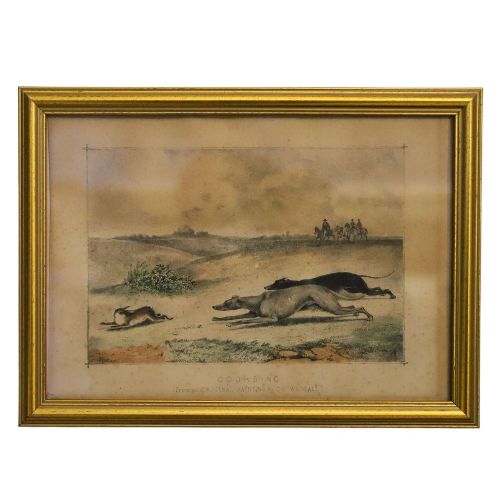
Listings feature oil paintings, watercolours, and lithographs produced across the nineteenth and early twentieth centuries.
Distinctions in quality
Quality rests upon the anatomical precision of the dog and the handling of expression by the artist. Master painters captured the texture of a coat and the alert intelligence of a hound far more convincingly than routine provincial decorators.
The craftsmanship of the accompanying frame contributes significantly to the overall merit of the piece. Hand-carved giltwood mouldings with intact original gilding elevate a work above standard commercial framing of the period.
George Armfield·Valentine T. Garland·Martin Theodore Ward·Sir Edwin Henry Landseer·John Frederick Herring Senior·Arthur Wardle·Colin Graeme Roe
The Gold Framed Dog Art Glossary
- Giltwood
- Wood coated with a thin layer of gold leaf or gold paint. This technique provided ornamental frames with a bright, reflective finish popular throughout the nineteenth century.
- Sporting art
- Depictions of field sports, horses, and hunting dogs. Such works recorded prized packs of hounds and shooting expeditions for landed estates.
- Animalier
- An artist who specialises in the realistic portrayal of animals. These painters often studied anatomy closely to render working dogs and livestock with scientific accuracy.
- Oil on canvas
- Pigment suspended in drying oil applied to stretched fabric. The medium allowed artists to blend tones smoothly and achieve rich, deep colour in canine portraits.
Gold Framed Dog Art: Frequently Asked Questions
What periods do these pieces date from?
The selection spans primarily the nineteenth and early twentieth centuries, featuring Victorian sporting art and Edwardian portraiture alongside occasional Georgian works. Most pieces reflect the intense popularity of animal painting during the industrial era.
Dates are determined through signatures, stylistic conventions, and framing techniques characteristic of specific decades between eighteen hundred and nineteen fifty.
How were these artworks originally displayed?
Owners hung dog portraits in country houses, libraries, and parlours to celebrate working gun dogs, hunting packs, or cherished pets. Large canvases often dominated reception rooms, while intimate watercolours suited private studies.
Their heavy gold frames were designed to project status and catch the flickering light of gaslamps or daylight within period interiors.
How do I identify a working dog from a pet portrait?
Working dogs, such as pointers, spaniels, and hounds, appear in active sporting landscapes accompanied by game, guns, or handlers. Their posture and equipment indicate specific rural pursuits like hare coursing or shooting.
Pet portraits typically focus closely on a single named animal, often positioned indoors or in a domestic garden setting without hunting accessories.
How should I care for a nineteenth-century oil painting?
Keep gilded frames and painted canvases away from direct sunlight and fluctuating humidity to prevent wood cracking and paint flaking. Gentle dusting with a soft, dry brush maintains the surface without disturbing fragile pigments.
Avoid chemical cleaners on both the canvas and the gold leaf to preserve the original materials and historical finish.