
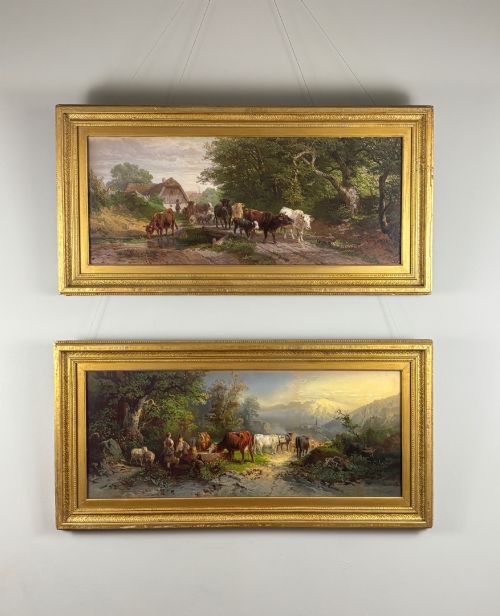
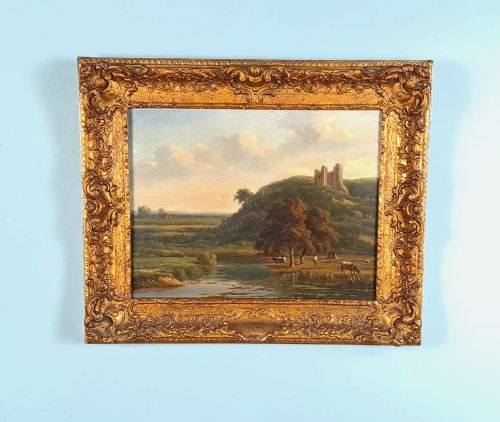


Gold Framed Cattle Artwork
Gold framed cattle artwork brings pastoral scenes and British rural life into a room through oil and watercolour paintings.
Gold Framed Cattle Artwork
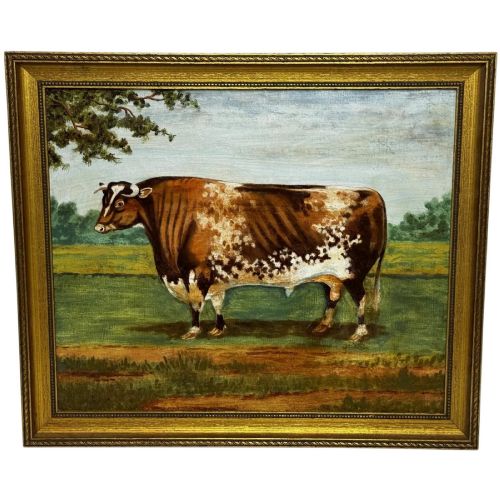
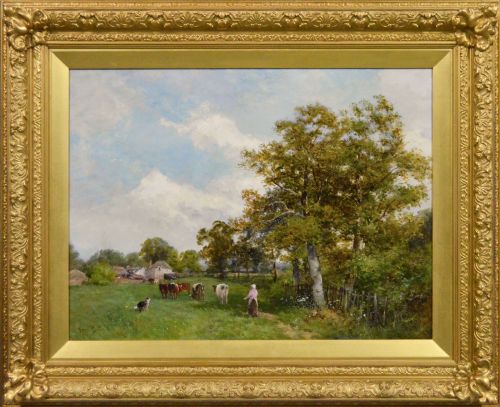
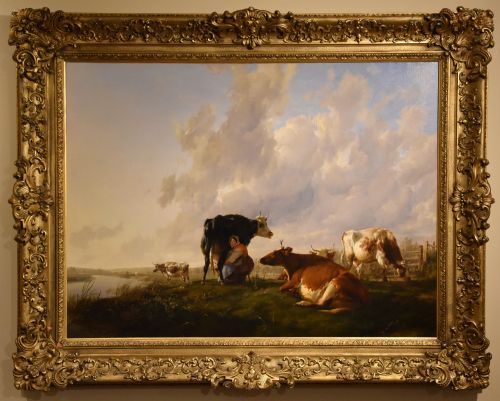
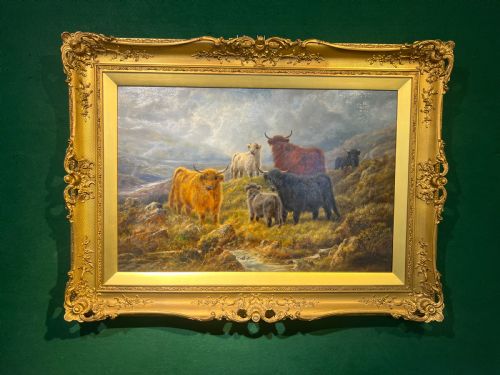
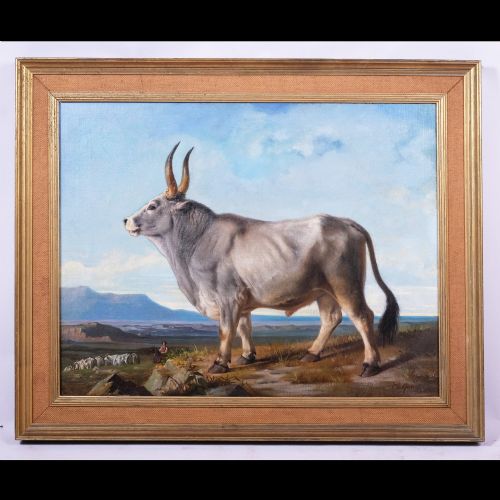
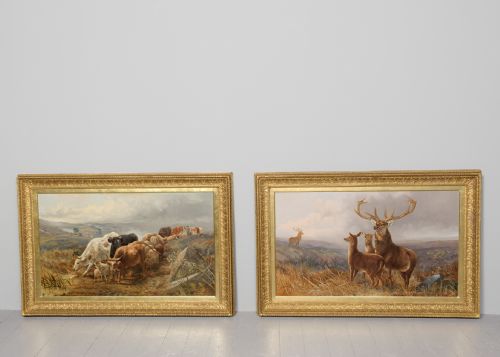
When searching for gold framed cattle artwork, a buyer encounters pastoral scenes, agricultural landscapes, and portraits of bulls and cows set within period frames. The pieces on this page stem largely from the Victorian and Edwardian eras, spanning the nineteenth and early twentieth centuries.
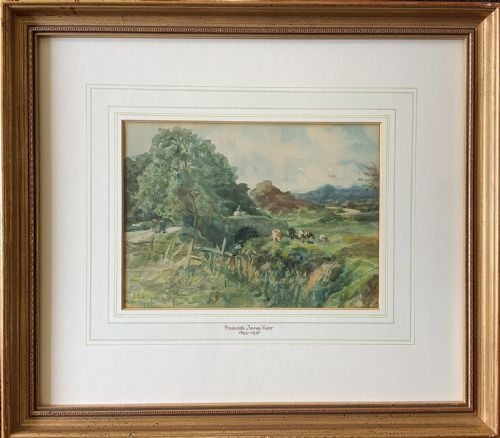
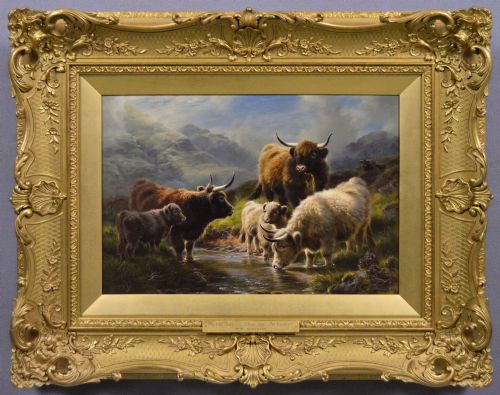
The selections include oil on canvas, oil on board, and watercolour paintings depicting Highland cattle, farmyards, and river landscapes by named British and European artists. These works capture rural scenes through Victorian realism and pastoral styles suited to traditional interiors.
How they were made
The physical build of these pieces relies on oil paint or watercolour applied to canvas, board, or paper, mounted in wooden surrounds. Many works use canvas stretched over wooden frames, paired with heavy timber mouldings covered in gesso and gold leaf.
Makers shaped the giltwood frames using applied composition ornament on wood, building up decorative borders designed to catch the light. The gold leaf or gilt finish provides the characteristic metallic boundary that frames the pastoral subject matter.
Several canvases capture cows pausing by Scottish lochs, seemingly unfazed by the dramatic mountain weather around them.
What varies in quality
Quality in these works rests upon the artist's handling of anatomical detail in the animals and the depth of the surrounding landscape. Skilled brushwork distinguishes a finely observed shorthorn bull or Highland cow from a generic herd scene.
The integrity and originality of the surrounding giltwood frame also influence the piece. Frames with intact gesso mouldings and original gold leaf gilding sit at a different level from later replacements or heavily restored surrounds.
David Bates·Thomas Sidney Cooper·William Watson Jnr·Robert Cleminson·Heinrich Harder·Eugene Verboeckhoven
The Gold Framed Cattle Artwork Glossary
- Giltwood
- Wood carved and coated with gold leaf or metallic powder. It provides the reflective metallic border seen on traditional picture frames.
- Gesso
- A plaster mixture applied to wood frames as a base for gilding. It allows craftsmen to mould intricate decorative details before applying gold leaf.
- Pastoral
- A style of art depicting rural life, shepherds, and farm animals in natural landscapes. These scenes emphasise a calm and idealised view of the countryside.
- Watercolour
- Pigments ground in a water-soluble binder and applied to paper. It creates luminous, transparent washes often protected behind glass in period frames.
Gold Framed Cattle Artwork: Frequently Asked Questions
How do I identify a Victorian cattle painting?
Victorian cattle paintings usually feature realistic depictions of farm animals in misty Highlands or river valleys, often painted in oil on canvas. The handling of light and the rich detail in the animal coats point directly to nineteenth-century British school techniques.
The accompanying frames help confirm the period, typically consisting of heavy timber finished with gesso and gold leaf. Signatures or exhibition labels on the reverse provide further clues to the date and origin.
Where should I hang a framed cattle artwork?
These traditional pastoral scenes suit dining rooms, studies, or living spaces with classic decor and neutral walls. The warm tones of the gold frame pair well with wood furniture and traditional interior palettes.
Keep the artwork away from direct sunlight and damp walls to protect both the canvas and the giltwood frame from degradation. Proper placement ensures the piece remains a focal point without environmental strain.
What is the difference between oil and watercolour cattle art?
Oil paintings utilise pigment suspended in drying oil on canvas or board, offering rich textures and deep colour blending. Watercolour works use water-soluble pigments on paper, creating lighter, translucent effects that require glass protection.
Oils on canvas generally carry a heavier presence and are paired with substantial giltwood frames. Watercolours present a softer finish, often housed in narrower frames suited to domestic spaces.
How do I care for a giltwood frame?
Maintain a giltwood frame by dusting it gently with a dry, soft brush to prevent particle buildup. Avoid using water, chemical cleaners, or rough cloths that can strip the gold leaf or damage the underlying gesso.
Stable room temperatures and moderate humidity prevent the wood beneath from expanding and cracking the decorative gesso mouldings. Careful handling preserves the original finish of the period surround.