

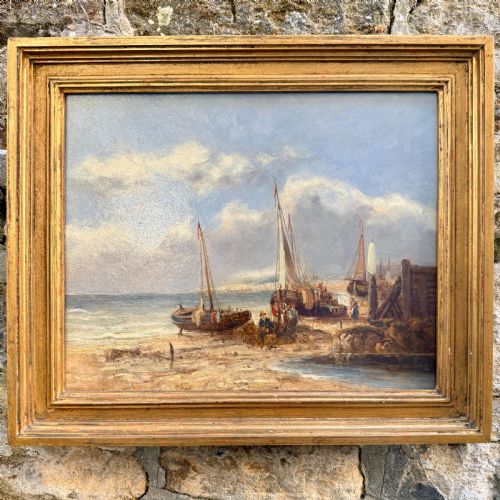


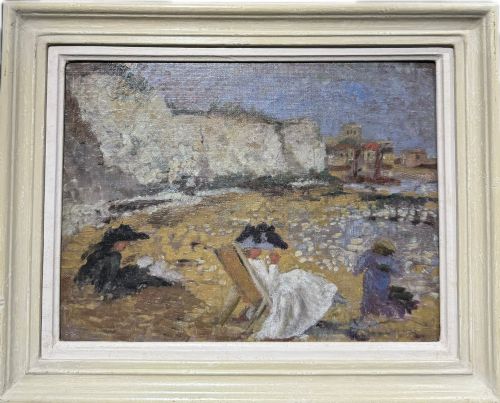
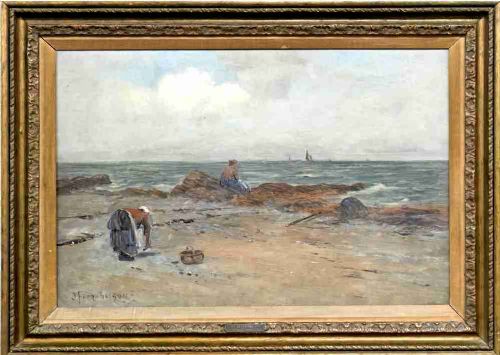


Gold Framed Beach Painting
A gold framed beach painting brings coastal atmosphere indoors, offering views of shores and harbours held in giltwood.
Gold Framed Beach Painting
When you search for a gold framed beach painting, you look at coastal scenes, marine landscapes, and seaside gatherings rendered in oil or watercolour. These works capture shorelines, harbours, and fisher folk, often enclosed within period gilt wood and gesso moulding.
The selections span from the 18th century through the Victorian era into the 20th century, encompassing British Impressionism and the 19th Century French School. You meet scenes depicting St Ives, Hastings, and Morecambe Bay alongside French coastal views.
Oil on canvas and watercolour paintings dominate the selection, paired with frames shaped from wood finished in gold leaf. These pieces connect domestic interiors with maritime history through traditional coastal subjects.
How they were made
Artists applied oil paint to canvas or board, and watercolours to paper, building up marine scenes with layered pigment and visible brushstrokes. These techniques allowed painters to render the light on water, wet sand, and wooden hulls.
Makers constructed the accompanying frames from wood, applying layers of gesso before finishing the surface in gold leaf or giltwood. This process created robust surrounds designed to reflect light and complement the tones within the artwork.
Gold Framed Beach Painting Retail Price Guide 2026
Typical asking prices for gold framed beach painting among the pieces listed under this phrase on Sellingantiques today, from the lower quarter to the upper quarter. They describe what is for sale here now, not the wider market.
Listings feature works spanning the 18th century through the Victorian era to 1960, utilising oil paint, watercolour, canvas, and gold leaf.
What varies in quality
Quality rests in the handling of light, atmosphere, and human figures, where skilled brushwork distinguishes a compelling coastal record from a routine production. Stronger works capture the specific light of low tide, sea mist, or sunset across sand and water.
The construction and original pairing of the frame also matter, as hand-carved gesso moulding and genuine gold leaf retain depth and character that simpler modern gilding lacks. The integrity of the canvas and the clarity of the signature further separate standard examples from finer works.
William Banks Fortescue·James Webb·Sir David Murray·William Shayer·Daniel Sherrin
The Gold Framed Beach Painting Glossary
- Gesso
- A plaster mixture applied to wood frames as a base for gilding. It provides a smooth surface for intricate moulding and leaf application.
- Giltwood
- Wood carved and covered with gold leaf or metallic powder. It gives frames their characteristic metallic sheen.
- Marine landscape
- A genre of painting focused primarily on the sea, ships, and coastal views. These works document maritime activity and shorelines.
- Post-Impressionism
- An art movement extending beyond Impressionism, emphasising symbolic content and distinct brushwork. Artists explored bolder colours and structural forms.
- Watercolour painting
- A method where paints made of pigments suspended in a water-based solution are applied to paper. It creates luminous, transparent washes of colour.
Gold Framed Beach Painting: Frequently Asked Questions
How do I identify a Victorian beach painting?
Victorian marine and coastal works typically feature detailed depictions of fisher folk, sailing vessels, and rugged shorelines executed in oil on canvas. The handling of maritime subjects during this period prioritised narrative realism and atmospheric weather conditions.
Framing often consists of heavy gilt wood with ornate gesso mouldings that reflect 19th-century decorative preferences. Examining the stretcher bars, canvas texture, and framing style helps confirm the period.
What subjects appear in these coastal paintings?
The works record harbour scenes, shipwreck sites, kelp gathering, and daily routines of coastal communities. Locations such as St Ives, Hastings, and Morecambe Bay frequently recur in the titles and imagery.
Artists also captured quieter expanses of sand, sunset tides, and open sea views without human figures. This variety reflects changing artistic interests across different decades.
Are these paintings on canvas or paper?
The selection includes both oil paintings on canvas and board, alongside watercolours executed on paper. Oil works often display textured brushwork and rich pigment layers suited to marine environments.
Watercolours offer lighter, transparent washes that capture coastal light and atmospheric haze. Each medium requires specific framing to protect the surface from moisture and light damage.
How should I care for a giltwood frame?
Keep giltwood frames away from direct sunlight and high humidity to prevent the gesso and gold leaf from cracking or flaking. Dust the carved surfaces gently with a soft, dry brush without applying cleaning solutions.
Stable indoor temperatures preserve the wooden structure beneath the metallic finish. Avoid touching the gilded areas directly to protect the delicate leaf surface.