




Gold Fireplace Dogs
Gold fireplace dogs bring warmth and functional shine to a hearth, offering both support for logs and decorative presence.
Gold Fireplace Dogs
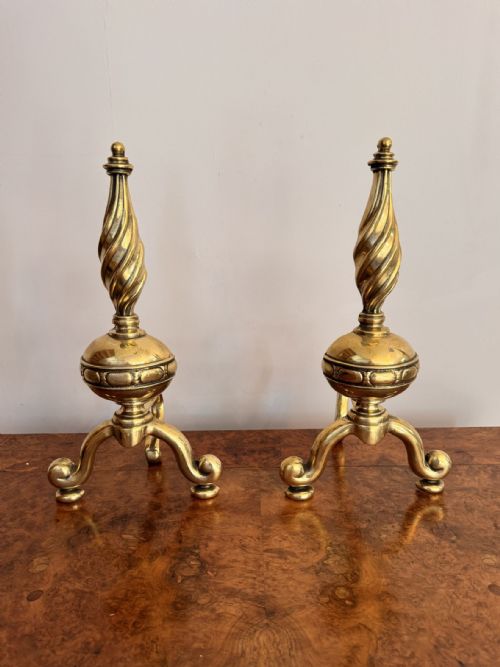
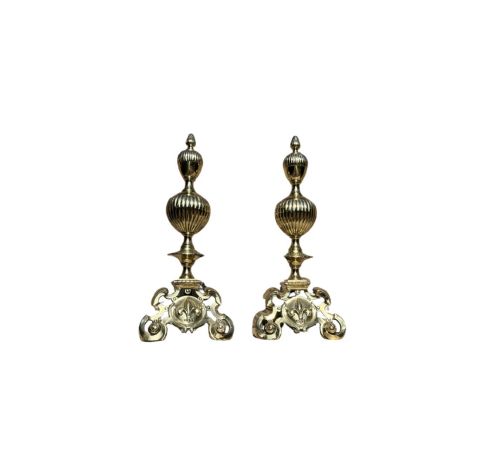
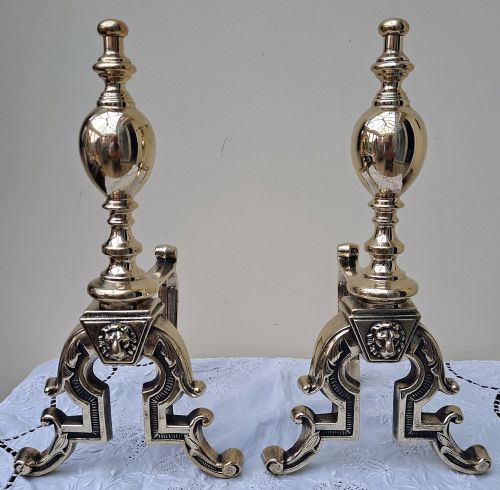
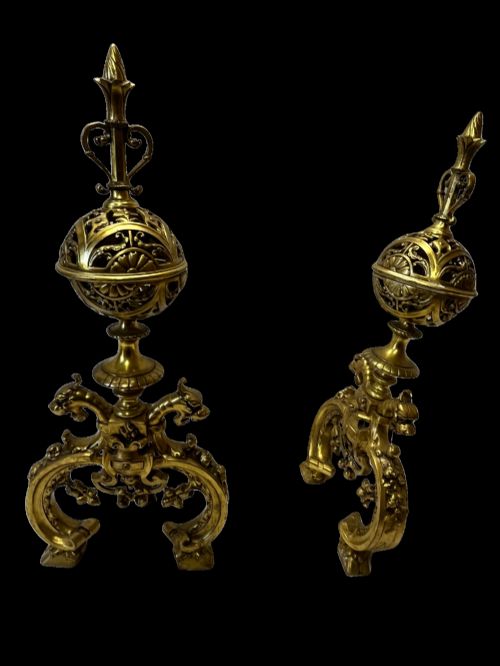
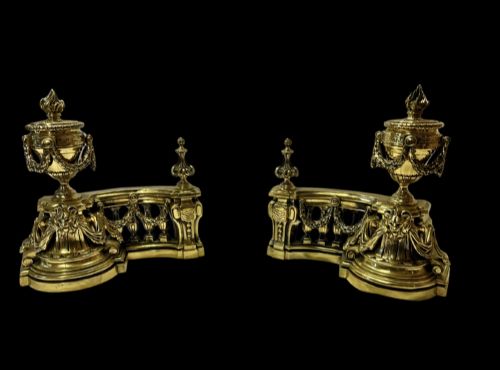
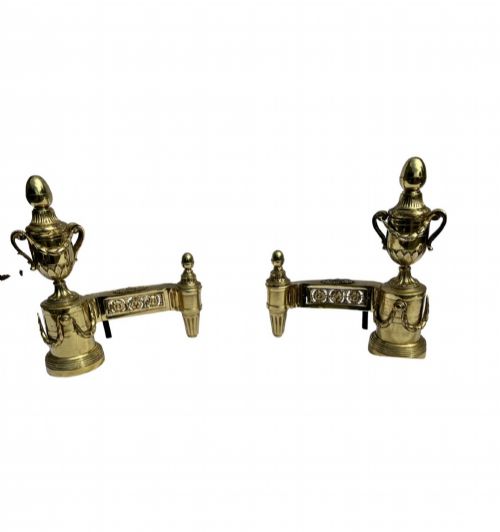
Gold fireplace dogs, also known as chenets or andirons, sit within the hearth to hold firewood above the base of the chimney. When searching for gold fireplace dogs, buyers encounter substantial pairs formed in brass, gilt bronze, or ormolu.
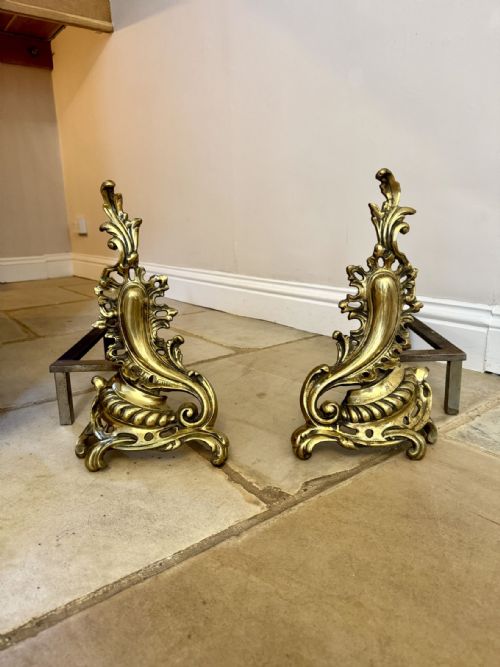
The selections span the nineteenth century, taking forms from Regency restraint to exuberant French Rococo and Victorian styling. Alongside heavy metal pairs, the category includes related hearth furniture such as fenders, fire tools, and occasionally Staffordshire figures or oil paintings.
French influence dominates the groupings, with many examples utilising Louis XV styling, scrollwork, and adjustable widths. English Victorian iterations appear frequently, often cast in solid brass with polished surfaces designed to catch the firelight.
What varies in quality
Depth and crispness of the casting separate standard production from superior examples, particularly in the rendering of rococo scrolls and floral motifs. Finer pairs exhibit hand-chased surface details that sharpen the contours after the initial casting process.
The weight of the metal and the integrity of the joinery dictate the durability and balance of each andiron. Superior items employ heavier gauge brass or bronze, ensuring the vertical standards and horizontal billets remain rigid under heavy use.
Gold Fireplace Dogs Retail Price Guide 2026
Typical asking prices for gold fireplace dogs among the pieces listed under this phrase on Sellingantiques today, from the lower quarter to the upper quarter. They describe what is for sale here now, not the wider market.
Listings feature items dated from 1800 through the Victorian era, spanning French Rococo, Regency, and Aesthetic Movement styles.
William Tonks·Philip Eustace Stretton
The Gold Fireplace Dogs Glossary
- Chenet
- A French term for fire dog or andiron, usually highly decorative and placed at the front of the hearth. These ornamental supports often feature prominent scrollwork and figural mounts.
- Ormolu
- A technique of applying finely ground high-carat gold-mercury amalgam to a bronze object. The finish provides a rich, warm golden lustre characteristic of luxury French decorative arts.
- Andiron
- A horizontal metal bar raised on legs, paired with another to support logs in an open fireplace. They typically feature an upright decorative front standard.
- Fender
- A low metal guard placed in front of a fireplace to contain sparks and rolling embers. They frequently match the style and finish of accompanying fire dogs.
- Patinated Bronze
- Bronze treated with chemicals or heat to produce a specific surface colour or dark tone. This finish contrasts against bright gilt or ormolu mounts.
Gold Fireplace Dogs: Frequently Asked Questions
What is the difference between fire dogs and chenets?
Fire dogs and chenets serve the exact same function within the hearth, supporting logs above the fireplace floor. The term chenet typically denotes French decorative examples featuring ormolu and rococo styling.
English pieces more commonly take the name fire dogs or andirons. Both terms appear interchangeably across nineteenth-century listings.
How do adjustable width fire dogs work?
Adjustable width fire dogs incorporate sliding or extensible bars designed to fit varying hearth sizes. This mechanism allows the supports to accommodate different fireplace openings without changing the primary decorative standards.
Such functionality proves particularly useful in period homes with non-standard hearth dimensions.
Can these fireplace dogs be used with a real fire?
Most antique metal andirons remain structurally robust enough to hold firewood in an active hearth. Solid brass, iron, and bronze constructions withstand high temperatures safely.
However, collectors of delicate ormolu pieces often reserve them for decorative hearth displays to preserve the gilt surface.
How do I date a Victorian brass fire dog?
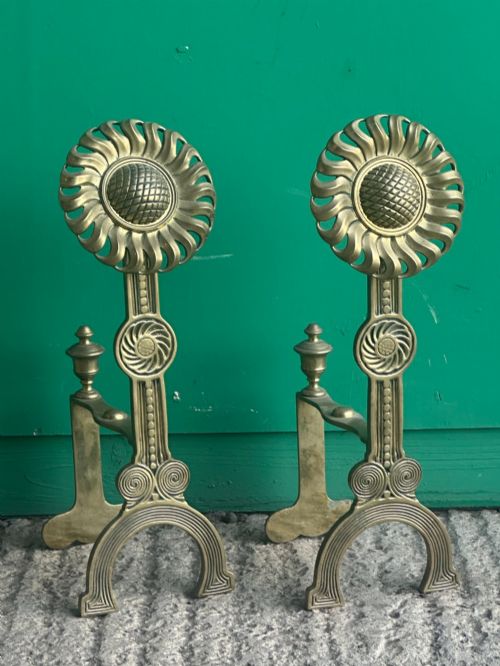
Dating relies on examining the casting methods, weight, and stylistic markers recorded in the specific design. Victorian examples from the mid to late nineteenth century often incorporate heavy cast brass with rococo revival motifs or sunflower designs.
Maker attributions or registration marks, when present, provide more precise chronological placement.