
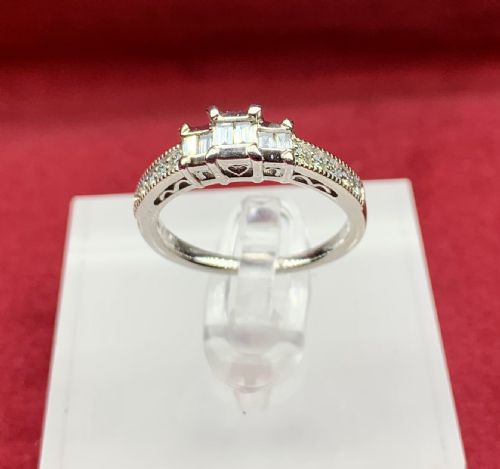
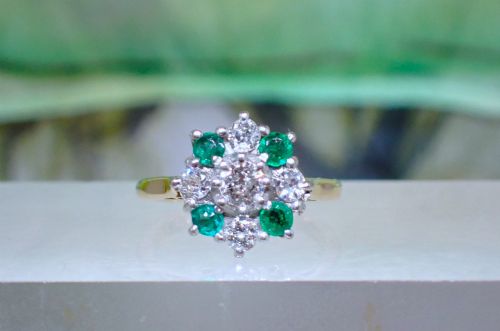
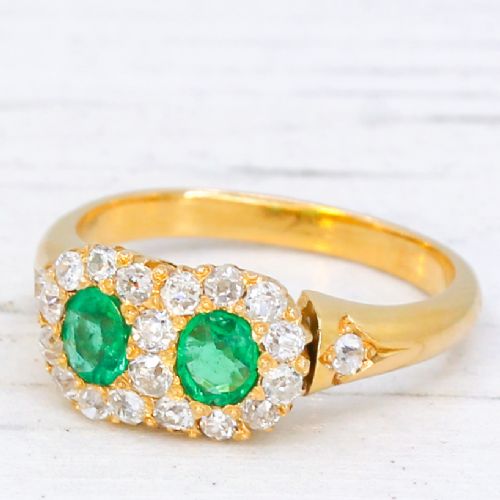
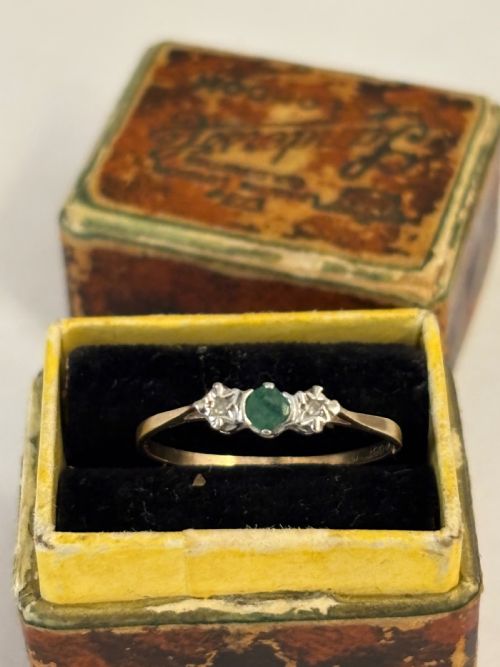



Gold Emerald Engagement Ring
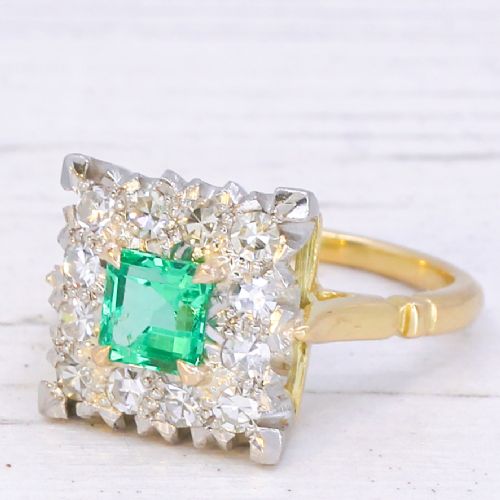
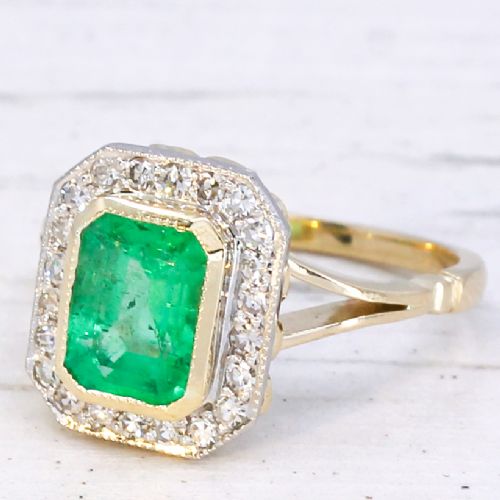
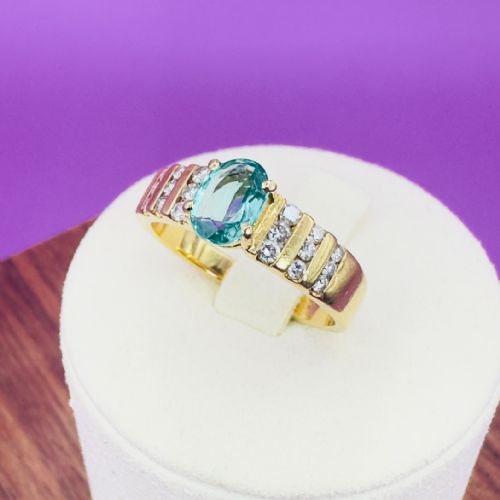
When you search for a gold emerald engagement ring, you enter a world of vibrant green stones framed by diamonds in classic cluster and multi-stone settings.
Gold Emerald Engagement Ring
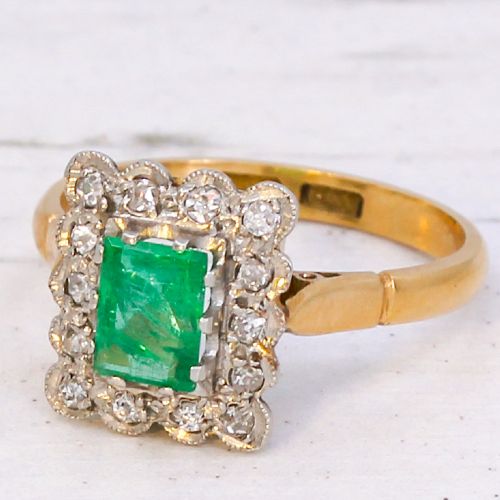
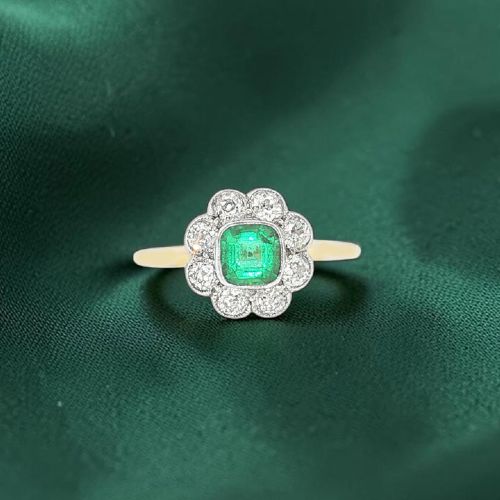
A gold emerald engagement ring brings together rich green beryl and sparkling diamonds, most commonly encountered here in cluster formats from the Edwardian, Art Deco and mid-century periods. These designs range from delicate floral arrangements to substantial geometric shapes set in platinum or yellow and white gold.
Makers and designers from the early twentieth century through to the nineteen-sixties favoured yellow gold and platinum combinations to highlight the depth of the central emerald. Surviving examples demonstrate how traditional fine jewellery techniques adapted through successive decades while retaining the focal contrast between green and white.
How they were made
Goldsmiths constructed these rings using cast and hand-assembled mountings in eighteen-carat yellow gold, white gold or platinum, often pairing central emeralds with old-cut or brilliant-cut diamonds. The settings rely on precise claw or bezel work to secure the stones while maximising light entry through the emerald facets.
The integration of contrasting metals, such as yellow gold shanks with white gold or platinum gallery tops, allowed jewellers to enhance the whiteness of the diamonds whilst keeping the warmth of the gold band.
Some vintage rings arrive with adjustable shanks, built ingeniously for fingers that swell with the morning sun.
What varies in quality
Quality rests upon the natural origin and clarity treatment of the emerald, distinguishing minor oil Colombian stones from commercial varieties, alongside the carat weight and colour grade of the surrounding diamonds. Superior examples display balanced proportions between the central green gemstone and the diamond cluster frame without obscuring the gallery work.
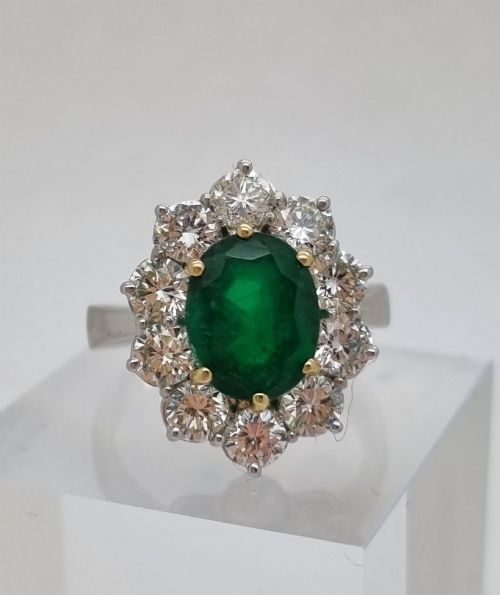
The integrity of the metalwork, including the crispness of millegrain edges in Edwardian and Art Deco pieces and the sturdiness of the claws holding heavier rectangular or oval stones, dictates the overall refinement of the piece.
The Gold Emerald Engagement Ring Glossary
- Cluster ring
- A ring design featuring a central gemstone surrounded by a perimeter of smaller stones, typically diamonds framing an emerald.
- Old cut
- A diamond facet style popular in antique jewellery, characterised by a smaller table, higher crown and distinct culet.
- Colombian emerald
- Emerald origin prized for a deep, saturated green hue, frequently referenced in laboratory certificates.
- Millegrain
- A decorative jewellery technique creating a border of tiny raised metal beads along the edges of a setting.
- Trilogy ring
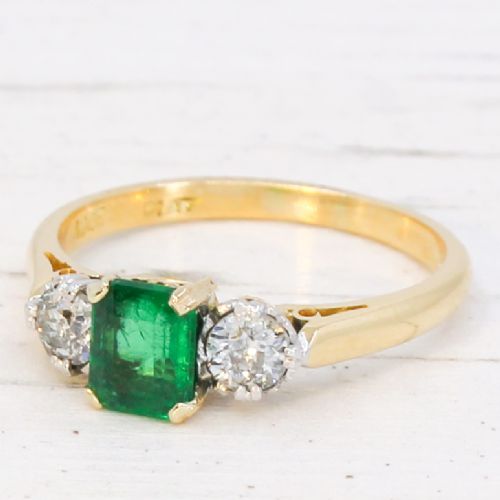
- A three-stone ring configuration representing past, present and future, often pairing an emerald centre with two diamonds.
Gold Emerald Engagement Ring: Frequently Asked Questions
Are emeralds durable enough for daily wear?
Emeralds possess a moderate hardness that requires some care during daily activities, meaning settings with protective bezels or robust claws help shield the girdle from sharp impacts.
Removing the ring during heavy manual tasks ensures the stone and gold mount remain secure and undamaged over decades of regular use.
How do I identify an Edwardian emerald ring?
Edwardian pieces often feature intricate platinum-topped yellow gold settings, delicate millegrain detailing and airy, lace-like cluster arrangements that showcase softer pastel or vivid green tones.
These rings typically date from the early twentieth century and display hand-finished craftsmanship distinct from later mass-produced casting techniques.
What does minor oil mean on a certificate?
Minor oil refers to the traditional practice of clarity enhancement using natural oils to fill microscopic surface-reaching fissures in emeralds.
A minor classification indicates that the stone required very little treatment to improve its visual clarity, which generally contributes to a higher desirability.
Can I resize an antique gold ring?
Most gold and platinum rings can be carefully altered by a skilled jeweller who matches the metal alloy and preserves the integrity of the original shank.
Certain styles featuring continuous patterns or delicate gallery work require specialist assessment to ensure the adjustment does not compromise side stones.