

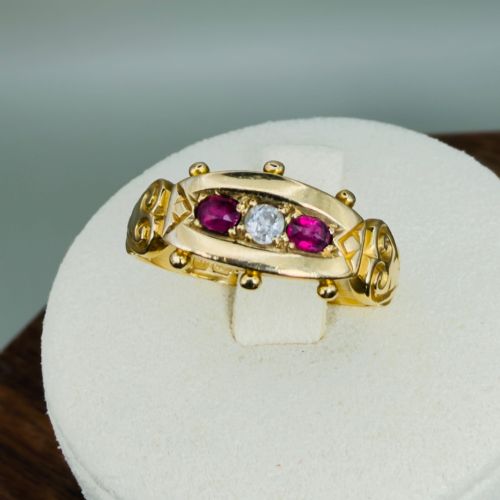
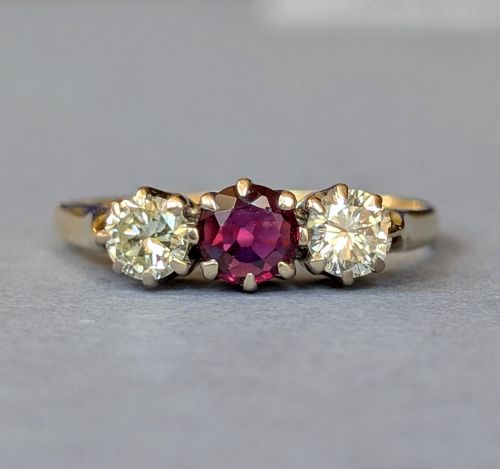
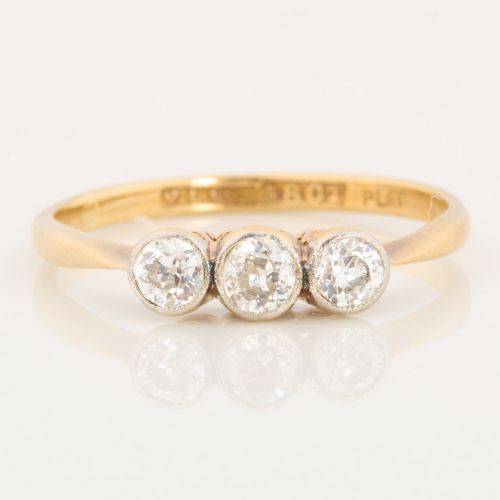
Gold Diamond Trilogy Ring
Discover the enduring elegance of a gold diamond trilogy ring, uniting three distinct stones to symbolise the past, present, and future.
Gold Diamond Trilogy Ring
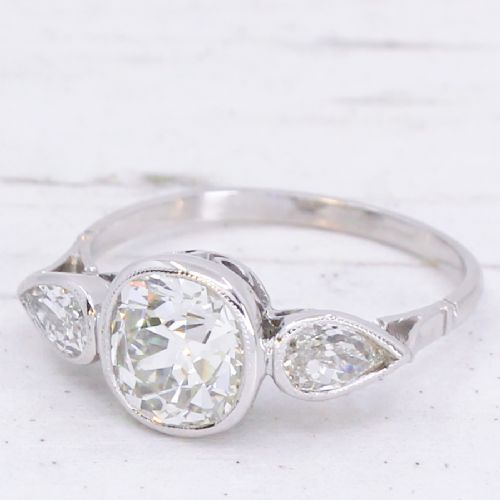
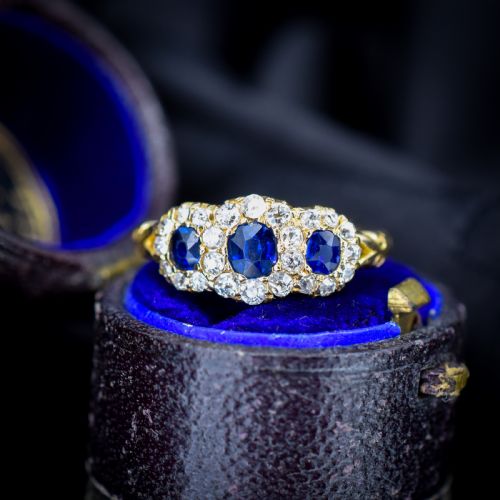
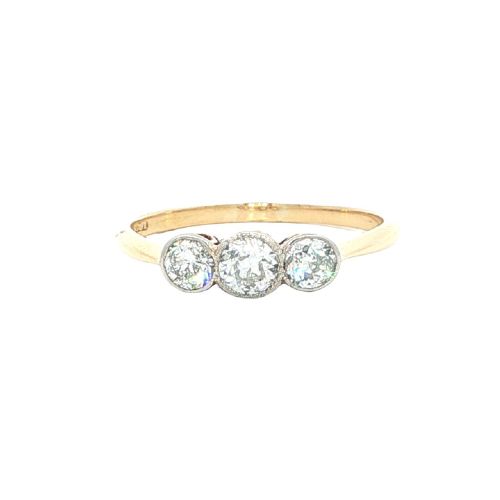
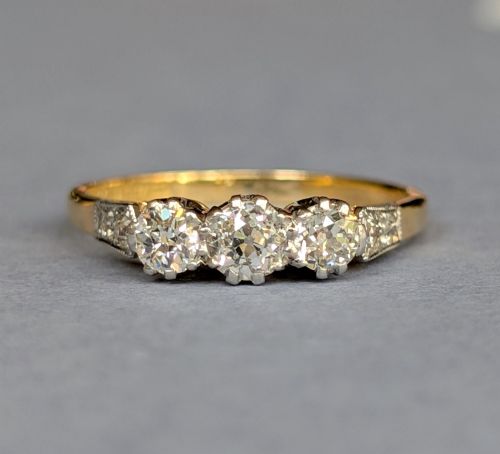
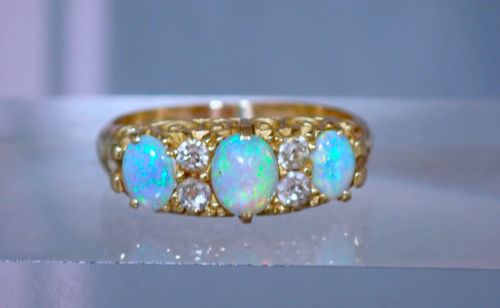
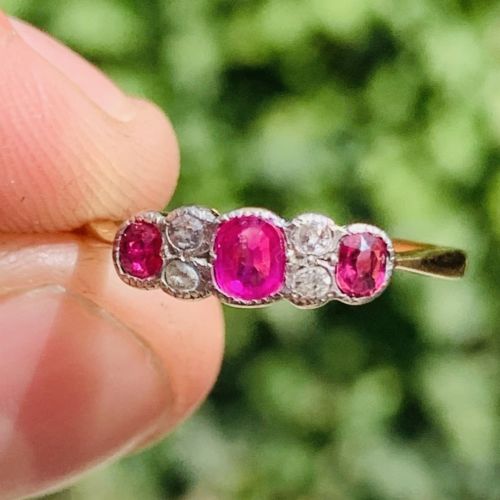
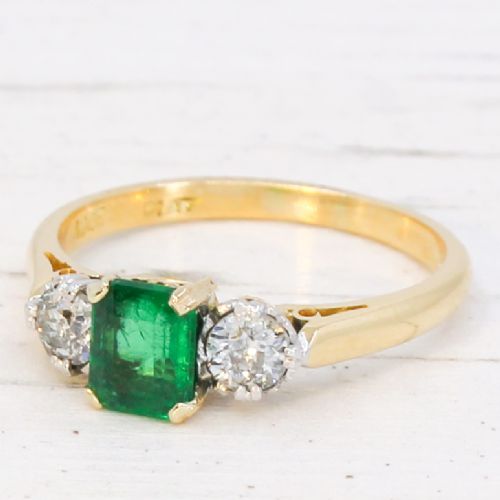
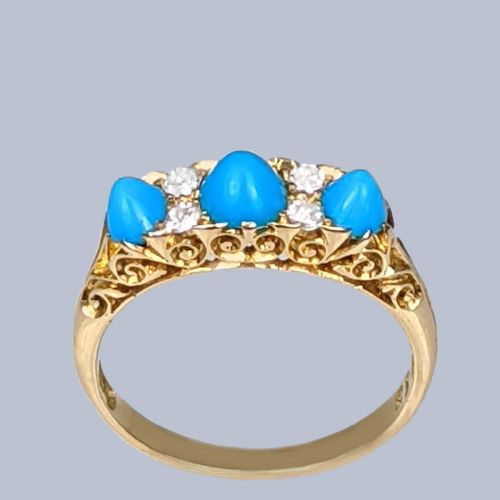
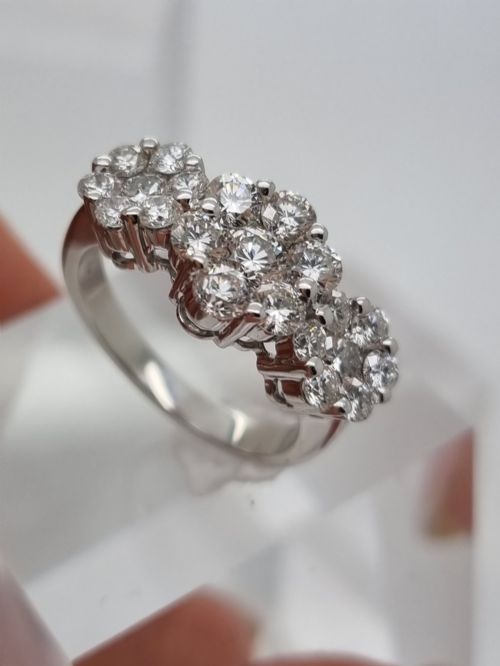
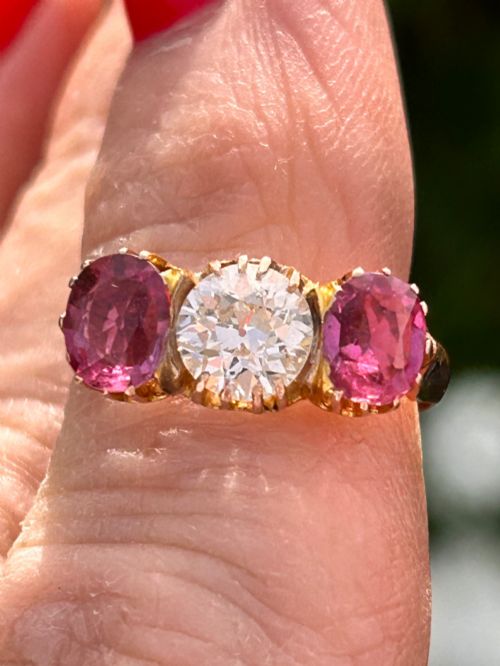
A gold diamond trilogy ring centres on a trio of stones, most frequently combining diamonds with rubies, sapphires, emeralds, or opals. These three-stone configurations appear across Victorian, Edwardian, and Art Deco periods, spanning from the late nineteenth century through the mid-twentieth century.
Makers utilised yellow gold, rose gold, and platinum settings, often mounting stones in claw, gypsy, or illusion styles. Buyers encounter both straight three-stone alignments and twist variations on this page.
How They Were Made
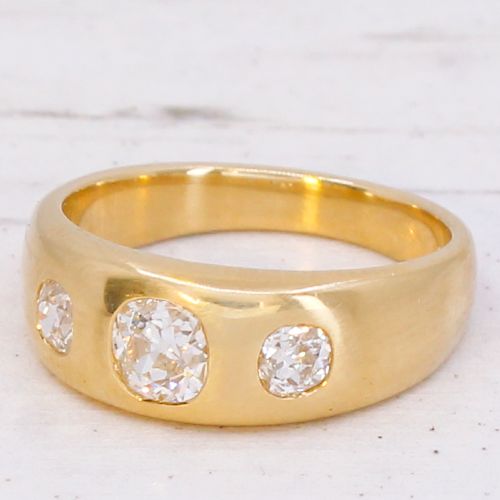
Goldsmiths fashioned bands primarily from eighteen-carat yellow gold and combined them with platinum heads to secure older diamond cuts safely. Stones such as old cushion cuts, old pear cuts, and old mine cuts were hand-set into claw or flush gypsy mountings.
Techniques evolved to incorporate intricate pierced galleries and millegrain edges, particularly during the Edwardian and Art Deco eras, while maintaining a sturdy three-stone framework.
Gold Diamond Trilogy Ring Retail Price Guide 2026
Typical asking prices for gold diamond trilogy ring among the pieces listed under this phrase on Sellingantiques today, from the lower quarter to the upper quarter. They describe what is for sale here now, not the wider market.
Listings feature yellow gold, rose gold, and platinum rings set with diamonds, rubies, sapphires, emeralds, and opals across Victorian to mid-century periods.
What Varies in Quality
Quality rests upon the proportion and matching of the central triad, where uniform stone sizing and complementary colour distribution elevate the design. Finer examples display superior gemstone clarity and minimal inclusions in accompanying rubies, sapphires, or emeralds.
The precision of hand-cut facets on older diamonds and the integrity of original hallmarking on the gold band distinguish exceptional survivals from standard regional work.
The Gold Diamond Trilogy Ring Glossary
- Trilogy ring
- A finger ring featuring three primary gemstones set in a row. This configuration traditionally represents a romantic past, present, and future.
- Old cut diamond
- A hand-faceted diamond predating modern brilliant cut geometry. These stones typically exhibit smaller tables and higher crowns.
- Gypsy ring
- A style where stones are flush-set directly into a heavy tapered band. The metal is hammered or burnished up around the girdle of the gemstone.
- Millegrain
- A decorative bordering technique consisting of a line of tiny raised metal beads along the edge of a setting. This finish is characteristic of Edwardian fine jewellery.
Gold Diamond Trilogy Ring: Frequently Asked Questions
What do three stones mean?
The three stones traditionally represent the past, present, and future of a relationship. This symbolism made them enduringly popular for engagements and anniversaries.
Jewellers arranged diamonds alongside coloured stones like rubies, sapphires, and emeralds to personalise this narrative.
How do I identify a Victorian ring?
Victorian pieces often feature substantial eighteen-carat yellow gold bands, sometimes paired with gypsy settings or intricate carved half-hoop designs. Hallmarks stamped inside the shank help pinpoint the exact assay office and year of creation.
Stones from this period frequently display hand-cut facets characteristic of nineteenth-century lapidary work.
Are platinum settings common?
Platinum began appearing alongside yellow gold in the Edwardian and Art Deco periods to frame diamonds securely. White metals enhanced the perceived brightness of old cut stones without altering the warm tone of the gold band.
Combinations of gold and platinum indicate a shift towards lighter, stronger mounting techniques.
What is a twist ring?
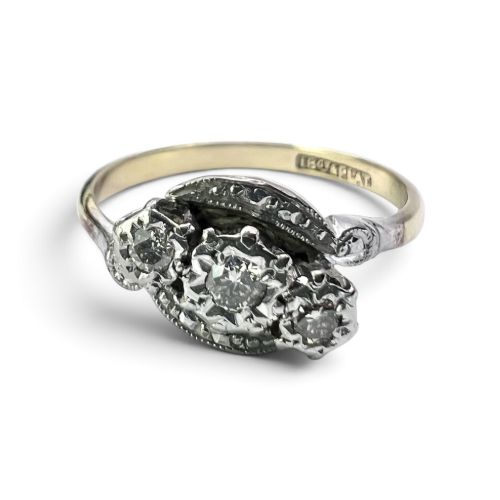
A twist ring curves the shoulders of the band so that the outer two stones embrace the central gem in a crossover motion. This flowing silhouette gained favour during the late Victorian and Edwardian eras.
The design softens the rigid line of a traditional three-stone layout.