
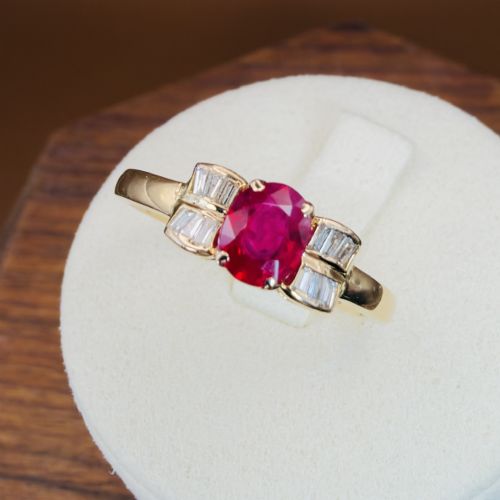
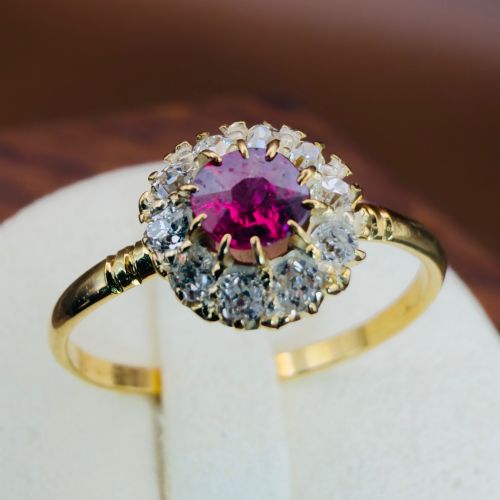
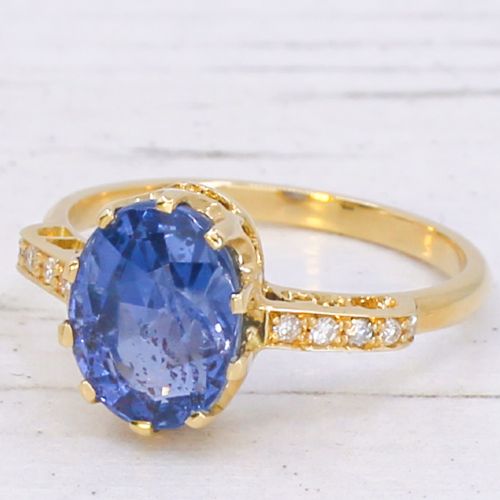
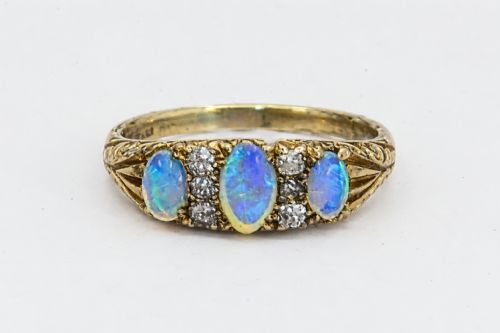


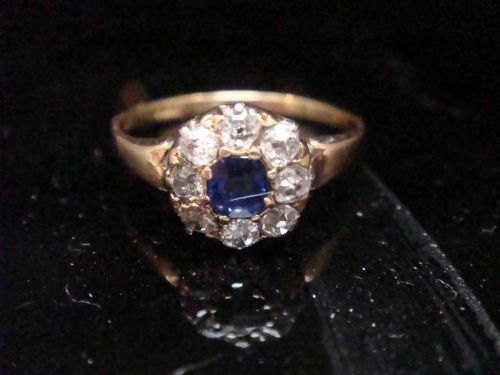
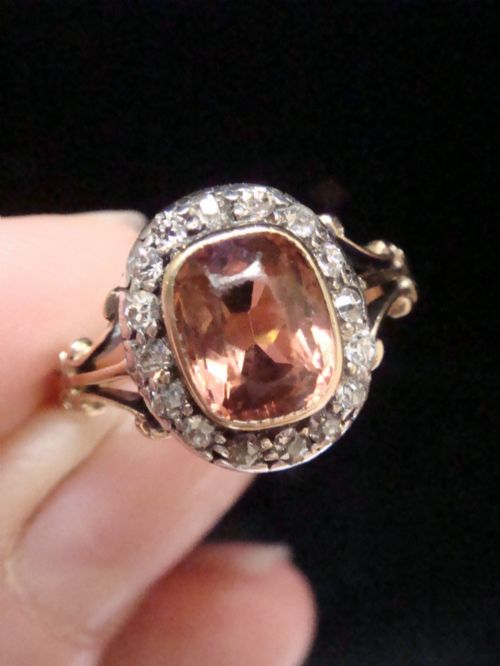
Gold Diamond Gemstone Ring
A gold diamond gemstone ring combines precious metal with colourful stones across eras from Victorian work to mid-century modern design.
Gold Diamond Gemstone Ring
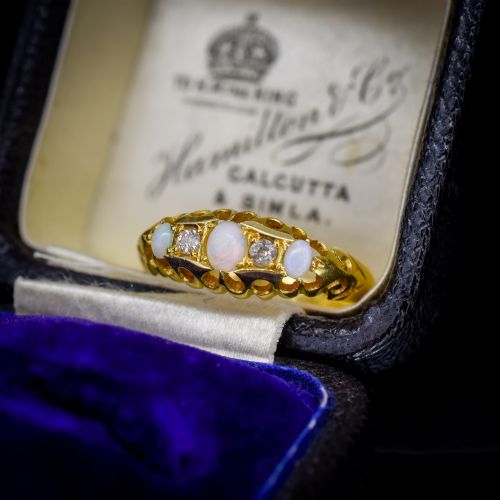
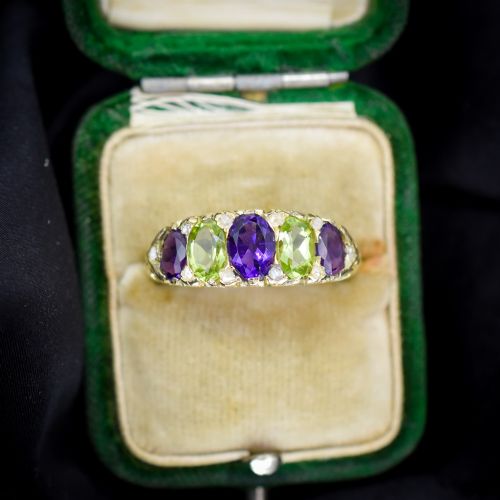
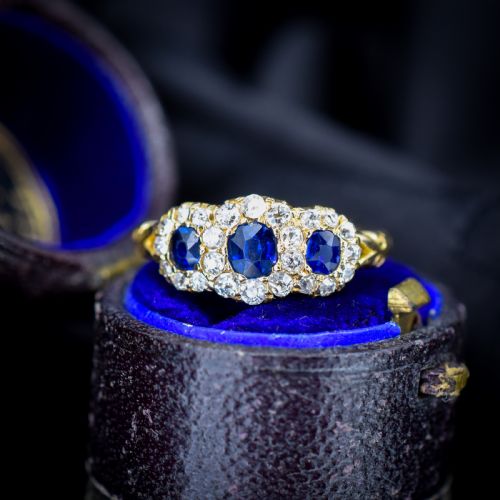
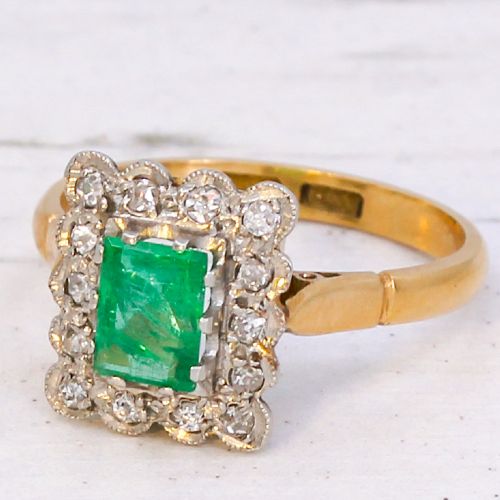
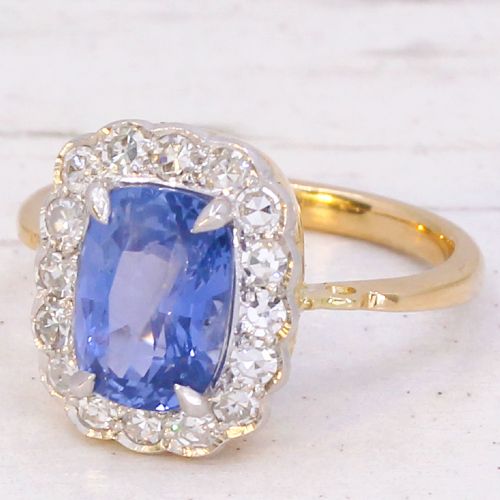
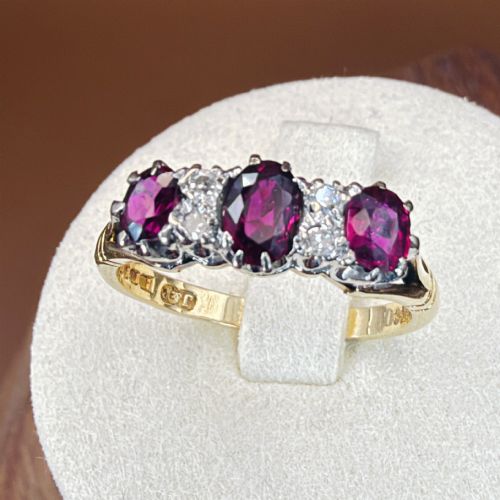
The most common forms you meet here are cluster configurations, boat rings, and multi-stone settings. These range from traditional fine jewellery styles to specific motifs like starbursts, daisies, and trilogies.
How they were made
The physical construction relies primarily on 18ct yellow gold and white gold mounts, occasionally incorporating platinum alongside older cut diamonds and coloured gemstones. Stones such as rubies, sapphires, emeralds, opals, tourmalines, and garnets are set into these precious metal frameworks using period techniques.
Makers utilised claw settings, boat shapes, and cluster arrangements to showcase the interplay between the central gemstones and the surrounding diamond accents.
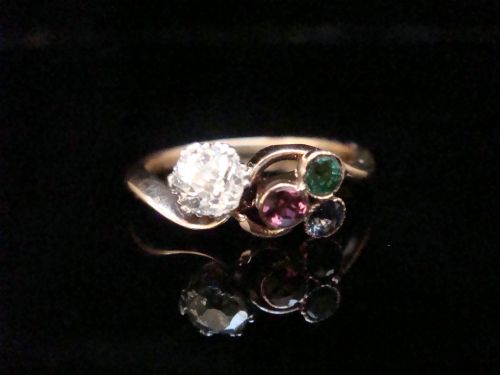
Several Edwardian pieces incorporate tourmalines alongside diamonds, offering a vibrant palette of green and pink hues.
What varies in quality
Distinctions across the range depend on the integration of the materials and the character of the stones, such as unheated sapphires or natural opals paired with old cut diamonds. The execution of specific styles, from Edwardian daisy motifs to Victorian starburst bands, dictates the fineness of the piece.
Design complexity and the harmony between the 18ct gold mount and the selected gemstones define the upper tiers of these rings.
The Gold Diamond Gemstone Ring Glossary
- Boat ring
- A curved, navette-like setting shape popular in the Edwardian period that resembles the hull of a boat. This horizontal profile often accommodates rows of diamonds and coloured gemstones.
- Old cut diamond
- A precursor to the modern brilliant cut, featuring a smaller table, higher crown, and open culet. These stones were hand-faceted to catch candlelight.
- Cluster ring
- A central stone surrounded by a border of smaller stones, typically diamonds framing a ruby, sapphire, or emerald. This arrangement maximises visual impact and perceived scale.
- Trilogy ring
- A three-stone ring representing the past, present, and future, frequently combining a central gemstone flanked by two diamonds.
- Gypsy ring
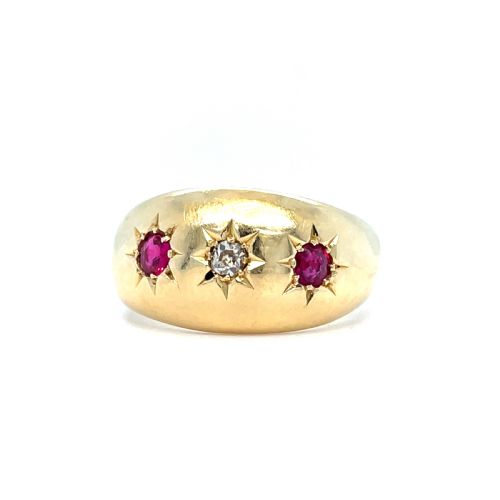
- A style where stones are flush-set directly into the thick gold band rather than held by traditional raised claws.
Gold Diamond Gemstone Ring: Frequently Asked Questions
How do I wear an antique gemstone ring daily?
Selecting a setting with secure flush mounting or robust claws helps protect softer coloured stones during everyday activities. Regular checks by a jeweller ensure the 18ct gold band and settings remain sound.
Removing the ring during heavy manual tasks prevents unnecessary wear on the gold and preserves the facets of the diamonds and gemstones.
What is the difference between Victorian and Edwardian rings?
Victorian pieces often feature warmer yellow gold, heavier band construction, and romantic motifs like starbursts or garnet clusters. These designs date from the nineteenth century.
Edwardian examples tend to introduce lighter, airier platinum and gold work, favouring delicate boat shapes, daisy clusters, and intricate openwork framing sapphires and diamonds.
Are these gemstones treated or natural?
Many listings specify natural stones, including unheated sapphires and natural opals originating from specific periods. Documentation or specific descriptions in the titles indicate whether a gem is untreated.
Historical pieces from the Victorian and Edwardian eras typically feature untreated stones mined before modern enhancement techniques became widespread.
How can I tell the age of my ring?
Assay office marks, date letters, and gold purity stamps provide precise chronological clues, such as Birmingham hallmarks found on Edwardian pieces. Stylistic markers like navette shapes or old cut diamonds also point to specific eras.
Comparing the setting technique and the type of gold used helps narrow down the period between the late nineteenth century and the mid-twentieth century.