
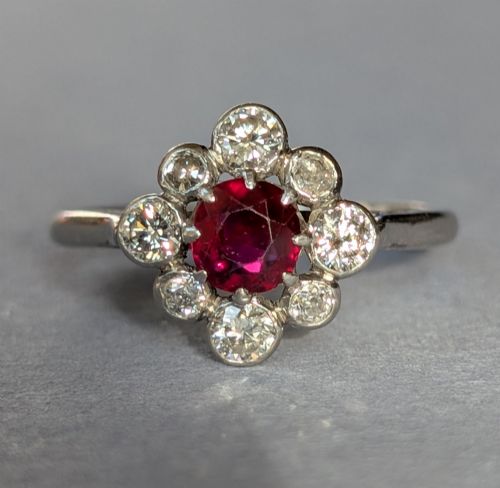


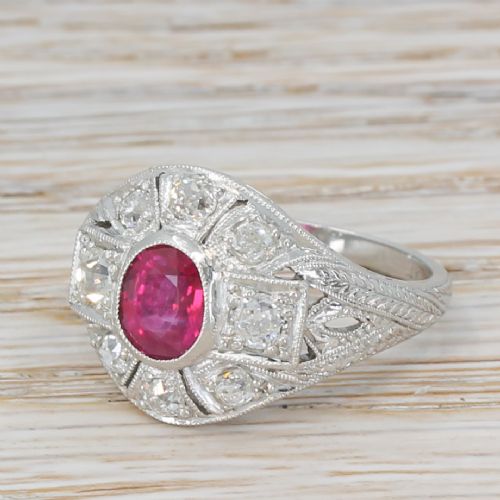
1920s Ruby Engagement Ring
A 1920s ruby engagement ring offers geometric precision and vibrant colour, prized for its distinct Art Deco design.
1920s Ruby Engagement Ring
A 1920s ruby engagement ring typically takes the form of a cluster, target, or twist ring, showcasing the signature geometry of the Art Deco period. Buyers searching this phrase encounter pieces spanning the 1920s, Edwardian era, 1930, and 1940, set with contrasting diamonds.
The most common versions on this page are cluster and elongated cluster configurations, often pairing natural Burmese rubies with old cut or rose cut diamonds. Platinum and white gold dominate the settings, creating the characteristic bright, monochromatic metal backdrop for the red stones.
How they were made
Goldsmiths of this era predominantly utilised platinum and 18ct white gold to fabricate intricate mountings that held rubies and diamonds securely without heavy metal presence. These metals allowed for delicate millegrain edges and fine pierced work typical of the style.
Stones are typically secured in claw or bezel settings, surrounded by pavé set diamonds that enhance the central red hue of the ruby. The combination of durable platinum and cast 18ct gold forms the structural basis of these surviving rings.
Every listed ring combines natural rubies with diamonds, predominantly utilising cluster and twist configurations.
What varies in quality
The distinction between tiers rests upon the origin and saturation of the ruby, alongside the cut and weight of the surrounding diamonds. Burmese stones with significant carat weights command greater attention.
Execution of the metalwork, from hand-pierced gallery details to the uniformity of the diamond settings, separates standard production from superior examples of the period.
The 1920s Ruby Engagement Ring Glossary
- Target ring
- A circular cluster ring featuring concentric rings of contrasting gemstones around a central stone. This layout creates a bullseye visual effect popular in the Art Deco era.
- Old cut diamond
- A precursor to the modern brilliant cut, hand-faceted with a smaller table and larger culet. These stones exhibit a distinctive, softer candlelight scintillation.
- Millegrain
- A decorative technique involving tiny raised metal beads along the edges of a setting. It provides a soft, textural border to geometric platinum work.
- Cluster ring
- A design featuring a central gemstone encircled by a group of smaller stones. This arrangement maximises visual impact and perceived size on the hand.
1920s Ruby Engagement Ring: Frequently Asked Questions
Are these rings suitable for daily wear?
Platinum and gold settings from this period are robust, but daily wear requires mindful care due to the age of the delicate claw settings.
Regular checks by a jeweller help ensure the rubies and diamonds remain secure in their original mountings.
How do I identify an Art Deco ring?
Art Deco rings are characterised by geometric symmetry, clean lines, and strong contrasts between red rubies and white diamonds.
Settings often incorporate platinum with millegrain detailing rather than the ornate, flowing floral motifs of the preceding Edwardian era.
What is a Burmese ruby?
A Burmese ruby originates from the Mogok region in Myanmar, historically celebrated for an intense red fluorescence and natural coloration.
These stones are particularly sought after by collectors for their depth of colour and geographic provenance.
How do old cut diamonds differ from modern ones?
Old cut diamonds are hand-cut to follow the original crystal shape rather than optical mathematics, resulting in smaller tables and deeper pavilions.
This cutting style produces broad flashes of light rather than the bright scintillation of modern brilliant cuts.