





1920s Three Stone Ring
A 1920s three stone ring carries a distinct geometric elegance, offering a brilliant arrangement of stones suited for daily wear.
1920s Three Stone Ring
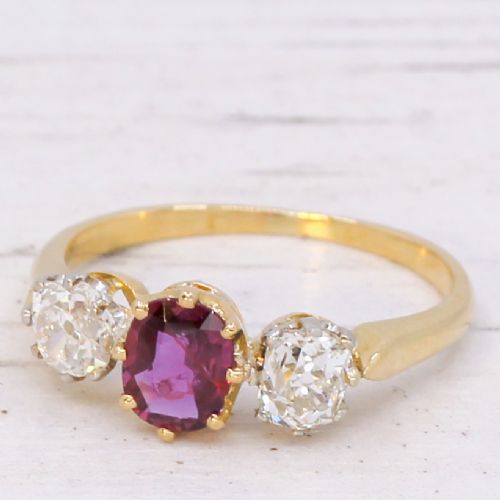
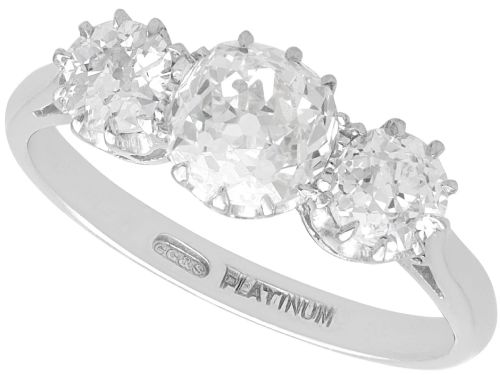
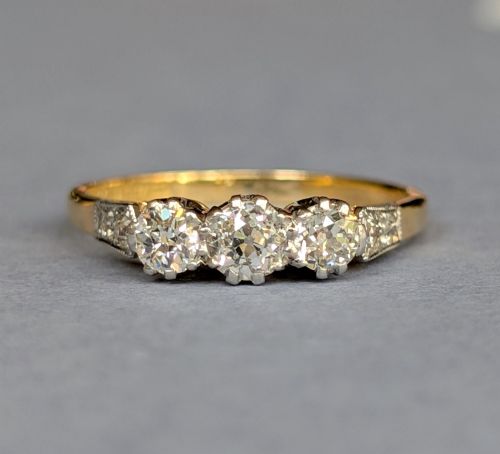
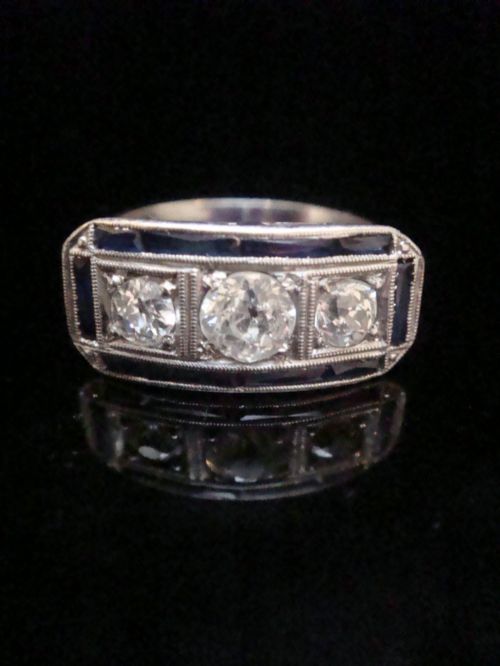
A 1920s three stone ring combines the linear geometry of the Art Deco period with a traditional trilogy layout. Most examples found here originate from the 1920s and 1930s, featuring three prominent gems set across the finger.
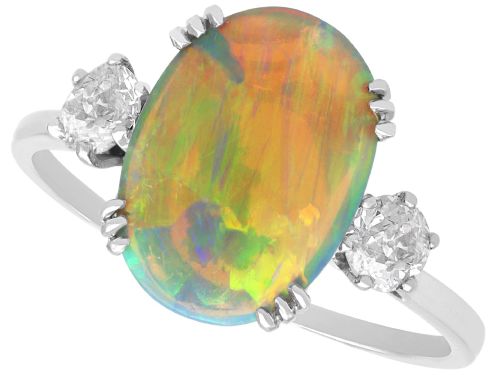
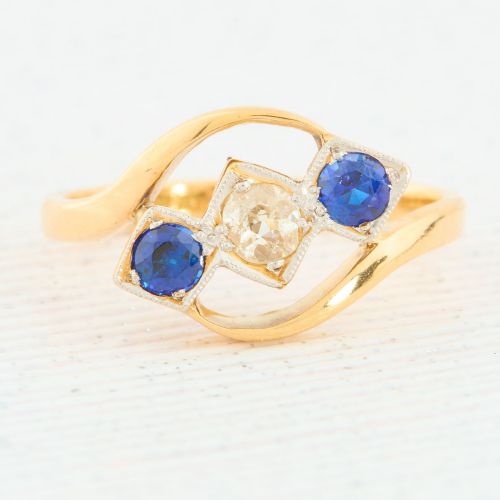
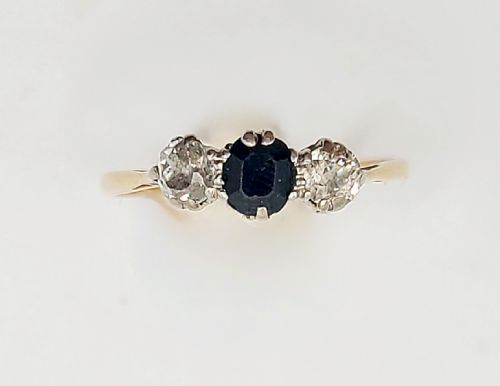
The central stone is typically flanked by two matching gems, creating a balanced silhouette. While diamond versions are common, many pieces incorporate sapphires, rubies, or opals alongside the diamonds.
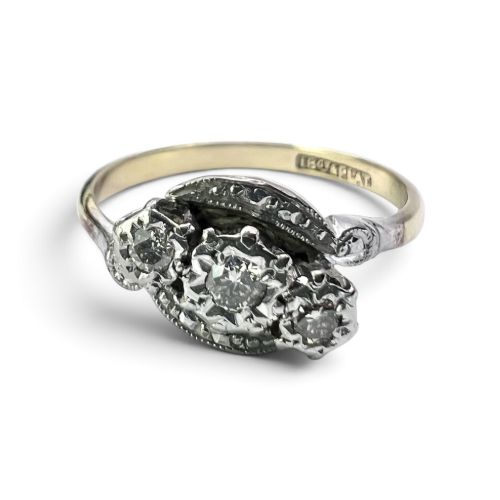
Settings frequently combine platinum with yellow or white 18ct gold, reflecting the manufacturing methods of the era. These rings served as engagement or dress rings and remain practical for modern wear.
Materials and construction
Makers of the period utilised platinum to construct secure, delicate settings that maximised light entry into the diamonds and coloured stones. This strong metal allowed for finer claw and bezel work than yellow gold alone.
Shanks are commonly forged from 18ct gold, sometimes paired with platinum heads or rendered entirely in white gold. Gemstones feature old cut diamonds alongside natural sapphires, unheated rubies, and opals.
Construction techniques often include platinum-topped gold integration and detailed gallery work characteristic of Art Deco manufacturing. Stones are secured by hand-worked claws or flush settings designed to highlight individual stone carat weights.
1920s Three Stone Ring Retail Price Guide 2026
Typical asking prices for 1920s three stone ring among the pieces listed under this phrase on Sellingantiques today, from the lower quarter to the upper quarter. They describe what is for sale here now, not the wider market.
Some platinum-set rings incorporate subtle star motifs around the diamonds, adding a hidden celestial touch to the finger.
Quality variations
Quality in a 1920s three stone ring rests primarily on the calibre of the central gemstone and the precision of the platinum setting work. Finer examples display well-matched side stones with superior clarity and colour consistency.
The integrity of the original metalwork dictates durability, particularly where platinum meets gold across the shoulders and gallery. Subtle hand-finished details and crisp geometric lines distinguish superior workshop output from standard commercial production.
The 1920s Three Stone Ring Glossary
- Trilogy ring
- A ring featuring three stones set in a row, traditionally symbolising the past, present, and future. This term is frequently used interchangeably with three stone ring.
- Old cut diamond
- A diamond cut prior to the standardisation of the modern brilliant cut in the mid-twentieth century. These stones typically exhibit smaller tables and broader facets that catch candlelight effectively.
- Platinum setting
- The use of platinum to hold the gemstones securely while allowing minimal metal obstruction around the stones. This technique became widespread during the Art Deco era due to the strength of the metal.
- Baguette cut
- A step-cut diamond or gemstone shaped into a narrow rectangle. They are often utilised as accent stones flanking larger central gems.
1920s Three Stone Ring: Frequently Asked Questions
What does a three stone ring symbolise?
A three stone ring traditionally represents the past, present, and future of a relationship. This symbolism made the configuration a popular choice for engagement rings during the early twentieth century.
In addition to romantic sentiment, the three-stone layout provided a balanced platform for showcasing diamonds and coloured gems together in Art Deco designs.
Are these rings suitable for daily wear?
Most pieces from this era utilise robust metals like platinum and 18ct gold, making them durable enough for everyday use. Care should be taken with softer stones such as opal.
Regular inspection of the claw settings by a jeweller helps ensure the gemstones remain secure over time.
How do I identify an Art Deco ring?
Art Deco rings are characterised by geometric motifs, platinum-topped gold settings, and clean architectural lines. Symmetry and stylised arrangements are central to the aesthetic.
The integration of calibre-cut coloured stones alongside old cut diamonds further points to this specific design period.
What is the difference between old cut and modern diamonds?
Old cut diamonds feature hand-cut facets tailored to the specific rough stone under candlelight, resulting in a softer, warmer glow. Modern brilliant cuts follow strict geometric formulas to maximise direct brilliance.
This historical cutting style gives vintage three stone rings a distinct visual character distinct from contemporary jewellery.