

Gold Dial Wristwatch
A gold dial wristwatch brings mid-century horology to the wrist, offering a combination of precious metals and reliable mechanical movements.
Gold Dial Wristwatch
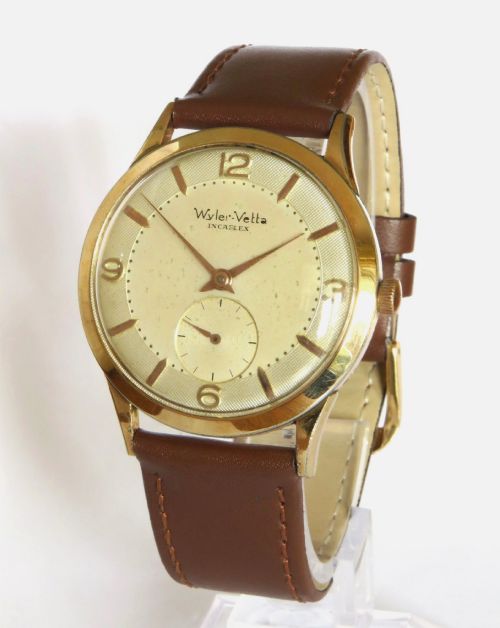
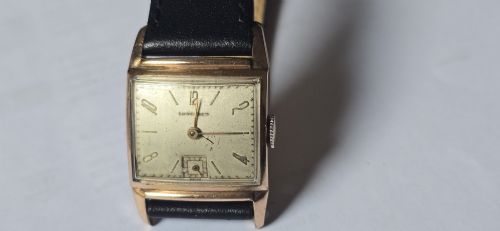
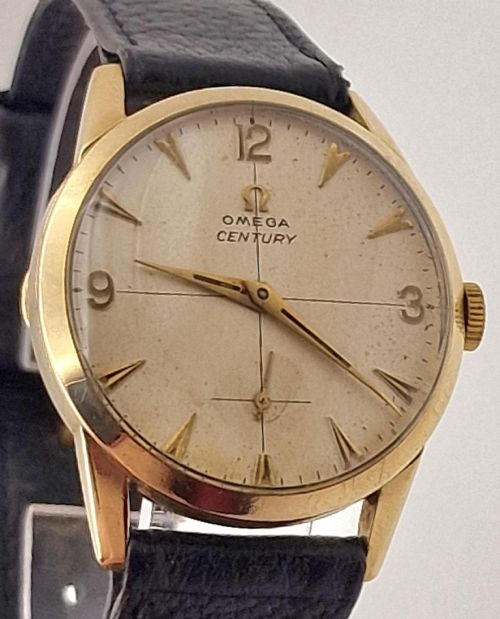
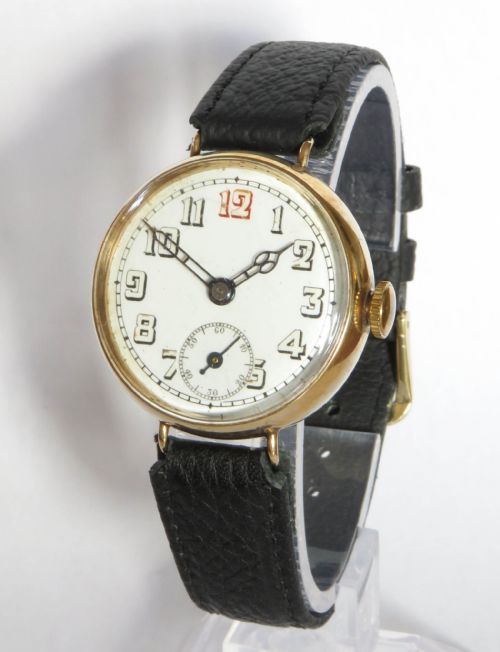
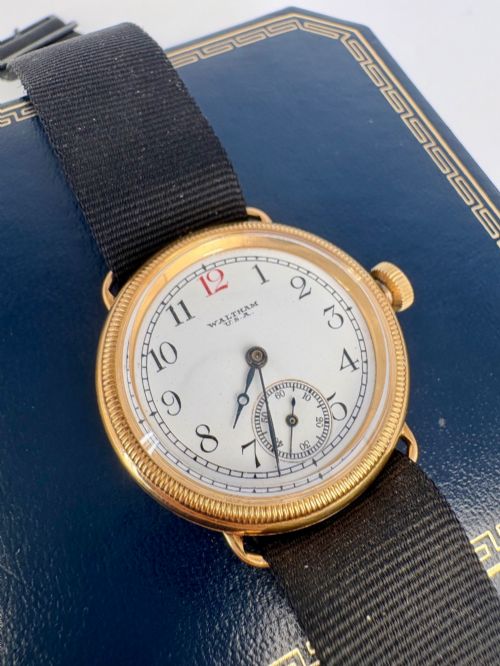
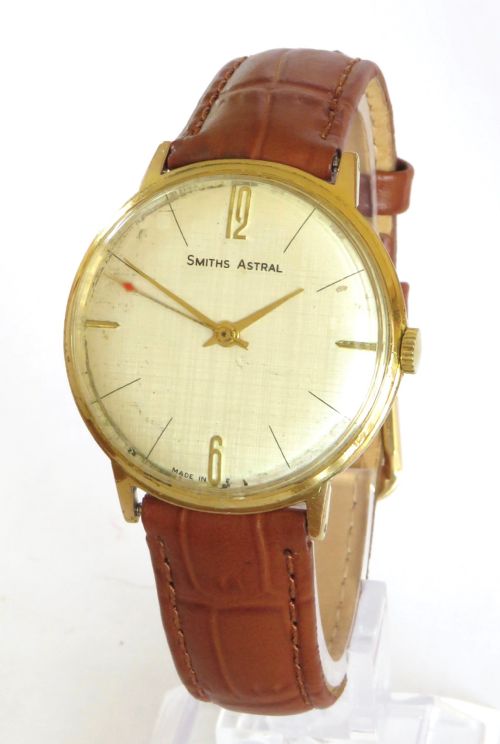
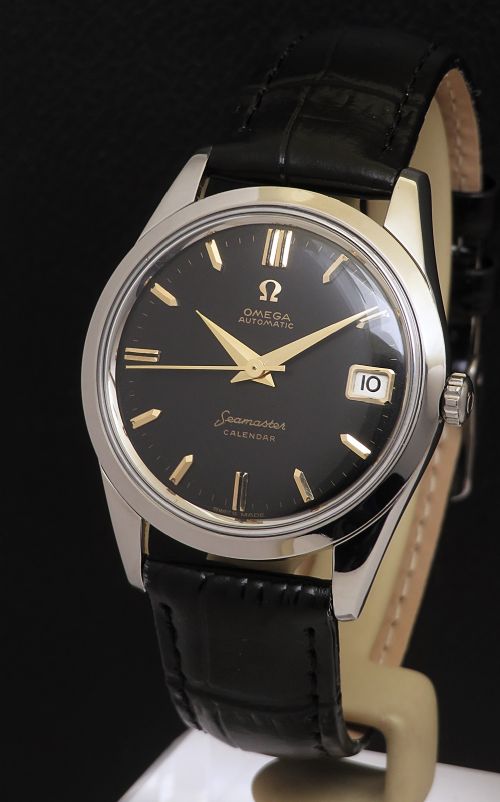
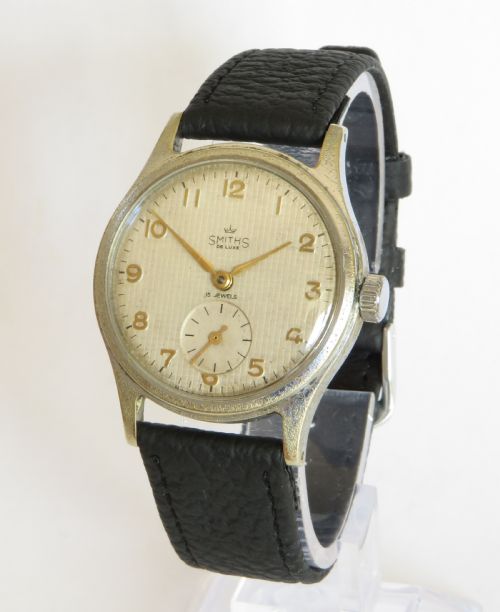
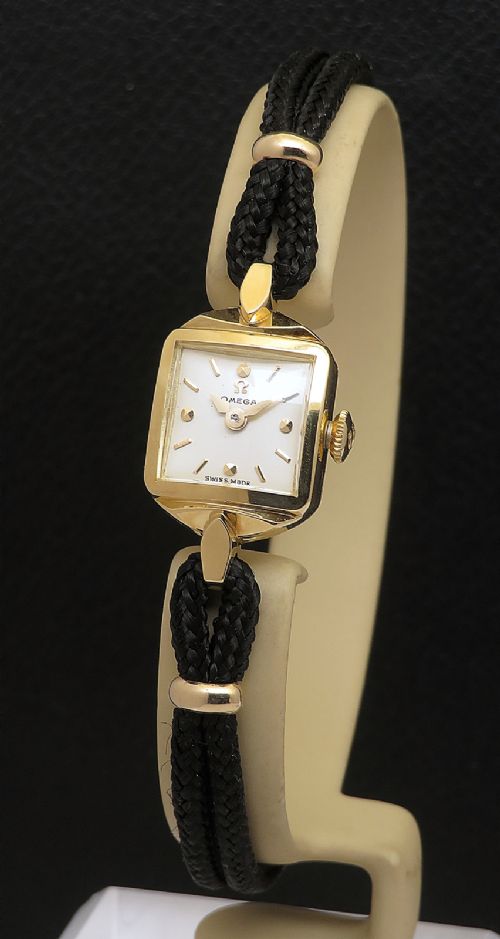
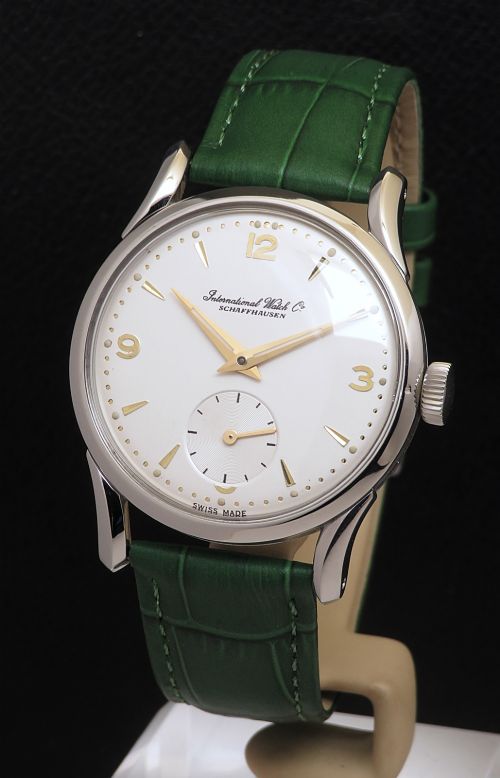
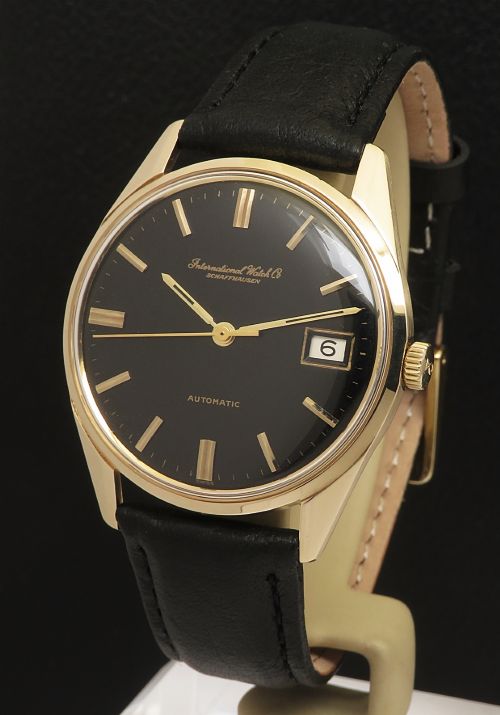
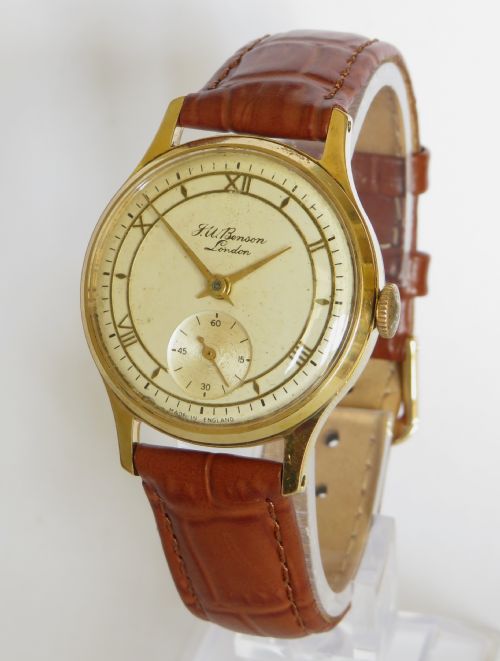
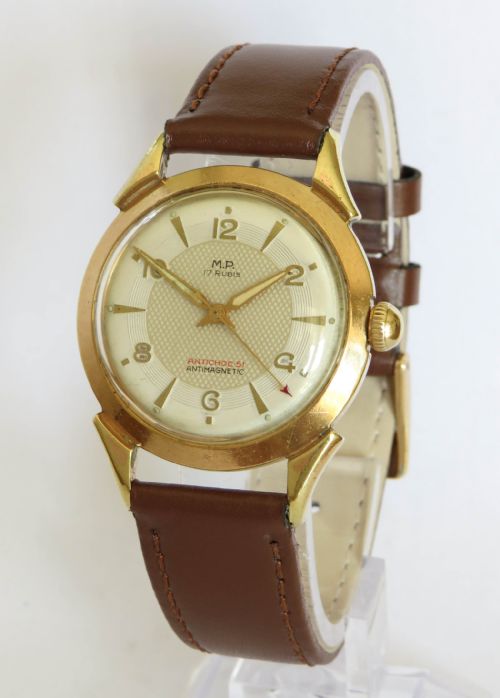
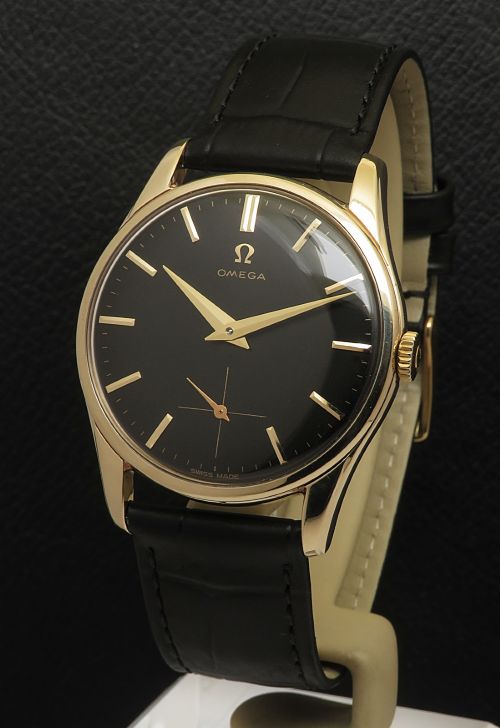
A gold dial wristwatch is a timekeeper featuring a metallic dial face paired with cases fashioned from 9ct gold, 18ct gold, or rolled gold. These pieces span from the 1930s through the 1960s, encompassing Art Deco designs and Mid-Century Modern aesthetics.
The most common examples on this page are men's dress watches and ladies' cocktail watches produced by Swiss and British makers during the 1950s and 1960s. These typically utilise manual wind or automatic movements housed in round or square cases.
Makers such as Omega, Smiths, and Longines dominate the selection, offering everything from robust everyday timepieces to intricate dress watches set with diamonds and onyx.
How They Were Made
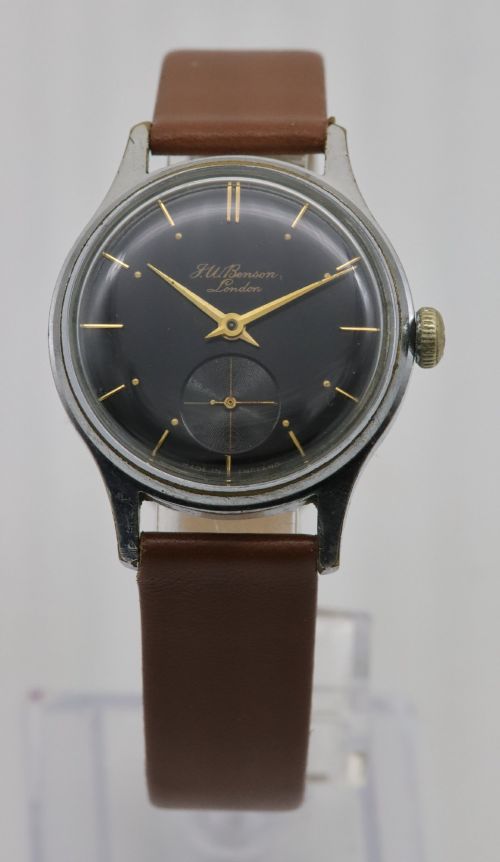
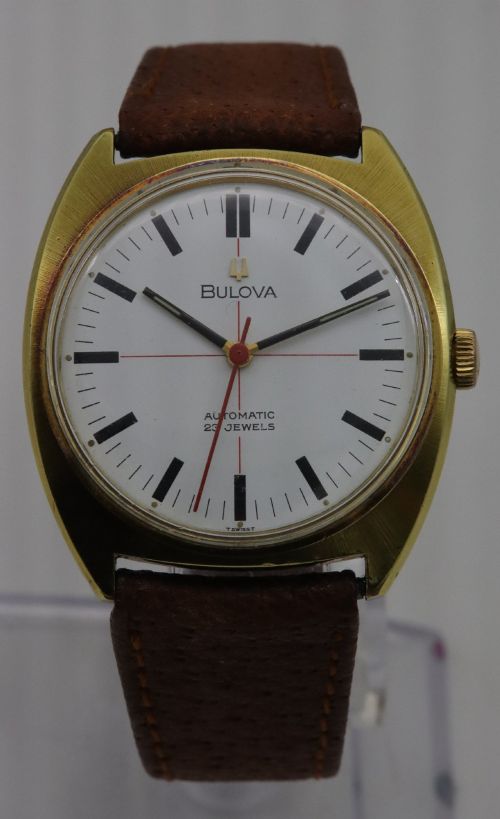
Watchmakers constructed these cases using solid 9ct gold, 18ct white or yellow gold, stainless steel, and gold plate or rolled gold over base metal. Dials were stamped, brushed, or sunburst-finished, often accented with applied Arabic numerals or baton markers.
Movements relied on mechanical calibres containing jewelled pivots to reduce friction, powered by mainsprings wound by hand or via internal automatic weights such as bumper rotors. Crystals protecting the dial were formed from glass, acrylic, or acrylic glass.
Gold Dial Wristwatch Retail Price Guide 2026
Typical asking prices for gold dial wristwatch among the pieces listed under this phrase on Sellingantiques today, from the lower quarter to the upper quarter. They describe what is for sale here now, not the wider market.
Materials in these listings include solid 9ct gold, 18ct white gold, gold plate, stainless steel, leather, glass, and acrylic.
What Varies in Quality
Quality rests upon the execution of the movement and the integrity of the casing. Pieces housing high-jewel count chronometer-grade calibres sit at the upper end, alongside those retaining their original factory dials without harsh refinishing.
The choice of precious metal casing dictates another tier of distinction, with solid 18ct or 9ct gold constructions commanding greater regard than gold-plated or rolled gold alternatives.
Smiths·International Watch Company IWC·Omega·J W Benson·Avia·Marvin·Tissot·Cyma·Zenith·Felca·Bulova·Longines·Breitling·Movado·Tudor·Le coultre
The Gold Dial Wristwatch Glossary
- Calibre
- The specific internal mechanical movement manufactured for a watch. This term identifies the exact design and series created by the maker.
- Automatic
- A self-winding mechanical movement that uses the natural motion of the wearer's wrist to power the mainspring. This system removes the need for daily manual winding.
- Bumper automatic
- An early form of automatic movement where the rotor swings back and forth within a limited arc, striking springs to absorb the momentum. It offers a distinct physical sensation on the wrist.
- Chronometer
- A precision watch that has passed rigorous accuracy tests conducted by an official observatory or testing body. These movements represent high standards of horological regulation.
Gold Dial Wristwatch: Frequently Asked Questions
How do I wind a manual watch?
Rotate the crown clockwise between your thumb and forefinger until you feel gentle resistance. Stop immediately to avoid damaging the mainspring.
Wind the watch at the same time each day to maintain consistent tension and accurate timekeeping.
Can I wear my vintage watch daily?
Many of these pieces were built for everyday wear and remain robust when handled with care. Ensure the watch is serviced regularly by a professional horologist.
Keep older pieces away from water and strong magnetic fields, as vintage seals and movements lack modern protections.
What is a bumper automatic movement?
A bumper automatic relies on a semi-circle rotor that swings against internal springs rather than rotating in a full circle. You will feel a slight tap on your wrist as the weight moves.
This mechanism represents an important transitional technology from the 1950s before full rotor automatics became standard.
How do I identify the decade of a watch?
Examine the typography on the dial, the shape of the case, and the style of the hands. Art Deco pieces from the 1930s and 1940s often feature geometric rectangular cases, while 1960s models favour clean, round sunburst dials.
Opening the case back to check the movement serial number against maker records provides a precise production year.