

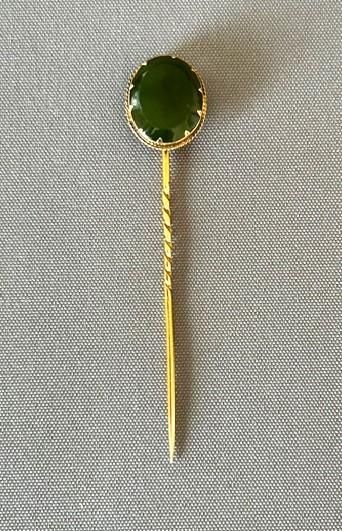
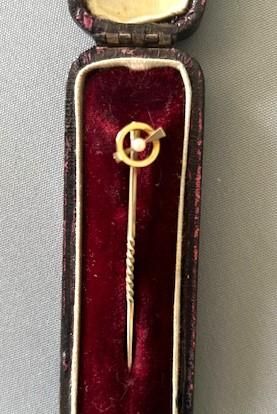
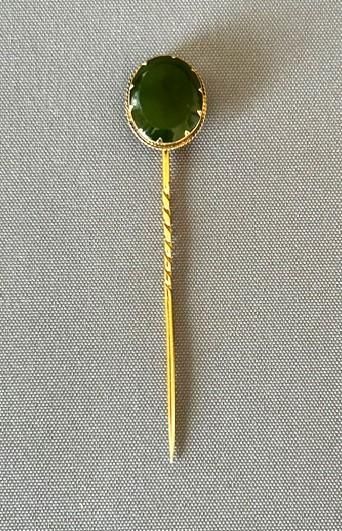


Gold Cravat Stick Pin
A gold cravat stick pin secures a neck cloth with a decorative head, bringing quiet period character to modern lapels.
Gold Cravat Stick Pin
A gold cravat stick pin combines a slender metal shaft with an ornamental top, originally designed to fasten neckwear in place. These pieces appear across several eras, with Victorian and Edwardian examples forming the core of what you encounter here.
The heads of these items take varied forms, ranging from simple gemstone settings to sporting motifs like hunting bugles and jockey caps. You also find maritime themes, miniature portraits, and carved elements such as jade and baroque pearl.
Dating ranges from the Regency period through the nineteenth century and into the mid-twentieth century. Most items rely on yellow gold, often graded at nine, fourteen, or eighteen carats, paired with stones like diamonds and garnets.
How they were made
Maker construction relies heavily on yellow gold fabrication, utilising varying carat weights such as 9ct, 14ct, and 18ct to shape the pins and mountings. Artisans combined traditional wire-working and soldering techniques to attach decorative heads securely to slender shafts.
Gemstone embellishment involved old cut European diamonds, rose cut diamonds, and garnets, often set alongside carved natural materials like jade, shell, and baroque pearl. Specialised decorative wirework such as cannetille adds intricate surface texture to specific nineteenth-century designs.
Gold Cravat Stick Pin Retail Price Guide 2026
Typical asking prices for gold cravat stick pin among the pieces listed under this phrase on Sellingantiques today, from the lower quarter to the upper quarter. They describe what is for sale here now, not the wider market.
Current listings demonstrate a strong presence of Victorian and Edwardian periods, utilising materials such as jade, garnet, diamond, and 9ct or 18ct gold.
What varies in quality
Quality differences stem from the complexity of the head and the choice of materials, distinguishing simple metal forms from those set with fine old cut diamonds or carved jade. The presence of specialised techniques like cannetille or detailed miniature portraits elevates the standard of craftsmanship.
The condition of the pin shaft and the security of the stone settings determine overall integrity. Pieces that retain their original structural rigidity and show crisp detail in motifs such as sporting bugles or yacht club insignia represent the upper tier.
The Gold Cravat Stick Pin Glossary
- Cravat stick pin
- A decorative pin with a long shaft used to fasten a necktie or cravat. It sits upright in the fabric, displaying its ornamental head.
- Cannetille
- A form of fine wirework popular in nineteenth-century jewellery. It creates intricate, lace-like patterns using coiled gold threads.
- Baroque pearl
- A pearl with an irregular, non-spherical shape. Its organic contours make each stone entirely unique in jewellery design.
Gold Cravat Stick Pin: Frequently Asked Questions
How were stick pins worn historically?
Victorian and Edwardian gentlemen and women pushed these pins directly through cravats, ties, and lapels to secure fabric layers. The long metal shaft kept the ornament anchored firmly in place.
Over time, the function shifted from purely practical fastening to decorative wear on waistcoats, hats, and modern jacket lapels.
What metals are used in these pins?
Makers predominantly worked in yellow gold, utilising nine, fourteen, and eighteen carat standards depending on the period and the workshop. The metal provides both the structural rigidity of the pin and the secure setting for stones.
Some pieces combine gold with other metals or rely entirely on high-carat gold to support heavy gemstone settings.
How do I date a stick pin?
Dating relies on stylistic clues, motifs, and the types of gemstone cuts present in the head. Victorian pieces often feature mourning themes, cannetille work, or sporting subjects, while Edwardian examples favour lighter pearl and jade elements.
Carat stamps and hallmarks, where present, help narrow down the decade of manufacture alongside construction methods.
Can I wear an antique stick pin daily?
These items tolerate careful daily wear on sturdy fabrics like wool lapels or heavy coat weaves. Delicate silks and fine cravats require gentle handling to avoid widening the pin holes.
Storing the pin in a proper box prevents the long shaft from bending when not being worn.