
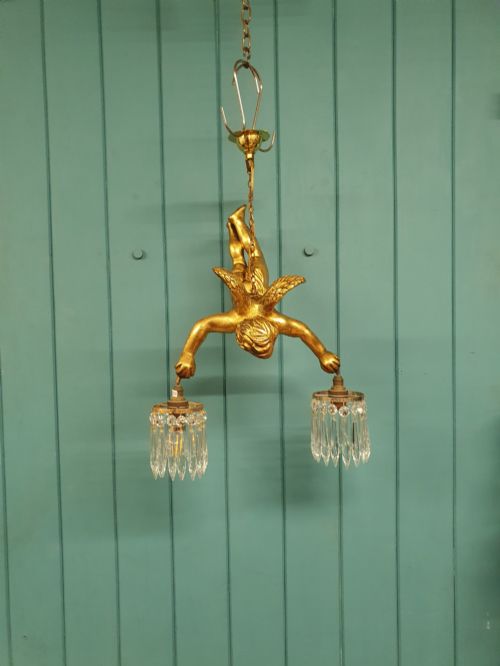
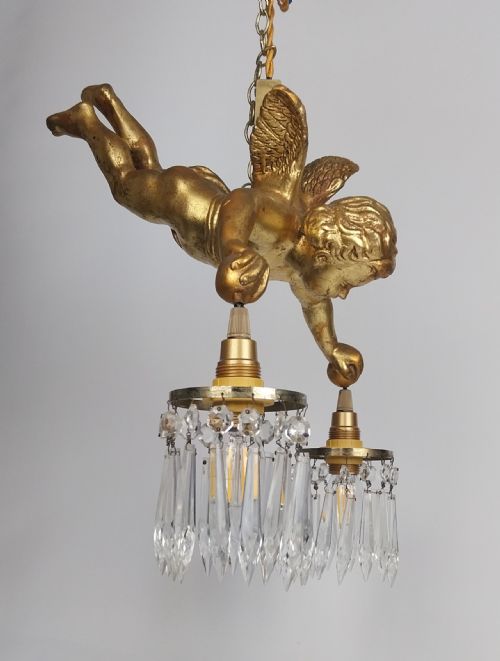


Gold Cherub Ceiling Light
A gold cherub ceiling light brings undeniable theatrical presence to a room, cast in gleaming metal and shaped around winged figures.
Gold Cherub Ceiling Light
A gold cherub ceiling light combines classical figural sculpture with functional illumination, taking the form of elaborate chandeliers and ceiling fixtures. Buyers seeking this aesthetic will find pieces originating primarily from the nineteenth century and early decades of the twentieth century, reflecting enduring revivalist tastes.
The dominant examples on this page feature winged cherubs or cupids cast in gilded bronze, gilt metal, brass, and spelter. These figures often support glass arms, crystal spikes, or multi-light configurations that project a distinctly French Rococo or Neoclassical character.
Most items function as central hanging chandeliers, ranging from smaller two-light fixtures with cut glass crystal spikes to grander eight-light French gilded bronze designs. The selection leans heavily into French Chateau and Rococo Revival styles, offering robust decorative impact for high-ceilinged interiors.
How they were made
Maker workshops utilised traditional metalcasting techniques to produce the figural components, employing bronze, brass, and spelter for the structural cherubs and arms. These metal bodies were then finished with surface gilding to achieve a rich gold appearance that catches ambient light.
Lighting assemblies were integrated with decorative glass and crystal elements, incorporating cut glass crystal spikes, glass bowls, and delicate bobeches. The combination of heavy cast metal frames and sparkling crystal components required precise mechanical joining to support multiple candle-style or electrified light arms securely.
Materials documented across the inventory include cut glass crystal spikes, gilded bronze, spelter, and polished brass.
What varies in quality
The distinction between standard and superior examples rests largely on the quality of the metalwork casting and the finish applied to the cherub figures. Finer pieces display crisp anatomical detail in the wings and faces of the putti, whereas lesser models can present softer contours and flatter surface chasing.
Material composition significantly alters the weight and longevity of the fixture, with heavier gilded bronze commanding greater presence than lighter spelter or brass alternatives. Furthermore, the inclusion of genuine cut glass crystal spikes and complete, matching glass components elevates the overall cohesion and visual depth of the chandelier.
The Gold Cherub Ceiling Light Glossary
- Cherub
- A winged celestial figure, frequently depicted in these light fittings as a cupid supporting the arms or central body of the chandelier.
- Gilt Bronze
- Metalwork cast from bronze and coated with a thin layer of gold, providing a durable and luminous finish characteristic of fine nineteenth-century French lighting.
- Spelter
- A zinc-based alloy commonly utilised as a cost-effective alternative to bronze in figural casting during the nineteenth and early twentieth centuries.
- Rococo Revival
- A decorative style popular in the nineteenth century that revives the ornate asymmetry, scrolls, and naturalistic motifs of the eighteenth-century French movement.
- Cut Glass Crystal Spike
- A faceted glass pendant or spear-shaped element hung from chandeliers to refract light and enhance the brilliance of the fixture.
Gold Cherub Ceiling Light: Frequently Asked Questions
How do I hang a heavy cherub chandelier?
These metal and crystal fixtures require secure anchoring directly into ceiling joists using rated steel fixings to bear the substantial weight safely. Professional installation by a qualified electrician is essential due to the complex internal wiring and heavy frame.
Ensuring the drop height suits your room proportions prevents the chandelier from dominating the space awkwardly while maintaining proper clearance below.
What periods do these chandeliers come from?
The pieces available predominantly span the nineteenth century up through the nineteen-twenties and thirties, capturing various revivalist movements. French Neoclassical and Rococo Revival aesthetics heavily influence these dates, reflecting enduring manufacturing traditions across European workshops.
Earlier nineteenth-century examples often utilise heavier cast gilded bronze, while later twentieth-century iterations frequently employ brass or spelter construction.
How do I clean a gilt metal and crystal light?
Dust the metal elements gently with a soft, dry brush to preserve the delicate gold surface without abrasive rubbing. Crystal spikes and glass components can be wiped carefully using a mild glass cleaner applied to a cloth rather than sprayed directly onto the fixture.
Avoid harsh chemical solvents that might strip the historic gilt finish from the brass, bronze, or spelter cherub figures.
Are these lights wired for modern use?
Many vintage fixtures have been rewired at various points in their lifespan to meet contemporary safety standards, though checking the internal wiring remains prudent. A professional electrician can easily adapt socket fittings to accommodate modern candle bulbs while preserving the antique exterior.
Inspecting the lampholders and ceiling rose ensures the antique metalwork integrates safely with your domestic electrical circuit.