
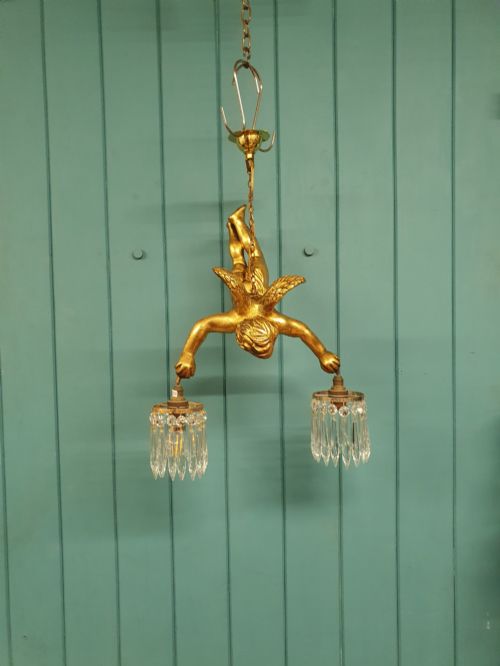
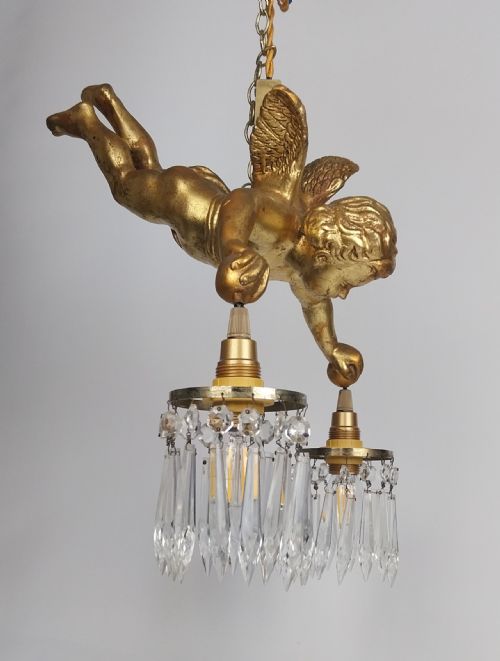


Antique French Cherub Chandelier
These antique french cherub chandelier pieces combine bronze, brass and crystal to bring figurative French lighting into a room.
Antique French Cherub Chandelier
An antique french cherub chandelier is a ceiling light featuring cast figures of putti, cherubs or winged cupids alongside arms for candles or electric lamps. These fixtures appear primarily in forms associated with the 19th Century and early 20th century, drawing on French Rococo Revival and classical styles.
The most common pieces on this page are multi-arm hanging lights constructed from gilt bronze, brass or gilt metal. They range from smaller twin-light fixtures and single cherub ceiling lights up to grander twelve-light chandeliers adorned with cut glass crystals and spikes.
How they were made
Makers utilised metal casting techniques to form the bronze, brass, spelter and gilt metal bodies of these chandeliers, creating detailed figural cherubs and scrolling arms. Gilt bronze, ormolu and silver plating provided the metallic finishes, often combined with hand-chased surface detailing.
Lighting assemblies were completed with glass and cut glass crystal drops, spikes and bobeches suspended from the metal frames. These transparent elements reflected candle or lamp light through the chandelier structure.
Some cherubs dangle mid-air clutching crystal spikes, as though they lost their footing while stringing up the lighting.
What varies in quality
The substance of the supporting frame and the integration of crystal elements also set pieces apart. Heavier bronze structures with complete, matching cut glass crystal drops and coordinated candle arms indicate superior production.
The Antique French Cherub Chandelier Glossary
- Ormolu
- Gilded bronze produced by applying a finely ground high-carat gold-mercury amalgam to a bronze base and heating it to drive off the mercury. This technique created a durable, rich golden surface on 19th-century French metalwork.
- Putto
- A plump, naked male child figure frequently depicted in classical and Renaissance art. In these chandeliers, putti appear as winged cherubs or cupids supporting the lighting arms.
- Spelter
- An alloy of zinc used as a cheaper alternative to bronze for casting decorative figures. It often received a gilt finish to mimic more expensive materials.
- Bobeche
- A small saucer-like collar fitted beneath the candle nozzle to catch melting wax. They are frequently made of matching glass or metal in these fixtures.
Antique French Cherub Chandelier: Frequently Asked Questions
How do I wire an antique chandelier for modern ceilings?
Electricians can thread modern wiring through the hollow central shafts and arms of these metal chandeliers. Many fixtures have already been adapted for electricity during the 20th century.
Original candle-form fittings can often be converted to accept small screw-base lamps while retaining their historic appearance.
Were these chandeliers originally for candles or gas?
Earlier pieces from the mid-19th century were designed for wax candles, evident in shallow drip pans and candle nozzles. Later examples incorporated gas or early electric wiring as technology advanced.
Many surviving pieces show evidence of subsequent conversions between candle, gas and electric lighting over their lifespan.
How do I clean cut glass crystals safely?
Crystals should be removed individually from the chandelier frame and washed in warm water with a mild detergent. They require careful drying with a lint-free cloth before being reattached to the metal loops.
Harsh chemical cleaners should be avoided to protect the metal finishes and any historic lacquers on the bronze or brass.
How do I tell a 19th-century chandelier from a later one?
Nineteenth-century pieces typically feature heavier bronze or gilded bronze casting with hand-chased details and heavier crystal components. Lighter gilt metal, spelter and simpler construction methods tend to appear in early 20th-century examples.
Examining the mounting points, screw threads and overall weight helps distinguish between earlier French casting and later revival work.